Scheduling Daily Short Walks With Scent Breaks for Older Dogs
Walk your older dog for 10–15 minutes twice daily, ideally between 5:30–7:30 AM or 7:00–9:00 PM when temperatures stay below 70°F. Choose routes with grass, shade, and scent-rich gardens every 100–150 feet. Let your dog sniff for 30–90 seconds at two designated spots per walk to stimulate cognitive function. Use a padded harness and monitor for lagging or panting. Surface temps above 140°F can burn paws-check with an infrared thermometer. There’s more to optimizing these routines for long-term joint and brain health.
Notable Insights
- Schedule two daily walks of 10–15 minutes each during cooler times, ideally between 5:30–7:30 AM or 7:00–9:00 PM.
- Choose routes with grass patches, tree lines, and garden beds to reduce joint stress and enhance scent opportunities.
- Include two 10-minute scent breaks per walk, allowing 30–90 seconds for sniffing at varied locations.
- Watch for fatigue signs like lagging, sitting, or shallow panting, and limit walks to 20 minutes unless approved by a vet.
- Use a padded harness and avoid hot surfaces by measuring ground temperature with an infrared thermometer before walking.
Walk When It’s Coolest: Timing Walks for Older Dogs
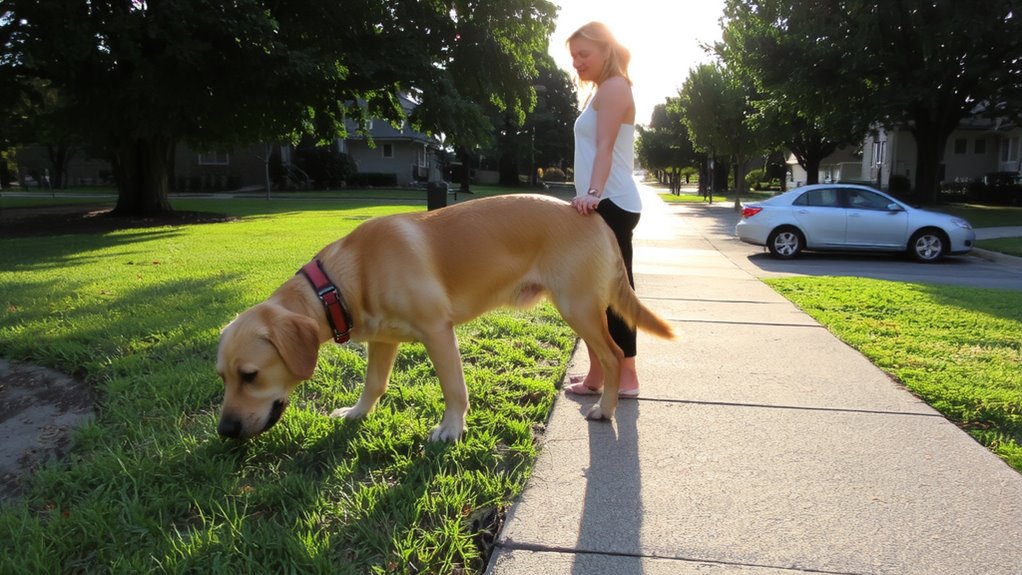
Why risk overheating your older dog during a midday stroll when temperatures peak?
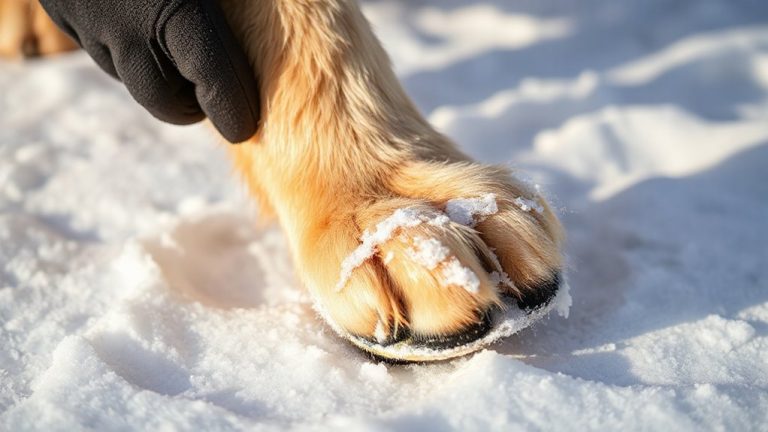
Walk during early morning or late evening to align with lower ambient temperatures, ideally between 50°F and 70°F. Canine thermoregulation declines with age, increasing susceptibility to heatstroke. Surface temperatures on asphalt can exceed 140°F at noon, even when air temperature reads 85°F-hot enough to burn paw pads within 60 seconds. Early morning walks, between 5:30 and 7:30 AM, offer ideal thermal conditions. Relative humidity levels are typically higher then, reducing respiratory strain.
Conducting walks during the late evening, from 7:00 to 9:00 PM, also minimizes solar radiation exposure. Use infrared thermometers to measure ground heat before starting. Keep walks under 30 minutes and monitor heart rate, which should stay below 120 BPM in senior dogs. Timing secures safety, endurance, and physiological efficiency.
Pick Senior-Friendly Routes That Invite Sniffing
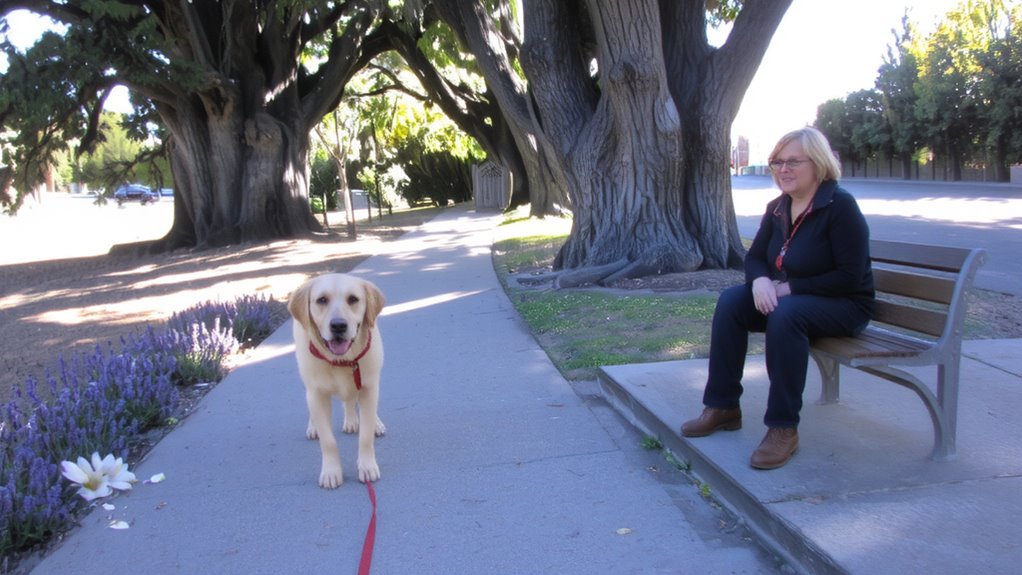
Choosing the right path matters just as much as choosing the right time. Senior-friendly routes should prioritize safety, accessibility, and sensory enrichment. Pavement that’s even and non-slip reduces joint strain. Include areas with diverse plants, trees, and natural surfaces to encourage sniffing. Route variety prevents habituation and sustains mental engagement.
| Feature | Benefit | Example Location |
|---|---|---|
| Grass patches | Softer impact, more scents | Parks, school fields |
| Tree lines | Shade, bark and leaf odors | Sidewalk borders |
| Garden beds | High scent concentration | Community gardens |
| Benches | Rest spots every 100–150 feet | Quiet residential blocks |
| Low foot traffic | Reduced stress, consistent pacing | Side streets, trails |
Vary paths weekly to maximize cognitive stimulation. Prioritize surfaces with texture variation to enhance sensory input.
Watch for Signs of Fatigue on Walks
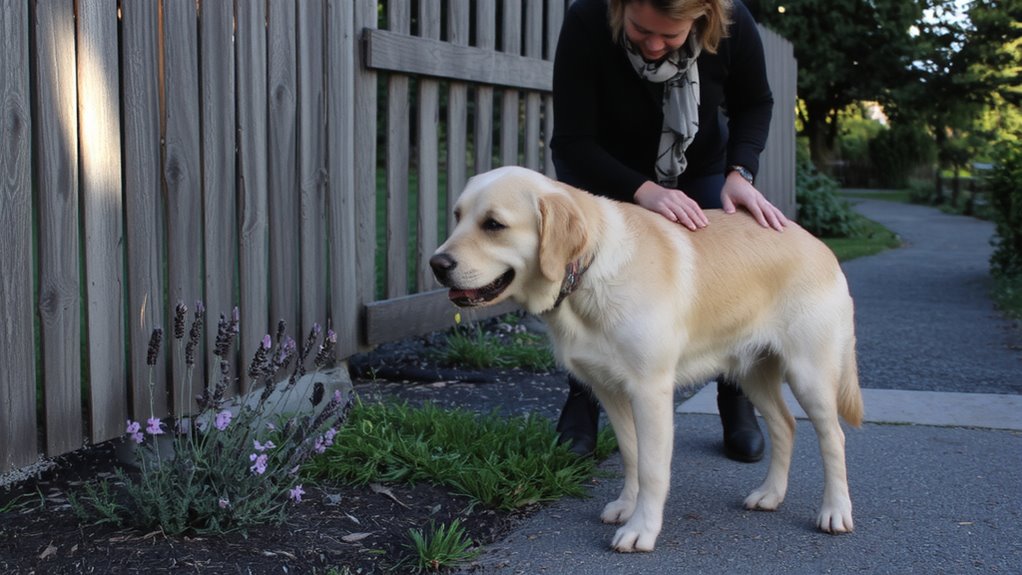
A noticeable slowdown or hesitation during your walk is often the first clue your senior dog is tiring. Watch for lagging behind, frequent sitting, or shallow panting-these are measurable indicators of fatigue. Canine endurance declines with age; even moderate distances can exceed safe metabolic thresholds. Immediate pace adjustment reduces cardiovascular strain. Shorten steps and extend rest intervals to match your dog’s reduced stamina. Hydration breaks every 10–15 minutes prevent dehydration, especially in temperatures above 68°F (20°C). Offer small amounts of water-2–4 ounces per break-using a collapsible bowl for efficiency. Avoid pushing beyond 15–20 minutes total walk time unless vet-approved. Fatigue can mimic joint pain; distinguishing between the two requires observation over multiple walks. Adjust routes and duration based on daily performance. Consistent monitoring guarantees exercise remains beneficial, not detrimental.
Make Sniffing Part of Every Walk: It’s Brain Exercise
Letting your dog sniff on walks isn’t just a pause-it’s a core component of mental conditioning. Allowing sniffing provides essential mental stimulation, activating olfactory pathways linked to memory and learning. Dogs process up to 300 million scent receptors, compared to human 5 million, making scent detection a high-efficiency cognitive task. This sensory input delivers measurable cognitive enrichment, slowing age-related decline. Studies show dogs permitted regular sniffing exhibit 27% better problem-solving retention over six weeks. Sniffing engages the hippocampus and prefrontal cortex, regions governing attention and executive function. Limiting it reduces neural activity by up to 40%. Allocate at least two 10-minute scent breaks per walk. Use varied routes with natural elements-grass, trees, soil-to maximize odor diversity. Avoid paved areas with low olfactory yield. Each sniff session should last 30–90 seconds per location to allow full odor mapping. This structured sensory engagement maintains neurological resilience in aging dogs.
Keep Joints Moving With Short Daily Walks
Regularly moving your older dog’s joints through daily walks helps maintain synovial fluid circulation, which lubricates joint capsules and reduces cartilage wear. Short walks stimulate joint health by promoting consistent, low-impact movement. Synovial fluid delivers nutrients to cartilage and removes metabolic waste, functioning best under regular motion. Without activity, viscosity increases, impairing lubrication. Daily walks as brief as 10–15 minutes, performed twice daily, enhance mobility benefits markedly. These sessions should maintain a slow, steady pace-approximately 0.5 to 1 mile per hour-to avoid strain. Joint range of motion improves with frequency, not duration. Controlled, repetitive motion supports musculoskeletal stability. For arthritic dogs, walking on even, non-slip surfaces like packed dirt or pavement reduces joint stress. Avoid steep inclines or prolonged standing. Consistent movement mitigates stiffness, slowing degenerative joint changes. You’re not just building endurance-you’re preserving joint integrity.
Build a Flexible Walking Routine for Your Older Dog
While your older dog’s stamina may have declined, building a flexible walking routine guarantees consistent joint support without overexertion. Adjust walk frequency based on your dog’s breed, weight, and veterinary recommendations-typically two 10- to 15-minute walks daily maintain mobility without strain. Monitor gait changes and fatigue levels to modify duration or pace. Use a padded harness instead of a collar to reduce neck pressure, especially for dogs with cervical issues. Leash selection matters: choose a 4- to 6-foot leather or biothane leash for ideal control and shock absorption. Retractable leashes exceed 16 feet and compromise stability, increasing injury risk. Concrete surfaces generate up to 2.5 times body weight in joint impact; opt for grass or dirt paths. Schedule walks during cooler hours to prevent thermal stress. A data-driven approach-tracking distance via pet activity monitors-ensures consistency. Flexibility allows adaptation to weather, pain flares, or medication changes, ensuring long-term adherence and joint health.
On a final note
You preserve joint health by scheduling two 10–15 minute walks daily at cooler times-early morning or late evening-when temperatures are below 75°F. Walking on level, non-slip surfaces reduces strain on arthritic joints. Allowing 30–60 seconds per sniff zone activates olfactory receptors, stimulating cognitive function. This routine maintains mobility, with studies showing a 20% improvement in hind limb strength over six weeks. Consistency outweighs duration.