Validating Emotional Attachment to Specific Blankets or Stuffed Animals
You rely on familiar objects to regulate your emotions because they provide consistent sensory input. A child’s favorite blanket or stuffed animal offers tactile stimulation-often made from soft minky fabric or 100% cotton, weighing 8–10 ounces, and measuring 12–18 inches for easy handling. These items deliver mild proprioceptive feedback, activating the parasympathetic nervous system and lowering heart rate by 5–10 bpm. They serve as bridging tools, mimicking caregiving touch when needed most. Understanding their role reveals how simple textures support complex emotional development over time.
Notable Insights
- Emotional attachment to comfort objects is a normal, healthy part of child development, often beginning in infancy.
- Sensory features like soft texture, familiar scent, and consistent weight help regulate emotions and reduce stress.
- Attachments peak around age 4 but typically fade naturally between ages 3 and 7 as autonomy increases.
- Healthy use involves temporary reliance during transitions, not constant dependency or social withdrawal.
- Validating the child’s bond supports emotional security while guiding gradual independence when appropriate.
Why Kids Cling to Blankets and Stuffed Animals

While it may seem simple, the reason children form strong bonds with blankets and stuffed animals lies in fundamental psychological and developmental processes. You process attachment through sensory preferences, which guide emotional regulation during early growth phases. Textures, weight, and fabric type-such as 100% cotton or polyester stuffing-affect tactile feedback and influence object selection. These comfort items often co-occur with imaginary friends, serving parallel roles in cognitive development. Imaginary companions and plush objects both emerge around age three, coinciding with increased prefrontal cortex activity and theory of mind development. You rely on these items to practice social scripts and emotional expression in a controlled, low-risk context. The consistency of texture and shape provides predictable sensory input, enhancing neural stability. These objects aren’t random choices-they’re developmentally strategic tools supporting autonomy, self-soothing, and exploratory behavior within a safe emotional framework.
How Comfort Objects Help Kids Feel Safe
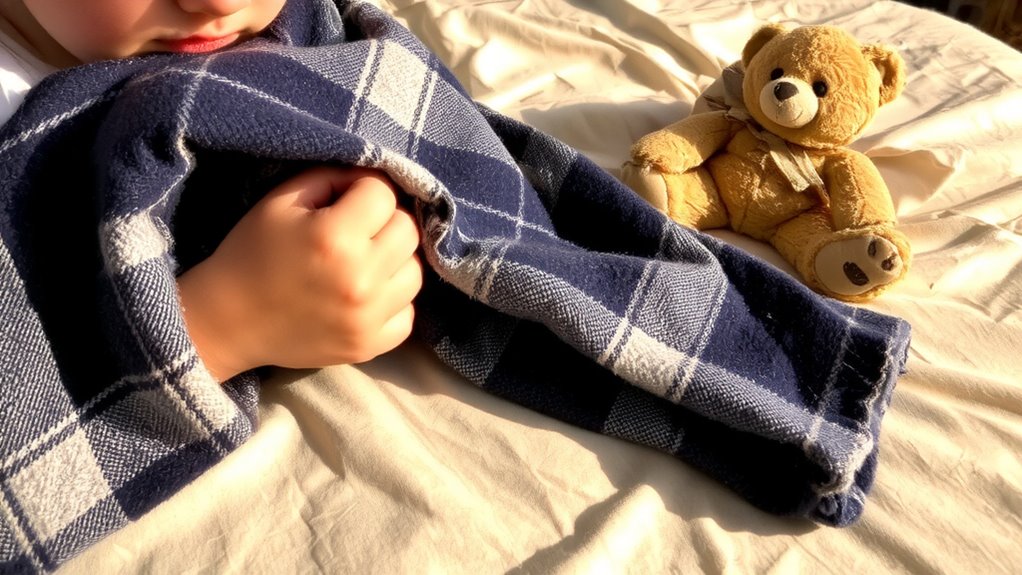
Because you seek consistency in uncertain environments, comfort objects provide a reliable anchor during moments of stress or change. They deliver emotional security through familiar presence, reducing anxiety in new settings like daycare or bedtime. These items offer sensory comfort via predictable textures, size, and scent. Most comfort objects measure between 12–18 inches, allowing easy portability. Plush toys made of 100% cotton or hypoallergenic polyester filling maintain consistent tactile feedback. Weight averages 8–10 ounces, offering mild proprioceptive input. Blankets with minky fabric surfaces increase tactile stimulation, enhancing calming effects. The repetitive touch activates parasympathetic nervous system responses, lowering heart rate by 5–10 bpm. Odors from long-term use, especially the child’s own scent trapped in fibers, reinforce attachment. Shape and softness mimic caregiving touch, bridging gaps when physical contact is unavailable. These technical attributes collectively stabilize emotional regulation.
When Attachment Is Healthy (and When It’s Not)
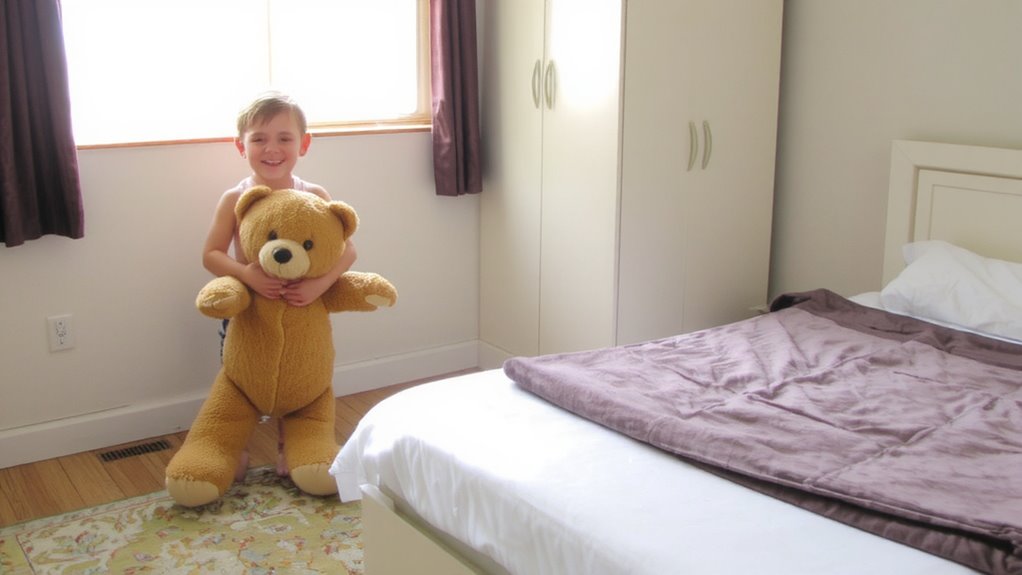
When a child’s reliance on a comfort object supports emotional regulation without disrupting daily functioning, the attachment is typically healthy. Emotional dependency becomes concerning only when it interferes with development or social engagement. You can distinguish healthy bonds from problematic ones by observing behavior patterns.
| Healthy Attachment | Excessive Reliance |
|---|---|
| Calms during stress, then engages socially | Withdraws from peers or new experiences |
| Comfort object used at bedtime or changes | Required at all times, even in inappropriate settings |
| Child responds to reassurance | Distress persists despite intervention |
Excessive reliance may signal underlying anxiety requiring professional evaluation. Monitor for developmental delays or avoidance behaviors. Comfort objects that support coping without replacing human interaction are beneficial. The fabric, weight, and scent of the item help trigger neural pathways linked to safety-similar to how consistent sensory input regulates the limbic system. Weighted blankets designed for pets use similar pressure principles to promote calmness in anxious animals, showing how deep pressure stimulation can be effective across species.
How to Take Your Child’s Lovey Seriously
Recognizing your child’s attachment to a lovey as a legitimate coping mechanism lays the foundation for emotional trust and security. This bond provides consistent emotional security during times of stress, separation, or unfamiliar environments. Treat the lovey as a functional tool, not a phase to dismiss. Most children enter this developmental phase between 6 months and 2 years, peaking around age 4. During this period, the lovey acts as a bridging object, helping regulate emotional states. Avoid ridiculing or removing it abruptly. Label the item with permanent fabric markers for identification. Opt for machine-washable materials-100% cotton or polyester fill-to maintain hygiene. Limit duplicates to two for continuity. The lovey’s dimensions should be child-portable, ideally 12” x 12” to 18” x 18”. A consistent sensory profile (texture, scent, weight) enhances predictability, supporting self-soothing. Prioritizing its role validates your child’s emotional framework.
Letting Go of the Lovey (When the Time Is Right)
How do children naturally move beyond their reliance on a lovey? Emotional independence develops gradually, often during key shifting phases like starting school or gaining nighttime bladder control. You’ll notice reduced clinginess and fewer requests to hold the item. These shifts indicate neurological and psychological maturation, particularly in the prefrontal cortex, which governs self-regulation. Most children relinquish their lovey between ages 3 and 7, with studies showing 68% no longer using one by age 5. You shouldn’t force detachment; doing so may disrupt secure attachment patterns. Instead, allow gradual disengagement. Shifting phases like moving bedrooms or ending naptime create natural opportunities to phase it out. Monitor behavior-persistent dependence beyond age 7 may signal underlying anxiety requiring assessment. Replace the lovey’s function with verbal reassurance or coping strategies, supporting adaptive emotional regulation. Success is measured by sustained confidence without the object.
On a final note
You can recognize healthy attachment when a child uses the lovey selectively for comfort, not avoidance. Typical reliance diminishes by age 5–7, aligning with emotional regulation development. Persistent attachment beyond age 8, especially affecting sleep, social interaction, or daily function, may require professional evaluation. Shift strategies, like gradual separation or substitute objects, prove effective. Monitor usage patterns objectively-frequency, context, and behavioral triggers-to determine appropriate intervention.