Why Senior Cat Cognitive Dysfunction Is Assessed With Behavioral Surveys
You rely on behavioral surveys because no blood test or scan can diagnose feline cognitive dysfunction. Changes in sleep, litter box use, or social interaction reflect neural decline. Veterinarians use your observations of disorientation or altered grooming as clinical markers. MRI studies confirm cortical atrophy aligns with these behaviors. Tracking patterns over 4–6 weeks gives measurable data. Your consistent logs become the foundation for diagnosis and care planning. The full picture of your cat’s cognitive health starts with what you see at home.
Notable Insights
- No definitive medical test exists to diagnose feline cognitive dysfunction, making behavior the primary diagnostic tool.
- Cognitive decline in cats mirrors human Alzheimer’s, with symptoms like disorientation and memory loss reflecting brain changes.
- Behavioral surveys capture subtle, progressive changes in routines such as eating, grooming, and litter box use over time.
- Veterinarians rely on owner observations of sleep disturbances, vocalization, and social withdrawal to assess cognitive function.
- Daily tracking of behaviors provides measurable, time-stamped evidence that correlates with neural degeneration and dysfunction severity.
What Is Cat Dementia?
Cognitive decline in aging cats is a real and diagnosable condition. You may observe feline memory loss as early as age 10, with prevalence increasing markedly after 15. This syndrome, known as feline cognitive dysfunction (CaDS), mirrors human Alzheimer’s in neurodegenerative progression. Lesions from beta-amyloid plaques accumulate in neural tissue, impairing synaptic function. Senior brain health declines due to reduced cerebral blood flow, oxidative stress, and diminished neurotransmitter production. MRI studies show cortical atrophy averaging 15–20% in affected cats. The condition is progressive, with histopathological changes detectable years before overt symptoms. Diagnosis relies on behavioral tracking, ruling out mimics like hyperthyroidism or renal disease. While no cure exists, early nutritional intervention with antioxidants and omega-3 fatty acids may slow degeneration by supporting neuronal integrity. Monitoring cognitive trajectories helps assess intervention efficacy. You must rely on objective tools-not anecdotes-to evaluate neurocognitive status over time.
Top Signs of Cognitive Decline in Older Cats
Disorientation is often the first red flag. Your cat may stare at walls, get stuck in corners, or wander aimlessly. These behaviors signal underlying confusion, a core symptom of feline cognitive decline. Memory loss impairs recognition of familiar people, pets, or rooms. Your cat might forget where the litter box or food bowl is located, despite unchanged placement. Altered sleep-wake cycles are common, with nighttime vocalization or restlessness. Reduced social interaction occurs as your cat withdraws from petting or avoids family. House soiling happens despite intact bladder control, indicating spatial confusion. Decreased grooming leads to matted fur and odor. These changes must persist beyond medical causes like thyroid or kidney disease. The presence of at least two signs-especially memory loss and confusion-over eight weeks supports cognitive dysfunction syndrome (CDS) diagnosis. Behavioral consistency and pattern recognition are critical for accurate assessment.
Why Behavior Matters When There’s No Test
You can’t run a blood test or scan to confirm feline cognitive dysfunction, and that’s why your cat’s daily actions carry so much weight. Behavior becomes the primary diagnostic indicator. Changes in routine, like disorientation in familiar spaces, suggest impaired cognitive mapping-the brain’s ability to create and use mental layouts of the environment. Neural plasticity, the nervous system’s capacity to reorganize and adapt, declines with age, reducing your cat’s ability to compensate for cognitive loss. Subtle shifts in grooming, eating, or litter box use reflect this deterioration. These behaviors are measurable and time-stamped, providing quantifiable data. Observations of pacing, vocalization at night, or failure to recognize family members align with validated dysfunction scales. Each noted behavior correlates with specific neurodegenerative processes. Without biomarkers, behavioral surveys are the only tools capturing the progressive nature of decline. Your consistent tracking delivers objective evidence critical for assessment.
How Your Observations Help the Vet Diagnose Dementia
How do you know when forgetfulness becomes more than just aging? Your observations of memory lapses and confusion episodes provide critical data for diagnosing dementia in senior cats. Unlike acute illnesses, cognitive dysfunction lacks definitive blood tests or imaging markers. Instead, veterinarians rely on behavioral surveys grounded in longitudinal observation. You notice when your cat stares at walls, forgets litter box training, or misjudges distances-each incident a documented symptom. Memory lapses, such as failing to recognize feeding cues, correlate with hippocampal degeneration. Confusion episodes, like vocalizing at night or getting stuck in corners, reflect circadian disruption and cortical atrophy. These patterns, recorded in frequency, duration, and severity, form the diagnostic foundation. Your input converts subjective concerns into objective metrics. Without your detailed accounts, differentiating cognitive decline from sensory loss or pain would be impossible. Observations bridge the diagnostic gap.
How to Track Changes at Home
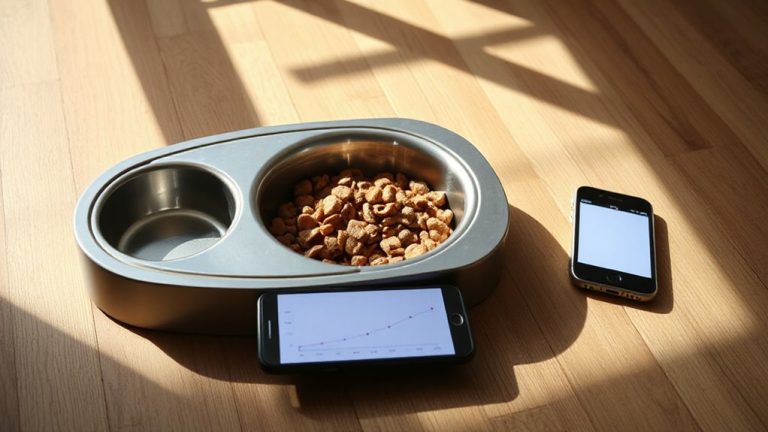
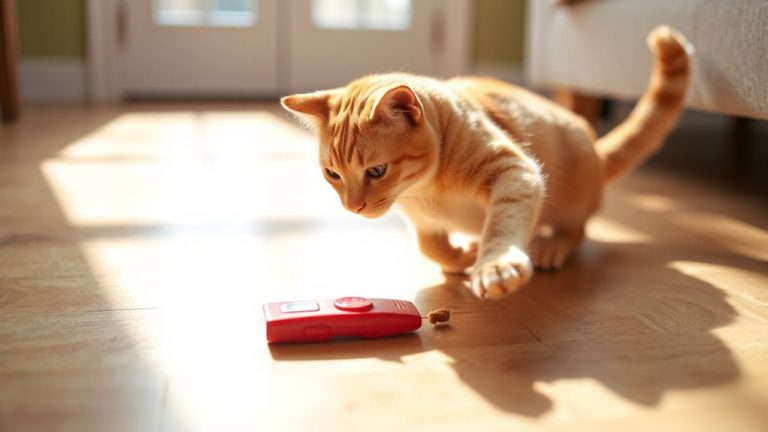
What if the key to early detection lies in the routine? Observing your cat’s daily routines reveals subtle shifts linked to cognitive decline. Track feeding times, litter box use, and sleep-wake cycles with a consistent log. Note deviations-such as nocturnal vocalizations or missed eliminations-as clinically significant markers. Use smartphone apps or paper journals; record data daily for accuracy. Introduce environmental enrichment strategically: place puzzle feeders in quiet zones, rotate toys every 72 hours to maintain novelty, and install ramps or steps near elevated surfaces. Enrichment should challenge cognition without causing stress. Monitor duration and frequency of interactions. Changes in engagement-like reduced play lasting over two weeks-may indicate dysfunction. These observations, documented over four to six weeks, provide veterinarians with quantifiable evidence. Reliable tracking combines behavioral logs with structured environmental adjustments. Consistency and precision are critical for clinical interpretation. Choose designs that match your cat’s skill level to ensure continued mental stimulation; for example, some cats benefit from rotating between different types of puzzle feeders for cats.
On a final note
You rely on behavioral surveys because no blood test or scan diagnoses feline cognitive dysfunction. Observable changes in sleep cycles, litter box use, and vocalization patterns provide critical diagnostic criteria. The Feline Cognitive Dysfunction Rating (FCDR) scale quantifies symptoms using 15-item owner assessments. Neurological exams rule out mimics like hyperthyroidism. Early detection improves management. Environmental enrichment and selegiline extend functional longevity.