Recognizing When a Cat’s Bite Wound Requires Immediate Veterinary Attention
Your cat needs immediate veterinary care if swelling exceeds 1 cm or redness spreads beyond 2 cm within 12 hours of a bite. Cat teeth inject bacteria deep into tissue, and punctures seal quickly, trapping *Pasteurella multocida* inside. Look for warmth, pus, or hardened skin-these signal active infection. Fever above 102.5°F or lethargy means the infection is spreading. Even without visible wounds, pale gums or rapid breathing can indicate internal damage or shock. Early treatment prevents abscesses, organ stress, or sepsis-waiting risks severe complications. Key interventions include high-pressure irrigation and targeted antibiotics. Outcomes improve drastically with prompt care. Warning signs often worsen silently, so close monitoring is critical in the first 24 hours. Immediate action supports full recovery and reduces long-term risk.
Notable Insights
- Cat bite punctures can seal quickly, trapping bacteria like *Pasteurella multocida* deep in tissue, requiring urgent cleaning and antibiotics.
- Swelling over 1 cm or redness spreading beyond 2 cm within 12 hours signals active infection needing immediate veterinary care.
- Warmth, firmness, or separation of wound edges with fluid drainage indicates worsening infection or abscess formation.
- Pus, increasing swelling, or fever above 102.5°F in the cat suggest deep bacterial invasion and systemic response.
- Pale gums, lethargy, rapid breathing, or abdominal rigidity may indicate internal bleeding or shock, demanding emergency treatment.
Why Cat Bites Lead to Serious Infections
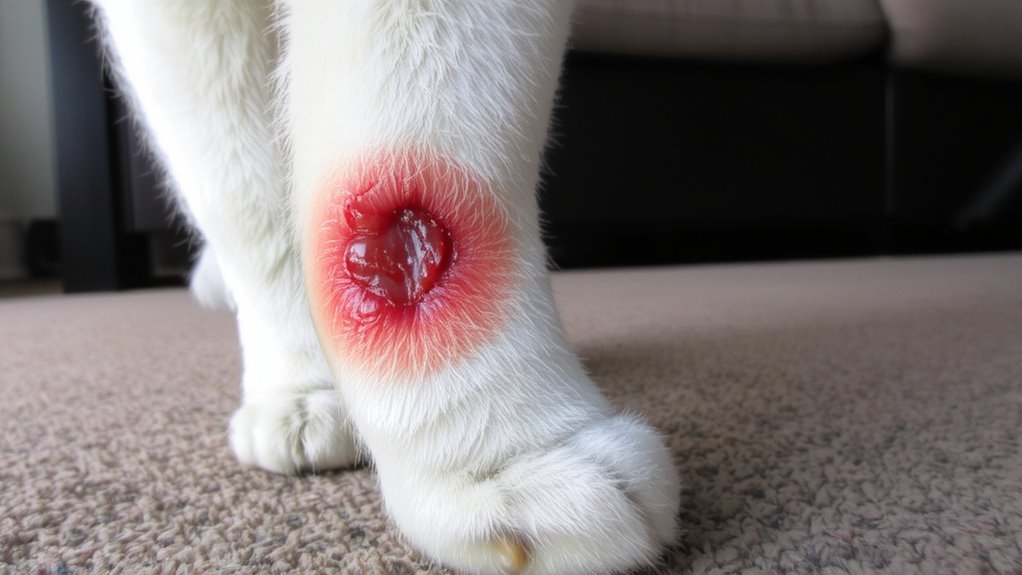
A cat’s bite carries more risk than you might think. The sharp, narrow teeth puncture deeply, injecting bacteria below the skin’s surface. These punctures often seal quickly, trapping pathogens in the tissue. Bacterial transmission occurs primarily through *Pasteurella multocida*, a common oral flora in cats, which multiplies rapidly in warm, anaerobic environments. Without immediate cleansing and, often, antibiotics, the infection spreads within hours. Your immune response activates, sending white blood cells to contain the threat, but the localized swelling can compress blood vessels, limiting further immune cell access. This creates a feedback loop where inflammation worsens while infection persists. The incubation period for symptoms averages 8–12 hours, shorter than many skin infections. Left untreated, cellulitis or septic arthritis may develop. Prompt medical evaluation is essential to interrupt bacterial proliferation and support effective immune response.
Visible Signs of a Dangerous Bite Wound
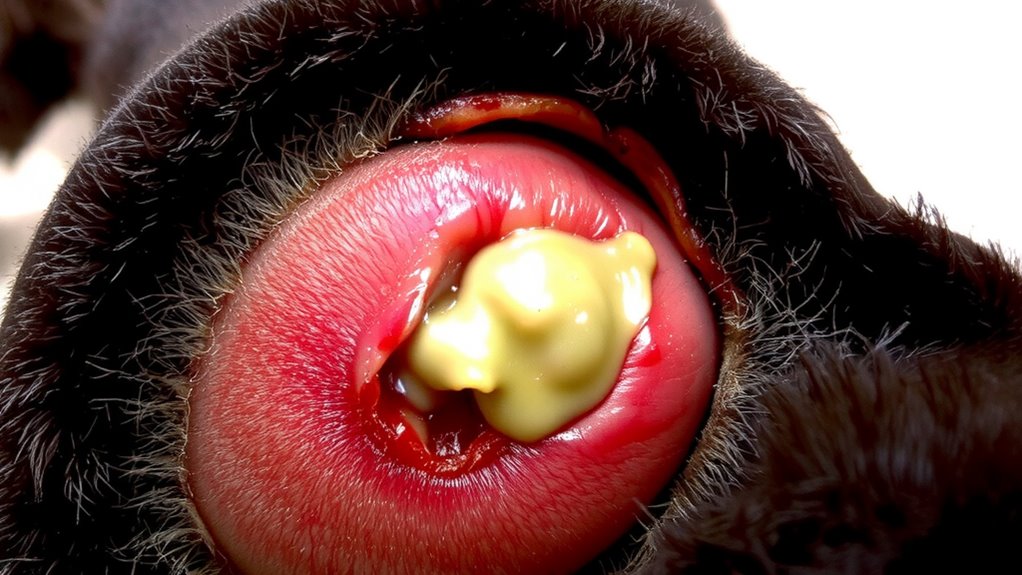
While not all cat bites look severe at first glance, certain visible changes signal an escalating infection. Swelling around the wound site is one key indicator. If the area expands beyond a centimeter in diameter within 12 hours, it may point to bacterial proliferation. Redness that spreads more than 2 cm from the puncture suggests inflammatory response. The skin often feels warm to the touch due to increased blood flow. You might notice hardened tissue around the wound, a condition called induration, which typically precedes abscess formation. Look for edges of the wound separating or weeping clear to yellow fluid. These physical changes are measurable and clinically significant. Immediate evaluation is necessary when swelling and redness progress rapidly. Do not wait for systemic symptoms. Early intervention prevents deeper tissue involvement. Track changes hourly for accurate assessment.
When a Cat Bite Is Getting Infected
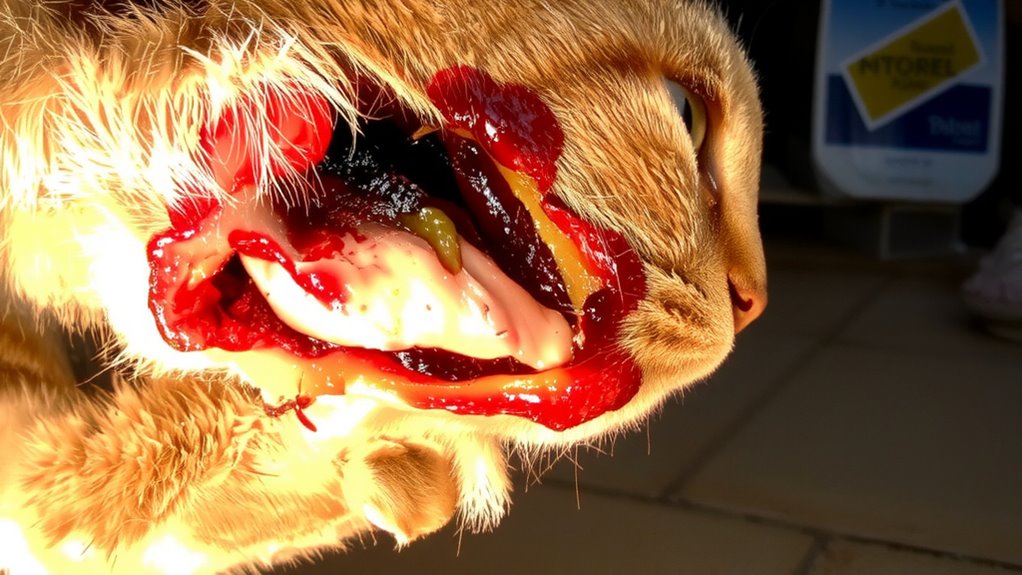
Signs of infection go beyond surface-level changes and involve measurable shifts in both tissue response and systemic health. You must monitor for progressive inflammation, abnormal wound drainage, and fever onset, as these indicate deeper bacterial invasion. Elevated body temperature above 102.5°F in cats suggests systemic involvement. Persistent redness, swelling, and heat around the wound site reflect amplified immune activity.
| Symptom | Clinical Significance |
|---|---|
| Pus-like drainage | Indicates bacterial infection |
| Increased swelling | Suggests fluid accumulation or abscess |
| Warmth around wound | Reflects localized inflammatory response |
| Fever onset | Shows systemic immune engagement |
| Lethargy | Correlates with infection progression |
Purulent wound drainage often contains anaerobic bacteria like *Pasteurella multocida*. Fever onset within 24–48 hours post-injury warrants urgent assessment. Early detection improves treatment efficacy.
Silent Symptoms That Need Emergency Care
How quickly can a cat’s bite wound turn dangerous without obvious signs? Faster than you think. Internal bleeding may occur even if the skin appears stable. Puncture wounds from cat teeth can drive bacteria deep below the surface, risking unseen complications. You might not see swelling, but pale gums or a rapid heart rate could signal blood loss. Shock sets in when blood volume drops 15% or more-cats can lose as little as 20–30 ml/kg before circulatory failure begins. Organ damage follows if hypoperfusion persists. The liver or kidneys are especially vulnerable due to reduced oxygen delivery. Subtle signs like lethargy, shallow breathing, or abdominal rigidity demand immediate attention. Unlike surface infections, these conditions worsen silently. Delaying care increases mortality. Internal bleeding and organ damage aren’t always visible, but they’re life-threatening. Watch closely. Act fast. Your cat’s stability may be an illusion.
How Vets Treat Cat Bite Wounds
A cat’s bite wound isn’t just a surface injury-it’s a potential gateway for serious infection and tissue damage. Your vet will first perform thorough wound irrigation, using sterile saline at high pressure to flush out bacteria and debris. This step is critical-cat bites often drive pathogens deep beneath the skin. After cleaning, your cat typically receives antibiotic therapy tailored to common feline oral bacteria like *Pasteurella multocida*. Oral antibiotics such as amoxicillin-clavulanate are standard, usually dosed at 62.5 mg per 10 lbs every 12 hours for 7–10 days. In severe cases, your vet may culture the wound or administer injectable antibiotics. Abscesses may require surgical drainage. Treatment also includes monitoring white blood cell counts and, if needed, follow-up imaging. Your vet guarantees minimal tissue necrosis and prevents systemic infection. The goal is rapid bacterial clearance and ideal healing.
When to Treat at Home vs. Go to the Vet
What should you do when your cat comes home with a bite mark-treat it yourself or head straight to the clinic? Use caution. Minor scratches without swelling, discharge, or pain may only need home care. Clean the area daily with a chlorhexidine solution (0.05% concentration) to reduce surface bacteria. Monitor for redness or warmth, which indicate deeper infection. Puncture wounds from fangs are high-risk due to sealed entry points that trap bacteria under the skin. These often develop abscesses within 2–3 days. If your cat shows lethargy, fever, or the wound enlarges, seek an immediate visit. Swelling over 1 cm in diameter or pus discharge signals systemic involvement. Bite wounds on the tail, legs, or face require faster evaluation due to tissue vulnerability. Never delay veterinary assessment when clinical signs progress rapidly-antibiotics and drainage may be necessary within hours.
How to Prevent Infection From Cat Fight Wounds
Catching a fight wound early gives you the best shot at stopping infection before it takes hold. Immediate wound cleaning is critical-flush the injury with sterile saline or dilute chlorhexidine (0.05%) for 30 seconds to reduce bacterial load. Avoid hydrogen peroxide, which damages tissue. Most cat bite wounds require veterinary evaluation due to high infection risk from deep punctures inoculating bacteria like *Pasteurella multocida*. Antibiotic use is often necessary; clindamycin or amoxicillin-clavulanate are common prescriptions. Delayed treatment can lead to abscess formation within 2–3 days.
| Step | Action | Purpose |
|---|---|---|
| 1 | Inspect cat after fights | Detect wounds early |
| 2 | Clean wound at home | Reduce contamination |
| 3 | Seek vet care | Assess need for antibiotics |
| 4 | Follow prescribed antibiotic use | Prevent systemic infection |
On a final note
You must act quickly when a cat’s bite wound shows redness, swelling, or pus. These signs indicate infection, often from bacteria like *Pasteurella multocida*. Left untreated, abscesses can form in 24–72 hours. Systemic symptoms like fever or lethargy require immediate vet care. Home treatment is only safe for superficial wounds. Vets typically prescribe antibiotics and may lance abscesses. Prevent complications with prompt, professional intervention.