How to Recognize Abnormal Eye Discharge in Senior Pets
Check your senior pet’s eyes daily for abnormal discharge, which is often yellow, green, or white and appears in excess, unlike normal clear, minimal secretions. Crusting, reddened skin, or staining indicates inflammation or infection. Persistent or purulent discharge may signal keratoconjunctivitis sicca if tear production is below 10 mm/min on a Schirmer test, or glaucoma if intraocular pressure exceeds 25 mmHg. Blood-tinged or cloudy discharge with squinting requires urgent evaluation. A thorough exam can reveal underlying conditions like corneal ulcers or uveitis-knowing the signs helps guarantee timely, accurate diagnosis.
Notable Insights
- Abnormal discharge is often colored (yellow, green, or bloody) and more excessive than normal clear, minimal tearing.
- Persistent or recurrent eye discharge, especially with crusting, may indicate an underlying condition like dry eye.
- Thick, mucoid, or purulent discharge can signal keratoconjunctivitis sicca, common in senior pets.
- Sudden changes in eye appearance, such as cloudiness or redness, alongside discharge, warrant immediate veterinary evaluation.
- Behavioral signs like squinting, pawing at the eyes, or bumping into objects may accompany abnormal discharge in older pets.
Normal vs. Abnormal Eye Discharge in Senior Pets
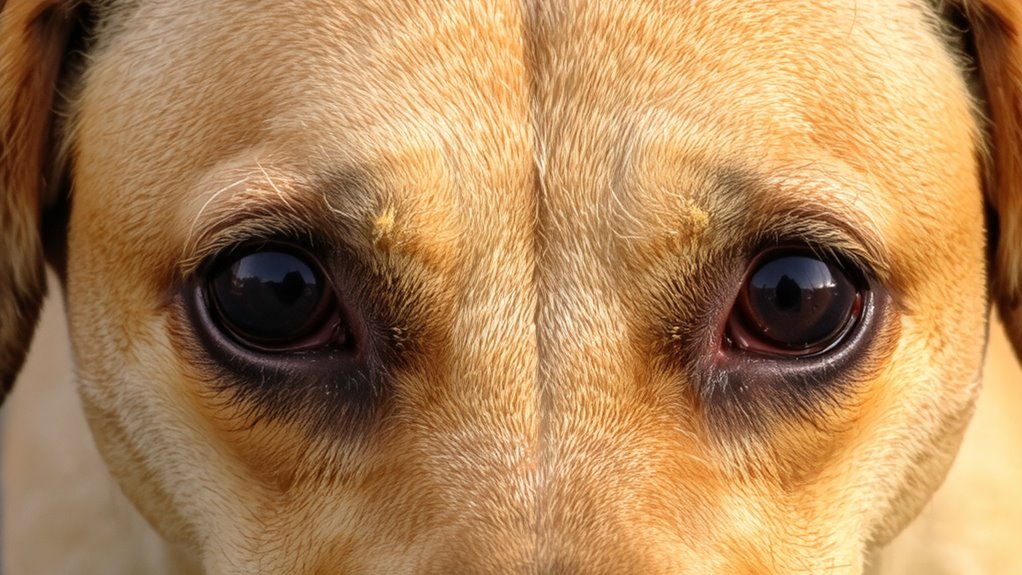
While all pets may experience some degree of eye discharge as part of normal physiological function, distinguishing between typical and concerning symptoms is essential, especially in senior animals. Normal discharge is usually clear, minimal, and dries without staining. It results from steady tear production, which maintains corneal health and lubrication. You’ll notice slight moisture upon waking-this is ordinary. Abnormal discharge, however, is often colored, excessive, or recurrent. It may indicate dysfunction in tear production, such as keratoconjunctivitis sicca or overproduction from irritation. Eyelid position plays a critical role: ectropion or entropion can expose or irritate the eye, altering secretion patterns. Misaligned lids disrupt the tear film’s distribution. Check for symmetry, blinking efficiency, and signs of strain. Consistent tearing or crusting warrants evaluation. Monitor changes daily. Early detection improves outcomes.
Common Causes of Eye Discharge in Senior Pets
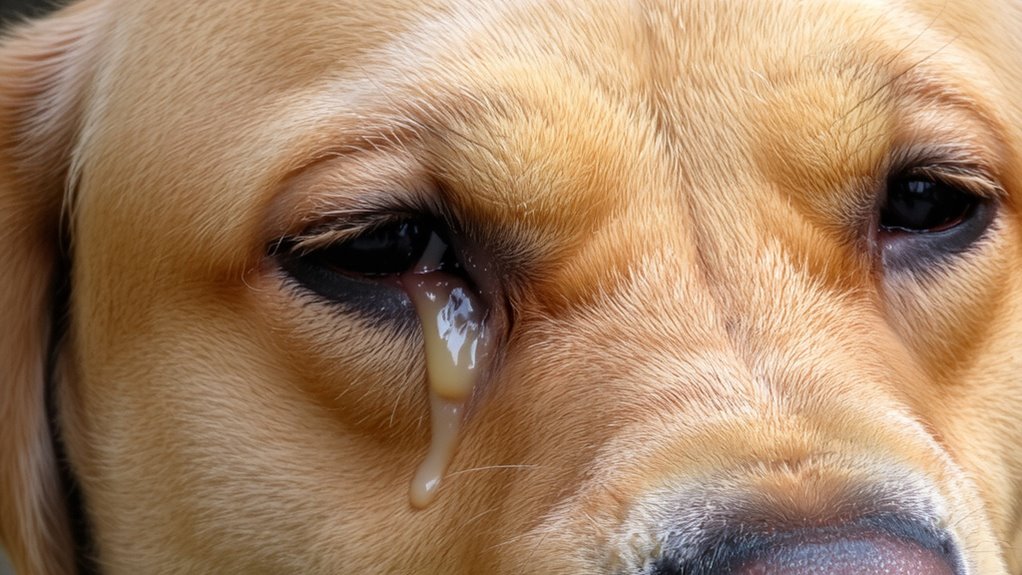
Eye problems in senior pets often stem from age-related changes and underlying disease. Dry eyes, or keratoconjunctivitis sicca, reduce tear production, leading to thick, yellowish discharge and increased infection risk. Your pet’s tear film may drop below 10 mm on a Schirmer tear test, confirming the condition. Corneal ulcers, common in older pets, result from trauma, decreased corneal sensitivity, or chronic irritation. These defects in the corneal epithelium cause watery or mucoid discharge, squinting, and redness. Fluorescein staining reveals green uptake in the ulcerated area under ultraviolet light. Chronic conditions like diabetes or autoimmune disorders exacerbate both dry eyes and corneal ulcer development. You should check your pet’s eyes daily for changes in clarity, moisture, or discharge consistency. Early detection supports effective treatment and prevents complications. Addressing these causes promptly improves comfort and visual function.
Red Flags: Serious Eye Conditions in Older Pets
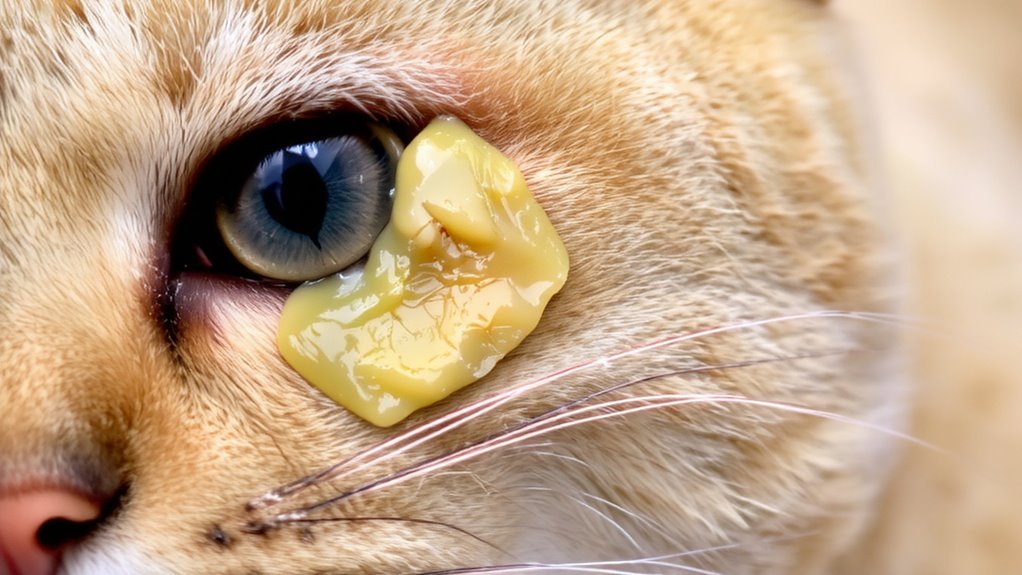
What should you do when your senior pet’s eye discharge becomes persistent, bloody, or purulent? These signs may indicate serious eye conditions requiring immediate veterinary attention. Glaucoma symptoms include sudden redness, cloudy corneas, and enlarged pupils due to increased intraocular pressure. Left untreated, it can lead to retinal detachment-where the retina pulls away from the back of the eye-causing irreversible blindness. Watch closely for behavioral changes like bumping into objects, which may signal vision loss.
| Condition | Key Signs |
|---|---|
| Glaucoma | Cloudy cornea, dilated pupil, pain |
| Retinal Detachment | Sudden blindness, abnormal pupil response |
| Uveitis | Redness, tearing, light sensitivity |
| Corneal Ulcer | Squinting, redness, purulent discharge |
These red flags demand urgent evaluation. Early detection improves outcomes and may preserve your pet’s vision.
How Eye Problems Are Diagnosed in Senior Pets
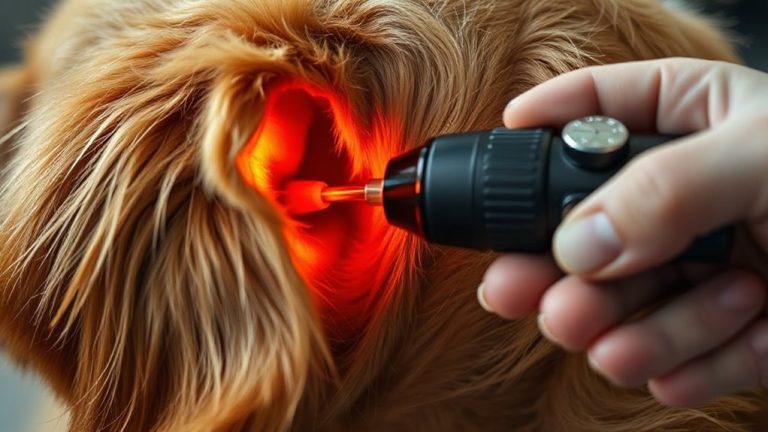
Since early diagnosis can prevent permanent vision loss, your veterinarian will begin with a thorough ophthalmic exam using tools like a penlight and magnifier to inspect the eye’s external structures. They’ll assess corneal clarity, pupil response, and eyelid position. The Schirmer tear test measures tear production in millimeters per minute; values below 10 mm/min indicate keratoconjunctivitis sicca. Fluorescein staining is applied to detect corneal ulcers or abrasions; the dye binds to damaged epithelium and glows green under cobalt blue light. Intraocular pressure is measured via tonometry to rule out glaucoma; normal readings range from 10–25 mmHg in dogs and cats. Ophthalmoscopy allows evaluation of the retina and optic nerve. These tests are non-invasive, quick, and essential for accurate diagnosis. Each provides specific, measurable data critical for identifying underlying diseases. Your vet may repeat tests to monitor progression or treatment efficacy. Timely, precise diagnostics support effective interventions.
Preventing Eye Issues in Aging Pets
Regular veterinary checkups give you the best chance to catch early signs of ocular disease before they progress. You should schedule eye exams every six months for pets over seven years old. Early detection improves treatment outcomes for conditions like cataracts, glaucoma, and dry eye. Diet supplements such as omega-3 fatty acids reduce inflammation and support retinal function. Administer 50–100 mg EPA per kg of body weight daily for maximum benefits. Regular grooming prevents ocular irritation by removing hair and debris near the eyes. Wipe the eye area weekly with a sterile, lint-free cloth moistened with saline solution. Hair over 1 cm near the eyelid margin increases the risk of corneal abrasions. Use rounded-tip scissors carefully when trimming. Verify supplements are vet-approved and contain proven ingredients like lutein and antioxidants. Prevention reduces emergency costs and maintains visual acuity.
On a final note
You must monitor your senior pet’s eye health closely. Normal discharge is clear and minimal. Abnormal discharge appears cloudy, yellow, or green and may signal infection. Excess tearing or crusting indicates underlying disease. Conditions like glaucoma or keratitis require immediate vet intervention. Diagnostic tests include tonometry and fluorescein staining. Left untreated, damage can be irreversible. Prevent issues with routine checkups and proper hygiene. Early action preserves vision.