Creating a Weekly Weight-Loss Schedule for Your Overweight Dog With Meal Timing
Start with veterinary clearance to rule out underlying health issues and confirm your dog’s ideal weight. Calculate daily intake at 60–70% of resting energy requirement-about 460–540 kcal for a 20 kg dog. Feed two measured meals 12 hours apart using a gram scale. Choose high-fiber (5–8% dry matter), low-calorie food and include vet-approved veggies under 10% of calories. Weigh your dog weekly and adjust portions by 5–10% as needed. Pair each meal with timed exercise, aiming for 30–60 minutes of brisk walking daily. Consistent scheduling supports metabolic efficiency and sustainable fat loss. Further refinements align with individual progress and metabolic response.
Notable Insights
- Obtain veterinary clearance to confirm your dog is healthy enough for weight loss and rule out underlying conditions.
- Calculate your dog’s daily calorie needs using 60–70% of RER, based on current body weight in kilograms.
- Feed two measured meals 12 hours apart daily to regulate metabolism and prevent overfeeding.
- Use a gram-scale kitchen scale to portion food accurately and avoid even small caloric excesses.
- Track weekly weight changes and adjust food portions by 5–10% if loss is outside the 1–2% body weight target.
Check Your Dog’s Weight and Health First
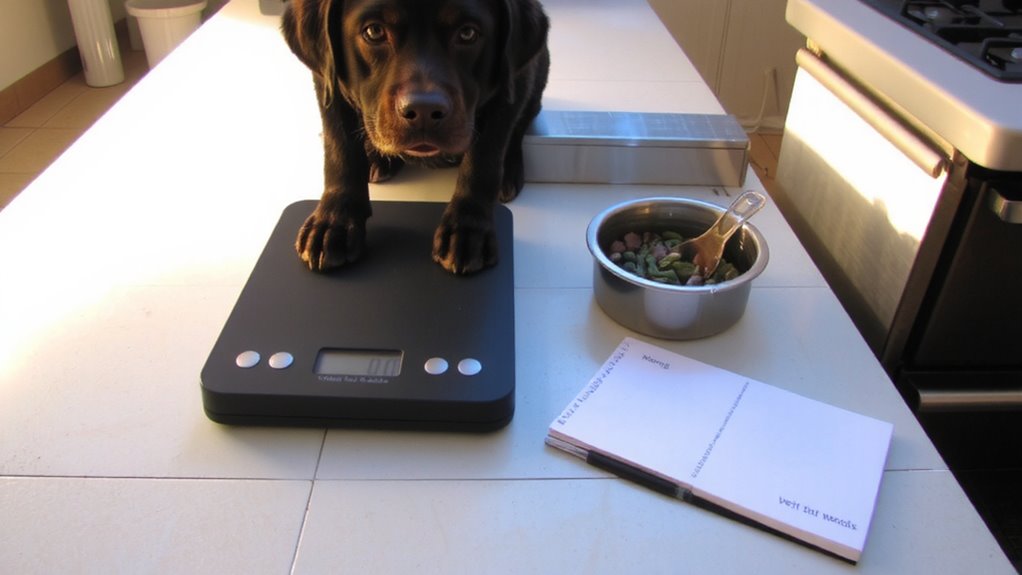
Before starting any weight-loss plan, make sure your dog is healthy enough to lose weight safely. Your dog needs veterinary clearance to confirm no underlying conditions impair weight loss. A veterinarian evaluates body condition using a 9-point scale; ideal scores range from 4 to 5. At score 6 or higher, excess fat increases health risks. Assess rib coverage: you should feel ribs with light pressure but not see them. Overweight dogs often show a faint or absent waist when viewed from above. The vet checks blood work, joint function, and organ health to confirm safe weight reduction is possible. Body condition impacts metabolic rate and mobility. Without proper clearance, calorie restriction could worsen conditions like liver disease. Never assume weight loss is safe without professional assessment. Your dog’s size, breed, and medical history determine risk. Veterinary clearance isn’t optional-it’s essential for effective, safe progress.
Calculate Daily Calories for Weight Loss
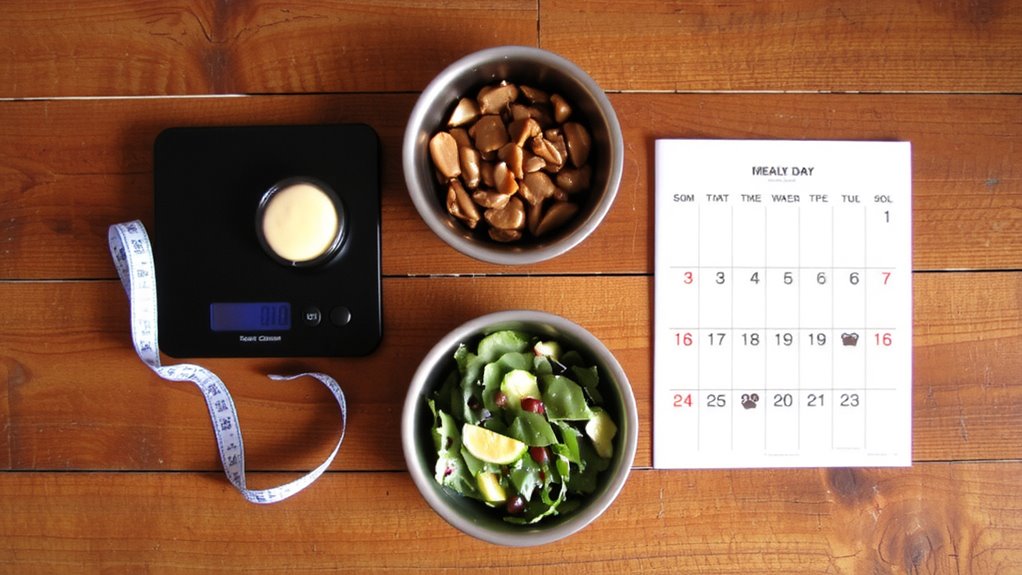
Once you know your dog is cleared for weight loss, the next step is determining how many calories they need each day. Use your dog’s current weight (in kilograms) and multiply by 30, then add 70 to estimate resting energy requirements (RER). For weight loss, feed 60–70% of RER to create a safe caloric deficit. For example, a 20 kg dog needs about 770 kcal/day at rest; reduce to 460–540 kcal daily. This deficit promotes gradual fat loss without sacrificing essential nutrients. Accurate portion control is critical-use a gram-scale kitchen scale to measure food, not measuring cups. Overfeeding by just 10% can stall progress. Commercial weight-loss diets often provide balanced nutrition at lower calories, typically 200–300 kcal per cup. Adjust based on weekly weight checks. Consistency in calorie intake supports predictable results.
Set Meal Times on a Weight Loss Schedule
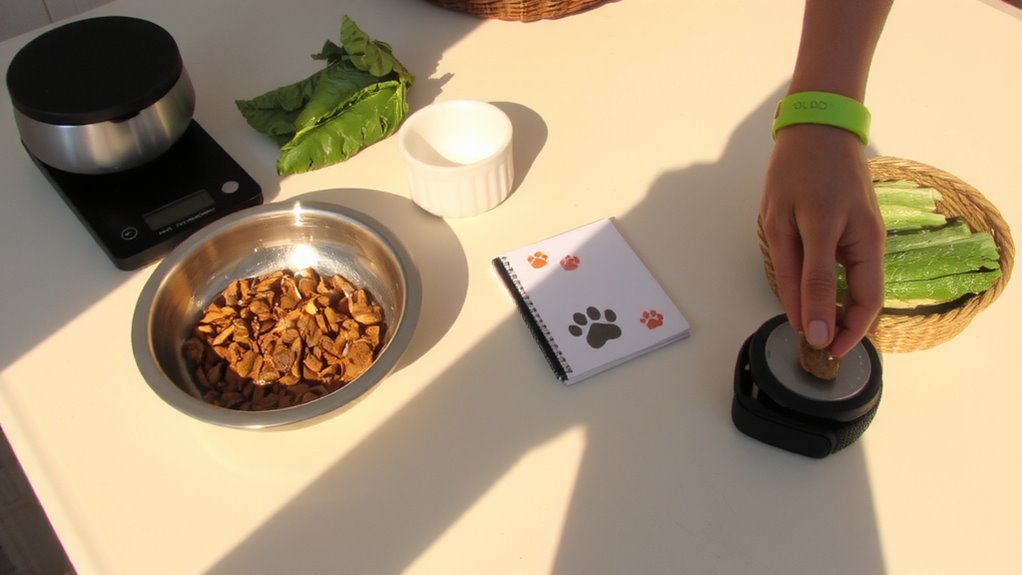
You’ve calculated your dog’s daily caloric needs for weight loss, and now it’s time to structure when those calories are delivered. Establishing consistent meal frequency supports metabolic regulation and reduces begging. Most dogs do best with two meals spaced 12 hours apart. This routine stabilizes blood sugar and improves insulin response, directly aiding fat metabolism. Divide the total daily calories into fixed portions for each meal to guarantee precise portion control. Use a kitchen scale or calibrated measuring cup to avoid overfeeding-even an extra 50 calories per meal can stall progress over time. Feeding at the same times daily conditions your dog’s digestive system for maximum efficiency, much like a clockwork mechanism. Avoid free-feeding, which undermines portion control and distorts natural hunger signals. A predictable meal schedule enhances adherence to the weight-loss plan and provides measurable, repeatable outcomes.
Serve Low-Calorie, High-Fiber Foods
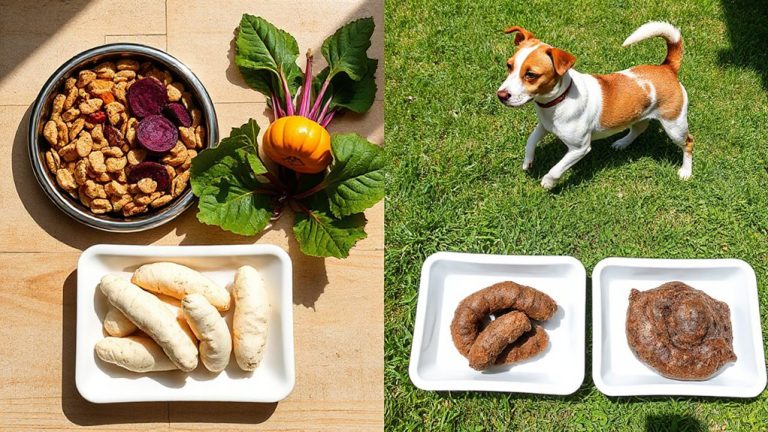
Fiber is your ally in canine weight management. It promotes satiety, helping your dog feel full without excess calories. Choose low-calorie, high-fiber foods with at least 5–8% crude fiber on a dry matter basis. These formulations slow gastric emptying, stabilizing blood sugar and reducing begging. Incorporate vegetable snacks like steamed broccoli, green beans, or sliced cucumbers-they’re under 10 kcal per cup and add bulk. These treats support portion control by replacing high-energy snacks. Limit vegetable intake to 10% of daily caloric intake to avoid digestive upset. Use a gram scale for precise portion control, adjusting meals to meet your dog’s resting energy requirement (RER = 70 × body weight^0.75). Monitor fiber sources for fermentability; beet pulp and psyllium are effective, promoting beneficial short-chain fatty acid production. Consistent use of high-fiber, low-calorie options aids sustainable weight loss without compromising nutrition. For optimal results, consider switching to one of the best high-fiber dog foods recommended for weight management.
Track Progress and Adjust Weekly
How do you know if your dog’s weight-loss plan is working? Use behavior tracking and food journaling to measure progress objectively. Record daily food intake, including portion sizes and treat amounts, to guarantee caloric targets are met. Monitor weekly weight changes using a digital scale with 0.1-pound increments. Adjust portions by 5–10% if weight loss is below or above 1–2% of body weight per week.
| Week | Weight (lbs) | Food Intake (cups) |
|---|---|---|
| 1 | 50.0 | 2.0 |
| 2 | 49.0 | 2.0 |
| 3 | 48.0 | 1.9 |
| 4 | 47.0 | 1.9 |
Behavior tracking helps identify changes in energy or appetite. Update your food journaling weekly to reflect adjustments. Consistent data collection guarantees precision and long-term success.
Pair Meals With Daily Exercise Goals
While meal timing and portion control set the foundation for weight loss, pairing food intake with daily exercise guarantees a consistent caloric deficit. Meal pairing aligns nutrient availability with energy demand, enhancing fat utilization and minimizing fat storage. Ideally, feed your dog 30 minutes before or 60 minutes after moderate to vigorous activity to optimize metabolic efficiency. Exercise timing matters-schedule workouts during cooler parts of the day to reduce heat stress and increase endurance. Aim for 30 to 60 minutes of aerobic activity daily, such as brisk walking or fetch, to maintain heart rate at 70–80% of maximum. Use a fitness tracker to log steps or active minutes, targeting 10,000 to 15,000 steps daily for most medium to large breeds. Consistent meal pairing and exercise timing regulate metabolic hormones, improve insulin sensitivity, and support sustainable weight loss without muscle loss. Adjust based on weekly progress.
On a final note
You must prioritize your dog’s current health before starting any weight-loss plan. Confirm with a veterinarian that your dog is fit for dietary changes. You need approximately 70% of their maintenance calories for safe weekly loss of 1–2% body weight. Divide meals into two equal feedings, 12 hours apart, using high-fiber, low-calorie food with at least 8% fiber and under 300 kcal per cup. Pair with 30 minutes of daily exercise.