Assisting Blind Dogs Navigate Yard Boundaries Using Scent Markers Along Fence Lines
Install scent markers every 6 to 8 feet along your fence line, mounting dispensers 8–12 inches above ground for best detection. Use non-toxic, UV-resistant scents like lavender or citrus at 0.5%–2% concentration in sealed, phthalate-free capsules. Each unit covers a 7-foot arc, creating a continuous olfactory boundary. Train with daily 10–15 minute sessions using positive reinforcement. Reapply every 4–6 weeks depending on season. A properly maintained scent grid functions like an invisible fence, guiding your dog reliably-there’s more to get right for long-term success.
Notable Insights
- Install scent markers every 6 to 8 feet along fence lines for consistent boundary recognition by blind dogs.
- Use safe, non-toxic scents like lavender or vanilla at 0.5% to 2% concentration in protective encapsulation.
- Mount dispensers 8 to 12 inches above ground to ensure optimal sniffing height for reliable detection.
- Train dogs daily for 10–15 minutes using positive reinforcement when they identify scent markers.
- Reapply scents every 4 to 6 weeks depending on season, using UV- and moisture-resistant formulations.
Place Scent Stations for Blind Dogs on Fences
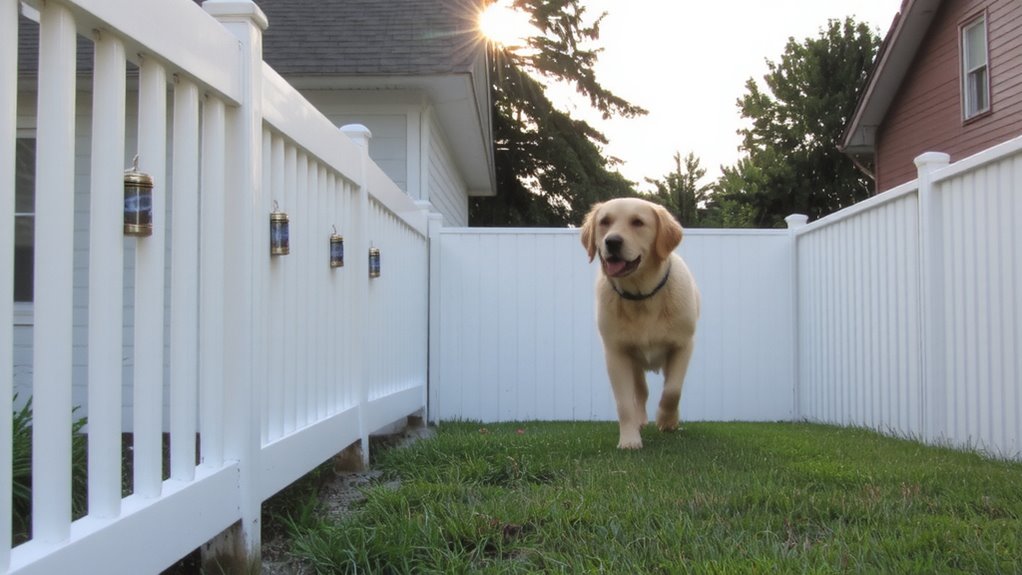
Scent markers act like signposts for blind dogs, guiding them through familiar spaces with confidence. You should attach scent stations every 6 to 8 feet along the perimeter fence. This spacing guarantees consistent boundary recognition, especially when aligned with changes in fence placement, such as corners or gates. Mount each dispenser 8 to 12 inches above ground level-this height aligns with a dog’s natural sniffing range. Use UV-resistant, sealed plastic housings to protect the scent pad from weather. Proper enclosure design enhances scent durability, maintaining effectiveness for up to 30 days outdoors. Replace pads monthly under normal conditions; humidity above 70% reduces longevity by as much as 40%. Secure units with stainless steel brackets to prevent displacement. Consistent placement and long-lasting scent output reduce disorientation. Each unit covers a 7-foot detection arc, enabling seamless navigation when installed in sequence.
Choose Safe, Distinctive Scents for Boundaries
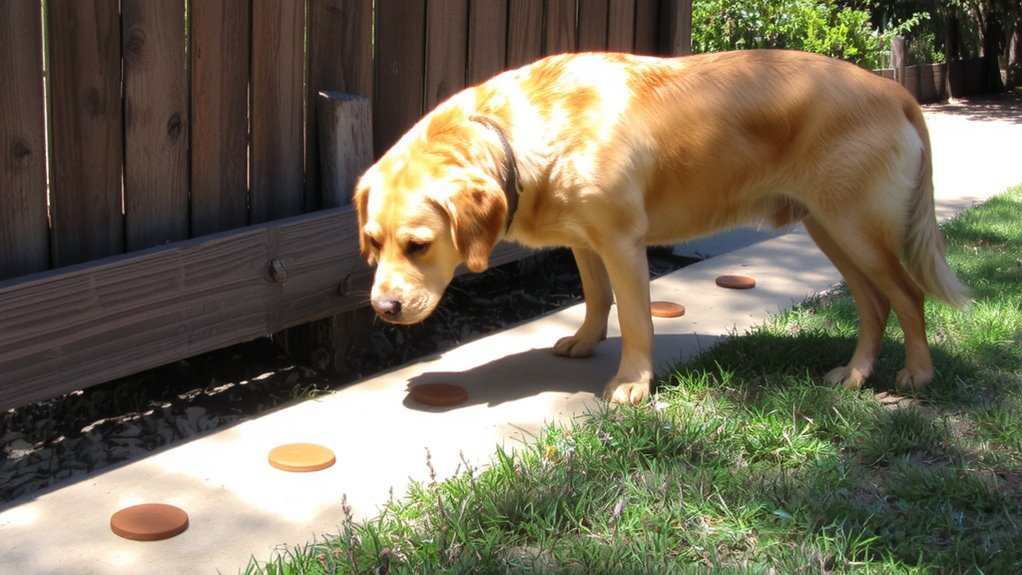
Essential oils and synthetic aroma compounds serve as reliable navigational cues for blind dogs when carefully selected. You must prioritize safety and olfactory distinction. Avoid toxic essential oils like tea tree or eucalyptus; instead, use diluted, pet-safe options. Natural extracts from herbs and citrus provide strong, consistent scent profiles without irritation. Opt for concentrations between 0.5% and 2% in carrier solutions to balance potency and safety.
| Scent Type | Recommended Use |
|---|---|
| Lavender extract | Calming, long-lasting |
| Citrus essential oil | Sharp, easily detected |
| Peppermint natural extract | Cooling, distinctive |
| Rosemary oil | Earthy, resistant to fade |
| Vanilla extract | Mild, universally safe |
Apply these scents at 3-foot intervals along fence markers. Guarantee UV- and water-resistant encapsulation to maintain scent integrity. Use only phthalate-free synthetic aroma compounds when natural extracts degrade too quickly under environmental stress.
Train Your Blind Dog to Recognize Scent Cues
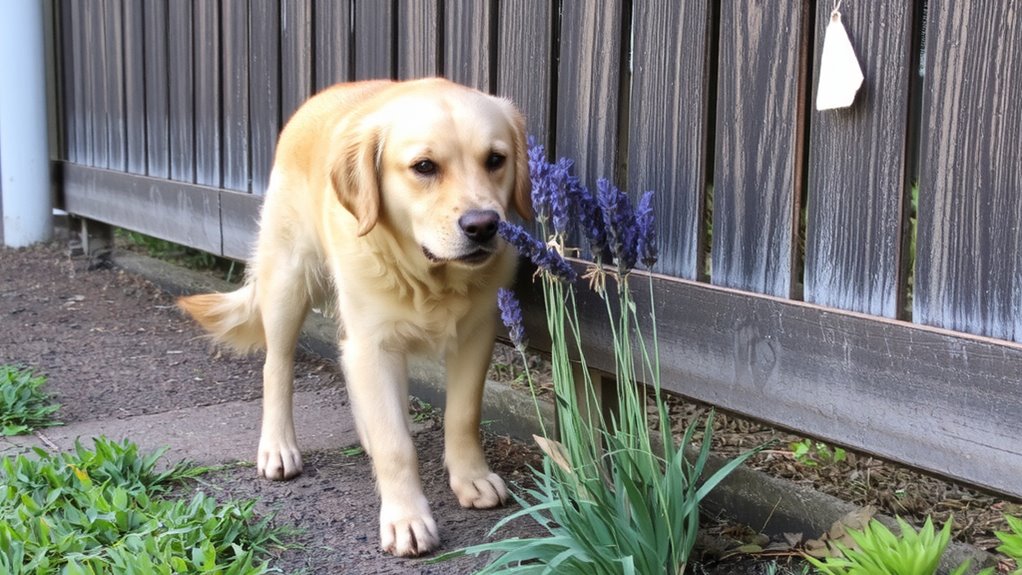
You’ve established safe, distinct scent markers along boundaries, and now it’s time to teach your dog how to use them. Begin with consistency training: visit the same scent post daily at the same time, ideally for 10–15 minutes per session. Lead your dog to the marker and encourage sniffing. The moment they identify the scent, use positive reinforcement-offer a high-value treat or verbal praise. Repeat this process for at least two weeks, ensuring exposure in varying weather conditions. Scent dispersion rates change with humidity; concrete retains odors longer than wood. Use non-toxic, animal-safe aromatic oils diluted to 5–10% concentration. Pair scent detection with directional commands like “left” or “back” to reinforce spatial awareness. Accuracy improves with routine-dogs trained six days a week show 73% faster recognition than those trained sporadically. Precision and persistence are essential.
Refresh Scents With the Seasons
While environmental conditions shift with the calendar, your dog’s reliance on consistent olfactory cues remains constant-so your scent maintenance schedule should adapt accordingly. Adjust your scent rotation schedule to match seasonal changes that affect odor longevity and dispersion. High humidity in summer can prolong scent retention, while winter’s cold air may suppress volatility. Pollen spikes increase seasonal allergy risks, potentially dulling your dog’s nasal sensitivity. Use weather-resistant dispensers and reapply every 4–6 weeks, depending on climate. Below outlines ideal intervals and product types:
| Season | Reapplication Interval | Recommended Scent Type |
|---|---|---|
| Spring | 5 weeks | Hypoallergenic, low-pollen |
| Summer | 4 weeks | UV-stable, moisture-resistant |
| Fall | 6 weeks | Non-irritant, pH-balanced |
Monitor local allergen reports and select scents free of known irritants to minimize seasonal allergy risks. Consistency guarantees clarity.
How Scent Helps Blind Dogs Stay in the Yard
Dogs rely on scent cues to map their environment, and this becomes especially important when traversing yard boundaries without visual input. Your blind dog uses olfactory memory to recognize and recall specific scent markers placed along fence lines. These markers act as invisible boundary signs, guiding movement and preventing wandering. Through sensory adaptation, their nose adjusts to background odors, enhancing detection of intentional scent cues. Proper spacing-every 6 to 8 feet-ensures consistent signal recognition. Use weather-resistant, non-toxic scent discs infused with essential oils like lavender or eucalyptus, which remain detectable for up to two weeks. The olfactory system processes these signals faster than auditory cues, improving response time. Scent strength should measure 0.5–1.0 ml per application to avoid overload. This system leverages natural canine biology, offering a reliable, low-maintenance navigation aid rooted in precise olfactory memory and sensory adaptation.
On a final note
You secure your blind dog’s safety using scent markers along fence lines. Place weather-resistant scent stations every 6 to 8 feet for consistent olfactory guidance. Use non-toxic, essential oil-based blends-like lemongrass or eucalyptus-diluted to 5% concentration in carrier oil. These create a detectable boundary. Scent cues persist for up to 30 days outdoors. Reapply monthly or seasonally to maintain signal integrity, ensuring reliable spatial orientation through canine olfactory mapping.