Hydration Techniques for Pets With Chronic Vomiting
You must control fluid loss in pets with chronic vomiting to prevent organ strain. Offer 1–2 teaspoons of water every 10–15 minutes using a syringe, starting 30 minutes after vomiting stops. Use vet-approved electrolyte solutions with 40–60 mEq/L sodium and 10–30 mEq/L potassium, dosed at 5–10 mL per pound every 1–2 hours. Monitor gum moisture, skin turgor, and capillary refill. Persistent symptoms demand immediate intervention-further strategies are available if signs worsen.
Notable Insights
- Offer 1–2 teaspoons of fluid per hour using a syringe to prevent gastric distension in vomiting pets.
- Administer vet-approved electrolyte solutions with balanced sodium, potassium, and osmolarity for effective rehydration.
- Begin microdosing water every 10–15 minutes only after vomiting has stopped for at least 30 minutes.
- Monitor dehydration signs like dry gums, slow skin turgor, sunken eyes, and prolonged capillary refill time regularly.
- Seek emergency care if vomiting persists over 6 hours, blood appears in vomit, or urine output stops for 12 hours.
Know the Risks of Dehydration in Vomiting Pets
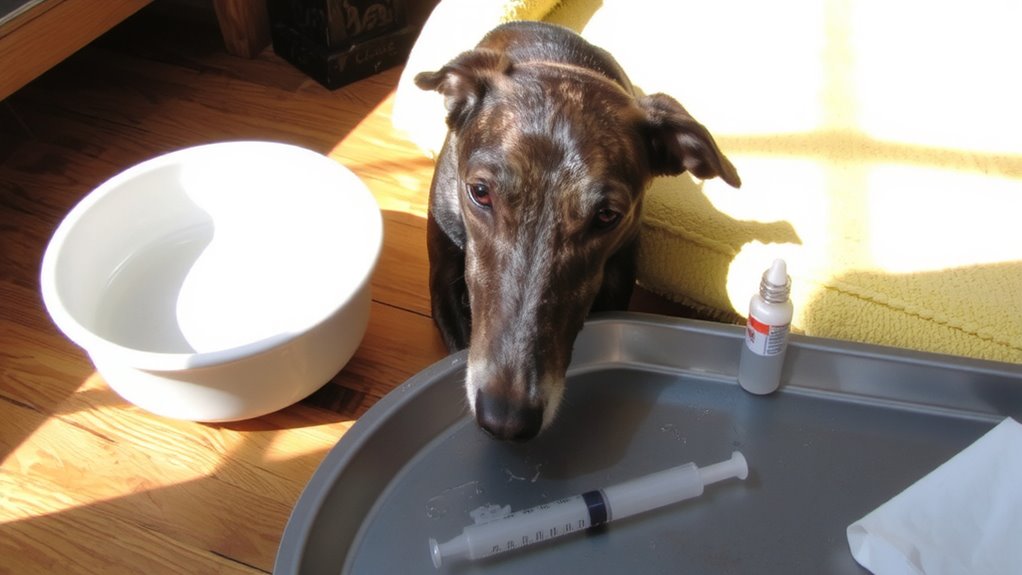
While vomiting may seem like a temporary issue, it can quickly lead to serious dehydration in pets. Dehydration impairs kidney function, reducing the body’s ability to filter waste and maintain electrolyte balance. You’ll notice decreased urine output, dry gums, and poor skin elasticity-signs demanding immediate attention. Vomiting pets lose fluids and essential minerals like sodium and potassium, disrupting normal cellular function. Some medications prescribed for gastrointestinal issues carry side effects that worsen fluid loss or suppress thirst. Common culprits include NSAIDs and certain antibiotics, which may reduce renal blood flow. Impaired kidney function further compounds dehydration, creating a dangerous cycle. You must monitor your pet’s hydration status closely-check capillary refill time and mucous membrane moisture. Even mild dehydration, defined as a 5% loss of body water, affects organ performance. Early recognition prevents progression to shock, organ failure, or death.
Offer Small Fluid Amounts Frequently
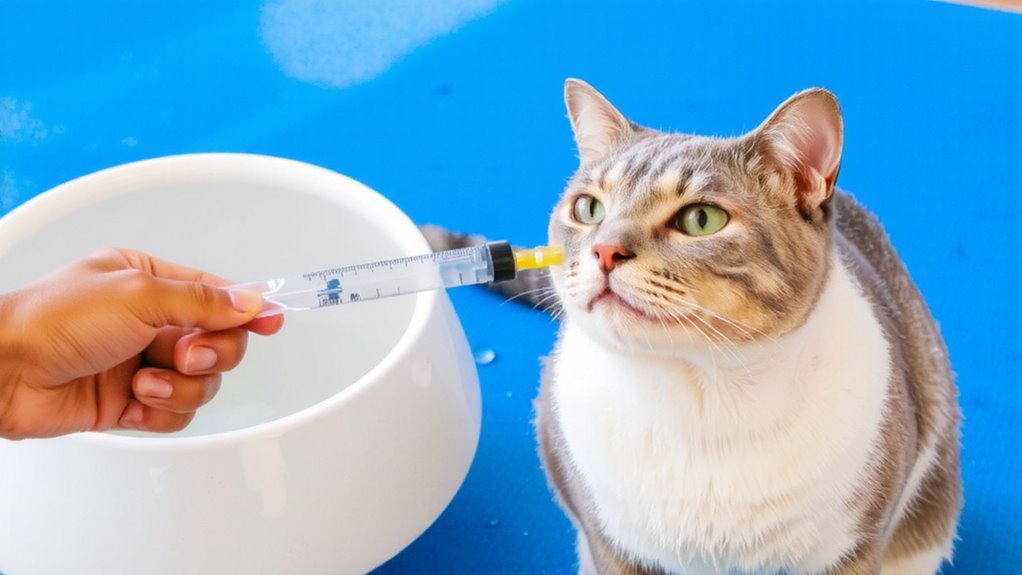
You can break the cycle of dehydration by controlling how your pet takes in fluids. Offer small fluid amounts frequently to prevent stomach overload. Fluid pacing means giving tiny volumes at regular intervals, typically 1–2 teaspoons per hour for cats and small dogs, slightly more for larger breeds. This method reduces vomiting risk and improves absorption. Use a syringe or dosing cup to deliver precise amounts. Microdosing water every 10–15 minutes allows intestinal uptake without triggering reflux. Wait 30 minutes after vomiting before starting. Continue only if no further vomiting occurs. Avoid free access to water. Instead, maintain strict intake control. The goal is consistent hydration without gastric distension. This technique supports mucosal recovery and electrolyte balance. Monitor urine output and gum moisture to assess progress. Adjust frequency based on tolerance. Fluid pacing is a measurable, repeatable process-essential for managing chronic vomiting safely and effectively.
Use Vet-Approved Electrolytes Safely
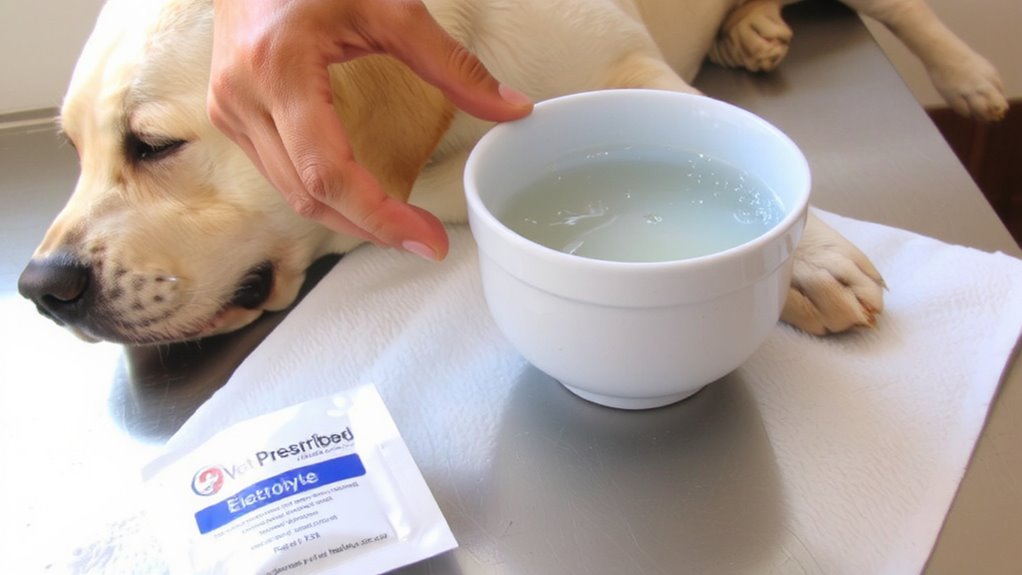
Since plain water alone can’t replace lost electrolytes, using a vet-approved electrolyte solution helps restore sodium, potassium, and chloride levels more effectively. Maintaining proper electrolyte balance is critical during vomiting episodes, as imbalances can impair nerve and muscle function. These formulas are designed for pets, with concentrations calibrated to species-specific needs-typically 40–60 mEq/L sodium, 10–30 mEq/L potassium, and buffered chloride. They enhance absorption efficiency through optimized osmolarity (around 270–320 mOsm/L), promoting faster fluid uptake in the small intestine via cotransport mechanisms. Avoid human drinks like sports beverages, which contain excessive sugar or toxic ingredients like xylitol. Administer 5–10 mL per pound body weight every 1–2 hours, depending on vet guidance. The solution should be fresh and unflavored, with no artificial additives. Correct electrolyte formulation supports cellular hydration, reduces strain on the kidneys, and stabilizes cardiac rhythms during recovery.
Watch for Dehydration Warning Signs
How can you tell if your pet is becoming dehydrated during a vomiting episode? Check for sunken eyes, a clear clinical sign of fluid loss. Normal eyes are bright and full; when they appear recessed, dehydration is likely present. Lift your pet’s lip and assess the gums. Dry gums indicate inadequate hydration, unlike moist, slick gums seen in well-hydrated animals. Perform the capillary refill test: press a finger on the gum until it blanches, then release. Normal refill time is 1–2 seconds. Delayed refill (over 2 seconds) suggests poor circulation from fluid depletion. Monitor skin turgor by gently pulling the skin at the nape. In dehydrated pets, the skin retracts slowly or remains tented. These signs-sunken eyes, dry gums, prolonged refill time, and slow skin elasticity-are measurable, objective markers. Track them every few hours during vomiting episodes.
Seek Emergency Care When Needed
When should you rush your pet to the vet during a vomiting episode? Look for emergency symptoms that signal a critical need for immediate intervention. If your pet shows signs like continuous vomiting, blood in vomit, lethargy, or abdominal pain, seek emergency care. These indicators often point to life-threatening conditions such as obstruction, intoxication, or pancreatitis. A prompt vet visit can make the difference between recovery and severe complications. Dehydration worsens rapidly with persistent vomiting, reducing electrolyte levels and impairing organ function. Below are key emergency symptoms requiring urgent attention:
| Symptom | Significance |
|---|---|
| Vomiting over 6 hours | Risk of severe dehydration |
| Blood in vomit | Possible GI ulcer or foreign body |
| No urine in 12 hours | Indicates kidney strain or failure |
| Weak pulse | Sign of circulatory compromise |
| Collapse | Immediate emergency; seek vet visit now |
Support Hydration Long Term
While acute vomiting episodes demand immediate attention, sustaining hydration over the recovery period is just as critical for your pet’s long-term health. Subcutaneous hydration is a reliable method you can use at home under veterinary guidance. Using sterile technique, administer Lactated Ringer’s Solution under the skin at 10–20 ml per pound, as directed. This technique bypasses the gastrointestinal tract, ensuring fluid absorption even during ongoing nausea. You’ll notice skin tenting diminish as hydration improves. Concurrently, increase dietary moisture to support fluid balance. Feed moisture-rich prescription diets or add water to kibble-aim for at least 70% water content in meals. Canned foods typically contain 75–80% moisture versus 10–12% in dry kibble. Monitor daily water intake; a 10 lb pet needs approximately 8–10 oz of total fluids daily. Consistent monitoring and intervention prevent relapses and support renal and gastrointestinal recovery.
On a final note
You must act quickly to prevent severe dehydration in pets with chronic vomiting. Offer 5–10 mL of water or vet-approved electrolyte solution per pound of body weight every 15–30 minutes. Monitor skin turgor, gum moisture, and capillary refill time; values outside 1–2 seconds indicate concern. Seek immediate veterinary care if signs worsen. Long-term hydration support may require subcutaneous fluids. Consistency and precise measurement are critical.