Reassessing Grooming Frequency for Less Active Indoor-Only Senior Rabbits
Your senior rabbit sheds less due to a 20–30% drop in metabolic rate, reducing grooming needs. Brush every one to two weeks using a soft rubber curry or fine-toothed slicker brush. Focus on hips and thighs to prevent matting, especially in high-fur-density breeds. Light pressure prevents skin injury, as elasticity declines with age. Sessions should last 5–7 minutes in quiet, calm environments. Dull coat or flaky skin may signal underlying issues. Watch for behavioral changes-further signs point to deeper concerns you’ll want to address early.
Notable Insights
- Less active senior rabbits require grooming every one to two weeks due to reduced shedding and lower activity levels.
- Coarser, thinner fur in aging rabbits decreases matting risk but increases skin fragility during brushing.
- Use soft-bristle brushes and limit sessions to 5–7 minutes to prevent stress and skin damage.
- Focus grooming on thigh and hip areas where mats commonly form, especially in high-fur-density breeds.
- Monitor for dull coat, patchy thinning, or skin issues, as these may indicate underlying health problems needing vet care.
Why Senior Rabbits Need Less Frequent Grooming
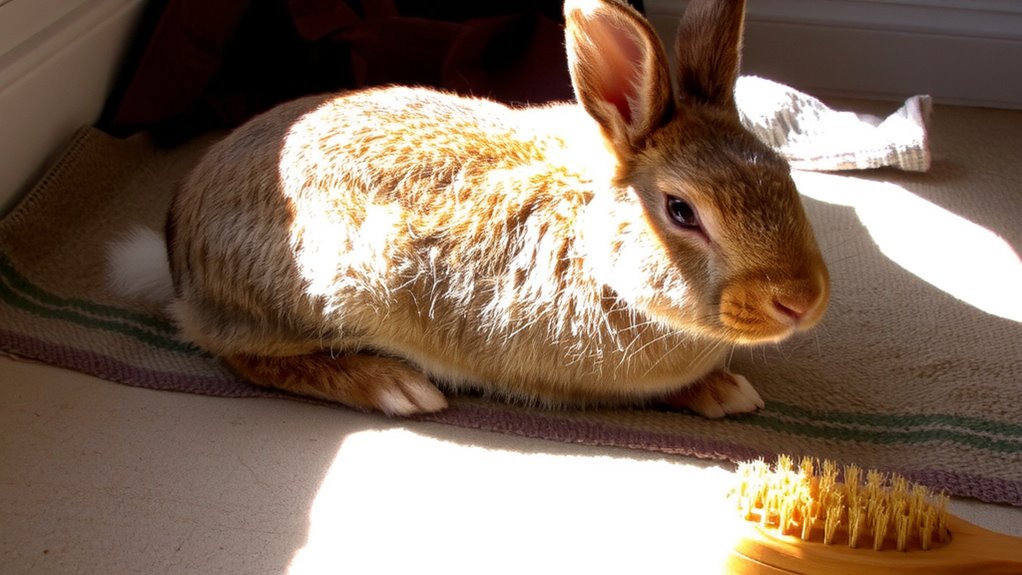
Often, senior rabbits require less frequent grooming due to natural changes in their coat and activity levels. As rabbits age, their coat texture becomes coarser and thinner, reducing mating risks. This change decreases the need for daily brushing. Skin elasticity also declines with age, making the skin more fragile and prone to injury during vigorous grooming. You should adjust your tools accordingly-use soft-bristled brushes instead of metal combs to avoid trauma. Reduced mobility in older rabbits means they self-groom less, but overhandling can cause stress. Their lower metabolic rate correlates with decreased sebaceous gland activity, leading to less oil buildup. These physiological shifts collectively reduce debris retention in fur. Consequently, weekly or biweekly sessions often suffice. Monitoring coat condition and skin health between sessions guarantees timely intervention without unnecessary interference. When grooming, don’t forget to check nail length, as overgrown nails can affect mobility-using proper rabbit nail clippers makes trimming safer and more efficient.
How Often to Brush Indoor-Only Older Rabbits
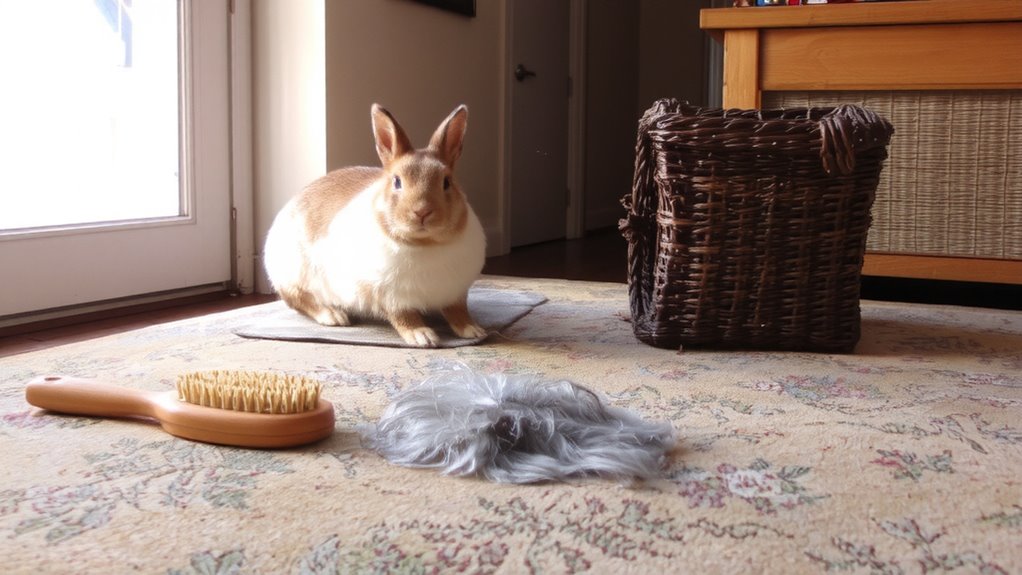
Generally, you’ll want to brush your indoor-only senior rabbit once every one to two weeks. This frequency balances hygiene with reduced stress. Older rabbits are less active, so natural fur shedding slows. Fur density decreases with age, especially in short-haired breeds, requiring less frequent detangling. For high-fur-density breeds like Rex or Flemish Giants, maintain biweekly brushing to prevent matting. Use soft-bristle brushes or fine-tooth combs-these support gentle, effective brushing techniques. Start at the head and move posteriorly, following hair growth direction. Apply light pressure to avoid skin irritation. Focus on thigh and hip areas, where matting commonly occurs due to limited mobility. Effective brushing removes loose keratinized hairs, reducing ingestion during self-grooming. It also stimulates dermal blood flow, promoting skin health. Avoid excessive brushing; overstimulation may cause skin abrasion or anxiety. Adjust interval based on visual inspection-weekly if fur accumulation is evident, monthly if sparse.
Cleaning Your Inactive Bunny Without Stress
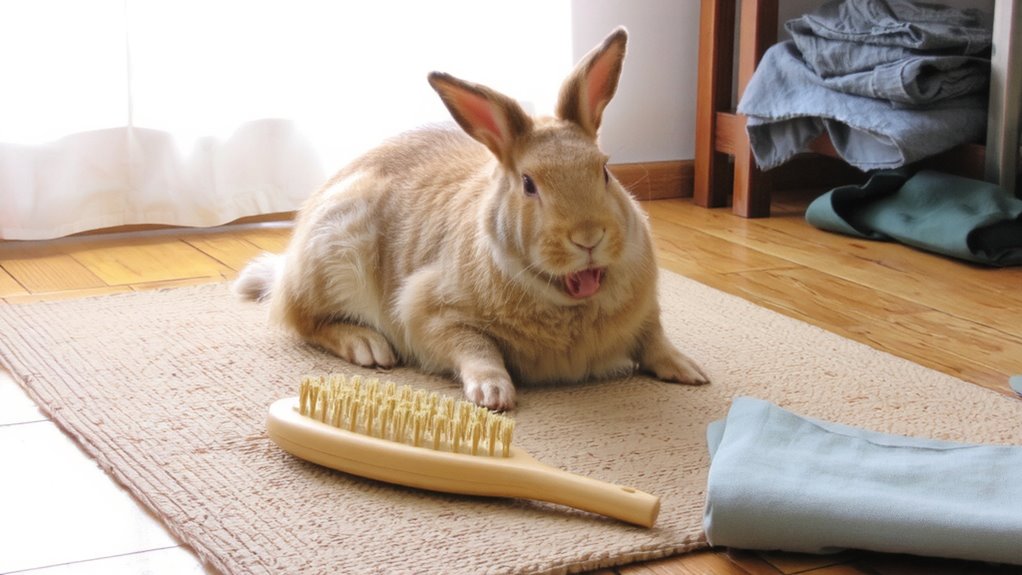
While your senior rabbit may no longer move with the energy of youth, keeping their coat and skin clean remains essential for preventing health issues. Use soft-bristle grooming tools like a rubber curry brush (approximately 2.5 inches wide) or fine-toothed slicker brush to remove loose fur and debris without irritating sensitive skin. Apply light pressure-excessive force can cause discomfort or abrasions. Limit sessions to 5–7 minutes daily to support stress reduction, aligning with veterinary behavioral guidelines. Work in quiet environments, ideally during the rabbit’s calmest hours, usually morning or early evening. Choose tools with non-slip handles for better control and precision. Avoid metal combs near delicate areas such as the vent or dewlap. Regular, gentle cleaning prevents matting and soiling, especially in low-mobility rabbits. Consistent use of appropriate grooming tools enhances hygiene while minimizing physical and psychological strain. This method guarantees cleanliness through proactive, low-impact care.
Warning Signs of Grooming-Related Health Issues
A clean coat doesn’t always mean a healthy rabbit-subtle changes in your senior bunny’s skin and fur can signal underlying problems, even with consistent grooming. Matted fur is a red flag; it traps moisture and waste, raising ammonia exposure and increasing dermatitis risk. Mats form when rabbits can’t reach certain areas due to stiffness or arthritis. Check under the chin, behind ears, and along the back daily. A dull coat instead of silky, lustrous fur often indicates malnutrition or dehydration. Healthy rabbit fur is dense, 2–3 cm in length, and sheds evenly. Patchy thinning, excessive dandruff, or greasy texture suggest parasitic infestation or hormonal imbalance. Skin should be supple and pale pink-never flaky or ulcerated. These signs demand adjustments in care and preparation for veterinary assessment.
When to Take Your Senior Rabbit to the Vet
How often should you call the vet when your senior rabbit seems just a little off? Immediately. Subtle changes may signal serious conditions. Conduct biweekly weight monitoring using a digital gram scale; a drop of 10% or more in body weight over two weeks demands urgent evaluation. Perform monthly dental checks; overgrown molars or spurs can cause silent pain and anorexia. Senior rabbits cannot afford delayed care. Signs like reduced grooming, moist forelegs, or fecal soiling often reflect underlying pain or dental disease. Monitor eating habits closely-cessation of cecotrope consumption or diminished fiber intake worsens gut motility. Any deviation from baseline behavior warrants a veterinary consultation within 24 hours. Early intervention improves prognosis markedly. Rabbits mask illness well; by the time symptoms are obvious, disease is often advanced. Routine professional exams every six months help catch issues before clinical decline. Preventative care extends quality lifespan.
On a final note
You should adjust grooming routines for senior indoor rabbits. Less frequent brushing-every 7 to 10 days-prevents skin stress. Use a soft slicker brush with 0.5 mm wire bristles. For inactive rabbits, spot-clean with pH-balanced wipes (pH 6.5). Monitor for matted fur, soiling, or skin lesions. Over-grooming risks epidermal abrasion. These steps maintain coat and skin integrity without strain.