Hypoallergenic Booth Filters Vital for Asthmatic Groomers Handling High-Shedding Breeds
You need hypoallergenic booth filters because they capture 99.97% of particles as small as 0.3 microns, including dander from high-shedding breeds like Huskies and Goldens. These HEPA-grade filters, rated H13 or higher, integrate into booth airflow systems operating at 150–200 CFM, removing contaminants fast. Sealed housings prevent air bypass, ensuring efficiency. Unlike carbon or electrostatic filters, true HEPA doesn’t emit ozone. Replace every 6–12 months for consistent performance. Discover how filter specs directly impact your respiratory health and long-term safety.
Notable Insights
- Hypoallergenic booth filters with HEPA H13 ratings capture 99.97% of dander and dust particles as small as 0.3 microns.
- High-shedding breeds release excessive dander and hair, drastically reducing air quality without proper filtration.
- HEPA filters integrated into grooming booths remove airborne allergens at 150–200 CFM for rapid air cleaning.
- Electrostatic and carbon filters are inadequate alone; HEPA is essential for asthma-safe, hypoallergenic performance.
- Regular maintenance, including HEPA replacement every 6–12 months, ensures sustained protection for asthmatic groomers.
Why Asthmatic Groomers Need Hypoallergenic Booth Filters
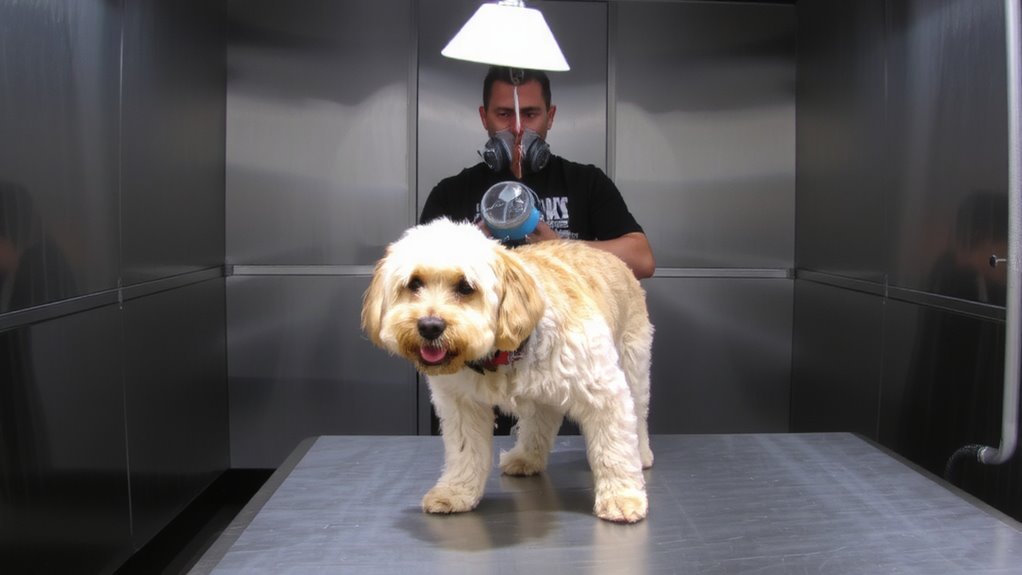
While grooming animals indoors, you’re often exposed to airborne allergens like dander, hair, and dust-particles that can trigger asthma symptoms in sensitive individuals. Hypoallergenic booth filters are essential for reducing these contaminants. These filters typically use HEPA-grade media, capturing 99.97% of particles as small as 0.3 microns. They integrate directly into the grooming station’s airflow system, continuously pulling contaminants from your breathing zone. Proper booth lighting enhances visibility, allowing you to monitor both pet and grooming tools while maintaining safety. The filtered air circulation operates at 150–200 cubic feet per minute (CFM), ensuring rapid particle removal. This airflow prevents allergen accumulation without disrupting your workflow. High-efficiency filters require replacement every 6–12 months, depending on usage. By combining strong booth lighting, reliable grooming tools, and medical-grade filtration, these systems create a safer, controlled environment-critical when managing asthma in professional grooming settings.
How Shedding Breeds Worsen Booth Air Quality
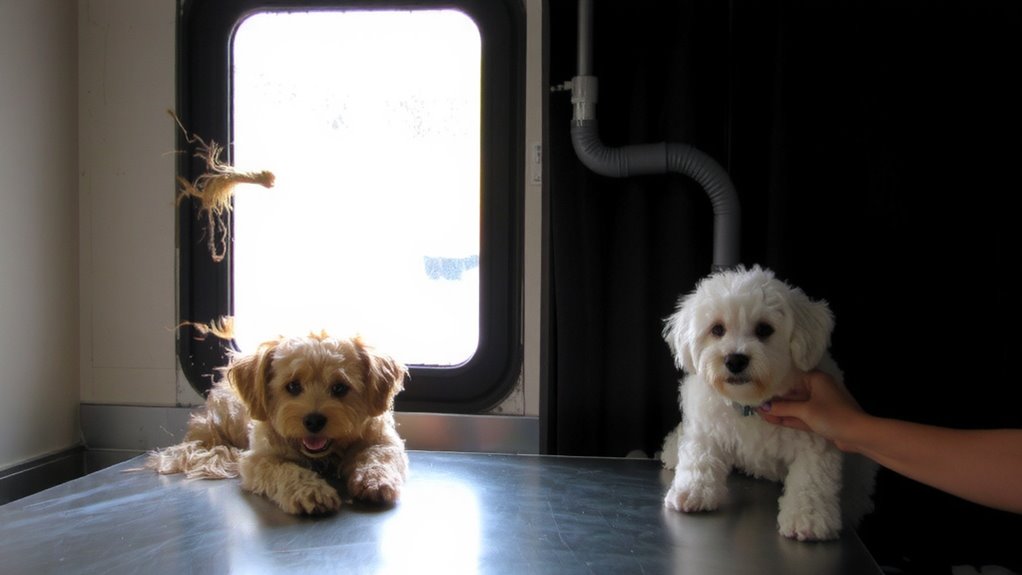
Since shedding breeds release large amounts of dander and loose hair during grooming, your booth’s air quality degrades rapidly without proper filtration. Poor air circulation allows allergens to linger, increasing respiratory risks-especially for asthmatic groomers. High-efficiency filters are essential to maintain clean working conditions. Without them, particles recirculate, reducing filter efficiency and worsening indoor air quality.
| Particle Type | Size (microns) |
|---|---|
| Dog dander | 1–10 |
| Loose fur | 50–100 |
| Allergen-carrying dust | 0.5–5 |
| Pollen (common) | 10–30 |
| Mold spores | 3–12 |
These airborne particles accumulate quickly in poorly filtered booths. Effective filtration systems capture over 99% of particles down to 1 micron. Best air circulation guarantees repeated pass-through of contaminated air, maximizing filter efficiency. Upgrading your booth’s system reduces exposure and supports consistent respiratory protection during long grooming sessions.
What Makes a Filter Truly Hypoallergenic and Asthma-Safe?
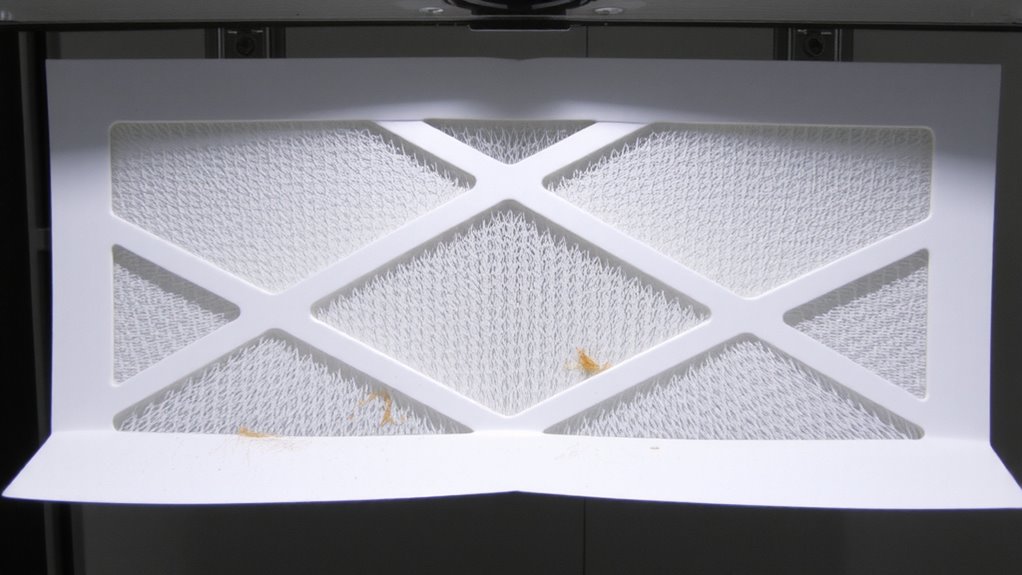
A truly hypoallergenic and asthma-safe filter isn’t just marketed as clean-it’s engineered to perform. It guarantees air purity by capturing 99.97% of particles as small as 0.3 microns, including pet dander, pollen, and dust mites. You need a filter with a certified HEPA standard-this filter certification guarantees laboratory-tested efficiency and consistent performance. Look for filters labeled H13 or higher; these meet medical-grade air cleaning benchmarks. Without certification, claims about air cleanliness are unreliable. The filter media must be uniformly dense, with no gaps or weak seams, to prevent leakage. Sealed housing units with gaskets further protect against bypass. Think of it like a sieve with precision spacing-only smaller. Real protection comes from verifiable specs, not marketing terms. Your respiratory safety depends on proven filtration, not promises. Choose certified performance.
HEPA vs Carbon vs Electrostatic: Best Filter for Pet Dander
You already know certified HEPA filtration sets the standard for asthma-safe air, capturing ultrafine particles like dander and dust mites with 99.97% efficiency at 0.3 microns. HEPA is unmatched for pet dander removal. Carbon filters adsorb odors and volatile organic compounds but don’t capture dander effectively. They’re best when paired with HEPA, not used alone. Electrostatic filters attract particles using an electric charge, offering decent initial efficiency. However, they produce ozone emissions-harmful for asthmatic groomers. Ozone worsens respiratory symptoms and compromises air quality. Unlike HEPA, electrostatic filters degrade over time, reducing efficiency. Their filter lifespan is shorter due to charge dissipation. HEPA filters last 6–12 months with consistent airflow and minimal maintenance. Carbon layers need replacement every 3–6 months. For high-shedding breeds, only true HEPA guarantees sustained, safe air quality without harmful byproducts. Choose HEPA for reliability, safety, and proven performance.
Key Features of Asthma-Safe Grooming Booth Filters
Certified HEPA filtration is the cornerstone of any asthma-safe grooming booth. It captures 99.97% of particles as small as 0.3 microns, including pet dander and allergens. High filter efficiency guarantees minimal irritants escape into the air you breathe. These filters use dense, layered fiberglass media to trap microscopic debris. However, high efficiency shouldn’t compromise airflow resistance. A well-designed filter maintains low resistance-below 1.2 inches of water gauge-so the booth’s fan doesn’t overwork. This balance keeps suction strong while reducing motor strain and noise. Look for filters with a rated airflow of 800–1,200 cubic feet per minute (CFM) to match standard grooming booth systems. Sealed edges prevent leaks, guaranteeing all air passes through the media. Together, maximum filter efficiency and controlled airflow resistance create a reliable barrier between you and airborne allergens-without sacrificing booth performance.
How Hypoallergenic Filters Reduce Asthma Flare-Ups on the Job
HEPA-grade hypoallerg Newton filters dramatically cut airborne allergens in grooming environments, directly lowering asthma trigger exposure. These filters capture 99.97% of particles as small as 0.3 microns, including pet dander, pollen, and dust-common irritants during high-shedding breed sessions. Effective air purification reduces the concentration of suspended allergens, which means fewer asthma-inducing particles enter your lungs. The booth’s sealed design works with the filter to create negative pressure, pulling contaminants away from your breathing zone. Consistent use supports long-term respiratory wellness by minimizing chronic inflammation risks. Filters with activated carbon layers also adsorb odors and volatile organic compounds, enhancing indoor air quality. For maximum performance, airflow must meet 100–150 CFM, ensuring rapid air exchange. This precision engineering isn’t overkill-it’s essential protection tailored for sensitive systems.
How to Maintain Your Hypoallergenic Booth Filter for Long-Term Protection
While proper maintenance won’t extend a filter’s life beyond its design limits, it guarantees peak efficiency throughout its service cycle. You should inspect your hypoallergenic booth filter weekly for visible debris and clogging, especially when grooming high-shedding breeds. Clean pre-filters monthly using mild detergent and let them dry completely-this supports airflow optimization. Check the manufacturer’s gauge or manometer monthly; a pressure drop of 20% signals declining performance. Most HEPA-grade booth filters require filter replacement every six to twelve months under regular use, or sooner if airflow drops despite cleaning. Replace seals and gaskets annually to prevent leakage. A well-maintained system assures 99.97% capture efficiency on particles as small as 0.3 microns. Consistent upkeep sustains respiratory protection, keeping allergen levels low and air quality high.
On a final note
You need a hypoallergenic booth filter that captures 99.97% of particles as small as 0.3 microns. HEPA filters meet this standard, effectively trapping pet dander and allergens. Carbon filters remove odors but not fine particulates. Electrostatic options offer reusable convenience but vary in efficiency. Replace HEPA filters every 6–12 months, depending on workload. Proper sealing and MERV 16+ ratings guarantee sustained air quality. This reduces asthma triggers in high-shedding breed environments.