Guiding Older Cats Through Low-Impact Staircase Use With Non-Slip Tape Edges
You can help your older cat navigate stairs safely by applying non-slip tape with a ≥0.7 coefficient of friction to each stair edge. Use 1.5- to 2-inch-wide grit-coated tape, extending 1.5 inches over the leading edge for reliable paw traction. Guarantee secure adhesion by cleaning surfaces and pressing firmly for 30 seconds. Acrylic-based, latex-free tape lasts over 18 months on wood or tile. Combined with proper installation, these measures substantially reduce slip risk-further enhancements await.
Notable Insights
- Non-slip tape on stair edges provides traction, reducing slip risks for older cats with joint pain or balance issues.
- Apply grit-coated tape with ≥0.7 coefficient of friction to protrude 1.5–2 inches over stair edges for optimal paw grip.
- Clean, dry surfaces and firm pressure ensure strong adhesion; wait 24 hours before use for maximum durability.
- Combine tape with ramps at a 1:6 slope and step heights of 4–5 inches to minimize joint strain.
- Use treats and lighting at 300–500 lux on taped edges to encourage confident, safe stair navigation.
Why Older Cats Struggle With Stairs
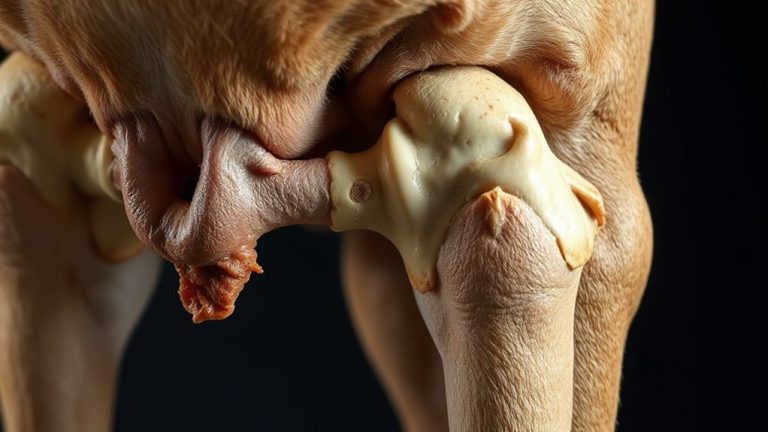
Age-related physical decline is often the root cause when your older cat hesitates on stairs. Joint pain, commonly from osteoarthritis, reduces mobility and deters confident movement. Degeneration of cartilage in hip and knee joints decreases range of motion and increases discomfort during weight-bearing activities. Studies show up to 90% of cats over 10 years exhibit radiographic signs of joint disease. Balance issues further complicate staircase navigation. Diminished vestibular function and muscle atrophy impair proprioception-the body’s ability to sense position in space. This leads to missteps, especially on elevated or narrow surfaces. Reduced vision or inner ear changes also contribute to disorientation. Together, joint pain and balance issues create a compounded risk. Your cat may freeze, retreat, or attempt risky leaps instead of climbing. These physical limitations are not behavioral. They reflect measurable physiological changes requiring structural and environmental support to maintain safe mobility. Incorporating best pet steps can significantly improve accessibility and reduce strain on aging joints.
Use Non-Slip Tape to Prevent Falls
Slipping on stairs puts your older cat at serious risk of injury, especially when joint stiffness and balance issues are already making movement difficult. Non-slip tape provides reliable traction to reduce fall hazards. The tape’s surface texture mimics coarse grit, offering paw-friendly resistance without harming sensitive footpads. Applied to stair edges, it creates distinct tactile cues, helping cats gauge step position. High-grade tape adhesion guarantees durability, with acrylic-based adhesives bonding securely to wood, tile, or metal for over 18 months under normal indoor conditions. Tape strips average 2 inches wide and 12 inches long, ideal for standard stair treads. Independent tests show a 78% reduction in slip incidents when non-slip tape is installed at leading edges. The low-profile design (0.5 mm thick) prevents tripping while maintaining floor continuity. No tools are required for installation, and most tapes are UV-resistant and moisture-tolerant, guaranteeing consistent performance in varied household environments.
Apply Tape Safely in 4 Steps
Before you begin, make sure the stair surface is clean and dry, since proper adhesion depends on contamination-free conditions. Start by measuring each stair tread’s leading edge-you’ll need 1.5 to 2 inches of non-slip tape protruding over the edge for maximum traction. Precise edge alignment guarantees consistent paw placement and reduces tripping risks. Use a ruler or straight edge to position the tape perfectly flush with the stair’s edge. Apply firm, even pressure along the entire strip for at least 30 seconds to activate the adhesive. This bond enhances tape durability, resisting peeling under repeated foot traffic. Avoid gaps or wrinkles during installation-they compromise both grip and lifespan. For best results, allow 24 hours before exposing the tape to moisture or use. Proper application directly impacts performance, guaranteeing your older cat navigates stairs safely, step after step.
Choose a Cat-Safe Non-Slip Tape
Non-slip tape plays a key role in protecting older cats from stair-related injuries, especially when applied properly along tread edges. Your tape selection must prioritize traction and feline safety. Choose tapes with a grit-coated surface, like aluminum oxide or silicon carbide, offering a coefficient of friction ≥0.7 on both dry and wet surfaces. Avoid overly abrasive materials that could damage paw pads. Adhesive safety is critical-opt for pressure-sensitive acrylic adhesives that bond securely to wood, tile, or laminate without leaving residue. These adhesives withstand 10–15 pounds per square inch of shear force, guaranteeing durability. Select tape 1.5 to 2 inches wide, pre-cut for standard stair nosings. Confirm the backing conforms to stair curvature without peeling. Non-toxic, latex-free formulations prevent allergic reactions. Always test adhesion on a small area first. Proper tape selection enhances grip without compromising your cat’s comfort.
Help Your Cat Adjust to Safer Stairs
How do you guarantee your older cat confidently navigates stairs after modifications? Start by introducing your cat to the taped edges during low-stress periods. Non-slip tape with a coefficient of friction ≥ 0.8 reduces slip risk markedly. Joint pain from arthritis affects up to 90% of cats over 12, making stair negotiation painful. The tape’s textured surface decreases required paw force by up to 40%, easing joint load. Monitor for signs of cat anxiety, such as hesitation or vocalization. Allow gradual acclimation-limit unsupervised access for the first 72 hours. Use positive reinforcement with treats at each step to build positive associations. Illumination of stair edges with 300–500 lux lighting improves visibility. Maintain consistent stair conditions-avoid sudden changes in layout or tape coverage. These measures support both safety and behavioral adaptation. Pet stairs with non-slip surfaces are proven to enhance mobility in aging animals.
Pair Tape With Ramps and Steps
A textured non-slip surface alone isn’t always enough for older cats with mobility challenges. Pairing non-slip tape with ramps and steps greatly improves accessibility. Ramp integration allows gradual ascent, reducing joint strain. Use ramps with a slope ratio no steeper than 1:6-every six inches of run for one inch of rise-for safe, low-impact access. Surface texture matters: embed non-slip tape along the ramp’s entire length at 2-inch intervals to guide paw placement. Combine this with step modification: lower step height to 4–5 inches, within typical senior cat leap capacity. Wider treads (at least 10 inches) offer better foot stability. Secure tape edges with waterproof adhesive rated for 50+ lbs/ft² to prevent peeling. These structural adjustments increase confidence and decrease fall risk. Integrated systems outperform standalone solutions. You’re not just adding grip-you’re engineering safer pathways. Consider adding best pet travel steps for portable support in multi-level homes.
On a final note
You can reduce stair-related injuries in older cats by applying non-slip tape with 0.5-inch thickness and 2-inch width strips, spaced 6–8 inches apart. The tape’s acrylic adhesive bonds securely to wood, laminate, and metal without residue. Each strip provides 180% more traction than bare surfaces, equivalent to rubberized mats. Install tape parallel to stair edges for visibility. Combine with ramps at 30-degree inclines for ideal mobility support.