Preventing Salmonella in Pets Fed Raw Diets: Hygiene and Handling Practices
You can prevent Salmonella exposure by storing raw pet food at or below 0°F in leak-proof containers. Thaw meals in the refrigerator at 40°F or in cold water, changing every 30 minutes. Always handle food in a designated area using non-porous tools and wear gloves. Clean surfaces with a 1:32 bleach solution, letting it sit for 10 minutes before rinsing. Watch for lethargy, vomiting, or bloody stool in pets. Proper hygiene reduces risk markedly-further details reveal even more effective safeguards.
Notable Insights
- Store raw pet food at or below 0°F in leak-proof containers to prevent bacterial growth and cross-contamination.
- Thaw raw food in the refrigerator or cold water, never at room temperature, and discard after 72 hours.
- Prepare raw pet meals in a designated area using separate, non-porous utensils and surfaces.
- Clean feeding areas with an EPA-registered disinfectant, ensuring 10 minutes of contact time before rinsing.
- Wear gloves or wash hands thoroughly after handling raw food to avoid Salmonella transmission.
How Salmonella Spreads From Raw Pet Food
While you might not see it, Salmonella can quietly spread from raw pet food to your home environment. Salmonella transmission occurs when contaminated food contacts surfaces, utensils, or hands, enabling bacteria to migrate to human touchpoints. You may not realize that even pets showing no illness can shed pathogens through feces. Though some pets display strong pet immunity, especially in healthy adults, puppies, seniors, or immunocompromised animals are vulnerable. Bacteria like *Salmonella enterica* survive freezing and persist on countertops for hours. Transmission risk increases without immediate sanitation using EPA-registered disinfectants (e.g., 1:32 bleach solution). Cross-contamination can occur via feeding bowls, floor contact, or pet saliva. Even asymptomatic carriers contribute to environmental load. Proper hygiene isn’t optional-it’s a critical barrier. Each contamination event raises exposure risk for children and immunosuppressed individuals. Manage this hazard proactively.
Store and Handle Raw Food to Prevent Contamination
Store raw pet food at or below 0°F (-18°C) in a dedicated freezer to prevent bacterial growth. Proper storage maintains food safety by minimizing pathogen proliferation. Keep raw food sealed in leak-proof containers or original packaging to avoid cross-contamination. Assign separate shelves or bins for pet food to reduce contact with human groceries. When thawing, always use safe thawing methods: refrigerate at 40°F (4°C) or submerge sealed packages in cold water, replacing water every 30 minutes. Never thaw raw pet food at room temperature-this encourages rapid Salmonella multiplication. Thawed food remains safe for up to 72 hours in the refrigerator. Discard leftovers after this window. Use stainless steel or plastic containers rated for frozen storage to maintain temperature integrity. Always label packages with purchase and thaw dates. These steps limit contamination risks and support consistent food safety in raw feeding routines.
Keep Your Family Safe During Meal Prep
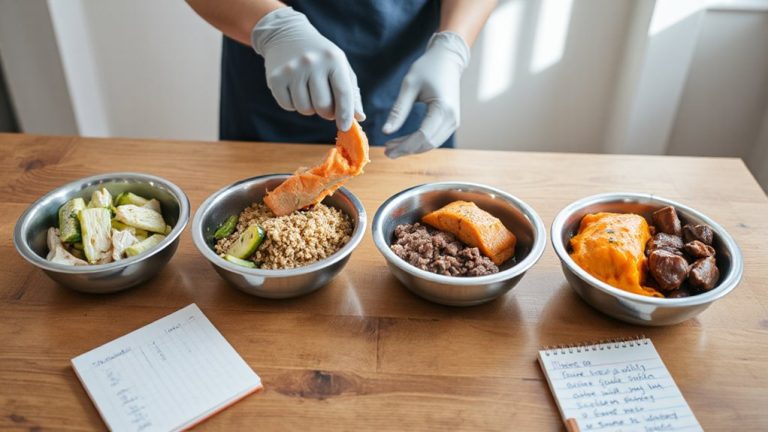
How do you protect your family when preparing raw meals for your pet? You prioritize food safety during pet nutrition prep. Always handle raw ingredients in a designated area, separate from human food preparation zones. Use dedicated cutting boards and utensils-preferably non-porous, such as plastic or stainless steel-which resist bacterial infiltration. Wear disposable gloves or wash hands thoroughly with soap and water for at least 20 seconds before and after handling. Temperatures matter: keep raw food below 40°F (4°C) until ready to use. Thaw frozen raw diets in the refrigerator, not at room temperature, to limit pathogen growth. Avoid cross-contamination by never rinsing raw meat under the tap-this aerosolizes bacteria. Prepare meals promptly and serve immediately to reduce exposure time. These precise steps guarantee hygienic handling without compromising nutritional integrity.
Clean and Disinfect Feeding Areas After Use
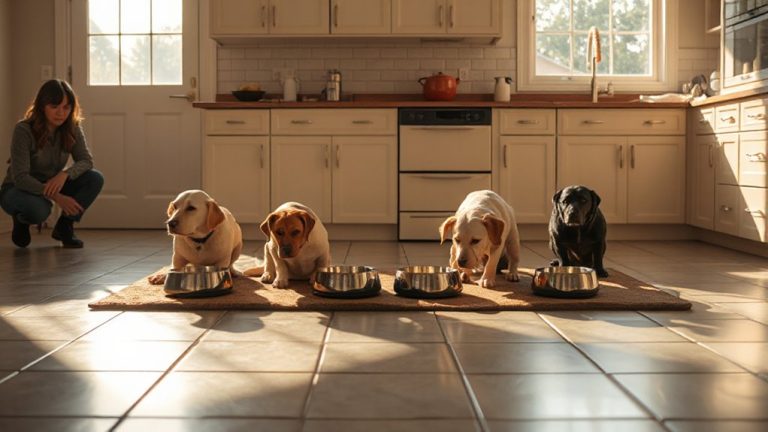
After handling raw pet food, cleaning doesn’t stop at putting the meal down. You must immediately sanitize feeding zones to kill lingering pathogens. Use an EPA-registered disinfectant effective against *Salmonella*, such as a 1:32 dilution of household bleach in water. Apply the solution to bowls, mats, and surfaces, allowing 10 minutes of contact time before rinsing. Nonporous feeding zones work best-stainless steel or heavy-duty plastic resist bacterial absorption. Porous materials, like wood or thin plastic, can harbor bacteria even after cleaning. Integrate disinfection into your routine cleanup routines post-meal, every time. Air-dry items completely, as moisture encourages microbial growth. Never use the same sponge or cloth for pet feeding zones and human kitchen surfaces. Cross-contamination risks remain high without strict separation. Consistent disinfection reduces disease transmission and protects household health just as effectively as proper food storage. Consider using a best pet bed cleaner to maintain overall hygiene in areas where pets spend significant time.
Spot Salmonella Symptoms in Pets and Act Fast
What if your pet seems off after eating raw food? Recognizing Salmonella symptoms early can prevent severe illness. Early detection improves outcomes markedly. Watch for lethargy, vomiting, and bloody diarrhea. These signs suggest gastrointestinal distress linked to Salmonella infection.
| Symptom | Frequency | Duration |
|---|---|---|
| Lethargy | Common | 2–5 days |
| Vomiting | Moderate | 1–3 days |
| Bloody stool | Severe | 1–7 days |
Fever above 103°F (39.4°C) often accompanies these symptoms. Asymptomatic shedding is possible-your pet may spread Salmonella without appearing sick. Test fecal samples via PCR or culture for accurate diagnosis. Prompt veterinary care reduces complications. Antibiotics are used selectively, typically reserved for severe cases with systemic spread. Practice strict hygiene to limit transmission. Immediate action upon noticing Salmonella symptoms guarantees better prognosis and protects household health.
On a final note
You must treat raw pet food as a potential Salmonella source. Always store it at or below 40°F (-4°C) in sealed containers. Use dedicated utensils and wash hands with soap and water for at least 20 seconds post-handling. Clean surfaces with a disinfectant solution-1 tablespoon bleach per gallon of water. Monitor pets for diarrhea or lethargy. Prompt action reduces cross-contamination risk.