Sanitary Trim Placement Variations Depending on Gender in Shih Tzus
You trim male and female Shih Tzus differently due to anatomical differences affecting hygiene. Males need a 1-inch ventral strip trimmed with a #10 blade and a 2-inch circle around the prepuce, avoiding cuts closer than 0.1 inch to prevent irritation. Females require a ½-inch shorter coat around the vulva and ¼-inch perianal clipping to reduce soiling. Use 3–5 mm curved trimmers and detangling spray for precision. Maintain insulation with 1-inch buffers between zones. Trim males every 2–3 weeks; females may need weekly trims during heat cycles. Each gender’s coat texture and sensitivity demands tailored tool selection and technique-a detail that reveals even more nuance upon closer inspection.
Notable Insights
- Male Shih Tzus require a 2-inch shaved circle around the prepuce to prevent waste buildup.
- Female Shih Tzus need reduced hair around the vulva, trimmed to at least ½ inch shorter.
- Males benefit from a 1-inch abdominal strip trim to maintain hygiene along the ventral line.
- Females need perianal hair clipped to ¼ inch to minimize fecal adherence and infection risk.
- Tail and groin trimming should preserve a 1-inch buffer in both genders to maintain insulation.
How Male and Female Shih Tzu Anatomy Affects Sanitary Trims
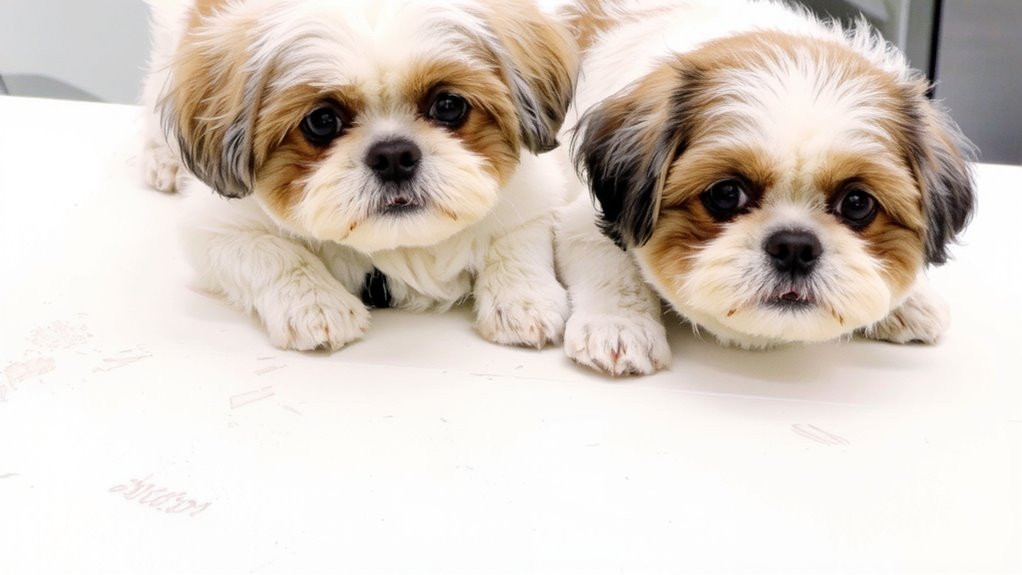
Genital structure matters when planning a sanitary trim. You must account for anatomical differences between male and female Shih Tzus to guarantee effective hygiene maintenance. Females have a broader genital area and shorter hair naturally, requiring less extensive trimming. Males possess a more protruding structure, demanding precise shaping to prevent waste accumulation. Coat texture influences clipper blade selection; dense, double coats need finer blades to avoid pulling. You’ll find that coat texture varies slightly between genders, with males often exhibiting coarser undercoats. Shedding patterns also differ-females may shed more during heat cycles, increasing matting risk near the genital region. This necessitates more frequent trims. Use a #10 or #15 blade for close, safe cuts. Always dry the area thoroughly before trimming. Proper technique reduces skin irritation and infection risk.
Where to Trim Male Shih Tzus for Hygiene and Comfort
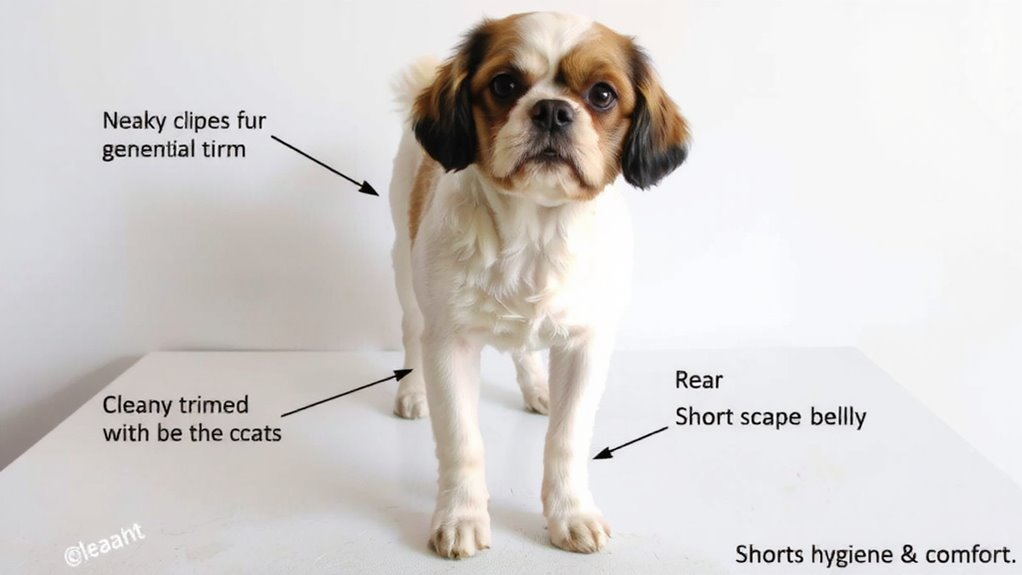
Your male Shih Tzu’s comfort and hygiene depend on precise trimming around key anatomical zones. Trim a 1-inch-wide strip along the ventral abdomen, extending from the pubic area to mid-thorax. This reduces urine matting and minimizes skin irritation. Shave a 2-inch circular area around the prepuce, following natural skin contours. Use blunt-tipped scissors for finishing edges to prevent injury. The coat texture in these regions is finer, making trapped moisture more likely. Maintain a 3–5 mm clip length to balance insulation and hygiene. Skin sensitivity is highest near the groin, so use hypoallergenic clippers with a #10 blade to limit friction. Sanitary trims should occur every 4–6 weeks, or more often if coat texture shows early signs of tangling. Proper technique prevents dermatitis and improves overall coat health. Always dry trimmed areas completely post-bath to reduce microbial growth. Choose a best shampoo for Shih Tzus to support skin health during routine grooming.
Where to Trim Female Shih Tzus to Prevent Irritation
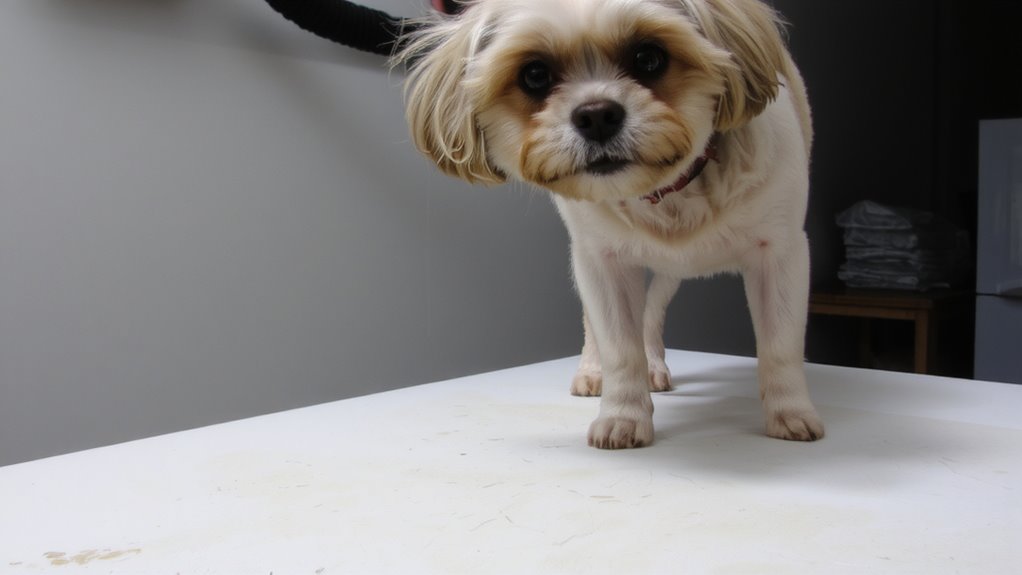
Areas requiring sanitary trimming in female Shih Tzus differ slightly from males due to anatomical structure, but the goal remains consistent: minimizing moisture retention and preventing skin irritation. You should trim closely around the vulva, keeping hair at least ½ inch shorter than surrounding areas to reduce urine splashback accumulation. The perianal region also needs shortening, with coat length maintained at ¼ inch to prevent fecal adherence. Moist, matted hair promotes bacterial growth, especially in dogs with dense coat texture. Female Shih Tzus often have heightened skin sensitivity in the groin and inner thighs, so precision is critical. Use blunt-tipped scissors for safety, trimming in the direction of hair growth to minimize irritation. Maintain a 1-inch buffer between trimmed zones to preserve natural insulation while ensuring cleanliness. Regular trims every 3–4 weeks help manage coat texture buildup and safeguard against dermatitis.
Best Tools for a Stress-Free Shih Tzu Sanitary Trim
Precision grooming tools make all the difference when tackling a Shih Tzu’s sanitary trim, especially given the breed’s dense double coat and sensitive skin. Using the right equipment minimizes discomfort and guarantees a clean, safe result. Your choice of tools should account for your dog’s coat texture and bathing frequency to maintain hygiene without irritating the skin. A quiet, low-noise clipper is ideal for keeping anxious dogs calm during grooming sessions.
| Tool | Purpose | Key Feature |
|---|---|---|
| Curved-blade trimmer (3–5 mm) | Safe trimming near sensitive areas | Rounded tip prevents nicks |
| Fine-tooth comb | Sectioning thick coat | Detangles before cutting |
| Detangling spray | Prepares matted areas | Reduces friction during cutting |
Stainless steel blades stay sharper longer, essential for coarse or silky coat textures. Clippers with low vibration reduce stress. A consistent bathing frequency of once every 1–2 weeks softens the coat, making trimming easier and more precise.
How to Trim Male Shih Tzus Safely and Efficiently
When trimming a male Shih Tzu, focusing on the correct anatomical landmarks guarantees both hygiene and comfort. Begin by identifying the area beneath the scrotum and around the prepuce, avoiding direct contact with sensitive tissue. Use a #10 or #15 blade for precision, trimming no closer than ½ inch from the base of the genital sheath. Your trimming technique should follow the natural contour of the abdomen, using short, controlled strokes to prevent nicks. Monitor the dog’s behavioral response closely; signs of tension may signal discomfort or stress. Restraint should be minimal but secure, ideally with a helper or grooming loop. Clip hair to ¼ inch in length around the urinary opening to reduce soiling. Always sanitize tools pre- and post-use. This method guarantees efficiency, safety, and consistent results across grooming sessions.
How to Trim Female Shih Tzus Without Causing Irritation
Why do some female Shih Tzus react with discomfort during sanitary trims? Their skin sensitivity and fine coat texture make them prone to irritation. Always use blunt-tipped scissors and a #10 stainless steel blade for close work. Work in small sections, lifting hair rather than pressing down to reduce skin drag.
| Factor | Female-Specific Consideration |
|---|---|
| Coat texture | Softer, silkier; requires sharper tools to prevent tugging |
| Skin sensitivity | Higher around genital and groin; use hypoallergenic clippers |
Moisturize the area post-trim with a vet-approved, alcohol-free wipe. Keep clipper speed at 2,800 RPM to minimize heat buildup. Rest every 90 seconds to prevent friction. Use consistent, feather-light pressure-never stretch the skin. A calm environment reduces movement, lowering nick risk. You protect both hygiene and comfort with precision.
Common Sanitary Trim Mistakes by Gender and How to Avoid Them
Though sanitary trims are essential for hygiene, mistakes often arise when grooming techniques don’t account for biological differences between male and female Shih Tzus. You may trim too close on males, risking skin irritation near the prepuce, or leave excess hair on females, trapping moisture around the vulva. Coat texture differences influence blade choice-females often have softer undercoats requiring finer blades, while males’ coarser hair needs durable #10 or #15 blades. Trimming frequency patterns vary: males typically need trims every 2–3 weeks due to faster hair growth near the sheath; females require precise vulvar hair removal weekly during heat cycles. Always use blunt-tipped scissors for shaping and a 0.1-inch margin from sensitive tissue. Avoid electric clippers on inflamed skin. Maintain consistent lighting and restraint to prevent uneven cuts. Proper technique prevents infections and matting. For optimal results, consider using one of the best dog grooming clippers for poodles, which are designed to handle dense, curly coats with precision.
On a final note
You must tailor sanitary trims to your Shih Tzu’s anatomy for best hygiene. Males require a clean ventral belly strip, extending from just behind the umbilicus to the prepuce, typically 1–1.5 inches wide, to prevent urine scalding. Females need a precise vulvar border trim, avoiding direct contact with labia, reducing moisture buildup and irritation. Use blunt-tipped scissors or a size 10 clipper blade with a 3 mm cut length. Always dry the area post-trim. Proper technique prevents infection and guarantees comfort.