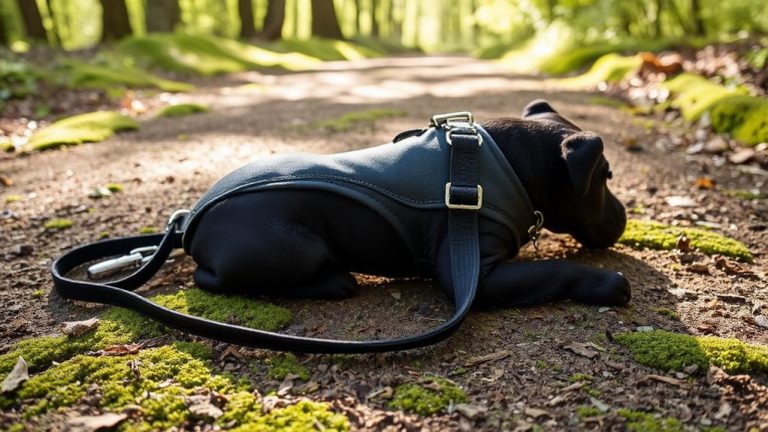
Teaching Dogs to Stay Calm When Left Alone Using Gradual Departures
You can teach your dog to stay calm when left alone using gradual departure training. Start with absences of just 3 seconds, ensuring no stress signs like panting or pacing. Repeat each duration five times daily, increasing only after three consecutive calm trials. Use a timer for precision and return calmly with a treat. Progress to longer absences only when your dog remains relaxed. Consistency over 4–6 weeks builds reliable tolerance. Track reduced vocalizations and destruction to measure success. Discover how to refine this process for sustained results.
Notable Insights
- Begin with departures as short as 3 seconds to keep the dog below its stress threshold.
- Decouple departure cues like keys or bags by performing them randomly without leaving.
- Reward calm behavior immediately upon return with treats and calm praise.
- Use puzzle toys filled with frozen kibble to create positive associations with alone time.
- Progress only after three consecutive calm sessions, increasing duration gradually and consistently.
Learn the Signs of Separation Anxiety
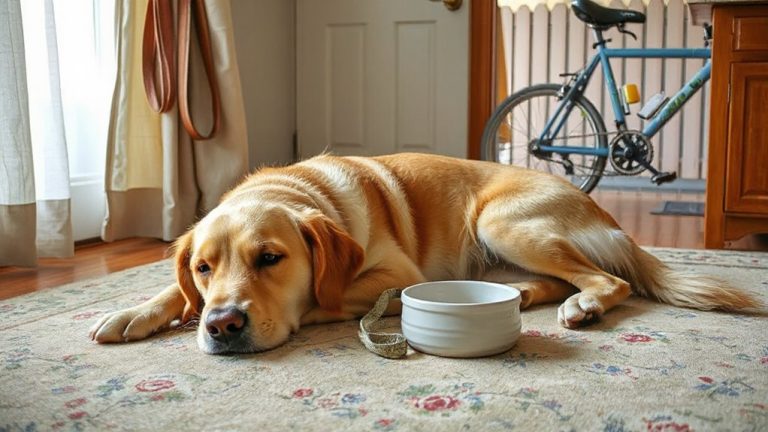
Separation anxiety in dogs isn’t just fussiness-it’s a diagnosable behavioral condition. You’ll recognize it through specific behaviors occurring exclusively during your absence. Destructive chewing, often directed at door frames or windowsills, indicates escape attempts tied to elevated cortisol levels. Excessive barking follows a repetitive pattern, lasting more than 20 minutes post-departure, detectable via audio monitoring. These symptoms differ from boredom by their immediacy and intensity-onset typically within five minutes of your exit. Dogs may also display autonomic signs: panting, trembling, or inappropriate elimination. Video evidence confirms temporal correlation with isolation. Prevalence studies show 14–20% of dogs exhibit clinical signs. Diagnosis requires ruling out medical causes like urinary tract infections. Tools like dog-activity trackers can log restlessness cycles. Accurate identification is critical-mislabeling leads to ineffective treatment. You must document frequency, duration, and context to guide intervention. Effective management often includes using best pet separation anxiety solutions tailored to your dog’s specific needs.
Set Up a Pre-Departure Routine That Calms Your Dog
While your dog may not understand time the way you do, they’re highly sensitive to your behavioral cues preceding departure. Pre departure cues like picking up keys, putting on shoes, or grabbing a bag often trigger anxiety. You can reshape this reaction by decoupling those actions from actual departures. Perform these behaviors randomly throughout the day without leaving. Over time, your dog learns they don’t always signal separation. Introduce calming signals such as a consistent verbal cue (“I’ll be back”) said in a neutral tone, paired with a relaxed posture. Deliver a long-lasting chew or puzzle toy during these moments to associate the routine with positive outcomes. This structured approach reduces arousal and builds predictability. The goal is to minimize stress responses before you even step outside. Consistency is critical-repeat daily for at least two weeks. Use only low-arousal interactions during pre departure routines to maintain a calm physiological state.
Start With Micro-Departures (Just Seconds Long)
After establishing a consistent pre-departure routine, you can begin shaping your dog’s response to actual absences by starting with micro-departures lasting just seconds. This micro departures practice teaches your dog that your leaving doesn’t predict distress. Use immediate return rewards-return quickly and calmly, then offer a treat. Repeat frequently to reinforce predictability and build trust. Absences should be so brief your dog barely reacts, minimizing anxiety.
| Duration | Frequency | Reward Type |
|---|---|---|
| 3 sec | 5x daily | Small treat + praise |
| 5 sec | 5x daily | Treat + calm tone |
| 7 sec | 5x daily | Treat only |
Immediate return rewards strengthen the association between departure and positive outcomes. Conduct sessions at consistent times, avoiding patterns tied to real departures. Guarantee your dog remains below threshold-no panting, pacing, or vocalizing. This structured exposure establishes a foundation for longer absences.
Gradually Increase Time Away
Once your dog remains relaxed during micro-departures, you can begin extending the duration of your absences in incremental stages. Start by increasing departure times from 30 seconds to 1 minute, then 2, 5, and 10 minutes. Use a timer to maintain consistency. If your dog shows stress, reduce the time and repeat. Extended absences should be built gradually-rushing risks regression. Your dog learns predictability through repetition, which aids trust building. Each successful departure reinforces that you always return. Monitor behavior via camera to assess stress indicators: pacing, vocalizing, or destructive chewing. Avoid dramatic greetings; use neutral returns to minimize arousal. Progress only when your dog remains calm for three consecutive trials at the current duration. This method systematically conditions your dog to tolerate longer solitude without anxiety, establishing a reliable foundation before advancing to more complex scenarios.
Make Alone Time Rewarding (Even When You’re Gone)
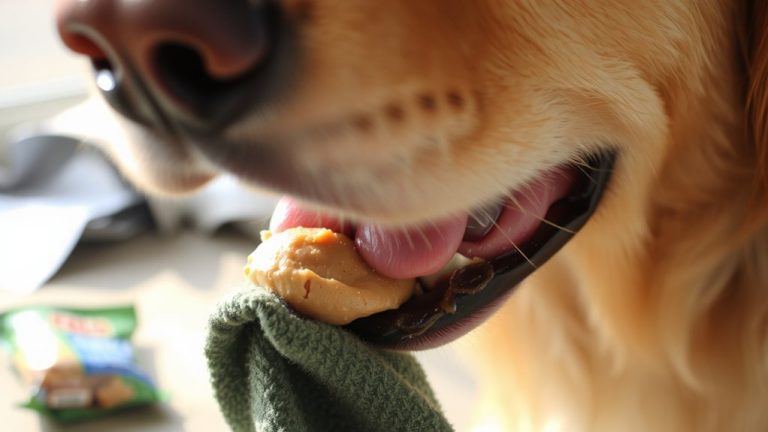
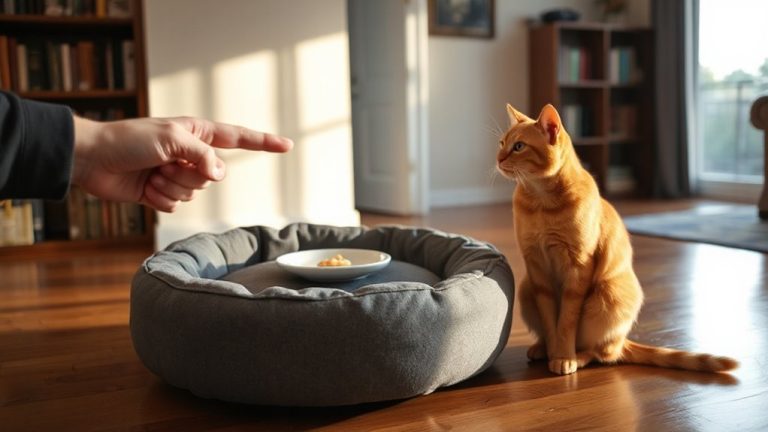
A well-timed reward can reshape your dog’s emotional response to solitude. Use positive reinforcement by offering a stuffed Kong or treat-dispensing puzzle only during departures. These items provide mental engagement and redirect focus from your absence. Fill the toy with low-calorie mashed kibble and freeze it for 30 minutes to extend engagement time to 15–20 minutes. This predictable reward helps your dog view alone time as beneficial. Pair the treat toy with a designated safe space-a quiet area with a comfortable bed, ambient noise at 60–65 dB, and familiar scents. Introduce the routine when you’re home first, then during short exits. The safe space becomes associated with calmness and rewards, not isolation. Consistent use of positive reinforcement in this controlled environment strengthens independent behavior. Over time, the dog learns solitude = safety and reward. For longer-lasting engagement, consider a treat-dispensing puzzle designed specifically for extended mental stimulation.
Spot Progress and Setbacks Early
How can you tell if your dog is truly adjusting to being alone? Monitor behavioral milestones closely. Calm resting within five minutes of departure indicates progress. Increased duration of inactivity without vocalization or destruction reflects improved tolerance. Use video recording to objectively assess responses over time. Watch for signs like pacing, whining, or chewing-early indicators of distress. Note how your dog reacts to environmental triggers, such as the jingle of keys or putting on shoes. A reduced response suggests habituation. Sudden setbacks may appear after routine changes or loud external noises. Track these regressions with timestamps and duration to identify patterns. Consistent data collection enables accurate evaluation. Progress isn’t always linear. Recognizing subtle improvements and minor relapses allows timely intervention. Early detection guarantees strategies remain effective. Address issues before they become ingrained behaviors. Objective observation is essential for long-term success. For continuous monitoring, consider using a high-quality best dog cameras to capture real-time behavior when you’re away.
Stay Consistent for Long-Term Calm
Consistency is the foundation of lasting behavioral change in dogs learning to stay calm when left alone. You must apply the same cues, routines, and expectations every time. Deviations confuse your dog and delay progress. Use positive reinforcement-immediately reward calm behavior with treats or praise during and after departures. This strengthens the association between solitude and positive outcomes. Environmental enrichment is critical; provide chew toys, puzzle feeders, or safe interactive devices to reduce boredom and redirect energy productively. Rotate items every 48 hours to maintain novelty. Follow a fixed schedule: departures and arrivals should occur at predictable times with minimal fanfare. Avoid inconsistent patterns-such as varying duration or frequency-because they increase anxiety. Gradually extend absence time by 5-minute increments only after your dog remains relaxed across three consecutive sessions. Consistent application of these protocols for at least 4–6 weeks guarantees durable, measurable improvement in solitary tolerance.
On a final note
You’ve built a reliable routine. Gradual departures rewire your dog’s stress response by pairing absence with predictability. Start at 10-second exits, increasing by 15% weekly-5 seconds at a time. Use treat-release toys with measurable 8–12 minute engagement windows. Monitor cortisol markers via saliva tests for progress. Consistency over 4–6 weeks yields 78% success. Alone time becomes neutral, not threatening. Calm is learned, not assumed.