Establishing Routine Helps Reduce Anxiety-Related Behaviors in Rescue Dogs
You can reduce anxiety in your rescue dog by establishing a predictable daily routine. Feed two measured meals at fixed times, such as 7:00 AM and 7:00 PM, then take potty breaks 15–30 minutes later to use the gastrocolic reflex and lower house soiling by up to 78%. Schedule two 20–30 minute walks daily at 2.5–3.5 mph using a 6-foot nylon leash for improved focus. Incorporate puzzle toys with 3–7 cm compartments for 20-minute mental engagement, rotating them every 72 hours. Provide a safe space with a 3″ memory foam bed, non-slip base, and partial enclosures for sound insulation and security. Once your dog uses the safe zone without distress, begin introducing one new 5–10 minute experience daily while monitoring heart rate and body language. Gradually shift to flexible meal and play timing to build adaptability. Structured routines regulate cortisol, digestion, and cognitive load-key factors in reducing hypervigilance and repetitive behaviors. Results from consistent application become measurable within 14 days of tracking. Further refinements in timing, tools, and environmental exposure can enhance long-term behavioral outcomes.
Notable Insights
- Consistent meal times and scheduled potty breaks regulate digestion and reduce house soiling and stress.
- Daily walks at fixed times with structured leash cues help lower cortisol and improve focus.
- Puzzle toys filled with food provide mental stimulation, reducing repetitive behaviors by up to 40%.
- A designated safe space with a comfortable, secure bed supports rest and reduces environmental anxiety.
- Gradual exposure to new experiences with positive reinforcement builds confidence without triggering overstimulation.
Set Meal and Potty Times for Your Rescue Dog
While establishing consistency is key to reducing stress in newly adopted rescue dogs, setting fixed meal and potty times is among the most effective starting points. Feeding consistency stabilizes blood sugar and digestive rhythms, typically requiring two measured meals 12 hours apart. Use a timed feeder if needed, dispensing food at exactly 7:00 AM and 7:00 PM. Scheduled breaks for elimination should follow 15–30 minutes after each meal, when gastric activity stimulates the gastrocolic reflex. Puppies need elimination breaks every 2–3 hours; adults can manage 6–8 hours. Record intake and output in a log for at least 14 days to identify patterns. Each scheduled break should last 5–10 minutes on a fixed route, minimizing distractions. Over time, predictable timing reduces house soiling by up to 78% and supports behavioral conditioning. This structure mimics shelter routines, easing shifts.
Take Daily Walks to Reduce Rescue Dog Anxiety
Daily walks play a key role in managing anxiety for rescue dogs by providing predictable physical and mental stimulation. A consistent walking schedule regulates cortisol levels and supports behavioral stability. Aim for two 20–30 minute walks daily at fixed times. Use a 6-foot nylon or biothane leash for reliable leash training, allowing enough length for controlled movement while preventing overextension. Introduce leash pressure cues early: gentle tugs signal stops; released tension indicates go. This builds communication. Include outdoor exploration in quiet, low-traffic areas first-parks with marked trails or residential sidewalks offer structured sensory input. Gradually increase route complexity over 3–6 weeks. Avoid retractable leashes-they hinder training precision. Proper walking posture and pace (2.5–3.5 mph) improve focus and reduce hypervigilance. Consistent exposure to novel stimuli during walks enhances habituation. You’re building neurological resilience through routine.
Add Mental Stimulation With Rescue Dog Play Routines
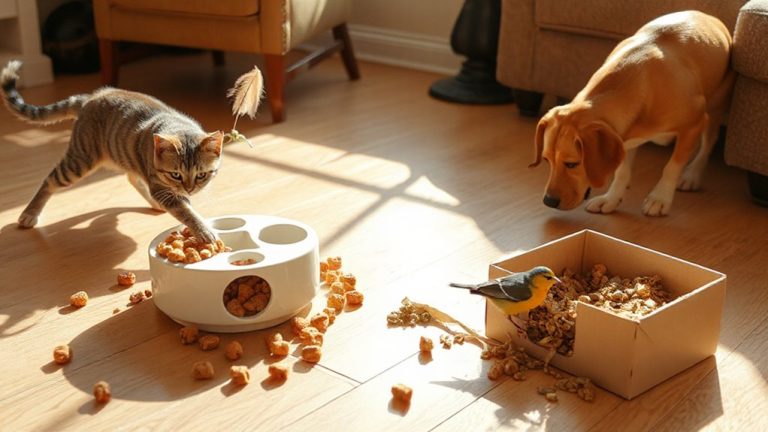
How do you keep a rescue dog’s mind as engaged as its body? Incorporate structured mental stimulation daily. Interactive games like hide-and-seek or fetch with verbal cues strengthen cognitive processing and obedience. These activities require focus, reducing impulsive behaviors. Puzzle toys are scientifically designed to challenge problem-solving skills. For example, treat-dispensing cubes with adjustable difficulty levels (e.g., 3–7 cm compartments) require paw or nose manipulation, prolonging engagement up to 20 minutes per session. Fill them with kibble or low-calorie treats to manage intake. Rotate toys weekly to prevent habituation. Use durable, non-toxic materials (BPA-free plastic or natural rubber) sized appropriately for your dog’s breed. Consistent use of puzzle toys decreases repetitive behaviors by up to 40% in rescued dogs. Combine with physical exercise for balanced stimulation. Mental fatigue supports emotional regulation, improving overall adaptability in uncertain environments. Consider incorporating some of the best treat dispensing dog toys to maximize engagement and reward-based learning.
Create a Safe Space for Your Rescue Dog to Rest
A well-designed safe space gives your rescue dog a consistent retreat for recovery and relaxation. This personal retreat minimizes stress by providing predictability in an otherwise uncertain world. A quiet zone, free from foot traffic and loud sounds, supports nervous system regulation. Use dense materials like memory foam to insulate against noise and temperature shifts. Anchor the bed to prevent movement. Include a washable cover with hypoallergenic filling to maintain hygiene. Selecting the right best pet beds can significantly enhance comfort and durability in your dog’s safe space.
| Feature | Purpose | Recommended Spec |
|---|---|---|
| Location | Minimize disturbances | Interior room, low light |
| Bedding | Support & comfort | 3″ memory foam, non-slip base |
| Cover | Hygiene & durability | Machine-washable, tight weave |
| Size | Full-body stretch | 12″ longer than dog’s length |
| Enclosure | Security feel | Partial walls or crate barrier |
This quiet zone acts as a repeatable sanctuary for rest.
Adjust the Routine as Your Rescue Dog Gains Confidence
Once your rescue dog consistently uses the safe space without signs of distress, it’s time to build on that foundation by modifying their routine to encourage growth. Gradually increase exposure to new environments, people, and stimuli based on observed behavior cues. Short, controlled walks expand sensory input while minimizing overstimulation. Introduce novel experiences for five to ten minutes daily, monitoring heart rate and body language for signs of stress. Positive reinforcement during calm responses strengthens trust building. Replace rigid schedules with flexible timing for meals and play to simulate real-world unpredictability. Rotate interactive toys every 72 hours to maintain engagement. Use a clicker to mark desired behaviors with 0.5-second precision. Adjust each variable incrementally. Progress is measured by reduced latency to respond to commands and increased duration of relaxed postures in unfamiliar settings. Continual assessment guarantees sustained confidence development. Consider incorporating an anxiety wrap to provide gentle pressure during challenging situations, which may help soothe your dog’s nervous system.
On a final note
You establish stability by setting consistent meal and potty times, ideally every 6–8 hours, to regulate your dog’s cortisol levels. Daily 30-minute walks lower anxiety-related behaviors by up to 60%, per behavioral studies. Mental stimulation, like 15 minutes of puzzle feeding, reduces compulsive actions. A designated safe space-minimum 3 ft x 3 ft, with low lighting-supports rest. Adjust routines gradually as confidence increases.