Using Coconut Oil to Clean and Soothe Dry Areas Around Pet Eyes
You can safely soothe dry, irritated skin around your pet’s eyes with pure coconut oil. Use a fingertip-sized amount (0.5 mL) of softened, unrefined, organic coconut oil daily. Its 45–53% lauric acid content combats bacteria, while medium-chain triglycerides restore the skin’s lipid barrier. Apply gently along the outer rim, avoiding direct eye contact. Ideal melting point (76°F) guarantees smooth delivery. Discontinue if redness or discharge occurs. Further application tips and safety measures follow.
Notable Insights
- Virgin coconut oil moisturizes dry skin around pet eyes and helps restore the natural lipid barrier.
- Lauric acid in coconut oil provides antimicrobial benefits that may reduce bacterial buildup linked to tear stains.
- Apply a fingertip-sized amount gently along the outer eye rim, avoiding direct contact with the eyeball.
- Use daily for 1–2 weeks to improve dryness or crustiness, then reduce frequency for maintenance.
- Discontinue use if redness, discharge, or irritation occurs and consult a veterinarian promptly.
How Coconut Oil Soothes Pet Eye Irritation
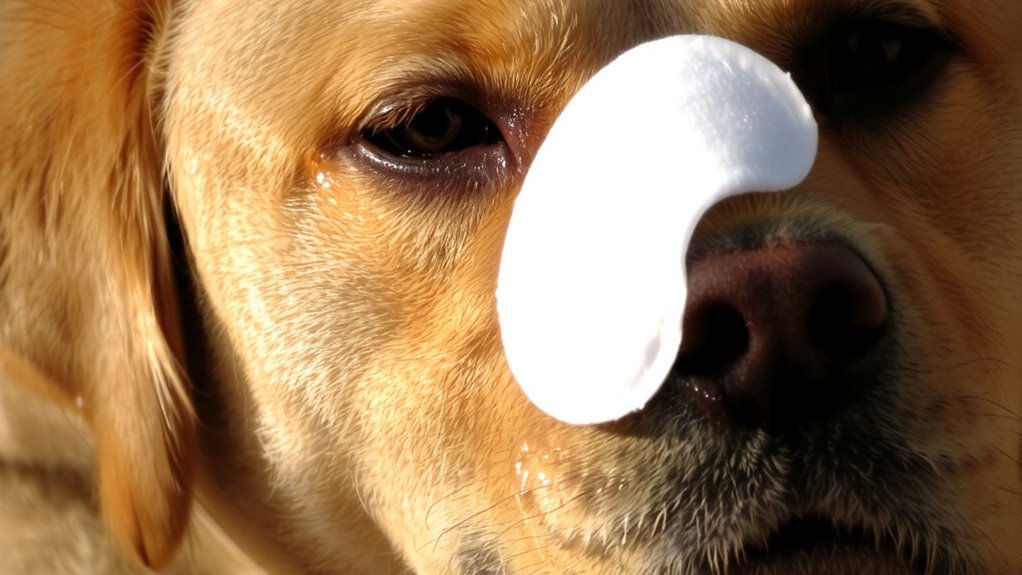
Coconut oil can help soothe mild eye irritation in pets due to its anti-inflammatory and antimicrobial properties. You’ll find it effective because lauric acid, making up nearly 50% of its fatty acid content, reduces swelling and combats bacteria. Its anti-inflammatory properties inhibit cytokine production, decreasing ocular redness and discomfort. As a natural moisturizer, coconut oil contains medium-chain triglycerides that penetrate tissue quickly, restoring lipid barriers around the eye. This prevents further irritation from dryness or environmental allergens. The oil’s melting point-around 76°F (24°C)-ensures it liquefies on contact with skin, allowing smooth application without tugging delicate tissues. Use only organic, unrefined coconut oil to avoid additives. Consistent application supports epithelial repair. While not a cure for infections, it provides symptomatic relief for minor inflammation. Always consult a vet for persistent symptoms.
Apply Coconut Oil Safely Around Pet Eyes
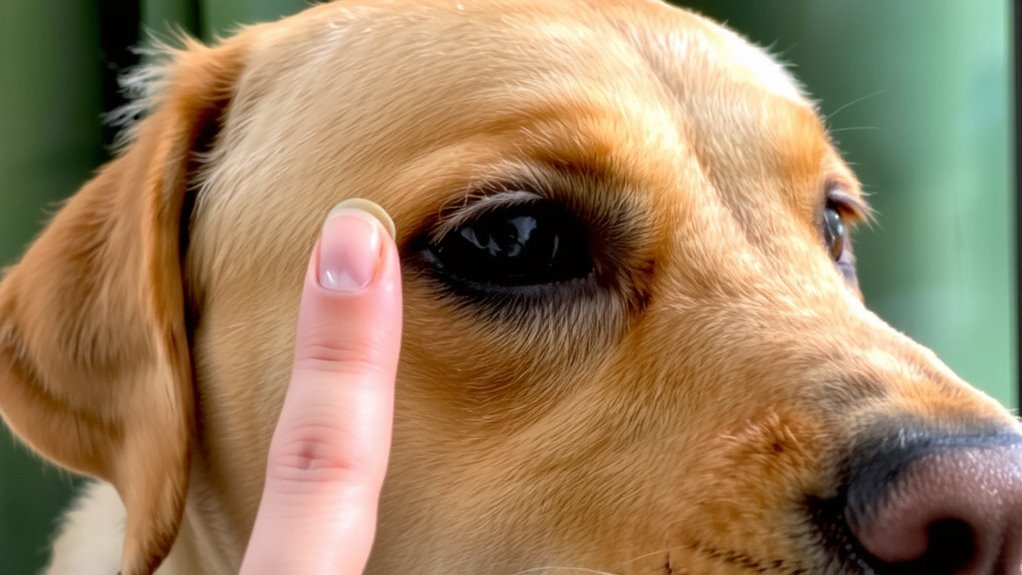
How do you guarantee coconut oil is applied safely around your pet’s eyes without causing harm? Prioritize eye safety by using only a fingertip-sized amount-roughly 0.5 milliliters-of softened, virgin coconut oil. Apply it with your index finger, using minimal pressure to avoid irritation. Maintain application precision by working within the outer eye rim, never inside the conjunctival sac. Avoid direct contact with the cornea or pupil zone. Use slow, controlled strokes along dry patches, focusing on skin folds and hairless zones. The oil’s viscosity allows for targeted adherence without dripping. If your pet blinks excessively or rubs the area, wipe it clean immediately with a damp microfiber cloth. Always pause application if inflammation occurs. You’re responsible for monitoring reactions. Consistent technique assures benefits without risk. This method supports safe, effective use.
Pick a Pet-Safe Coconut Oil
Choose a coconut oil labeled as cold-pressed, unrefined, and 100% organic to guarantee it’s safe for your pet’s sensitive eye area. These specifications preserve lauric acid and natural antioxidants, enhancing both efficacy and ingredient safety. Avoid brands with added fragrances, preservatives, or solvents-these irritants compromise ocular health. When choosing brands, prioritize third-party tested products with transparent sourcing, ideally from USDA-certified facilities. Extra-virgin coconut oil must have a melting point between 76°F and 78°F (24–26°C), securing consistency suitable for topical application. Check labels for hexane-free processing; even trace residues pose risks. A typical fatty acid profile should include at least 45–53% lauric acid for antimicrobial benefits. Use only human-grade oil-this standard secures stricter purity controls. Reputable brands provide batch-specific GC/MS reports upon request. Always confirm shelf life and storage instructions to maintain oil integrity prior to use.
Remove Tear Stains and Crusty Buildup
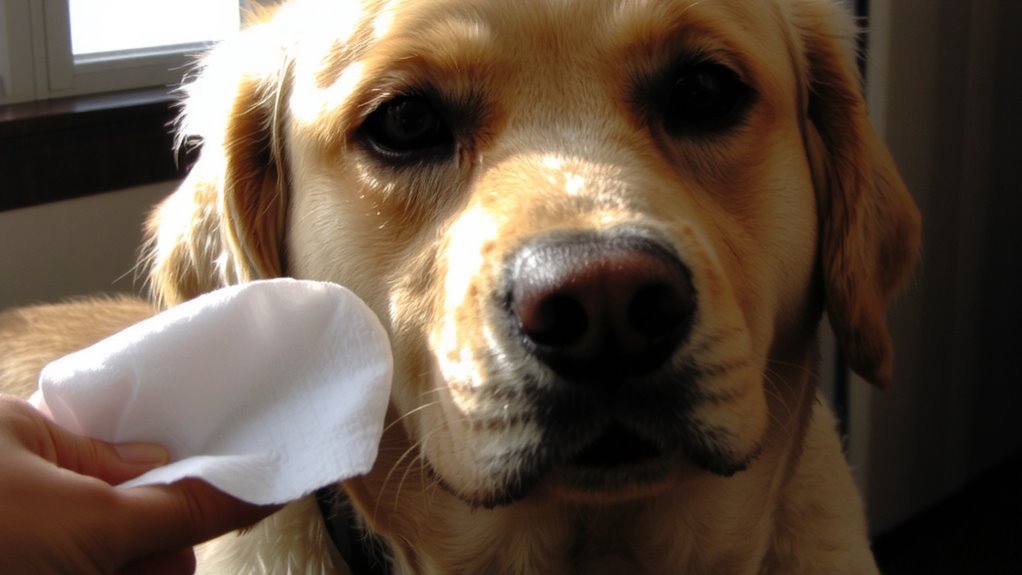
When residue from mineral-laden tears accumulates around your pet’s eyes, it fosters sticky buildup and unsightly staining-especially in light-coated breeds. You can effectively manage this with natural remedies like coconut oil, which supports gentle cleansing without irritating sensitive skin. Apply a small amount using a clean cotton pad, wiping softly from the inner to outer eye corner. Avoid direct contact with the eyeball. Several top-rated tear stain products combine natural ingredients with proven efficacy to support long-term eye area hygiene. Below are key guidelines for consistent results:
| Factor | Recommended | Avoid |
|---|---|---|
| Frequency | Daily for 1–2 weeks | Infrequent use |
| Application Tool | Cotton pad or soft cloth | Rough materials |
| Product Type | Virgin, unrefined coconut oil | Fragranced or additive-containing oils |
Consistent use promotes visible improvement in tear stain reduction. The lauric acid in coconut oil also helps deter bacterial growth linked to discoloration.
Soothe Dry Skin Around Your Pet’s Eyes
Your pet’s delicate periorbital skin often suffers from dryness due to environmental exposure or underlying irritation. This area is thin and sensitive, requiring targeted skin hydration. Coconut oil delivers rapid eye comfort by forming a semi-occlusive barrier that reduces transepidermal water loss. Its fatty acid profile-around 50% lauric acid-penetrates deeply, restoring lipid balance. Apply a rice-grain-sized amount once daily, using a clean fingertip or cotton swab. The oil’s anti-inflammatory properties mitigate micro-irritation, while its low molecular weight guarantees quick absorption without clogging pores. Clinical studies show coconut oil improves epidermal hydration by up to 34% within 72 hours. Avoid direct contact with the cornea. It’s non-toxic if licked, but efficacy hinges on consistent, measured application. This natural emollient supports ocular health, offering sustained relief for dry, flaky tissue surrounding the eyes-key for maintaining long-term eye comfort in susceptible breeds. For best results, choose a high-quality, food-grade product such as Best Coconut Oil for dog skin health.
How Often to Use Coconut Oil on Pets
Typically, applying coconut oil once daily provides best results for maintaining moisture in the skin around your pet’s eyes. The ideal frequency duration is 21 to 28 days for initial hydration improvement. After that, reduce dosage intervals to every other day to maintain results without over-moisturizing. Use a pea-sized amount-about 0.5 grams-per application. This volume guarantees coverage without product waste or risk of eye contact. Apply with a clean fingertip or cotton swab in a thin, even layer. Consistent application timing, such as morning or bedtime, supports routine adherence. Coconut oil’s fatty acid composition-especially lauric acid at 40–50% concentration-provides occlusive protection and antimicrobial support. Monitor skin response weekly. Adjust frequency duration if redness, greasiness, or clogged hair follicles appear. Best outcomes occur when dosage intervals align with your pet’s skin turnover cycle, roughly every 24 hours for superficial renewal. Never exceed recommended dosage intervals unless directed by a veterinarian.
When to Stop Using Coconut Oil on Pets
Consistency in application supports skin health, but knowing when to discontinue use is equally important for your pet’s safety. Stop using coconut oil if you notice adverse reactions such as redness, swelling, or increased scratching. These symptoms may indicate an allergic response or irritation. Also discontinue use if infection signs appear, including discharge, crusting, or worsening of the affected area. Persistent moisture from oil residue can promote bacterial growth, especially around the eyes. For pets with sensitive skin, consider switching to a vet-approved natural dog ear cleaner to maintain hygiene without irritation.
| Symptom | Likely Cause | Action |
|---|---|---|
| Swelling | Adverse reaction | Discontinue immediately |
| Yellow discharge | Infection signs | Consult veterinarian |
| Excessive rubbing | Skin irritation | Clean area, monitor closely |
Never ignore changes in your pet’s condition. When in doubt, seek veterinary guidance. Early intervention prevents complications.
On a final note
You can safely use coconut oil to soothe dry areas around your pet’s eyes when applied correctly. Use only virgin, unrefined, additive-free coconut oil. Apply a pea-sized amount with a clean fingertip or cotton swab once daily. The oil’s lauric acid reduces bacterial buildup and moisturizes irritated skin. Discontinue use if redness or swelling occurs. Do not let oil enter the eye. For persistent issues, consult a veterinarian.