How to Create a Calorie-Deficit Diet Plan for Overweight Dogs Without Starving Them
You start by calculating your dog’s ideal weight using body condition scoring and breed standards, then determine their Resting Energy Requirement (RER) with the formula: 70 × (ideal weight in kg)^0.75. Multiply RER by 1.4 to set a safe daily calorie target for weight loss. Use high-fiber, low-calorie foods like canned pumpkin (7g fiber per cup) and green beans to promote fullness. Replace high-energy treats with frozen carrots or apple slices (seed-free), staying under 10% of daily calories. Feed measured meals twice daily, spaced 12 hours apart, and support the plan with 30–60 minutes of structured exercise like leash walks or fetch. Progress checks every two weeks guide adjustments to keep loss steady at 1–2% of body weight per week-all while keeping your dog satisfied and nutritionally supported. More details on food portions and sample meal plans follow.
Notable Insights
- Determine your dog’s ideal weight using breed standards and body condition scoring to set accurate calorie goals.
- Calculate resting energy requirement and apply a 1.4 correction factor to establish a safe daily calorie target.
- Use high-fiber, low-calorie vegetables like pumpkin, green beans, and zucchini to increase meal volume and satiety.
- Feed measured, balanced meals twice daily with ≤10% calories from healthy treats like apple slices or frozen carrots.
- Combine controlled feeding with daily exercise such as walking and fetch to promote weight loss without hunger.
Start Here: Find Your Dog’s Ideal Weight and Calorie Goal
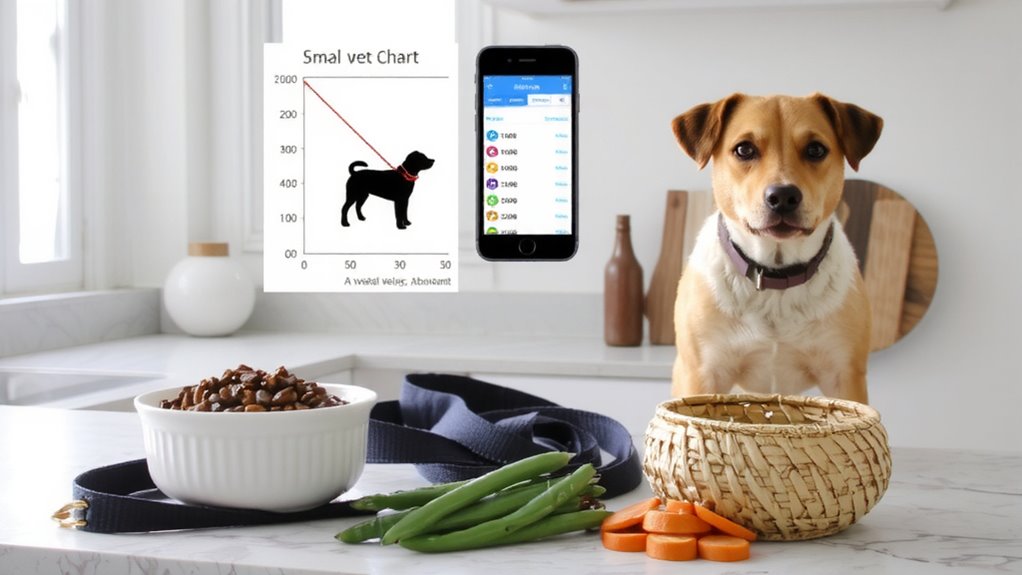
How do you know if your dog is overweight? Check for visible waistline behind the ribs and palpable ribs without excessive fat. If these signs are absent, your dog likely exceeds its ideal weight. Determining the ideal weight requires breed-specific standards, frame size, and body condition scoring (BCS), typically on a 9-point scale; aim for a BCS of 4–5. Once established, calculate your dog’s resting energy requirement (RER) using the formula: 70 × (ideal weight in kg)^0.75. Multiply RER by a correction factor-usually 1.4 for weight loss-to set the daily calorie goal. This deficit promotes safe, steady fat loss without muscle depletion. Avoid guesswork; use veterinary assessments and digital scales for accuracy. Monitoring progress every two weeks guarantees adjustments align with targets. Accurate measurement and consistent tracking turn the calorie goal into a practical roadmap.
Best Low-Calorie, High-Fiber Foods for Dog Weight Loss
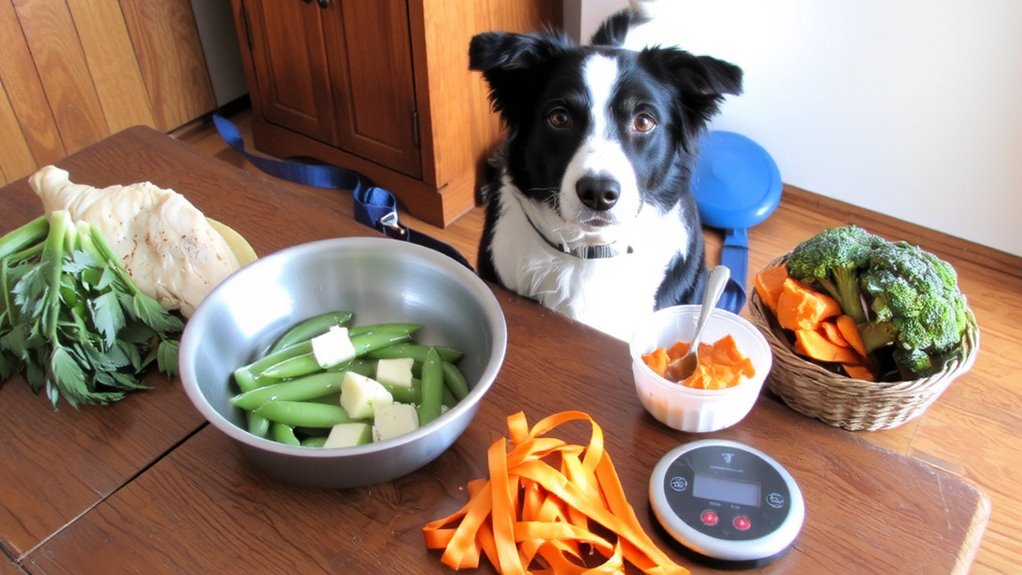
Fiber-rich, low-calorie foods are essential tools in managing canine weight loss without sacrificing satiety. You can leverage the pumpkin benefits of canned pure pumpkin (not pie filling), which provides 7 grams of fiber per cup with only 80 calories. The green beans advantage lies in their high water and fiber content-just 31 calories per cup raw-helping your dog feel full. These foods increase meal volume without adding energy density, promoting adherence to a calorie deficit.
| Food | Emotional Benefit |
|---|---|
| Pumpkin | Comforts digestive health |
| Green Beans | Supports energy and pride |
| Broccoli (steamed) | Encourages owner confidence |
| Carrots (raw) | Strengthens bonding moments |
| Zucchini (sliced) | Restores hope for progress |
Introduce new fibers gradually to avoid GI upset. Always weigh portions to maintain precision in caloric control.
Healthy Treat Swaps That Won’t Derail Progress
What if your dog could enjoy treats without slowing their weight loss? You can offer low-calorie alternatives that satisfy chewing instincts and provide essential nutrients. Frozen carrots are an excellent option, delivering 6 calories per 100 grams while promoting dental health through abrasive chewing action. Their firm texture prolongs oral engagement, reducing the urge to scavenge. Apple slices contain 52 calories per 100 grams but are high in fiber and vitamin C. Remove seeds and cores to eliminate cyanogenic glycoside exposure. Both options are over 85% water by weight, increasing satiety with minimal caloric intake. Unlike commercial treats averaging 300–400 kcal per 100 grams, these whole foods help maintain daily energy deficits. Use them in measured portions to align with dietary goals. These swaps support adherence to a structured calorie-deficit plan without sacrificing palatability or behavioral reinforcement. For French Bulldogs, choosing the right treat is especially important due to breed-specific sensitivities, making best treats for French bulldogs a key consideration when balancing flavor and health.
Portion Control Tips to Keep Your Dog Satisfied
| Meal Timing | Portion (for 20 kg dog) |
|---|---|
| 7:00 AM | 120 g low-calorie kibble |
| 7:00 PM | 120 g kibble + 50 g pumpkin |
| Treats | ≤ 10% of daily calories |
| Water | Unlimited, fresh |
| Feeding frequency | 2 meals, spaced 12 hours |
Exercise That Supports Your Dog’s Weight Loss Plan
While diet plays a central role in canine weight loss, exercise is the critical counterpart that boosts caloric expenditure and improves metabolic health. Leash walking is a controlled, low-impact activity ideal for overweight dogs. Begin with 10- to 15-minute sessions at 2–3 mph, gradually increasing to 30 minutes daily as fitness improves. This consistent aerobic effort supports fat oxidation and joint mobility. Supplement leash walking with fetch games, which elevate heart rate and build lean muscle. Toss a durable toy 20–30 feet for 10–15 minutes per session, adjusting intensity based on your dog’s stamina. These interval-style activities simulate natural foraging and chasing behaviors, enhancing engagement. Exercise duration and frequency should match veterinary guidelines-typically 30 to 60 minutes daily, split into two sessions. Combined with a calorie-controlled diet, structured activity promotes sustainable weight loss at approximately 1–2% of body weight per week.
Track Progress and Adjust Safely for Continued Results
Consistent exercise supports your dog’s weight loss, but monitoring progress guarantees the plan delivers lasting results. Use body condition scoring (BCS) every two weeks to assess fat coverage and muscle tone, assigning a score from 1 (emaciated) to 9 (obese), with 4–5 as ideal. Pair this with weekly weight trend analysis using a digital scale accurate to 0.1 lb. Adjust food portions by 10% if weight loss stalls for three consecutive weeks. Never drop below 90% of resting energy requirements (RER = 70 × [ideal weight in kg]^0.75).
| Time (Weeks) | Emotional State of Dog |
|---|---|
| 0 | Lethargic, uncomfortable |
| 2 | Slight improvement |
| 4 | More alert, playful |
| 6 | Confident, energetic |
| 8 | Joyful, engaged |
Track both metrics to tailor the plan safely and effectively.
On a final note
You now have a science-based plan to safely reduce your dog’s weight. Feed 70–75% of their maintenance calorie needs, calculated using their ideal body weight and a multiplier of 70 kcal × (ideal weight in kg)^0.75. Include high-fiber vegetables like green beans (0.36 kcal/oz) to increase satiety. Measure all portions with a digital scale. Combine daily exercise-30–60 minutes of brisk walking-to boost caloric expenditure. Reassess weight every 2 weeks; adjust intake by 5–10% if progress stalls.