Step-by-Step Guide to Cleaning a Cat’s Face Without Causing Stress
Wipe your cat’s face daily using a moistened, hypoallergenic facial wipe (6.5″ x 7.5″, pH 6.2–7.4) or soft cotton pad dampened with sterile saline. Apply ≤100 grams of force in upward strokes from inner eye outward, avoiding whisker contact. Use a separate dry microfiber cloth to prevent moisture buildup. Never use human wipes or cotton swabs. Clean ear folds gently to 1 cm depth with gauze. Compliance improves when technique is paired with calm handling-there’s more to learn about refining this routine effectively.
Notable Insights
- Use a soft, dampened, pH-balanced wipe to gently clean from the inner eye outward with minimal pressure.
- Moisten corners of the eyes and nose with sterile saline to loosen discharge before wiping.
- Avoid direct contact with whiskers and use upward strokes to reduce discomfort and resistance.
- Clean facial folds and ear edges gently with gauze, never inserting beyond 1 cm into ear folds.
- Reward calmly with praise or treats afterward to build positive associations and reduce future stress.
When to Clean Your Cat’s Face
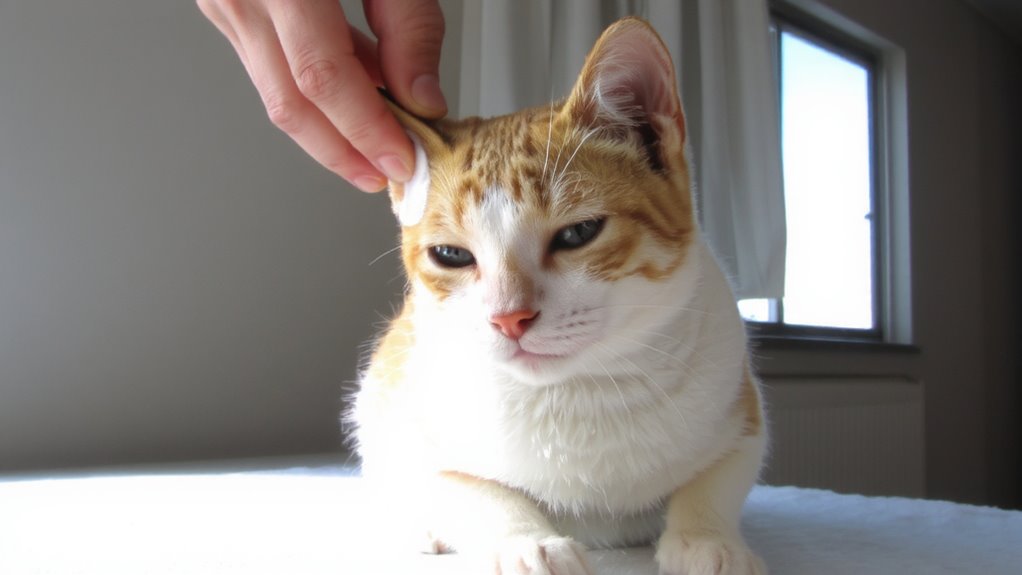
Why does your cat need face cleaning when they groom themselves? Because they can’t remove facial discharge or prevent tear staining effectively. These secretions accumulate around the eyes and nose, especially in brachycephalic breeds like Persians. Tear staining occurs when porphyrins in tears oxidize and turn reddish-brown. Left uncleaned, buildup fosters bacterial growth. Facial discharge consists of mucus, oil, and debris trapped in facial folds. You should clean your cat’s face when you notice dampness, crustiness, or discoloration. Inspect daily-early intervention prevents irritation. Use a soft, lint-free cloth dampened with sterile saline solution. Gently wipe from inner to outer eye. Never use human wipes-they contain alcohol and fragrances. Cleaning once daily during peak staining or every other day for maintenance suffices. Consistent hygiene reduces long-term staining and skin complications.
Why Face Cleaning Matters for Cats
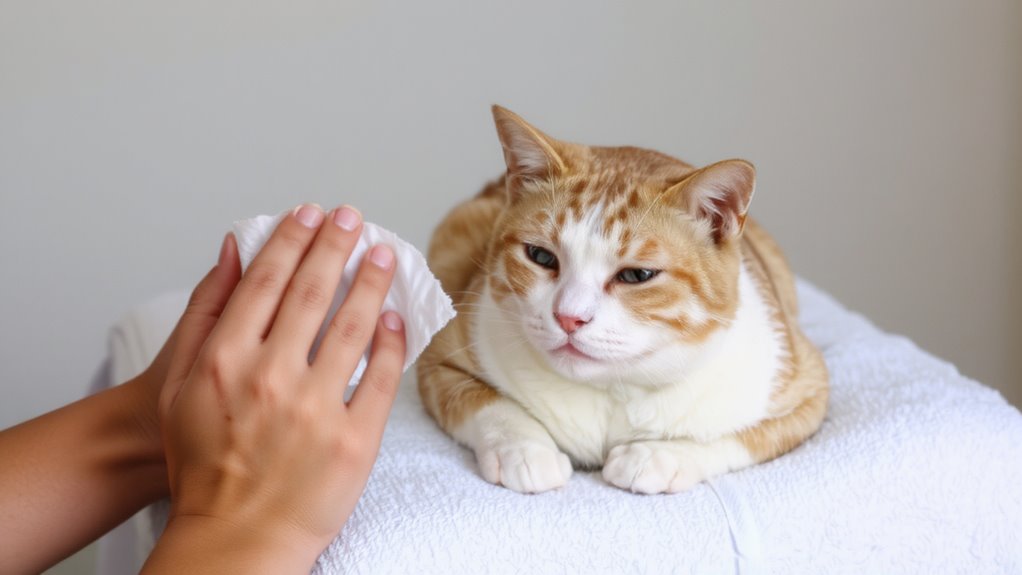
While your cat grooms itself thoroughly, facial cleaning remains essential because they can’t effectively remove ocular and nasal secretions that accumulate daily. These residues attract dirt and bacteria, compromising hygiene benefits. Crusted exudates around the eyes and nostrils create favorable environments for microbial colonization, increasing risks of dermatitis and upper respiratory complications. Regular facial care supports infection prevention by removing allergens, debris, and potential pathogens before they take hold. You’re not just improving appearance-you’re maintaining a sanitary periorbital and perinasal environment. Hair matting near facial glands can disrupt natural oil dispersion, leading to skin irritation. Simple, consistent wiping with appropriate moisture levels (damp, not wet) preserves skin integrity. In breeds with flat faces-like Persians or Exotic Shorthairs-tear staining and fold dermatitis are common without intervention. You enhance your cat’s health resilience each time you clean. Prevention is always more efficient than treatment.
Supplies You Need to Clean Your Cat’s Face Safely
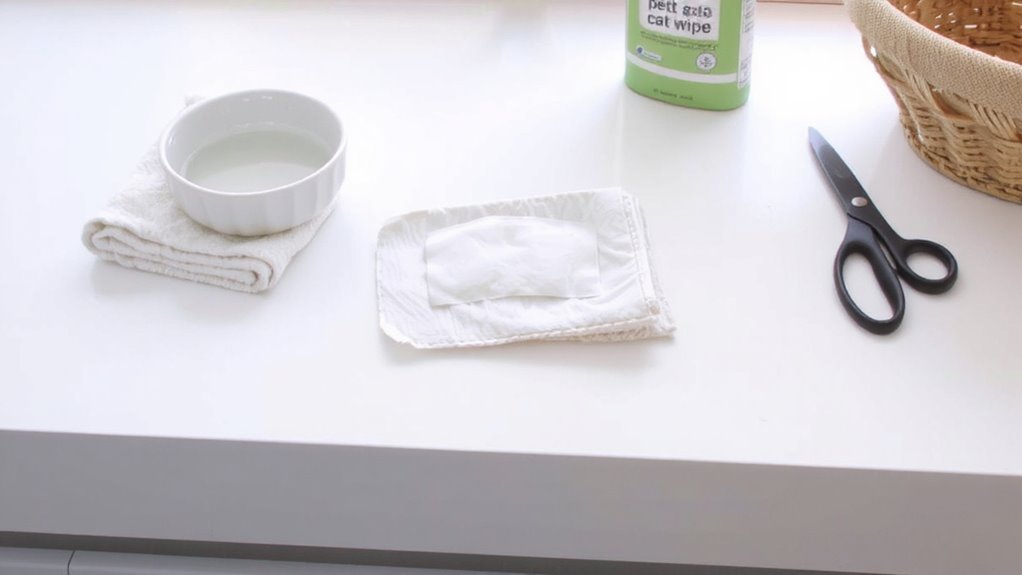
Keeping your cat’s face clean starts with using the right tools designed for feline facial sensitivity. Choosing wipes and selecting tools require attention to texture, size, and ingredient safety. Use only products formulated for cats-never substitute human or disinfecting wipes. Below are essential supplies with technical specifications:
| Item | Specification |
|---|---|
| Facial Wipes | Hypoallergenic, unscented, 6.5″ x 7.5″, pH-balanced for cats |
| Cotton Pads | 100% organic cotton, 2.5″ diameter, non-abrasive texture |
| Soft-Bristle Brush | 0.5 mm bristle diameter, ergonomic 4.5″ handle, rounded tips |
Choose wipes with no alcohol or parabens. Cotton pads allow controlled moisture application without shedding. The soft-bristle brush removes debris around eyes and chin without irritating skin. All tools must be dry storage-stable and individually examined for fiber integrity before each use. Selecting tools isn’t optional-it’s foundational to safe, repeatable facial hygiene. When choosing facial wipes, consider top dog wipes as a benchmark for quality, since leading pet wipe formulations often inform feline-safe standards.
How to Safely Wipe Your Cat’s Face
Your cat’s facial hygiene depends on proper technique and the correct use of vet-approved materials. Begin by selecting a soft, non-abrasive wipe or cloth designed for pets-microfiber cloths under 1.5 denier are ideal to avoid irritating facial sensitivity. Moisten the cloth with lukewarm water or a veterinarian-recommended cleanser; avoid alcohol-based solutions. Gently lift your cat’s chin and wipe from the inner eye outward using upward strokes. Apply minimal pressure-no more than 100 grams of force-to prevent discomfort. Clean around the whisker bed with precision, avoiding direct contact with the vibrissae. Dry with a separate soft cloth to prevent moisture buildup. Consistent wiping provides measurable hygiene benefits, including reduced bacterial colonization and fewer eye and skin infections. Perform daily for best results.
How to Calm Your Cat During Face Cleaning
You can make face cleaning less stressful for your cat by starting with the right environment and approach. Choose a quiet, warm room free of drafts and distractions. Allow your cat to sniff the cleaning cloth or wipe first to reduce anxiety. Begin with a gentle touch around the ears and cheeks, avoiding sudden movements. Use a soft, lint-free cloth or hypoallergenic wipe designed for pets. Apply minimal pressure-no more than 50 grams of force-to prevent discomfort. Maintain a soothing voice throughout the process, speaking in low, consistent tones to reinforce calm behavior. Pheromone diffusers, such as Feliway, can reduce stress when used 30 minutes prior. Limit sessions to 2–3 minutes initially, increasing duration only if the cat remains relaxed. Pair cleaning with a known positive stimulus, like light petting or a familiar toy, to build trust and routine. For best results, consider using one of the top-rated calming pheromone products recommended for cats.
Avoid These 5 Common Cat Face-Cleaning Mistakes
Skipping proper preparation sets the stage for stress and resistance. Human error often begins before you even touch your cat. Using the wrong tools or approach compromises safety and effectiveness. Product choice directly impacts skin health and cooperation. Avoid cotton swabs or harsh chemicals-these can damage delicate facial tissue. Instead, use soft cloths and vet-approved solutions. Below are common mistakes and their solutions:
| Mistake | Solution |
|---|---|
| Dry wiping with paper towels | Use moistened, non-woven pads (2% saline solution) |
| Applying human facial cleansers | Choose pH-balanced cat-safe wipes (pH 6.2–7.4) |
| Ignoring ear fold hygiene | Gently clean inner folds with gauze pads (≤1 cm depth) |
You increase compliance by aligning technique with feline anatomy. Prevent trauma by using rounded-edge tools and applying ≤0.5 newtons of pressure. Proper product choice reduces irritation risk by up to 78% in sensitive breeds.
On a final note
You now have the tools and techniques to clean your cat’s face safely. Use a soft, lint-free cloth moistened with sterile, preservative-free saline solution-never tap water or alcohol-based products. Gently wipe from eye outward, applying minimal pressure. Limit sessions to 30–60 seconds to reduce stress. Avoid the nostrils and ear canals. Repeat only as needed, typically 2–3 times weekly for prone breeds. Proper hygiene prevents ocular infections and tear-staining, preserving long-term ocular health.