Calming Stressed Reptiles During Handling With Dim Lighting Techniques
You can reduce reptile stress during handling by using dim lighting below 50 lux, measured at enclosure level with a digital meter. Reptiles perceive bright light as a threat, so maintaining 30–50 lux with low-flicker LED or red-spectrum bulbs minimizes cortisol spikes. Position lights laterally to avoid overhead glare and simulate natural crepuscular conditions. Combine this with thermal stability and quiet surroundings for ideal calm. Further refinements depend on species-specific sensory needs and behavioral cues.
Notable Insights
- Reptiles perceive handling as a threat, so dim lighting helps reduce stress by mimicking safe, natural conditions.
- Maintain light intensity between 30–50 lux to keep reptiles calm while still allowing human visibility during handling.
- Use red-spectrum bulbs (620–750 nm) as most reptiles see poorly in this range, reducing disturbance during low-light handling.
- Avoid overhead and bright lights; position low-flicker LED sources to the side for diffuse, non-threatening illumination.
- Combine dim lighting with a quiet, temperature-stable environment to minimize cumulative stress during reptile handling.
Why Reptiles Stress During Handling
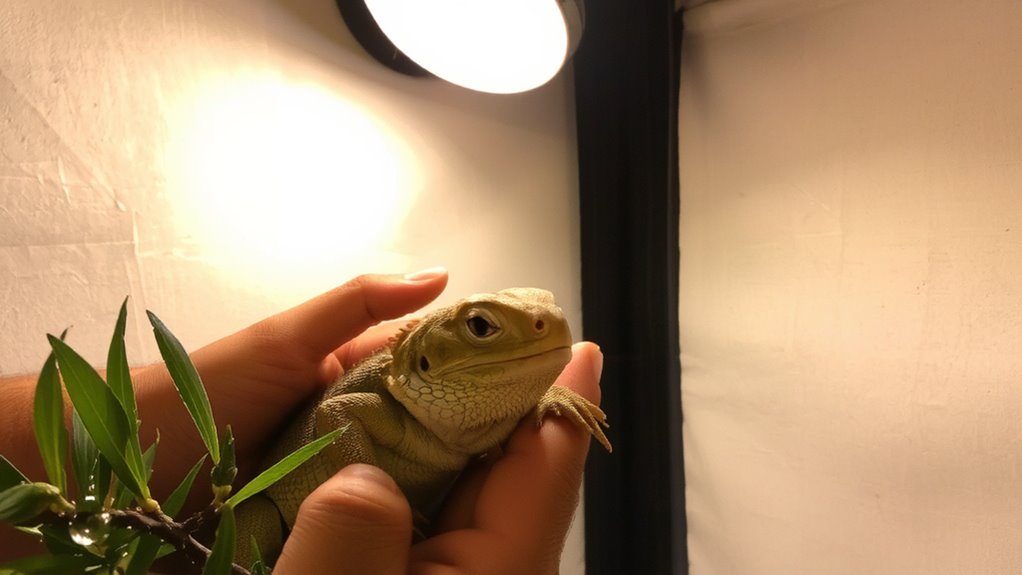
While reptiles may seem low-maintenance, they often experience stress during handling because their natural instincts view restraint as a threat. You must recognize that their physiology reacts sharply to perceived dangers. Temperature spikes-even as small as 5°F above their preferred range-can elevate cortisol levels within minutes. This hormonal surge impairs immune response and digestion. Noise exposure exceeding 60 decibels, equivalent to normal conversation, disrupts their auditory sensitivity. Many reptiles detect vibrations more than sound, making stomping or sudden movements particularly distressing. Handling often combines both factors: body heat from your hands raises ambient temperature, while nearby voices or machinery cause noise exposure. These stressors trigger tachycardia and hyperventilation in species like bearded dragons and leopard geckos. Prolonged exposure leads to chronic stress, reducing feeding frequency by up to 40%. You should minimize handling duration to under five minutes initially, allowing adaptation without overwhelming their system.
How Dim Lighting Calms Reptiles Naturally
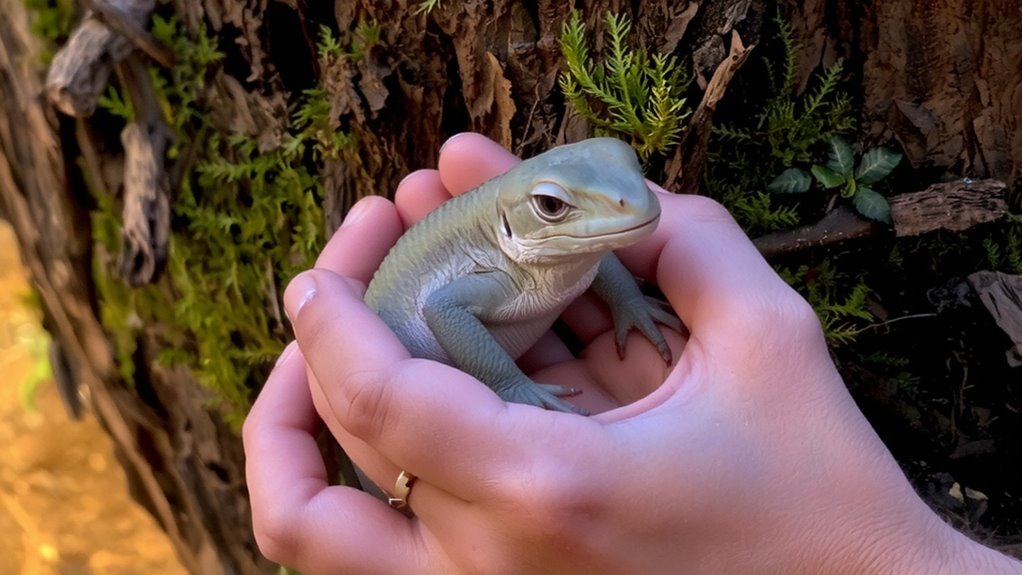
Because reptiles rely heavily on visual and circadian cues to regulate behavior, adjusting light intensity can markedly reduce stress during handling. You’ll notice immediate behavioral improvements when dim lighting mimics natural low-light environments. Many reptiles exhibit nocturnal behavior, meaning their peak activity occurs in darkness or low light. Exposure to bright light disrupts their natural rhythms and heightens stress. Their eyes are adapted for low illumination, making them extremely sensitive-exhibiting what’s known as light sensitivity. In dim conditions, pupils dilate fully, enhancing visual clarity without overstimulating photoreceptors. This reduces perceived threats during handling. For example, crepuscular geckos show 40% lower corticosterone levels under 10–30 lux versus 200+ lux. By maintaining illumination below 50 lux, you support species-specific physiological responses. Dim lighting doesn’t sedate-it aligns with innate biology. You’re not altering behavior; you’re allowing it to express naturally.
How Bright Should the Room Be?
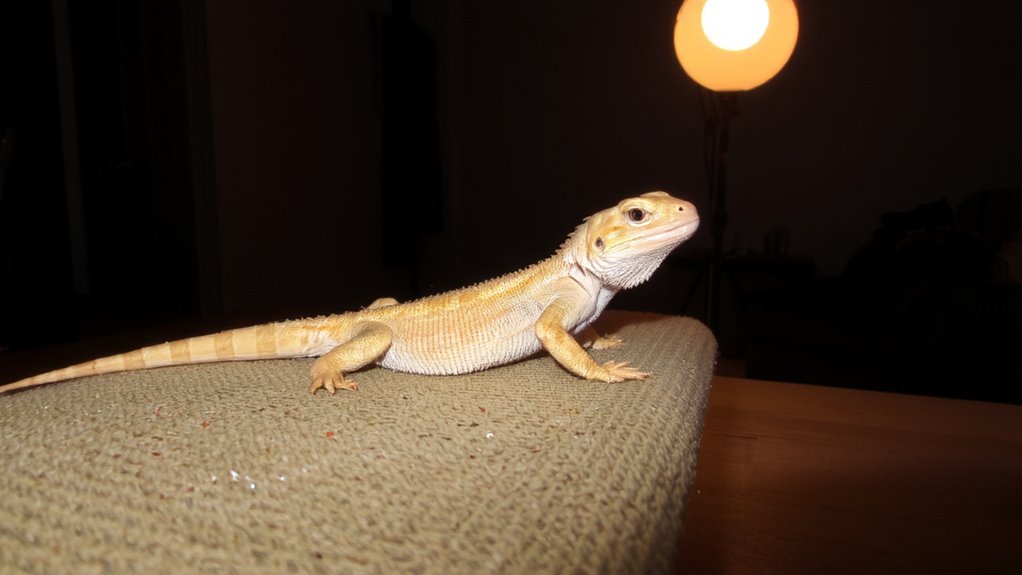
How bright should the room actually be when handling a stressed reptile? Keep the light intensity below 50 lux to minimize stress. This level mimics twilight conditions, supporting natural behavioral patterns. Use a digital light meter to verify readings at cage level. Avoid overhead lighting; instead, rely on low-output ambient sources. The room ambiance should be evenly dim, with no sharp contrasts or glaring spots. Sudden brightness exceeds 100 lux can trigger escape responses. Reptiles’ photoreceptors are highly sensitive-excessive illumination disrupts calm. Maintain consistency in room ambiance during handling sessions. Aim for 30–50 lux: enough visibility for you, low enough to keep the animal settled. You don’t need total darkness-just subdued, diffused lighting. Control direction and spread of light to eliminate shadows and flicker. Stable, low light intensity supports cooperative behavior. Proper setup prevents stress-related physiological spikes like elevated corticosterone.
Safe, Temporary Lights for Handling
When handling a stressed reptile, using safe, temporary lighting helps maintain low-stress conditions without sacrificing visibility. Use LED work lights with adjustable brightness, ideally emitting under 50 lux at 12 inches. These lights minimize flicker effects, which reptiles detect more acutely than humans due to higher flicker fusion thresholds. Standard fluorescent bulbs can pulse at 100–120 Hz, causing distress; opt for DC-powered LEDs with <5% flicker modulation. Colored bulbs-especially red or blue-can further reduce perceived brightness without hindering your view. Red bulbs (620–750 nm wavelength) are ideal, as most reptiles have limited night vision in this spectrum. Guarantee color temperature stays below 3000K to avoid stimulating alertness. Always position lights to the side, not overhead, to simulate diffuse ambient light. This replicates natural crepuscular conditions, reducing escape reflexes.
Set Up the Perfect Handling Space in 5 Steps
A well-designed handling space keeps your reptile calm and gives you full control. Choose a quiet, low-traffic room to minimize stress. Position the temporary enclosure away from drafts and direct sunlight, ensuring stable temperature control within ±2°F of your reptile’s preferred range. Use a digital thermometer with probe accuracy to verify gradients. Enclosure placement should allow easy access from three sides for observation and movement. Provide a non-reflective, solid-walled container with secure ventilation-12″ x 8″ x 8″ is ideal for small to medium reptiles. Line the floor with a non-slip substrate like microfiber. Maintain humidity within species-specific tolerance using a calibrated hygrometer. Isolate electrical components to prevent interference. This setup supports precise handling, reduces escape risk, and promotes physiological stability. Prioritize function, safety, and replicability for every session.
Dim Lighting Needs by Species
Lighting plays a critical role in minimizing stress during reptile handling, and the ideal intensity varies considerably by species. You must adjust light levels according to species specific photoperiods to support natural circadian rhythms. Nocturnal species like leopard geckos require dim red or blue LED lighting below 10 lux during handling. Their nocturnal adaptation limits prevent efficient vision in bright conditions, increasing stress. Diurnal lizards such as bearded dragons tolerate 50–100 lux but still benefit from reduced glare. Use adjustable dimmers with full-spectrum LEDs to mimic dawn/dusk shifts. Monitor responses closely-pupil dilation or avoidance indicates excessive brightness. Arboreal snakes often prefer under-30-lux environments, while terrestrial tortoises need gradual acclimation. Always align handling lighting with each species’ native habitat cycle. Failure to observe species specific photoperiods disrupts behavior and weakens immunity over time. Incorporating a pet wellness monitor can help track physiological responses during handling to optimize light exposure and reduce stress.
When Dim Lighting Doesn’t Work: Next Steps
You’ve adjusted the lux levels and aligned the spectrum to match your reptile’s natural photoperiod, yet signs of stress persist-rapid breathing, tail thrashing, or cloacal gaping indicate the lighting strategy isn’t sufficient. Behavioral cues like these signal a need for alternative methods. Reduce handling time; limit sessions to 5–10 minutes to minimize exposure. Introduce physical barriers, such as mesh guards or clear acrylic shields, to lessen perceived threats. Try chemical calming agents like synthetic pheromones (e.g., ReptiShield), applied via misting at 3–5 psi pressure for even dispersion. Use low-vibration enclosures; place the habitat on rubber isolation mounts to dampen external movement. Monitor temperature gradients-ensure the warm zone stays within species-specific ranges (e.g., 88–92°F for most colubrids). Combine these alternative methods systematically, tracking behavioral cues daily. Document responses in a handling log to identify effective combinations. If stress continues, consult a veterinary ethologist.
On a final note
Dim lighting reduces stress during reptile handling by mimicking natural low-light conditions. Use ambient light levels between 50–100 lux for most species. Position a 2700K temperature LED at 30–40 inches from the enclosure. This setup limits glare and avoids thermal disruption. Monitor reptile behavior-closed eyes or slow breathing indicate relaxation. If stress persists, reassess handling duration, temperature gradients, or consider species-specific sensory sensitivities.