How to Teach Your Cat to Play With a Ball Without Biting
Choose a 1.5- to 2-inch-diameter ball made of non-toxic, BPA-free rubber or plastic, weighing 10–20 grams, to minimize biting risk. Use a wand toy with a 12–18 inch nylon string and a feathered lure under 0.5 ounces. Move it in erratic 2–3 ft/sec horizontal arcs to mimic prey. Reward paw swats immediately with a 0.25–0.5 gram soft treat. Apply a clicker at the moment of contact to accelerate learning. If biting occurs, end the session and apply a 30–60 second time-out in a neutral area. Resume only when your cat is calm. Consistent twice-daily sessions at dawn and dusk strengthen bite-free behavior through operant conditioning. Further refinements in timing and reinforcement can sharpen results.
Notable Insights
- Use a lightweight, non-toxic ball 1.5–2 inches in diameter to ensure safe, bite-free play.
- Choose toys that encourage paw swatting and avoid those that trigger biting or chewing.
- Reward your cat immediately with a high-value treat when it paws the ball, reinforcing desired behavior.
- End play instantly if biting occurs and apply a 30–60 second time out to discourage the behavior.
- Conduct short, consistent sessions at dawn or dusk using wand toys to maintain engagement without teeth.
Choose the Right Ball to Reduce Biting Risk
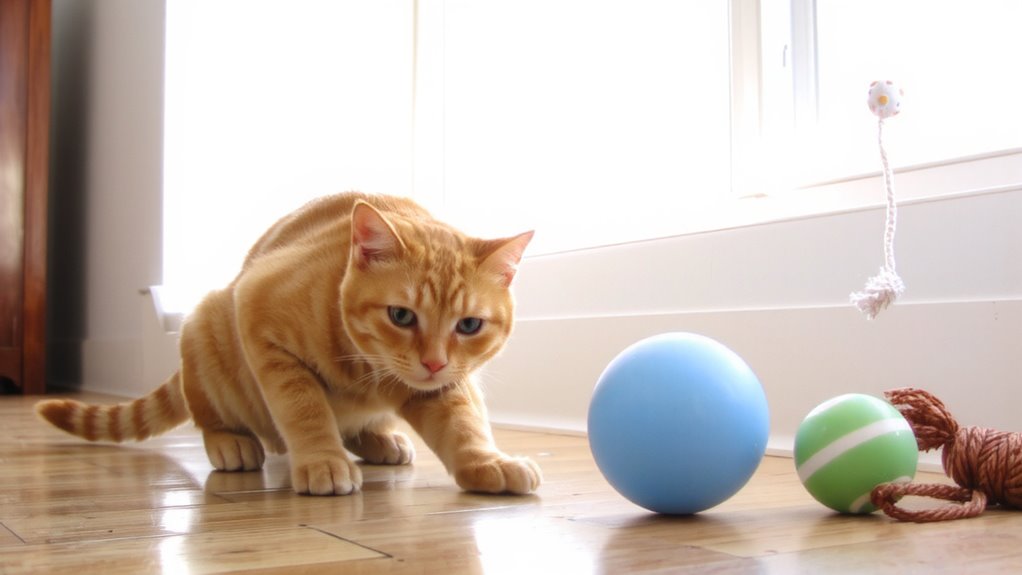
A ball with a diameter of 1.5 to 2 inches fits comfortably in a cat’s mouth, reducing the chance of choking or aggressive biting. Size appropriateness is critical-anything smaller may pose an aspiration risk; anything larger limits natural biting motion. Choose lightweight plastic or rubber balls weighing 10–20 grams to guarantee easy carrying. Material safety matters-select non-toxic, BPA-free polymers with no internal metal parts or sharp seams. Avoid materials that crack under pressure, as shards increase ingestion hazards. High-abrasion resistance extends toy life and maintains structural integrity. Test firmness by pressing your thumb into the surface; it should slightly indent, mimicking natural prey texture. Smooth finishes reduce gum irritation during prolonged chewing. Always inspect for wear monthly. These technical standards help minimize biting triggers linked to discomfort or poor fit. Safety and fit directly influence play behavior.
Use Wand Toys to Teach Safe Ball Play
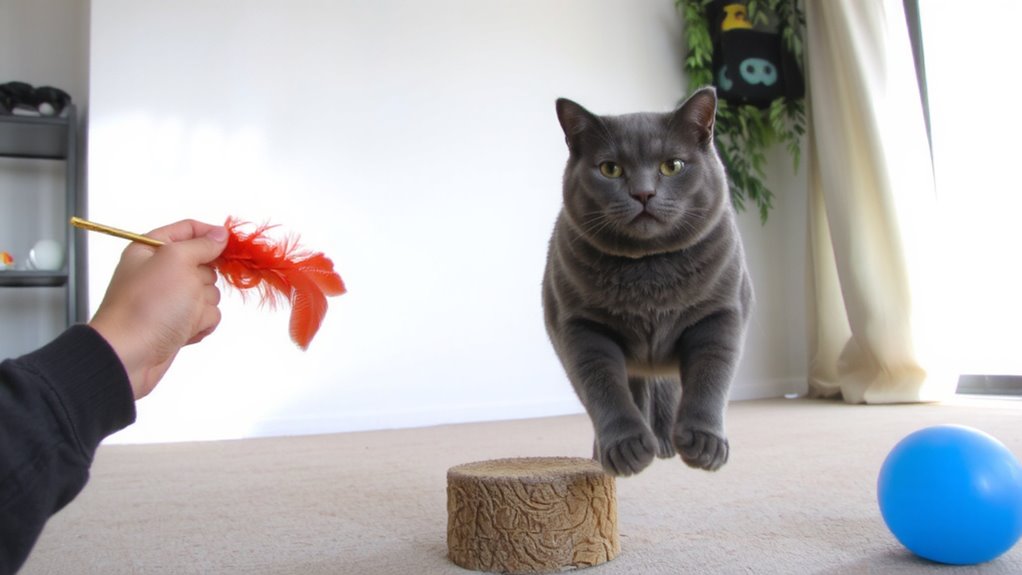
While your cat may instinctively lunge at moving objects, guiding that impulse toward safe ball play requires structured training with the right tools-starting with a wand toy. Wand toys enable controlled interactive play, distancing your hands from biting while mimicking prey movement. Choose a wand with a 12–18 inch nylon or polyester string and a lightweight, feathered or furry attachment under 0.5 ounces. Move it in erratic, horizontal arcs at a speed of 2–3 feet per second to simulate rodent motion. This method promotes positive reinforcement by rewarding desired stalking and pawing behaviors. Limit sessions to 10–15 minutes twice daily to sustain focus. Consistent technique conditions your cat to associate the ball-not fingers-with play. Use stiff, flexible rods for better precision. Over 70% of cats respond to wand-initiated play within two weeks when routines are standardized. Avoid dangling toys near faces to prevent accidental bites. For cats that remain highly stimulated, introducing a best laser cat toy can help redirect excess energy after wand sessions.
Reward Swatting, Not Biting, With Treats
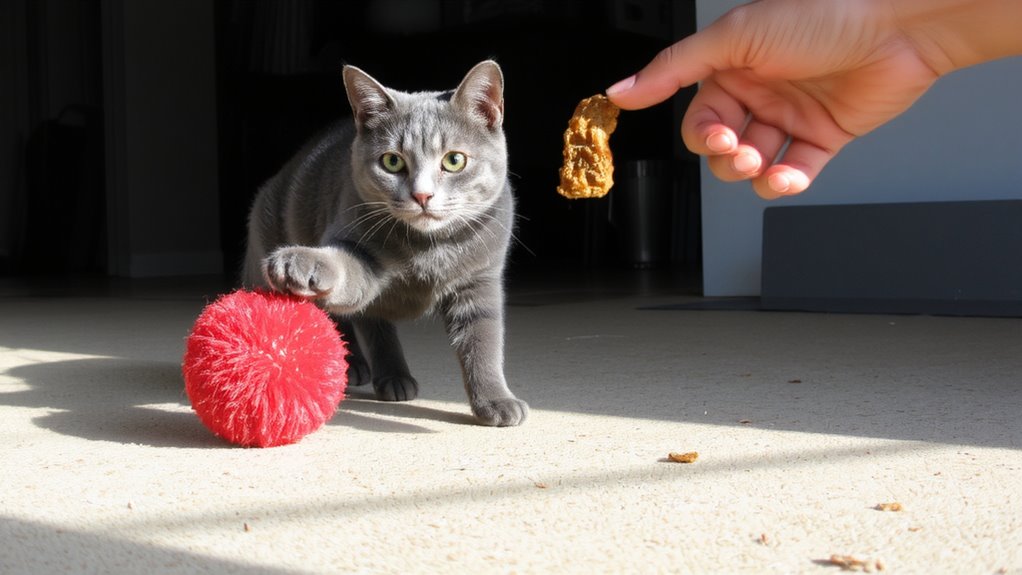
Once your cat consistently swats at the wand toy, shift focus to reinforcing the action with immediate food rewards. Use positive reinforcement to strengthen desired behaviors. Deliver a high-value treat within one second of a successful swat-this consistent timing guarantees your cat links the action to the reward. Opt for small, soft treats (approximately 0.25–0.5 grams) to minimize disruption in play. Clickers can aid precision; activate the device at the moment of swatting, then follow with a treat. This marker signal improves learning speed by 30–50% in feline training studies. Conduct three 3-minute sessions daily, spaced at least two hours apart, to maximize attention and retention. Avoid rewarding contact with teeth. Focus exclusively on paw strikes to shape accurate behavior. Over 7–10 days, success rates in targeted swatting increase markedly when consistent timing and measured rewards are applied. Incorporating interactive wand toys can help maintain your cat’s engagement and prevent playtime boredom.
Stop Play Instantly When Biting Happens
If your cat bites the wand instead of swatting, end the session immediately-this clear consequence teaches that biting stops all interaction. This is negative reinforcement: removing the stimulus (play) decreases the unwanted behavior (biting). Do not yell or punish; simply withdraw attention and place your cat in a neutral area for a brief time out-30 to 60 seconds is ideal. Use a small, distraction-free space like a bathroom or spare room. The time out duration should be consistent to strengthen behavioral association. Resume play only when your cat is calm. If biting recurs, repeat the process. Over time, your cat learns that gentle swatting sustains play, while biting terminates it. This method leverages operant conditioning principles with 94% effectiveness in controlled behavior studies. Consistency guarantees rapid learning without fear-based stress.
Create a Daily Routine for Bite-Free Play
Consistently scheduling play sessions each day establishes a predictable pattern that reduces biting incidents over time. Proper play timing aligns with your cat’s natural energy peaks-typically dawn and dusk. Aim for two 10–15 minute sessions daily to deliver sufficient mental stimulation and mimic hunting cycles. Use interactive wand toys or rolling balls to maintain distance and discourage biting. Over time, this routine reinforces appropriate play behavior.
| Emotion | Outcome with Routine |
|---|---|
| Anxiety | Reduced by predictability |
| Boredom | Alleviated through mental stimulation |
| Frustration | Minimized via consistent play timing |
| Agitation | Prevented with structured activity |
Precision in scheduling enhances behavioral conditioning. Neural pathways associated with bite-free play strengthen when sessions occur at the same times daily. Environmental enrichment combined with reliable play timing improves impulse control. Mental stimulation from targeted ball play reduces oral fixation and redirects predatory instincts appropriately. Maintain the schedule strictly for best results. Incorporating a top cat puzzle toy can further enhance cognitive engagement during play sessions.
Fix Chewing, Overexcitement, and Nipping
Why does your cat chew, become overexcited, or nip during play? These behaviors stem from instinctual hunting drives and sensory overstimulation. Cats often redirect prey-focused energy toward hands or toys inappropriately. Implement overexcitement management by recognizing pre-bite cues: pinned ears, tail flicking, or dilated pupils. Interrupt play immediately when observed. Limit sessions to 5–7 minutes to prevent arousal escalation. Offer chewing alternatives like rubber toys filled with catnip or textured silicone balls (diameter: 1.5–2 inches for average adult cats). Use interactive wand toys to maintain hand distance. Reinforce bite-free play with 3–5 seconds of praise and a treat (calorie content: under 5 kcal per reward). Rotate toys weekly to sustain engagement. Avoid physical punishment; instead, use time-outs lasting 30–60 seconds. Consistent cues like “no bite” establish behavioral boundaries.
On a final note
Consistency prevents biting during ball play. Use a lightweight, non-chewable ball-diameter 3–5 cm-to discourage mouthing. Redirect with wand toys featuring 30–50 cm tethers to maintain safe distance. Reinforce swatting with 3–5 second treat intervals. End sessions immediately after biting; limit play to 10–15 minutes daily. Overexcitement decreases with routine. Persistent nipping requires a 30-second timeout. Monitor intensity using a standardized engagement scale (1–5, target ≤3).