How to Create a Weight-Loss Diet for Dogs With Food Allergies and Obesity
Start with a vet-confirmed diagnosis of food allergies and obesity using a 9-point body condition score (BCS), where 7–9 indicates obesity. Implement an 8–12 week elimination diet with a hydrolyzed or novel protein formula to identify allergens. Feed 60–70% of your dog’s resting energy requirement (RER = 70 × body weight in kg^0.75) for safe weight loss. Use novel proteins like venison or duck (180–220 kcal per 100g) and avoid common allergens like corn, soy, and fillers. Measure food precisely using a digital scale to control portions within 10% of target intake. Choose complete, AAFCO-compliant diets with 21–26% crude protein on a dry matter basis from a single animal source. Formulate homemade meals with 50% lean protein, 35% vegetables, and 15% grain alternatives like sweet potato or buckwheat. Monitor weight every two weeks with a 0.1-pound scale and adjust calories by 5–10% monthly based on progress. Limit weight loss to 1–2% of body weight per week to avoid metabolic stress. Track symptoms, energy levels, and coat condition to assess dietary response. Further refinements to timing, formulation, and monitoring frequency can enhance outcomes.
Notable Insights
- Confirm food allergies and obesity with a vet using diagnostic elimination trials and body condition scoring.
- Use a hydrolyzed or novel protein diet with one animal source to minimize allergic reactions.
- Feed 60–70% of the resting energy requirement based on target weight for safe weight loss.
- Eliminate treats, flavored medications, and fillers to ensure diet accuracy and reduce inflammation.
- Monitor progress every 2 weeks with weigh-ins and veterinary check-ups to adjust food and nutrients.
Get a Vet-Approved Diagnosis for Allergies and Weight
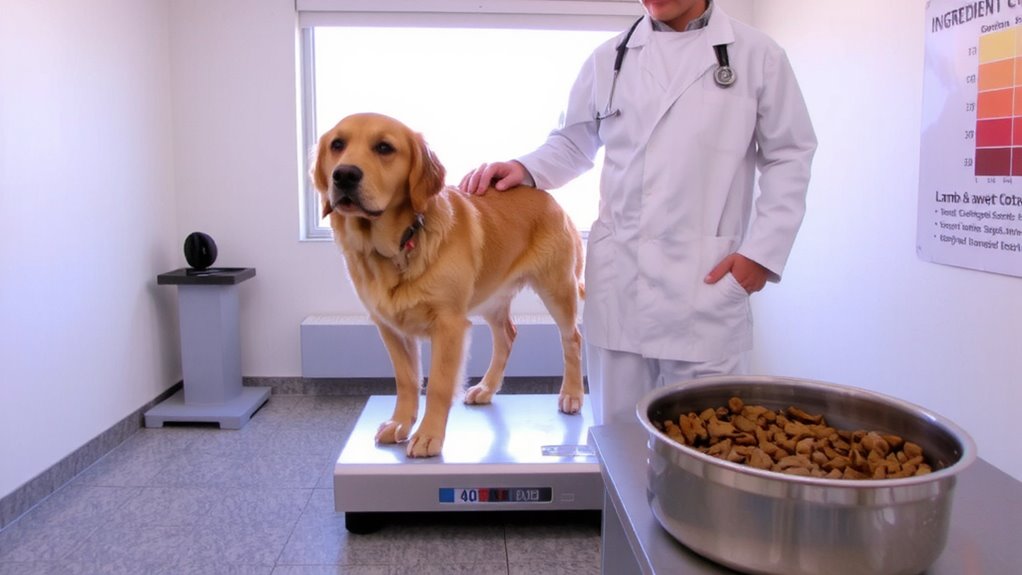
Before adjusting your dog’s diet, you need a vet-confirmed diagnosis to pinpoint both food allergies and the severity of obesity. A veterinarian will assess body condition score (BCS) and may classify your dog’s obesity as mild, moderate, or severe using a 9-point scale, where 7–9 indicates obesity. Food testing is essential to identify specific allergens. The gold standard is an elimination diet lasting 8–12 weeks, using a novel or hydrolyzed protein. During this period, no treats or flavored medications are allowed. You’ll monitor for reduced allergy symptoms such as pruritus, ear infections, or gastrointestinal upset. Blood and skin tests exist but have high false-positive rates. Accurate diagnosis guides safe weight loss. Without confirmation, dietary changes may worsen health issues. Proper documentation of food intake and symptom changes increases diagnostic accuracy. Always follow clinical guidelines to guarantee effective, safe outcomes. A highly effective option during an elimination diet is hydrolyzed dog food, which breaks proteins into small fragments to minimize allergic reactions.
Pick Low-Calorie, Hypoallergenic Protein Sources
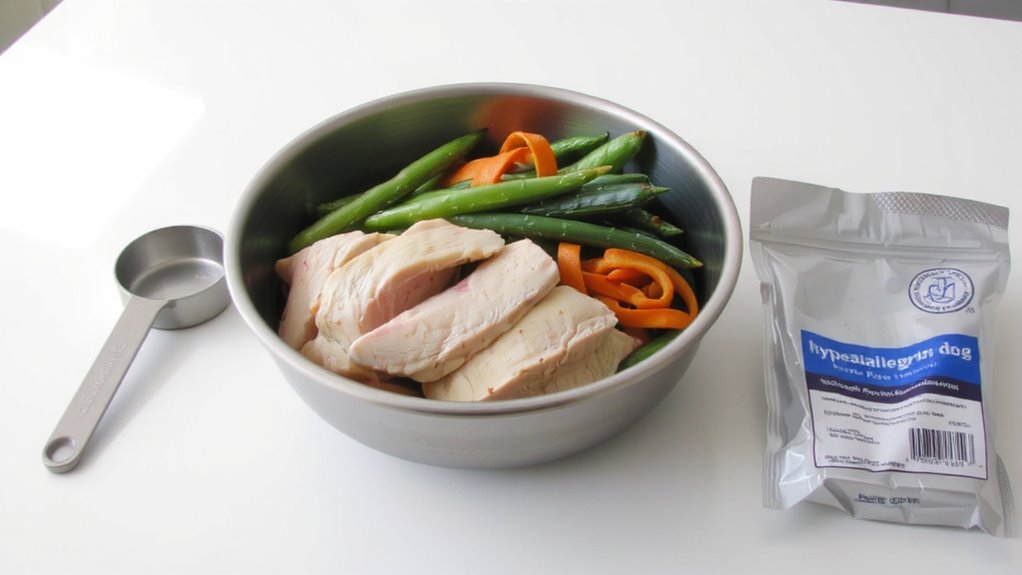
You’ll need to choose protein sources that are both low in calories and unlikely to trigger allergic reactions. Limited ingredients diets reduce exposure to potential allergens. Select novel proteins like venison, duck, or kangaroo, which your dog hasn’t eaten before, minimizing immune response risks. These proteins typically contain 180–220 kcal per 100 grams, lower than conventional beef (250–280 kcal). Hydrolyzed protein formulas, where proteins are broken into small peptides, also prevent allergic reactions. Look for foods listing one animal source as the primary ingredient, with crude protein levels between 21–26% on a dry matter basis. Avoid fillers such as corn or soy. Pair novel proteins with limited ingredients to isolate allergens and support weight loss. Always verify via AAFCO statements to guarantee nutritional completeness. This targeted selection reduces caloric load while maintaining muscle mass during weight loss.
Determine Your Dog’s Daily Calorie Goal for Weight Loss
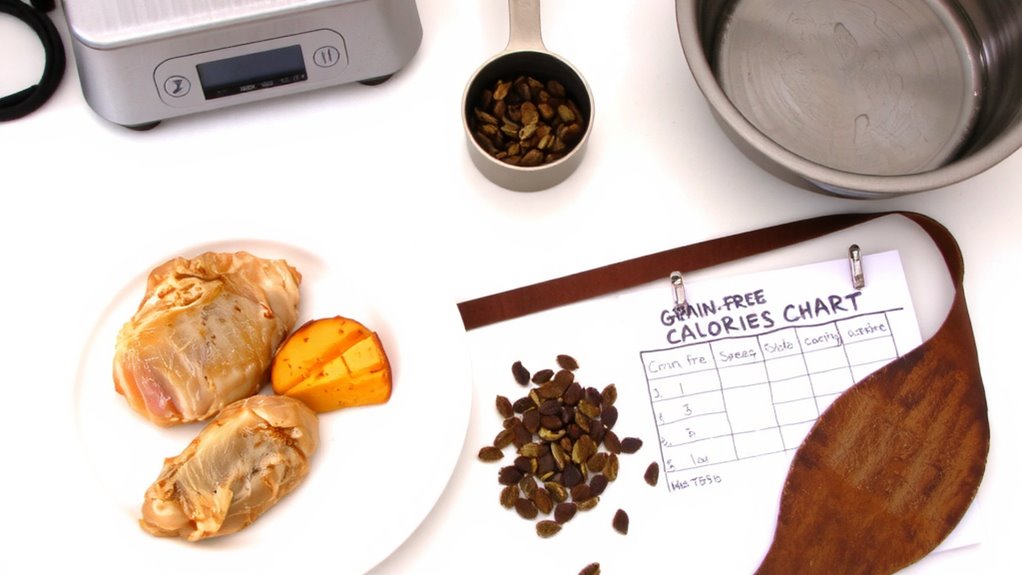
Selecting the right protein is just the first step-now you need to determine how much to feed. Your dog’s daily calorie goal depends on their ideal weight, not current weight. Start by calculating resting energy requirement (RER): multiply your dog’s target weight in kilograms raised to the ¾ power by 70. This accounts for their metabolic rate. For weight loss, feed 60–70% of the RER. A 10-kg dog aiming to lose weight needs roughly 250–300 kcal/day. Use a digital scale to measure food to the gram-precision guarantees proper portion control. Overfeeding by just 10% can stall progress. Monitor body condition score monthly and adjust calories by 5–10% if needed. Always consult your vet to tailor calorie targets based on age, activity, and health.
Make Complete Meals Without Common Allergens
While avoiding common allergens, you still need to guarantee your dog gets complete, balanced nutrition to support healthy weight loss. Use novel protein sources like venison, duck, or kangaroo, paired with grain alternatives such as sweet potato, buckwheat, or tapioca to reduce allergic reactions. These ingredients provide necessary carbohydrates without triggering sensitivities linked to wheat or corn. Formulate cooked portions using a precise 50% lean protein, 35% vegetables, and 15% grain alternatives ratio to assure nutritional balance. Each meal must include essential fatty acids, vitamins, and chelated minerals-add supplements if needed. Cooked portions allow better control over ingredients and digestibility, reducing inflammation. Avoid fillers, artificial preservatives, and high-fat additives. Weigh meals accurately to align with your dog’s daily calorie goal. Use veterinary-formulated recipes to meet AAFCO nutrient profiles, ensuring safe, effective weight loss without compromising health.
Track Progress and Adjust the Diet Safely
Consistent monitoring guarantees the dietary plan supports both weight reduction and allergy management without sacrificing nutritional integrity. You must monitor changes in body weight, coat condition, and energy levels every two weeks. Use a digital scale calibrated in 0.1-pound increments for accuracy. Adjust portions by 5–10% if weight loss stalls or adverse reactions appear. Do not exceed a 1–2% body weight loss per week to avoid metabolic stress. Below is a tracking guide:
| Week | Weight (lbs) | Daily Food (cups) |
|---|---|---|
| 1 | 50.2 | 2.0 |
| 3 | 49.0 | 1.9 |
| 5 | 47.8 | 1.9 |
| 7 | 46.5 | 1.8 |
Record all data diligently. Sudden shifts may indicate incomplete allergen elimination or caloric imbalance. Adjust portions based on trends, not single measurements. Continue veterinary check-ins every 4–6 weeks to validate progress and nutrient adequacy.
On a final note
You must confirm allergies and obesity through veterinary diagnostics before starting dietary changes. Choose hydrolyzed or novel protein diets with <200 kcal per cup to meet low-calorie, hypoallergenic requirements. Feed 70% of resting energy requirement (RER) for weight loss-RER = 70 × (ideal weight in kg)^0.75. Eliminate treats with allergens. Monitor weight biweekly, adjusting calories by 10% if progress stalls. Always shift food over 7 days to avoid GI upset.