Cloth Scent Markers: Teach Your Dog Scent ID (5 Drops, 90% Rule)
Start with 100% cotton 4×4-inch cloths, using one essential oil like anise to avoid confusion. Charge each cloth with five drops, let it dry, and present it at nose level. Use nitrile gloves to prevent contamination. Reward interaction immediately. Progress to identical containers with randomized positions-one holds the scented cloth. Use metal tins (3/10 permeability) or fabric pouches (9/10) based on difficulty. Mastery requires 90% accuracy over three trials; consistency strengthens odor memory. You’ll uncover advanced scent discrimination methods next.
Notable Insights
- Start training with one essential oil on a 100% cotton cloth to build foundational scent recognition.
- Use identical, ventilated containers to hide scented cloths and eliminate visual guessing.
- Introduce a second scent gradually, rewarding only correct discrimination to develop odor differentiation.
- Add mild distractions like breeze or noise once your dog achieves 90% accuracy in controlled settings.
- Space multiple scented cloths 12–18 inches apart to prevent pattern learning and test true scent identification.
Start Training With Scent Markers and Simple Smells
How do you begin building a dog’s scent detection skills? Start with cloth scent markers and simple target odors like anise or birch. Scent identification begins by conditioning your dog to associate one specific smell with a reward. Use 100% cotton training cloths, 4×4 inches, free of dyes or fragrances. Each cloth should be handled with nitrile gloves to prevent contamination. Introduce odor recognition in low-distraction environments, presenting only one scented cloth per session. Charge the cloth with five drops of essential oil, allowing it to dry completely before use. Present the cloth at nose level, encouraging investigation. Upon interaction, immediately mark and reward. Repeat daily for five to seven days, guaranteeing consistent reinforcement. Gradually increase complexity, but always guarantee clarity. This foundational step guarantees accurate scent identification and builds your dog’s confidence in odor recognition through repetition and precision.
Set Up Your First Scent Matching Game
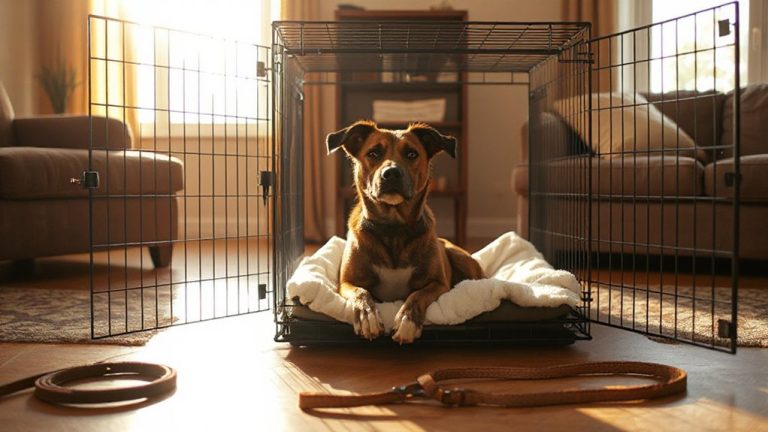
Where do you go after mastering basic scent recognition? You set up your first scent matching game. This step reinforces your dog’s ability to associate a target odor with a reward using scent container types that limit visual cues. Use identical containers-metal tins, plastic tubes, or fabric pouches-with small ventilation holes to release odor consistently. Position three empty containers and one holding the scented cloth. Reward immediately when your dog indicates the correct container. Precise reward timing strategies strengthen association; delay beyond two seconds weakens learning.
| Container Type | Odor Permeability (Rating) |
|---|---|
| Metal Tin | 3/10 |
| Plastic Tube | 6/10 |
| Fabric Pouch | 9/10 |
| Cardboard Box | 8/10 |
Use consistent placement and randomized positions per trial to prevent pattern learning.
Teach Your Dog to Tell Two Scents Apart
Now that your dog reliably identifies a single target scent, you can begin teaching discrimination between two distinct odors. Start by introducing a second cloth scent marker with a new, non-competing odor-such as anise alongside birch. Present both cloths simultaneously, one with the original target scent, the other unscented or neutral. Reward only correct selections of the target. Gradually replace the neutral cloth with a second scented one to establish odor discrimination. Use consistent 6-inch by 6-inch cotton cloths, each scented with precisely 3 drops of essential oil to maintain uniform odor concentration. This structured exposure sharpens your dog’s scent memory and prevents confusion. Repeat sessions for 5–7 minutes daily, increasing difficulty only after 90% accuracy over three consecutive trials. Accurate odor discrimination develops through repetition, precise stimulus control, and measurable response criteria.
Test Focus With Mild Distractions
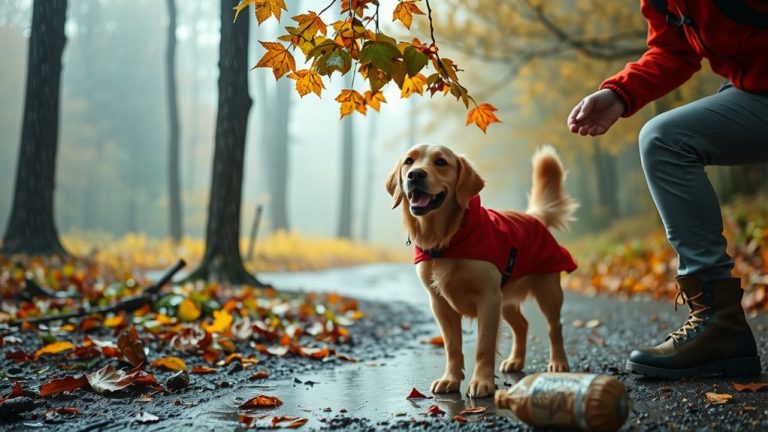
Once your dog consistently identifies the target scent under controlled conditions, you can begin introducing mild distractions to test focus and reinforce scent discrimination. Start with low-level environmental interference, such as a light breeze or background noise, to assess your dog’s ability to remain on task. These conditions simulate real-world variables without overwhelming the animal. Limit distractions to single variables-wind speed under 10 mph, for example-to maintain control over the training environment. Handler influence must be minimized; stand neutrally, avoid leaning, and keep your gaze averted to prevent unconscious cueing. Use a 6-foot nylon leash to allow slight movement without compromising control. Reward correct identifications within 3 seconds to maintain association clarity. Conduct five trials per session, collecting performance data for consistency. Accurate detection rates should remain above 80% before advancing.
Level up With Multi-Scent Challenges
How do you know your dog is truly scent-discriminating and not just guessing? You test with multi-scent challenges. Introduce three to five cloth scent markers, each infused with a different essential oil like anise, clove, or thyme. Only one matches your dog’s target scent. This setup demands accurate scent memory and prevents pattern recognition. Space markers 12–18 inches apart in a straight line to eliminate positional cues. Reward only correct identifications to reinforce precision. Advanced discrimination improves when scents are chemically similar, such as basil and oregano. Rotate target scents weekly to prevent habituation. These challenges measure cognitive flexibility and olfactory processing accuracy. Performance above 90% correct responses across three sessions indicates mastery. Multi-scent trials are essential for validating reliable detection skills under controlled conditions. They simulate real-world complexity without introducing emotional or environmental noise.
Boost Your Dog’s Mind With Scent Work
Every scent session strengthens your dog’s cognitive pathways, turning basic training into a mental workout. Scent games activate your dog’s olfactory system, which contains up to 300 million receptors-dramatically more than humans. This stimulation delivers essential mental enrichment, reducing stress and preventing destructive behaviors. Using cloth scent markers with distinct essential oils-like anise, clove, or birch-creates controlled, repeatable learning environments. Start with one target odor placed 1 meter away, gradually increasing complexity. Position markers at varied heights and substrates (grass, carpet, concrete) to simulate real-world conditions. Each session should last 5–7 minutes to maintain focus. Rotate scents weekly to prevent habituation. These structured scent games improve neural plasticity and sharpen focus. Consistent training yields measurable results: dogs learn to discriminate target odors within 10 to 15 sessions. You’re not just teaching detection-you’re building a sharper, more resilient canine mind.
On a final note
You’ve built a strong foundation in scent discrimination. Consistent training sessions enhance olfactory acuity and neural processing. Use 100% cotton swatches, 2 inches square, for reliable scent transfer. Introduce one new odor every 7–10 days to prevent interference. Each trial should last 90 seconds, with a 30-second rest interval. Dogs typically achieve 90% accuracy after 15–20 sessions. Scent work sharpens focus, strengthens cognition, and deepens handler-dog coordination through structured repetition.