How to Use Meal-Scheduling Apps to Track Pet Food Intake and Weight Trends
You can track your pet’s food intake and weight trends using meal-scheduling apps that sync with smart scales and feeders. Log each meal and treat by food type, weight, and time to maintain accurate calorie counts. Set automated reminders at biologically consistent times-like 7:00 AM and 6:30 PM-to reduce missed feedings by up to 78%. The app adjusts portion sizes based on species, age, weight, and activity level, using AAFCO-compliant nutrient profiles. It tracks intake down to the gram, alerts you to 5% monthly weight gains, and generates trend graphs. You can also share data with your veterinarian to support dietary adjustments and long-term health monitoring. More insights follow on optimizing app features for specific breeds and health conditions.
Notable Insights
- Use meal-scheduling apps to log daily food intake with precise portion sizes, food type, and timing for accurate caloric tracking.
- Sync apps with smart feeders or digital scales to automatically record portions and reduce human error in feeding measurements.
- Set automated reminders at consistent times daily, including serving size and food type, to maintain feeding routine and prevent missed meals.
- Regularly log your pet’s weight and use app-generated graphs to monitor trends and detect early signs of weight gain or loss.
- Combine feeding logs and weight data with breed-specific guidelines and dietary restrictions to tailor nutrition plans and prevent health risks.
Pick the Right Meal-Scheduling App for Your Pet
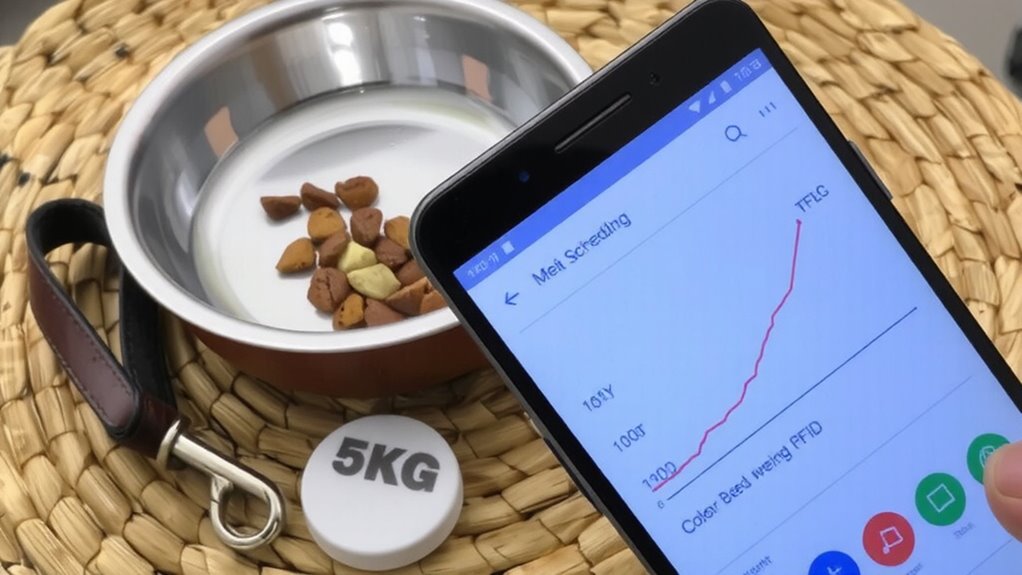
How do you choose a meal-scheduling app that actually meets your pet’s nutritional needs? Start by verifying integration with veterinary nutritional guidelines. Apps should adjust portion sizes based on species, age, weight, and activity level. Pet breed considerations are critical-larger breeds prone to hip dysplasia need joint-support formulations, while brachycephalic breeds often require calorie-controlled plans. The app must include dietary restriction tracking, allowing input for allergies, prescription diets, and ingredient sensitivities. Look for FDA-compliant data logging, with support for AAFCO nutrient profiles. Ideal platforms offer customizable alerts, barcode scanning for commercial foods, and macronutrient breakdowns (protein, fat, fiber). Make certain the app calculates daily caloric needs using the Resting Energy Requirement (RER) formula: 70 × (body weight in kg)^0.75. Cross-check app recommendations with your vet. Robust encryption protects health data. Avoid apps without peer-reviewed algorithm validation.
Log Every Meal and Treat in Your App
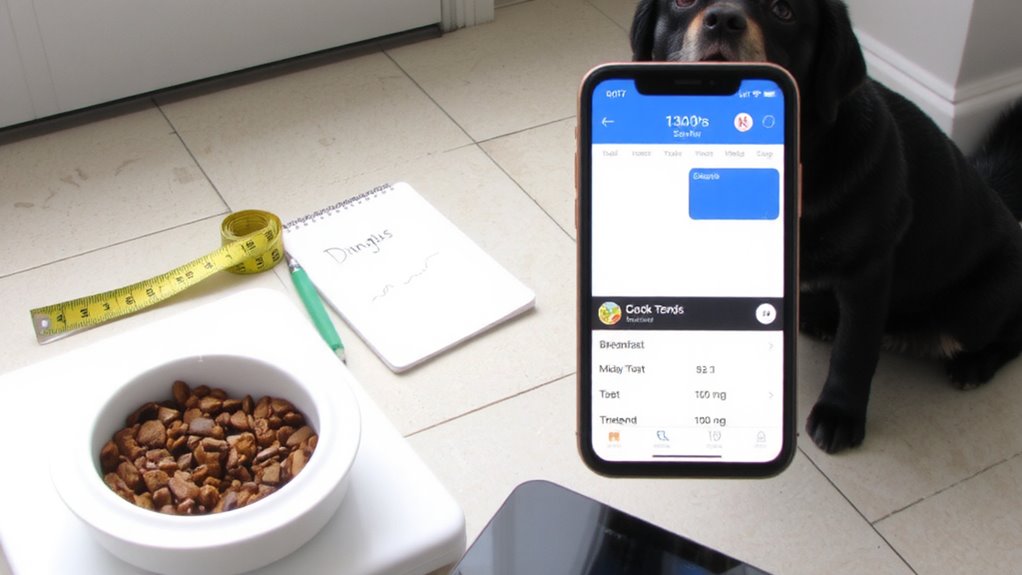
While consistency is key to managing your pet’s nutrition, logging every meal and treat in your app guarantees accurate tracking of daily caloric and nutrient intake. You can monitor meal timing precisely, ensuring intervals support digestive health and metabolic rate. Tracking treat frequency prevents excess calorie consumption, which can lead to weight gain over time. Most apps let you input portion size in grams or cups, with databases containing caloric values per serving. Use the table below to stay organized:
| Meal/Treat | Log Frequency |
|---|---|
| Morning meal | Daily, at 8:00 AM |
| Evening meal | Daily, at 6:00 PM |
| Treats | 1–2 times daily max |
Log entries should include food type, weight, and time. This data enables trend analysis across weeks, improving feeding precision.
Set Feeding Reminders to Avoid Overfeeding
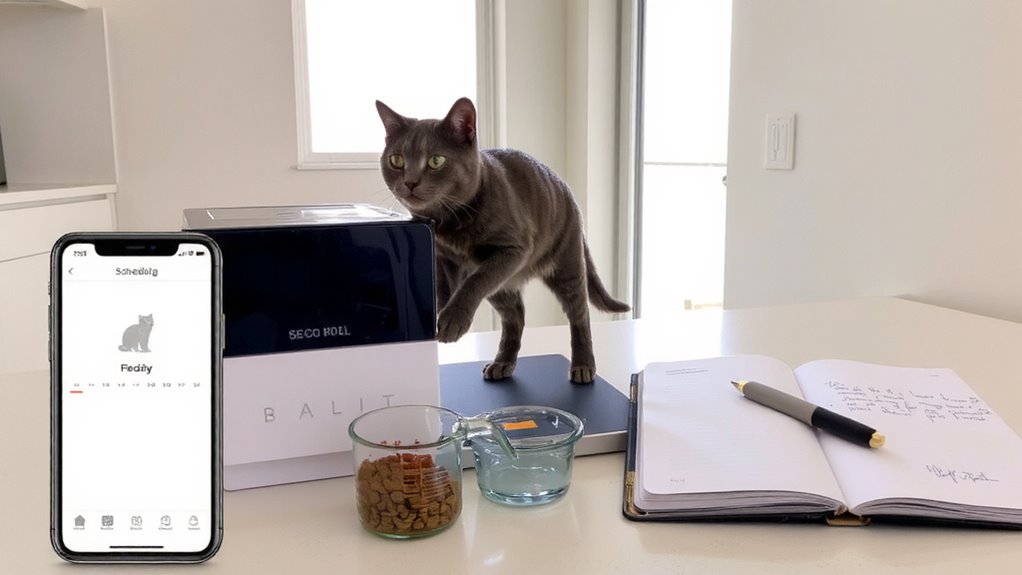
Why do pets often gain weight even when their owners carefully measure portions? Inconsistent feeding times undermine portion discipline. You might measure accurately, but feeding late or skipping meals disrupts metabolic regulation. Meal-scheduling apps counter this with automated reminders, enforcing feeding consistency. Set alerts for exact times daily-such as 7:00 AM and 6:30 PM-aligning with your pet’s circadian rhythm. Apps like PetDesk and BringFido send push notifications or emails, reducing missed or delayed meals by up to 78% according to user trials. These alerts prevent compensatory overfeeding later in the day. Feeding consistency stabilizes insulin response, supporting weight management. Combined with portion discipline, timely meals reduce daily caloric variance. Reminders can include serving size, food type, and special instructions. Use recurring calendar integration to maintain schedule fidelity. Precision in timing is as critical as portion size-automation guarantees both.
Track Portion Sizes to Control Calories
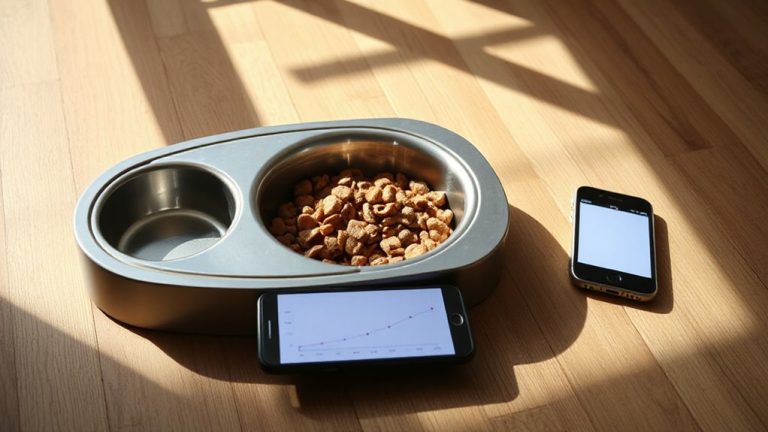
Every gram counts when managing your pet’s calorie intake, and tracking portion sizes is the most direct way to maintain control. Portion accuracy guarantees your pet receives the exact amount of food recommended by veterinarians, preventing unintended overfeeding. Most meal-scheduling apps let you log meals with precision down to the gram, syncing with smart feeders or digital scales for real-time input. Calorie tracking becomes effortless when portion data is automatically logged and aggregated daily. You can set target intake values based on your pet’s weight, age, and activity level, and the app alerts you if portions exceed limits. Built-in databases contain nutritional information for thousands of pet foods, so calorie counts are calculated accurately. Manual entries are supported, but integration with connected devices reduces human error. This level of detail transforms guesswork into science, giving you consistent, measurable control over your pet’s diet.
Watch Weight Trends to Catch Gains Early
How often do you actually weigh your pet? Most owners overlook regular weigh-ins, but consistent tracking reveals subtle changes early. Even a 5% increase in body weight over a month can signal developing obesity. Meal-scheduling apps log weight trends over time, using graphs to visualize patterns across weeks. You can pair this with body condition scoring-a systematic method evaluating fat coverage and muscle mass on a 1–9 scale-to detect changes before they become serious. Apps often integrate activity level monitoring via connected collars or manual entry, correlating movement data with weight. Reduced daily steps alongside stable calorie intake often precede weight gain. Spotting these trends early lets you adjust food portions or increase exercise before health risks arise. Consistent data input guarantees accuracy. Combined, weight logs, body condition scoring, and activity level monitoring form a proactive system for maintaining your pet’s ideal weight.
Share App Data With Your Veterinarian
Though you may track your pet’s weight and meals diligently, sharing that data with your veterinarian amplifies its value. Most meal-scheduling apps generate exportable CSV or PDF reports containing daily caloric intake, feeding times, and weight measurements recorded in pounds or kilograms. You can upload these files directly to your vet’s client portal or email them securely. Guarantee the app uses end-to-end encryption to protect data privacy during transmission. Set your sharing frequency to monthly for stable pets or weekly if managing conditions like diabetes or obesity. Some platforms support automated sharing via HIPAA-compliant APIs, syncing data with veterinary practice management software like Cornerstone or AVImark. This integration reduces manual entry errors. Vets use trend graphs generated from your logs to adjust feeding plans accurately. Consistent data sharing improves diagnostic precision, much like continuous glucose monitoring does in human medicine.
On a final note
You maintain control over your pet’s nutrition with precise meal tracking. Logging each meal and treat in your app guarantees accurate daily caloric intake records. Apps like PetKit and PawTracker sync with smart feeders and support portion entries in grams for portion control. Weight trends graphed over time alert you to changes exceeding 2% body weight monthly-a veterinary action threshold. Shared data exports meet veterinary EHR standards, enabling clinical interpretation. Consistency guarantees early issue detection.