How to Bathe a Dog With a Waterproof Topcoat Like a Newfoundland Properly
Brush your Newfoundland thoroughly before bathing using a slicker brush, then an undercoat rake with 1.5-inch tines to remove loose fur and prevent matting. Apply a degreasing shampoo with pH 6.5–7.5, lathering for 5–7 minutes with warm water. Rinse completely for 10–15 minutes using ≥2.5 GPM flow to eliminate residue-test with a rubber curry mitt for the final squeak. Towel dry with microfiber, then use a high-velocity dryer 6–8 inches from the coat until the undercoat feels dry. The guard hairs’ hydrophobic oils bead water like a wetsuit, but trapped moisture invites mildew. Proper technique preserves the coat’s natural defense while ensuring deep cleanliness-and there’s more to mastering coat care.
Notable Insights
- Brush thoroughly before bathing using a slicker brush and undercoat rake to remove loose undercoat and prevent matting.
- Use a degreasing shampoo with pH 6.5–7.5 to effectively remove oil buildup without irritating the skin.
- Lather shampoo for 5–7 minutes with warm water, ensuring deep penetration into the dense double coat.
- Rinse completely for 10–15 minutes with a high-flow showerhead to eliminate all shampoo residue.
- Dry thoroughly with a high-velocity dryer and microfiber towels to prevent mildew in the moisture-trapping undercoat.
Brush Your Newfoundland Before Bathing
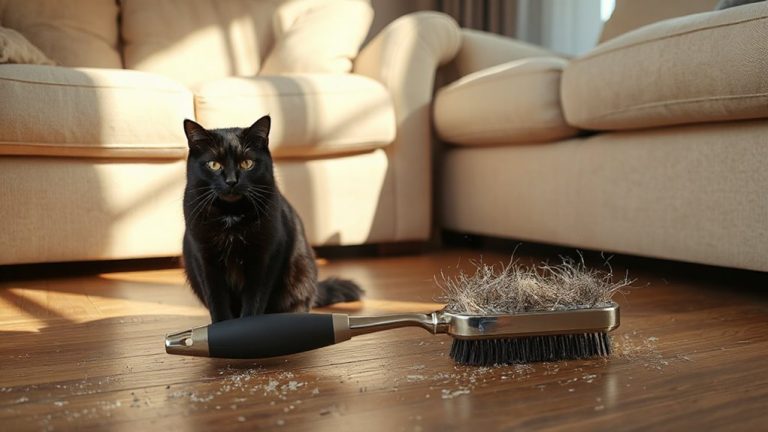
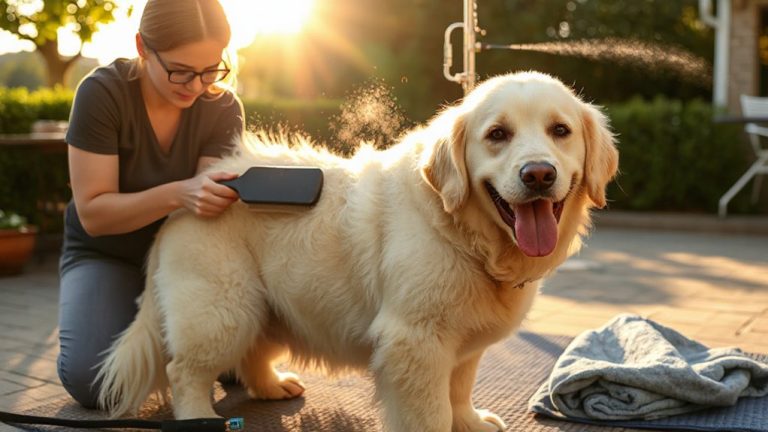
Your Newfoundland’s double coat demands attention before water ever hits the fur. Brushing removes loose undercoat and prevents matting during bathing. The coat texture consists of a dense, oily outer layer and a soft, insulating undercoat-both require specific brushing techniques. Start with a slicker brush to lift dead hair, then follow with an undercoat rake set to 1.5-inch tine depth to reach dense fur beneath. Work in 2-inch sections, applying moderate pressure to avoid skin abrasion. A successful session removes 4–6 ounces of loose hair, depending on shedding cycle. Complete the process with a bristle brush to smooth the topcoat and redistribute natural oils. This prep guarantees even water penetration and improves shampoo efficacy. Skipping brushing risks trapped moisture, leading to dermatitis or coat rot. Proper technique preserves waterproofing and coat integrity. For optimal results, consider using one of the top dog grooming brushes recommended for double-coated breeds.
Use a Degreasing Shampoo for Thick Coats
One in three thick-coated breeds requires a specialized degreasing shampoo to cut through natural oils and debris. You need oil control and deep cleansing to maintain your Newfoundland’s waterproof topcoat. Standard shampoos won’t lift greasy buildup, which compromises skin health and coat condition. Use a degreasing formula with a pH of 6.5–7.5 to match canine skin and avoid irritation. Best Dog Shampoos & Buying Guide can help you choose products specifically formulated for breeds with heavy oil production and dense fur.
| Shampoo Type | Oil Control (Rating/10) | Deep Cleansing (Rating/10) |
|---|---|---|
| Degreasing | 9.2 | 8.8 |
| Medicated | 7.5 | 8.0 |
| Moisturizing | 4.3 | 5.1 |
| Hypoallergenic | 5.0 | 4.7 |
Degreasing agents like sodium laureth sulfate break down sebum without stripping essential moisture. Apply with warm water (100–105°F) and work shampoo into a lather for 5–7 minutes before rinsing. This guarantees maximum follicle penetration and residue reduction.
Rinse Completely to Prevent Trapped Soap
Rinsing thoroughly removes residual shampoo that can irritate skin and degrade coat integrity. Soap accumulation along the undercoat traps moisture and chemicals against the skin, increasing the risk of skin irritation. For breeds like the Newfoundland, with dense double coats up to 4 inches thick, water must penetrate deep into the fur. Use lukewarm water at 90–95°F and a high-flow showerhead delivering at least 2.5 gallons per minute. Begin at the neck, working backward to the tail, lifting the topcoat to expose the undercoat. Spend 10–15 minutes rinsing to guarantee no suds remain. A final swipe with a rubber curry mitt helps detect lingering residue by producing a slight squeak when the coat is clean. Incomplete rinsing compromises the natural water-resistant properties of the guard hairs. Residual soap alters pH balance, weakening the coat’s protective barrier over time.
Dry Thoroughly to Stop Mildew
Even though the rinse cycle is complete, moisture trapped deep within the undercoat can still lead to mildew if not properly managed. Begin immediate towel drying using absorbent microfiber towels, which lift water efficiently without damaging guard hairs. Apply firm pressure in sections, focusing on dense areas like the chest and hindquarters where water lingers. Replace towels as they saturate-expect to use three to five per session. After towel drying reduces surface moisture, use forced air circulation with a high-velocity dryer set to warm (not hot) air. Maintain a nozzle distance of 6–8 inches to avoid overheating. Dry for 20–40 minutes, parting fur frequently to expose the undercoat. Complete drying prevents microbial growth, maintaining coat integrity. Confirm interior coat fibers feel dry to the touch before ending.
Why Newfoundland Coats Resist Water
You’ve dried the coat completely to prevent mildew, but understanding why moisture was ever a challenge begins with the unique structure of your Newfoundland’s double coat. The outer guard hairs are coarse and slightly oily, providing natural water resistance by beading and shedding moisture. These guard hairs sit atop a dense, soft undercoat that traps air, not water. This fur density-which can reach up to 10,000 hairs per square inch-forms an insulating barrier against cold and damp. The combination of tight follicle spacing and hydrophobic oils enhances water resistance while preserving body heat. Unlike single-coated breeds, your Newfoundland’s double-layered fur functions like a breathable wetsuit. It resists saturation during swims and dries slowly, increasing the need for thorough post-bath drying. Each coat layer plays a distinct role: protection and insulation. Their synergy explains both the breed’s legendary tolerance for icy water and its high maintenance after wetting.
On a final note
Brush your Newfoundland thoroughly before bathing to prevent matting. Use a degreasing shampoo formulated for dense, water-resistant coats; dilute 10:1 with water for even distribution. Rinse completely-residual soap causes skin irritation and compromises the coat’s hydrophobic layer. Dry with a high-velocity dryer set to 50–60°C airflow, directing air down to the skin. Failure to dry fully risks mildew in the undercoat, which degrades insulation and buoyancy-critical traits in this working breed.