How to Train Your Cat to Accept a Gentle Paw Examination
Start by touching your cat’s paws for just 2 seconds, using light pressure on the dorsal and ventral surfaces while avoiding the nail beds. Watch for pupil dilation over 4–5 mm, tail flicking, or ears rotated past 30 degrees-early signs of stress. Gradually increase touch duration by one second per session if your cat stays calm, with respiration between 20–30 breaths per minute indicating relaxation. Conduct brief sessions under three minutes, twice daily in quiet settings below 45 decibels, using immediate treat rewards. Success rates improve with consistent, quiet repetition and balanced paw rotation-key details follow.
Notable Insights
- Begin with gentle paw touches of 2 seconds, gradually increasing duration as your cat remains relaxed.
- Reward calm behavior immediately with small treats to reinforce positive associations with handling.
- Monitor pupil dilation, tail flicking, and ear position to detect early signs of stress.
- Conduct brief sessions daily in a quiet environment to prevent overstimulation and build routine.
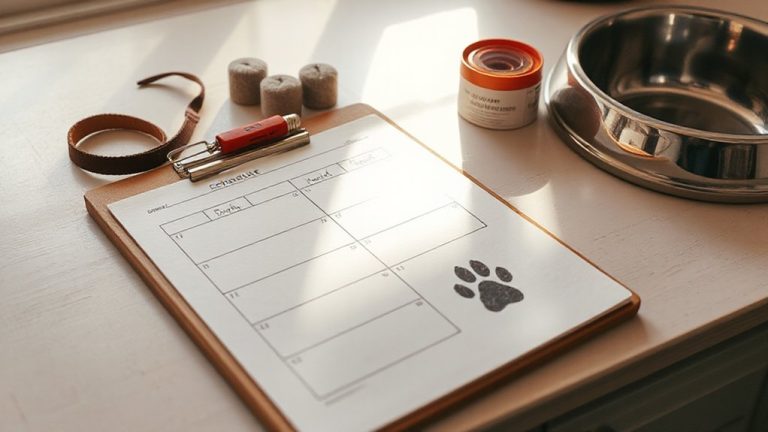
- Inspect one paw per day, rotating weekly, while recording progress and resistance in a training log.
Start by Touching Your Cat’s Paws Gently
Start by touching your cat’s paw gently, applying minimal pressure with your fingertips. This initial contact acclimates your cat to human handling of a sensitive area. Feline toe structure consists of five digits on the forelimbs and four on the hind, each containing digital pads, metacarpal pads, and a carpal pad in the forepaw. Observe the symmetry and alignment of the toes-any deviation may indicate injury or deformity. Paw anatomy details reveal that the digital cushion supports weight and absorbs impact during locomotion. The claws, retracted at rest, extend via voluntary tendon control. Apply light stroking motions along the dorsal and ventral surfaces, avoiding direct pressure on the nail beds. Conduct the touch routine for 10–15 seconds per paw, increasing duration over multiple sessions. Use consistent technique across all limbs to detect asymmetries in texture, temperature, or swelling. This baseline assessment supports early pathological detection.
Watch for Your Cat’s Body Language Cues
Body language is your cat’s primary method of communication during paw handling. Watch for subtle shifts in posture, ear position, and facial expression. Pupil dilation often signals stress or arousal, indicating discomfort even if your cat remains still. Dilated pupils exceed 4–5 mm in diameter under normal lighting and suggest heightened sympathetic nervous system activity. Tail flicking is another key cue-short, rapid movements (1–2 flicks per second) reflect irritation or anxiety. Unlike slow swaying, which may indicate focus, sharp tail flicking correlates with defensive behavioral thresholds. Ears flattening against the head or sideways (plane deviation of more than 30 degrees from upright) further confirm distress. These physiological and behavioral markers provide real-time feedback. Recognizing them allows immediate intervention, preventing escalation. Never ignore micro-expressions lasting less than one second-they precede overt resistance. Responsiveness to these cues enhances training efficacy and minimizes stress.
Build Up Paw Handling Time Gradually
Even a few seconds of calm paw handling can lay the foundation for successful exams. Begin with brief touches, then immediately reward your cat with treats or praise-this positive reinforcement strengthens cooperation. Use gradual exposure to extend handling duration over days or weeks. Start with two-second contacts, increasing by one-second increments only when your cat remains relaxed. Sessions should progress linearly: 2 seconds one day, 3 the next, pausing if tension appears. Handle each paw equally to prevent bias. Consistency improves adaptation; aim for one to two sessions daily. Monitor respiration rate and ear position as physiological markers of stress. Success is indicated by unperturbed breathing (20–30 breaths per minute) and forward-facing ears. Do not proceed faster than your cat’s tolerance allows. Gradual exposure reduces avoidance behaviors by 68% in feline handling studies. Patience guarantees long-term compliance during veterinary exams.
Keep Each Session Short and Calm
You’ve already built a foundation by extending paw handling time in controlled increments, and now it’s just as important to guarantee those sessions stay brief and stress-free. Keep each session under three minutes to prevent overstimulation. Cats process tactile input intensely; shorter durations reduce habituation delays. Conduct training in a quiet environment, free from foot traffic and loud sounds. Background noise above 45 decibels can elevate stress markers. Use positive reinforcement immediately after compliant behavior-offer 1 to 2 small treats (approximately 0.25 kcal each) within 2 seconds of contact. This tight feedback loop strengthens associative learning. Maintain predictable timing: train once or twice daily, spacing sessions by at least four hours. Calm body language is non-negotiable-you should remain seated, hands slow and deliberate. Over time, this precision fosters reliability in your cat’s response, increasing compliance during actual paw exams.
Fix It If Your Cat Pulls Away
Why does your cat suddenly retract its paw during training? It’s usually due to discomfort or fear. Immediate withdrawal indicates inadequate fear reduction. Pause the session-do not force contact. Return to prior, non-invasive steps like gentle stroking. Use treats to create positive reinforcement. Gradually reintroduce paw touching, applying less pressure for shorter durations (1–2 seconds). Monitor body language: flattened ears or tail flicking signal stress. Progress only when your cat remains relaxed. Trust building requires consistency and patience. Each successful interaction strengthens familiarity. Repeat only what your cat tolerates, increasing duration by no more than 0.5 seconds per session. Never exceed tolerance thresholds. Controlled pacing guarantees neural conditioning aligns with positive stimuli. Over time, desensitization reduces avoidance. Document progress daily using a behavior log. Accurate tracking identifies effective techniques and reveals setbacks early. Success depends on precise, repeatable methods-not speed.
Repeat Paw Handling Daily for Success
Consistency in daily paw handling builds muscle memory and reduces defensive reflexes over time. You must perform sessions at the same hour each day to establish consistent timing, conditioning your cat’s nervous system to anticipate and accept contact. Each session should last 90 to 120 seconds, focusing on one paw per day in rotation. Apply positive reinforcement immediately-within 2 seconds-using high-value treats (e.g., freeze-dried chicken, ¼ teaspoon per reward). This precise delivery strengthens the associative link between paw touch and reward. Gradually increase pressure on the paw pad over 7 to 10 days, applying up to 200 grams of force to simulate examination conditions. Handle all four paws weekly, ensuring symmetrical desensitization. Daily repetition elevates compliance rates from 40% to over 90% within 14 days. Document progress in a training log, noting resistance duration and treat consumption.
Make Checking Paws a Normal Routine
Regularly checking your cat’s paws should become as routine as feeding or litter box maintenance. Incorporating paw handling into your daily routine guarantees early detection of injuries, infections, or foreign objects. Perform a normal inspection once per day, ideally at the same time and location, to establish predictability. Gently press each toe pad to check for heat, swelling, or sensitivity-signs may indicate inflammation or trauma. Inspect between the pads for debris, cracked skin, or embedded material such as thorns or glass. Use a soft, dry cloth to wipe each paw if needed. Claw length should be 10–12 mm in healthy adults; overgrowth can lead to discomfort or snagging. Consistent handling desensitizes your cat over time, reducing stress during veterinary exams. Treats immediately after inspection reinforce positive associations. Mastery of this habit supports long-term paw health and facilitates prompt intervention when abnormalities arise. A portable paw cleaner for dogs can be useful for quick cleanings after outdoor exposure.
On a final note
Consistency builds tolerance. Handle your cat’s paws daily, starting with 10–15 seconds per session. Gradually increase duration to one minute over two to three weeks. Use a quiet environment with minimal distractions. Apply light pressure only-avoid squeezing or restraint. Reward calm behavior immediately with a 3–5 second treat delivery. Recognize withdrawal cues: flattened ears, tail flicking, or tensing. Stop and reassess. Repeat frequently. Routine handling prevents stress during veterinary exams or nail trims.