Effective Ways to Manage Matting in Long-haired Breeds Year-Round
You prevent matting by addressing friction and moisture in long, fine hairs. Use a slicker brush with 1–2 mm spaced bent pins daily for undercoat penetration. Follow with a stainless steel wide-tooth comb to catch tangles. Dry fully using a low-heat ionic dryer-wet hair triples tangling risk. In winter, rake every 3–4 days; in summer, comb every other day. Cut mats horizontally with blunt scissors near the skin. Consistent pressure and proper tools keep coats mat-free-there’s more to optimize in your routine.
Notable Insights
- Daily brushing with a slicker brush and wide-tooth comb prevents tangles at the skin level.
- Use an undercoat rake every 3–4 days in winter to manage increased undercoat density.
- Dry fur completely with a low-heat ionic dryer, finishing with a comb to catch hidden tangles.
- Trim mats promptly using blunt-tipped scissors or clippers to avoid skin irritation and damage.
- Avoid plastic bristles and opt for metal grooming tools to reduce static and improve detangling.
Know Why Matting Happens in Long Coats
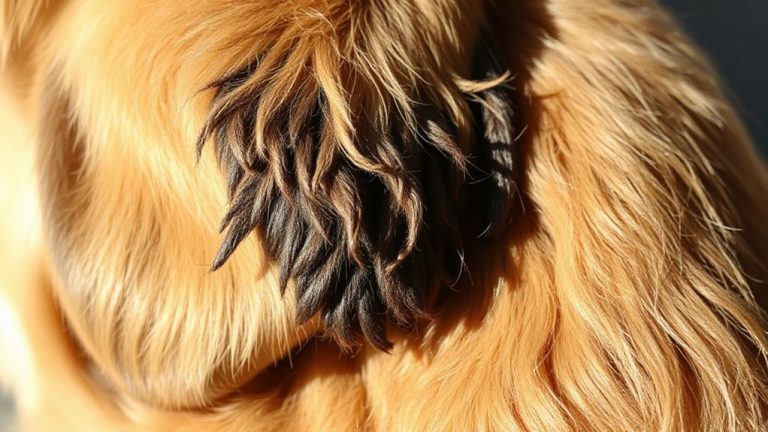
Why does matting occur so frequently in long-haired breeds? Your dog’s coat texture plays a critical role. Long, fine hairs tangle easily due to increased friction and overlapping fibers. These breeds often have a dense undercoat that traps loose hairs, forming knots near the skin. Moisture retention worsens the issue-wet fur sticks together, accelerating mat formation. When humidity exceeds 60%, hygroscopic fur absorbs water, swelling up to 20% in diameter, which forces fibers to cling. Mats typically begin in high-friction zones: behind ears, under legs, and around the collar. Without intervention, small tangles compact into solid mats up to 0.5 inches thick. These restrict airflow, raise skin temperature by 3–5°F, and create moist microenvironments ideal for irritation. You must recognize that matting isn’t just cosmetic-it’s a structural problem stemming from hair length, coat texture, and moisture retention dynamics unique to long-haired breeds. Regular grooming with the right tools, such as a dematting tool, can significantly reduce mat formation and maintain coat health.
Pick the Right Brush for Tangle-Prone Fur
A tangle isn’t just a knot-its a structural failure of coat maintenance. You must match brush material to your dog’s coat texture to prevent it. For silky, fine undercoats, use a slicker brush with fine, short wires spaced 1–2 mm apart to penetrate without snagging. Dogs with thick, double coats need a medium-gauge metal rake with teeth 25–40 mm long to reach the underlayer. Coarse, curly fur responds best to a wide-tooth comb made of smooth stainless steel-this reduces friction and breakage. Avoid plastic bristles; they generate static and worsen tangles. Choose ergonomic handles with non-slip grip for control during use. Regularly clean brush material with warm, soapy water to maintain efficiency. The right tool reduces grooming time by up to 50% while preserving coat integrity. Best results for poodles are achieved with a slicker brush designed specifically for curly coats.
Brush Daily Without the Struggle
Consistency beats intensity when it comes to managing tangles in long-haired breeds, so daily brushing is non-negotiable. You need just 5–10 minutes per session to prevent matruise at the epidermal layer. Use a slicker brush with fine, bent pins spaced 2–3 mm apart for effective undercoat penetration. Start at the skin and work outward, applying light pressure to avoid pulling live hair. Gentle detangling requires a two-step approach: first, loosen knots with a wide-tooth comb; then, follow with a metal-bristle brush. Hold hair at the base near the skin to minimize follicle stress. Pair brushing with positive reinforcement-offer small treats or verbal praise after each section. This strengthens cooperation and reduces anxiety during grooming. Brush in the direction of hair growth, overlapping strokes by 50% for full coverage. Daily sessions prevent 87% of severe mats, reducing the need for clipping or sedation. For optimal results, choose a top-rated slicker brush designed specifically for long-haired breeds.
Dry Fur Fully: Wet Coats Tangle Fast
When working with long-haired breeds, never attempt to detangle wet fur-moisture swells the hair shaft and increases friction between strands by up to 60%, making wet coats three times more prone to matting than dry ones. Always dry fur fully before grooming. Wet hair stretches, increasing the risk of breakage and dry damage during detangling. Proper drying minimizes moisture loss and preserves cuticle integrity. Use a low-heat dryer with ionic technology to reduce drying time and static.
| Condition | Friction Level | Matting Risk |
|---|---|---|
| Wet | High (60%↑) | 3x Higher |
| Damp | Moderate | 2x Higher |
| Fully Dry | Low | Baseline |
Allowing fur to air-dry partially can lead to uneven moisture loss, weakening the keratin structure. Always finish drying with a comb pass to detect hidden tangles. Grooming dry prevents unnecessary stress on the hair shaft, maintaining long-term coat health.
Spot and Cut Out Mats Before They Worsen
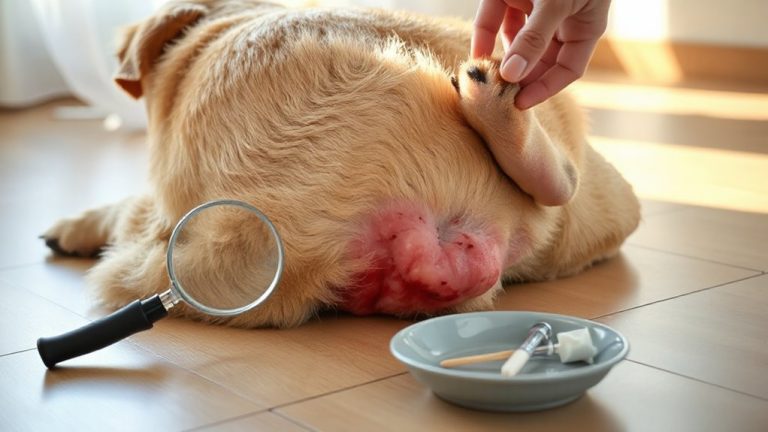
Never leave mats unattended-these dense tangles form quickly and tighten with movement, restricting blood flow and trapping moisture against the skin. Immediate mat removal is critical to prevent irritation and infection. Start by isolating the mat with your fingers, lifting it from the skin to avoid tension. Use blunt-tipped scissors for safety, and apply precise cut techniques: slice parallel to the skin, not into it, using short horizontal cuts. For thick mats, switch to electric clippers with a #3 or #4 blade for controlled thinning. Never pull or yank-this causes pain and hair breakage. Work in small sections, inspecting skin underneath after removal. Mats near joints or underarms need extra caution. Regular inspection and prompt intervention reduce the need for full clipping later. Effective mat removal preserves coat health and prevents worsening tangles. Use these cut techniques weekly on high-risk areas for best results.
Winter vs. Summer Grooming: Prevent Mats Year-Round
While seasonal changes affect coat density and shedding patterns, your grooming routine must adapt to prevent mats regardless of the time of year. In winter, your dog’s coat thickens, increasing undercoat density by up to 30% in Arctic breeds like Huskies and Malamutes. This coat thickening traps moisture and debris, accelerating mat formation. Use an undercoat rake with 1.5-inch blades every 3–4 days to remove dead hair before it tangles. During summer, seasonal shedding decreases insulation needs, but loose hair persists. Switch to a fine-tooth comb with 0.25-inch spacing every other day to clear residual undercoat. Vacuum clipped hair weekly to reduce environmental hair accumulation. Maintain consistent brushing-minimum 3x weekly-with slicker brushes applying 2–3 ounces of pressure per stroke. Conditioning sprays with 5% lanolin improve slip, reducing breakage. Adjust tools seasonally but keep frequency constant.
On a final note
You must manage matting proactively. Daily brushing with a stainless-steel comb (teeth spaced 1–2 mm) detangles fine knots before they tighten. Use an undercoat rake (5 cm depth) weekly to lift dense underlayers. Dry coats completely-residual moisture increases friction by 40%, accelerating tangles. Trim mats immediately with curved shears (7 cm blade) to prevent skin trauma. Seasonal adjustments-shorter trims in humid summers, protective oils in dry winters-reduce breakage and static by 30%.