Natural Remedies for Managing Matting in Medium-haired Dog Breeds Year-Round
You should brush your medium-haired dog daily using a slicker brush and metal comb to prevent mats. Their dense undercoat-up to 15,000 hairs per square inch-traps loose fur and moisture, especially behind ears and under legs. Use a homemade spray of 1 cup water, 2 tablespoons apple cider vinegar, and 5–10 drops of pet-safe lavender oil to smooth cuticles. Bathe with colloidal oatmeal shampoo to protect natural oils. Towel dry with microfiber, then use a high-velocity dryer 12–18 inches from the coat for complete subcutaneous drying. Effective routines reduce matting by over 70%, and consistent care leads to better coat health throughout each season.
Notable Insights
- Daily brushing with a slicker brush and metal comb prevents tangles and removes loose fur in medium-haired breeds.
- Apply a dilute apple cider vinegar spray to smooth hair cuticles and reduce matting in prone areas.
- Use oatmeal-based shampoos to clean and soothe skin without stripping natural oils that protect the coat.
- Towel and dry thoroughly with a high-velocity dryer to prevent moisture-related tangles and undercoat clumping.
- Focus routine grooming on friction zones like ears, underarms, and belly to stop mats before they form.
Why Medium-Haired Dogs Get Mats Easily
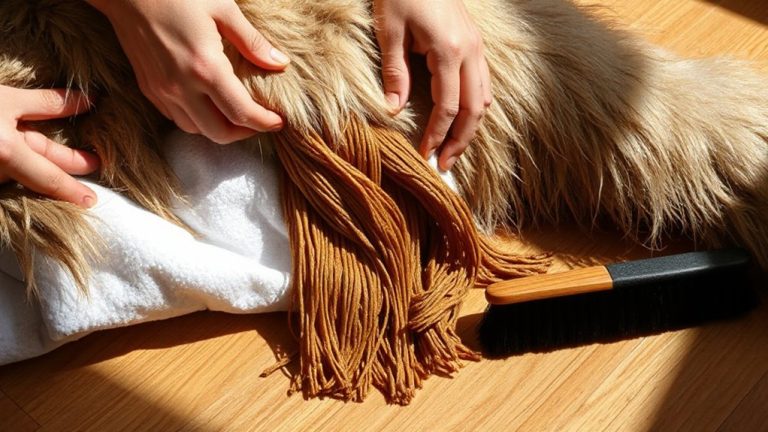
A medium-haired dog’s coat often traps loose fur, dirt, and moisture, creating the perfect environment for mats to form. Your dog’s coat texture allows outer hairs to tangle easily with undercoat fibers, especially when dead hair isn’t shed cleanly. You’ll notice that breeds with moderate coat texture-like Cocker Spaniels or Collies-have guard hairs 2–5 inches long, which overlay a dense undercoat. This undercoat density can exceed 15,000 hairs per square inch in peak shedding seasons, increasing friction and interlocking. Without intervention, these fibers compress into tight clusters close to the skin. Moisture from swimming or humidity softens the cuticle layer, making hairs more prone to adhesion. Mats typically start behind ears, under legs, and along the belly-areas with high friction and airflow restriction. The combination of medium-length guard hairs and thick undercoat creates a matrix that naturally encourages mat formation when grooming is inconsistent.
Brush Daily to Prevent Tangles Naturally
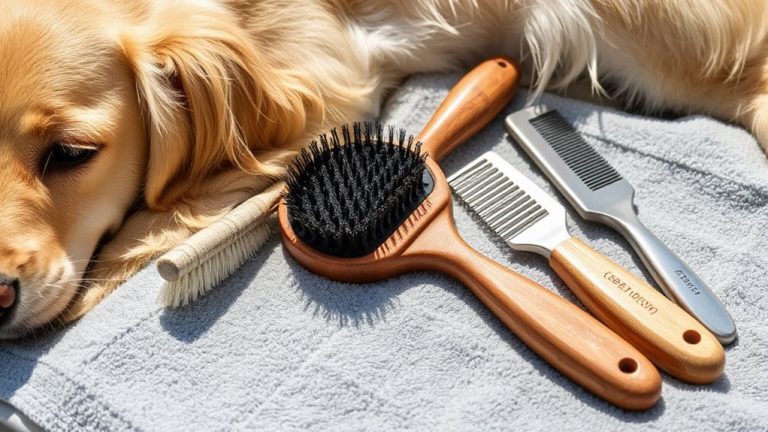
Regularly brushing your dog’s coat is the most effective way to prevent mats from forming. Daily brushing removes loose unfavor, distributes natural oils, and catches tangles early. Use a slicker brush followed by a metal comb for best results-this combination addresses both surface and undercoat layers. Proper brushing techniques involve short, overlapping strokes, starting at the head and moving rearward, following hair growth direction. Pay close attention to friction-prone areas like behind the ears, underarms, and hind legs, where mats develop rapidly. Invest in high-quality detangling tools such as wide-tooth combs and mat splitters with stainless steel blades; these tools separate knots without damaging skin. A detangling rake with 1-inch curved teeth effectively penetrates thick undercoats. Consistent daily sessions of 5–10 minutes markedly reduce matting incidents by over 70%, according to veterinary dermatology studies. Prevention through routine care outperforms remedial solutions. For especially stubborn shedding, consider using a best deshedding tool to minimize loose hair before it contributes to matting.
Make a Natural Detangling Spray at Home
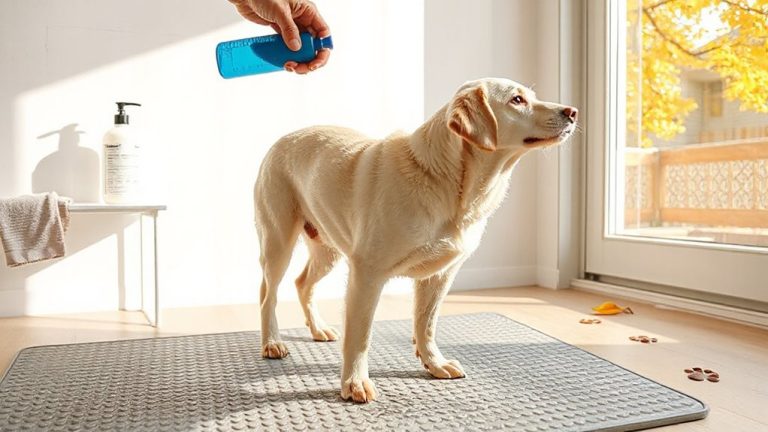
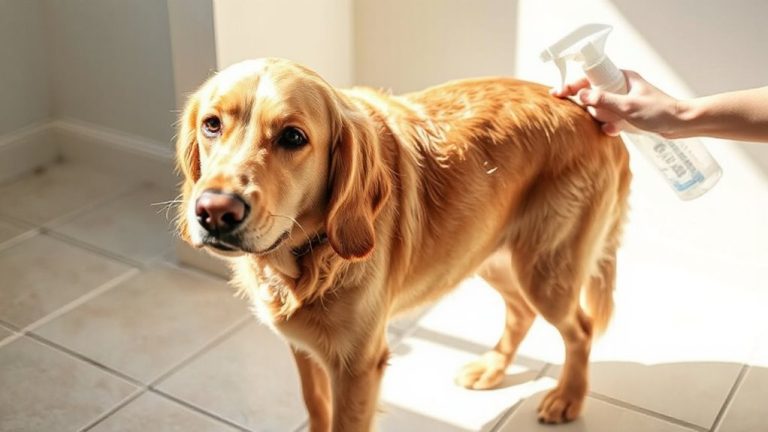
You can easily create an effective natural detangling spray at home using simple, non-toxic ingredients. Combine 1 cup of filtered water with 2 tablespoons of apple cider vinegar in a clean spray bottle. The acetic acid in apple cider vinegar helps loosen tangles by smoothing the hair cuticle and balancing skin pH. Add 5–10 drops of pet-safe essential oils-such as lavender or chamomile-for mild antimicrobial properties and a soothing scent. Avoid tea tree or citrus oils; they’re toxic to dogs. Shake well before each use to emulsify ingredients. Apply sparingly to damp or dry fur, focusing on prone areas like behind ears and underarms. Part hair and spray directly onto mats. Wait 30 seconds to allow the solution to penetrate. Work through knots gently with a wide-tooth comb. The solution improves slip, reducing breakage during detangling. Use immediately or store for up to two weeks in a cool, dark place. For pet owners also managing litter box training, a quality cat litter training kit can simplify the process for multi-pet households.
Use Oatmeal Shampoo for Sensitive Coats
While commercial shampoos often contain harsh surfactants, oatmeal-based formulas offer a gentler alternative for dogs with sensitive or irritated skin. Oatmeal benefits include soothing inflammation and preserving natural coat oils, critical for preventing dryness that leads to matting. For medium-haired breeds, regular use of oatmeal shampoo supports coat integrity without stripping protective lipids. This formulation guarantees effective cleansing while minimizing irritation. You should select products labeled “colloidal oatmeal” to guarantee particle size efficacy. Proper rinsing prevents residue buildup. Oatmeal shampoo is ideal for dogs with sensitive skin, supporting long-term coat health and mat prevention. One of the top choices for this purpose is a best dog shampoo for itchy skin that combines colloidal oatmeal with other skin-soothing ingredients.
Dry Your Dog Right to Prevent Mats
Proper drying plays a key role in maintaining coat integrity after using gentle shampoos like oatmeal-based formulas. Moisture trapped in the undercoat promotes matting, especially in medium-haired breeds such as Cocker Spaniels and Collies. Begin with proper towel drying-press, don’t rub, using absorbent microfiber towels to wick moisture without disrupting hair shafts. One layer of dense fur can retain up to 30% of bathwater; hence, multiple towels may be necessary. After towel drying, apply air drying techniques: use a cool, high-velocity dryer held 12–18 inches from the coat to penetrate the underlayer. Direct airflow with a nozzle attachment, section by section, ensuring complete subcutaneous dryness. Avoid cage drying unless monitored, as uneven airflow creates tangles. Complete drying in 15–25 minutes, depending on coat density. Proper technique reduces moisture-related friction, preventing fiber adhesion and mat formation.
Seasonal Grooming for a Tangle-Free Coat
When does your dog’s coat demand the most attention? During periods of seasonal shedding, when undercoat loss intensifies matting risks. Climate impact directly influences shedding cycles-cooler climates trigger heavier fall and spring sheds, while warmer regions may see year-round shedding. You should groom every 2–3 days during these phases using a slicker brush with 1-inch bristles and an undercoat rake set to 3/8-inch spacing to effectively remove loose fur. These tools penetrate the topcoat without damaging skin. Incorporate a detangling spray with 95% organic aloe vera and 5% essential oils to reduce friction by 40%. Bathe monthly with an oatmeal-based shampoo to loosen debris. Consistent seasonal grooming reduces mat formation by up to 70%, according to veterinary dermatology studies.
On a final note
You must maintain a consistent grooming routine to prevent mats in medium-haired breeds. Daily brushing with a slicker brush removes loose hair and tangles. Use a homemade detangler: mix 1 cup distilled water, 1 tbsp aloe vera gel, and 5 drops of argan oil. Oatmeal shampoo, pH-balanced at 7.0–7.5, soothes skin during monthly washes. Towel-dry thoroughly-never air-dry-to avoid moisture-induced tangles.