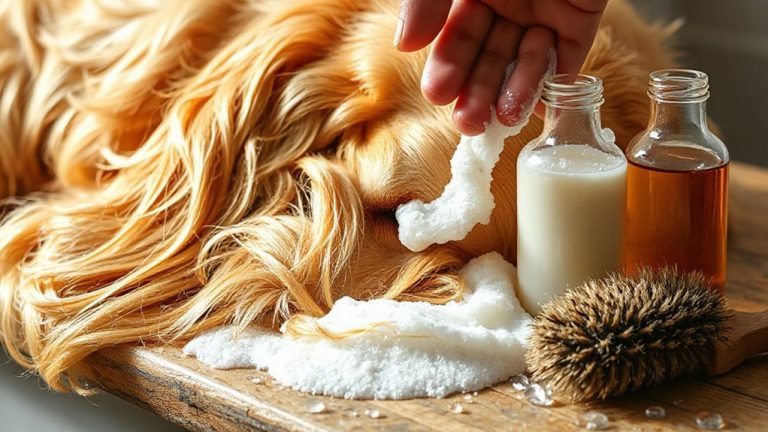
Bathing Frequency Adjustments for Pets With Seasonally Affected Skin Conditions
You should adjust your pet’s bathing frequency based on seasonal allergen exposure and skin barrier needs. Bathe every 4–6 weeks in winter to preserve natural oils, increasing to every 2–3 weeks in spring and fall to remove pollen. Use hypoallergenic, pH-balanced shampoos with ceramides to maintain lipid integrity. In summer, weekly baths may be necessary for active pets. Medicated shampoos require 10 minutes of contact time for full efficacy. Optimizing your routine supports long-term skin health and reduces irritation. Specific product choices and timing strategies further enhance protection.
Notable Insights
- Adjust bathing frequency seasonally: every 4–6 weeks in winter, 2–3 weeks in spring and fall, and weekly in summer for active pets.
- Use hypoallergenic, pH-balanced shampoos with ceramides to support skin barrier function year-round.
- Increase bathing during high-allergen seasons like spring and fall to reduce pollen and mold exposure.
- Limit shampoo contact time to 10 minutes for medicated formulas to effectively treat secondary infections.
- Avoid overbathing in winter to prevent dryness from low humidity and reduced natural oil production.
How Seasons Affect Your Pet’s Skin
Why does your pet’s skin seem to worsen at certain times of the year? Seasonal shifts directly influence your pet’s skin sensitivity. During spring and fall, environmental allergens like pollen, mold spores, and dust mites increase markedly. These allergens settle on your pet’s coat and skin, triggering inflammatory responses. Histamine release from mast cell activation leads to pruritus, erythema, and secondary infections. Breeds with genetic predispositions-such as French Bulldogs or West Highland White Terriers-often experience exacerbated symptoms. Relative humidity fluctuations impair the skin’s barrier function, reducing ceramide levels by up to 30%. This compromises lipid matrix integrity, increasing transdermal water loss. You’ll notice increased scratching or hot spots during peak allergen seasons. Managing exposure through air filtration and post-walk wipe-downs helps. Monitoring symptom timing provides diagnostic clues. Preventive care during high-allergen months improves long-term dermatologic outcomes.
Is Your Pet Bathed Too Much or Too Little?
Overbathing or under-bathing your pet can worsen existing skin conditions, especially when seasonal allergens have already compromised the skin barrier. Frequent bathing strips natural oils, increasing skin sensitivity and disrupting lipid balance. You should limit shampoo use to once every 3–4 weeks unless directed otherwise. Medicated shampoos require precise contact time-typically 10 minutes-to remain effective without drying the skin. Insufficient bathing allows allergen buildup, exacerbating irritation. Assess coat moisture by touch: a healthy coat feels supple, not greasy or brittle. Use pH-balanced, hypoallergenic cleansers with ceramides or fatty acids to support the epidermal barrier. For pets with heightened skin sensitivity, opt for leave-on conditioners containing oatmeal or aloe vera. These maintain hydration while reducing transepidermal water loss. Monitor your pet weekly. Adjust bathing routines based on clinical signs: flakiness suggests under-bathing; redness or odor indicates over-bathing. Consistency preserves coat moisture and skin integrity. Choosing the right product is crucial-consider using shampoos specifically formulated for double coats to ensure thorough cleaning without disrupting the protective undercoat.
Bathing Frequency: Winter vs. Summer
How often should you bathe your pet when the seasons change? In winter, lower indoor humidity dries your pet’s skin, requiring fewer baths-every 4 to 6 weeks is ideal. Reduced outdoor allergens during cold months mean less frequent cleansing is needed. Moisturizing shampoos help maintain skin barrier integrity, but over-bathing strips natural oils, worsening dryness. In summer, higher outdoor allergens like pollen and mold increase skin irritation risks. Bi-weekly baths may be necessary to remove irritants. Use hypoallergenic, pH-balanced formulas that support the skin’s microbiome. Monitor environmental exposure: pets active outdoors need more frequent washing. Adjust frequency based on activity level, coat type, and climate. Maintaining a consistent routine responsive to seasonal shifts supports dermal health. Balance hygiene with skin protection to prevent flare-ups linked to seasonal allergens and fluctuating indoor humidity. For huskies, using the best shampoo & conditioner for huskies can further support coat and skin health year-round.
Best Shampoos for Seasonal Pet Skin
Choosing the right shampoo plays a direct role in managing your pet’s skin health as seasons shift. Oatmeal therapy shampoos contain colloidal oatmeal at a scientifically effective concentration of 1–2%, which soothes irritated skin by forming a protective barrier and maintaining moisture. These shampoos support the skin’s natural pH, typically between 5.5 and 7.5, preventing further dryness. Hypoallergenic formulas eliminate common allergens like fragrances, dyes, and parabens, reducing adverse reactions in sensitive pets. They often include ceramides and fatty acids to reinforce the lipid layer, especially in winter. Medicated versions may combine chlorhexidine or miconazole with oatmeal therapy to target secondary infections. Always apply with lukewarm water and allow 5–10 minutes of contact time before rinsing to maximize effectiveness. For pets with persistent itching, consider a shampoo specifically formulated for best dog shampoo for itchy skin.
Build a Year-Round Pet Bathing Schedule
When should you bathe your pet to maintain skin health throughout the year? Adjust bathing routines seasonally to support consistent skin hydration. In winter, bathe every 4–6 weeks using lukewarm water (100–105°F) to prevent moisture loss. During high-allergen seasons like spring and fall, increase frequency to every 2–3 weeks to remove pollen and debris. Use hypoallergenic, lipid-balancing shampoos with ceramides or phytosphingosine to reinforce the epidermal barrier. Summer may require weekly baths if your pet swims or gets dirty often, but avoid over-bathing, which strips natural oils. Always rinse thoroughly-residue disrupts pH balance (ideal: 5.5–7.5). Towel-dry gently; high-heat blowers reduce skin hydration by up to 30%. Monitor skin condition monthly with a veterinary dermatology scale (e.g., CADESI-03) to guide adjustments. Consistent, data-informed bathing routines prevent irritation and promote long-term coat and skin resilience.
On a final note
You must adjust your pet’s bathing routine seasonally to maintain skin health. In winter, bathe every 4–6 weeks using moisturizing shampoos with ≥2% colloidal oatmeal to prevent dryness. During summer, increase to every 2–4 weeks with antimicrobial formulas containing 2–4% chlorhexidine to combat allergens and microbes. Always rinse thoroughly-residual shampoo causes irritation. Use lukewarm water, 98–102°F, and towel-dry immediately. This protocol supports barrier function and reduces seasonal flare-ups.