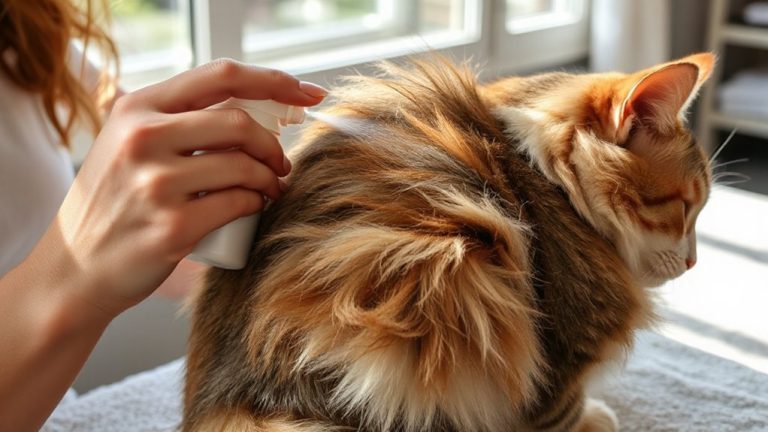
How to Brush a Dog With a Dense Undercoat in High Heat Without Stress
Brush your dog early between 5–7 AM or late 6–8 PM when temperatures stay below 75°F and UV index drops under 3. Use a stainless steel slicker or undercoat rake with 1.5–2-inch teeth at a 45-degree angle to lift dead fur without skin trauma. Work in shaded, quiet areas under 72°F with cross-ventilation or AC. Apply gentle strokes along the coat, reducing pressure by half on sensitive zones. Offer water every 10 minutes and watch for panting or wobbling-signs of heat stress. Use non-slip mats and ergonomic tools to improve control and comfort. Early detection of discomfort guarantees safer, more effective grooming sessions. You’ll find even better results by adjusting tools and timing with seasonal changes.
Notable Insights
- Brush during cooler times of day, like 5–7 AM or 6–8 PM, to avoid heat stress.
- Use a slicker brush and undercoat rake at a 45-degree angle to safely remove dead fur.
- Work in a shaded, quiet area below 75°F with cross-ventilation or air conditioning.
- Apply gentle, short strokes with reduced pressure, especially on sensitive areas like the belly.
- Offer water every 10 minutes and watch for heavy panting or unsteadiness as overheating signs.
Brush Early or Late to Beat the Heat
Why risk brushing your dog in midday heat when the cooler parts of the day offer safer, more effective results? Brush early in the morning or late in the evening to reduce heat stress. Canine body temperatures rise quickly in high ambient heat, especially with thick undercoats. Best brushing occurs when temperatures are below 75°F (24°C). This improves both dog comfort and shedding efficiency. Effective time management means scheduling grooming sessions outside peak sunlight hours, ideally between 5–7 AM or 6–8 PM. During these windows, UV index levels drop below 3, minimizing exposure risk. Always practice proper shade selection. Work under dense canopy or portable shelters blocking at least 90% of UV rays. Shade reduces surface temperatures by up to 20°F. Avoid concrete or asphalt surfaces, which retain heat. Use a thermometer to monitor microclimate conditions. These steps guarantee safer, more efficient undercoat removal without overheating your dog.
Pick the Best Brush for Thick Double Coats
Choosing the right tool isn’t just about convenience-it’s about efficiency and safety when managing a dense double coat. Your dog’s coat type demands a brush that reaches the undercoat without damaging the topcoat. Use a slicker brush with fine, bent wires set at a 45-degree angle to lift dead undercoat hair. For thicker coats, opt for an undercoat rake with teeth 1.5 to 2 inches long to penetrate deep layers. Brush material matters: stainless steel resists corrosion and maintains tension, while ergonomic rubber grips reduce hand fatigue. Avoid plastic bristles-they snag and break. A double-row pin brush with spaced wires works well for finishing, smoothing the outer guard hairs. Match tool specs to coat density: high-shedding breeds need sturdier brush material and wider tooth spacing. Choose precision-engineered tools to maximize dead hair removal and minimize grooming time.
Find a Cool, Quiet Spot to Groom
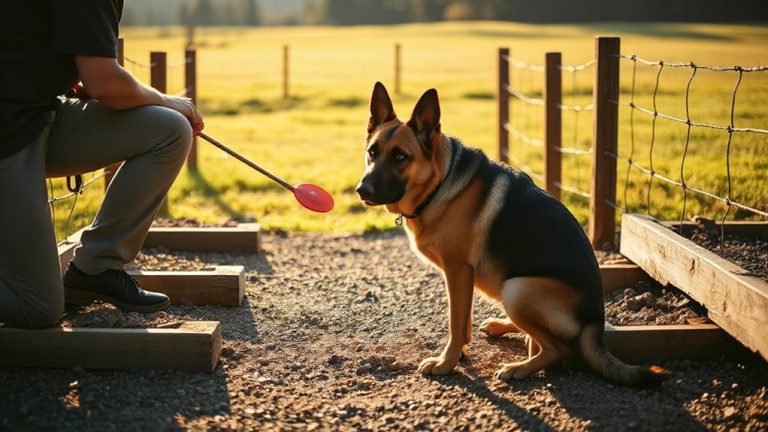
A well-chosen grooming environment keeps your dog calm and guarantees thorough coat maintenance during hot weather. Opt for indoor grooming in an air-conditioned space set to 68–72°F (20–22°C), which prevents heat stress. Use non-slip mats on hard floors to stabilize your dog. If indoors aren’t possible, choose a shaded area with cross-ventilation, like a covered porch or under a tree canopy. These spots reduce ambient temperature by 5–10°F compared to direct sun. Eliminate distractions-turn off loud appliances and keep other pets away. Noise levels below 50 decibels promote relaxation. A quiet, consistent setting improves cooperation, allowing you to focus on undercoat removal. Proper ambient conditions support effective brushing without elevating your dog’s core temperature. Cooling isn’t just comfort-it’s a safety measure.
Brush Gently to Prevent Skin Irritation
You’ve set up a cool, quiet space to groom-now it’s time to begin brushing with care to avoid irritating your dog’s skin. Use gentle strokes along the direction of hair growth to minimize friction and prevent epidermal trauma. Apply soft pressure-pressing too hard can damage hair follicles and cause inflammation, especially in breeds with dense undercoats like Huskies or Newfoundlands. A slicker brush with fine, bent wires spaced 2–3 mm apart effectively lifts loose undercoat hair without scraping the skin. Begin at the shoulders and work backward, maintaining a 30-degree angle between the brush and skin surface. For sensitive areas like the abdomen, reduce pressure by 50% and switch to short, sweeping motions. Monitor the coat’s response; if redness or warmth develops, stop immediately. Consistent technique preserves skin integrity and supports long-term coat health. A high-quality grooming tool makes a significant difference in managing thick, heat-sensitive coats efficiently.
Keep Water and Treats Handy Mid-Brush
Keep a fresh supply of water and treats within reach throughout the brushing session-your dog’s comfort and cooperation depend on timely hydration and positive reinforcement. Hydration breaks prevent overheating and maintain energy. Offer small sips every 10 minutes, especially in temperatures above 85°F (29°C). Treat timing strengthens behavior; reward calmness after each brush pass. Use bite-sized, low-moisture treats to avoid mess. Anxiety during grooming can be reduced by addressing environmental stressors, much like how anxiety relief for pets is managed during fireworks.
| Item | Quantity | Purpose |
|---|---|---|
| Water bowl | 1 | Constant hydration access |
| Treats | 10–15 | Reinforcement every 1–2 min |
| Timer | 1 | Track hydration breaks |
| Cooling mat | 1 | Surface for comfort stops |
Proper treat timing increases cooperation by up to 70%. Hydration breaks every 10 minutes sustain stamina during extended brushing.
Stop at Signs of Overheating
If your dog begins to pant heavily or appears unsteady during brushing, stop immediately-these are early warning signs of overheating, especially in breeds with dense undercoats like Huskies or Newfoundlands. Breathing heavily beyond normal post-exercise levels indicates rising core body temperature. Heat exhaustion occurs when thermoregulation fails, typically at ambient temperatures above 85°F (29°C) with humidity over 60%. At this stage, capillary refill time may exceed two seconds, and gums often turn pale or brick red. Remove your dog from direct sun and cease all activity. Move to a shaded or air-conditioned area. Do not immerse in cold water-rapid cooling can induce shock. Instead, apply cool (not icy) damp towels to the head, neck, and groin. Monitor respiratory rate; normal is 10–35 breaths per minute. If symptoms persist beyond five minutes, seek veterinary care-untreated heat exhaustion can escalate to heatstroke.
Short Sessions Build Better Heat-Safe Habits
Even when temperatures are moderate, brushing a dog with a dense undercoat demands careful planning to prevent heat-related stress. Short sessions reduce thermal load and allow your dog to cool between strokes. Limit each session to 5–7 minutes, focusing on one body section at a time. This prevents overheating and builds cooperation through predictable routine. Use positive reinforcement immediately after each session-offer water, praise, or a small treat to reinforce calm behavior.
| Body Area | Time (min) | Tool Type |
|---|---|---|
| Back | 5 | Undercoat rake |
| Flanks | 6 | Fine-tooth comb |
| Rear legs | 5 | Slicker brush |
| Chest | 6 | De-shedding tool |
Repeat sessions 2–3 times daily with 30-minute breaks. Short sessions with consistent positive reinforcement create long-term, heat-safe grooming habits.
On a final note
You must prioritize thermoregulation during grooming. A dense undercoat traps heat, increasing the risk of overheating. Use a slicker brush with 0.5-inch bent pins to reach the undercoat without scraping skin. Limit sessions to 10 minutes; ambient temperature should stay below 75°F. Offer cool water and monitor for panting or lethargy. Grooming in shade reduces thermal load by up to 20%. Stop immediately if signs of distress appear.