What to Ask Your Vet During Your Pet’s First Adult Wellness Visit
Ask your vet about the recommended annual wellness exam, which includes a Body Condition Score (BCS) assessment on a 1–9 scale, with 4–5 as ideal. Confirm your pet’s core vaccines-rabies and distemper for dogs, rabies and feline viral rhinotracheitis for cats-are up to date and due every one to three years. Discuss whether vaccine titers are appropriate. Review daily exercise needs-30–60 minutes for dogs, short play sessions for cats-and whether your pet’s current diet meets AAFCO standards for crude protein: 18–25% for adult dogs, 26–30% for cats. Bring up parasite prevention; year-round heartworm protection with monthly ivermectin or milbemycin oxime is essential, alongside flea control using nitenpyram or isoxazolines. Ask about dental care-daily brushing with pet-safe toothpaste and VOHC-approved chews can reduce plaque by up to 70%. Make sure fecal exams and bloodwork are scheduled to monitor organ function and detect early disease. Inquire if your pet shows behavioral signs of cognitive decline and what enrichment strategies help. Details on each of these areas will guide long-term health planning.
Notable Insights
- How often should my adult pet have wellness exams to monitor for early signs of disease?
- Which core vaccines does my pet need, and how often should boosters be administered?
- What is my pet’s ideal body condition score, and how can I maintain a healthy weight?
- How much daily exercise and mental enrichment does my pet need based on species and activity level?
- What parasite preventives and dental care routines do you recommend for ongoing health?
How Often Should Adult Pets See the Vet?

Generally, adult pets should see the vet once a year for a routine wellness exam. This annual visit helps monitor long-term health and detect early signs of disease. Your vet will assess body condition, dental health, organ function, and joint mobility using standardized scales and diagnostic tools. They’ll also review your pet’s exercise routine to guarantee it meets species-specific needs-dogs typically require 30–60 minutes of daily activity, while cats need short bursts of play mimicking hunting. Mental stimulation is equally important; puzzles, training, and environmental enrichment reduce cognitive decline. Small mammal and bird species need species-appropriate foraging tasks. These evaluations support neurological health and behavioral stability. Preventive care at this stage includes parasite screening and nutritional assessment. Consistent veterinary intervals guarantee peak physiological function. Adjustments may be needed for seniors or pets with chronic conditions, but yearly exams remain the standard.
Vaccines for Adult Pets: What’s Required?
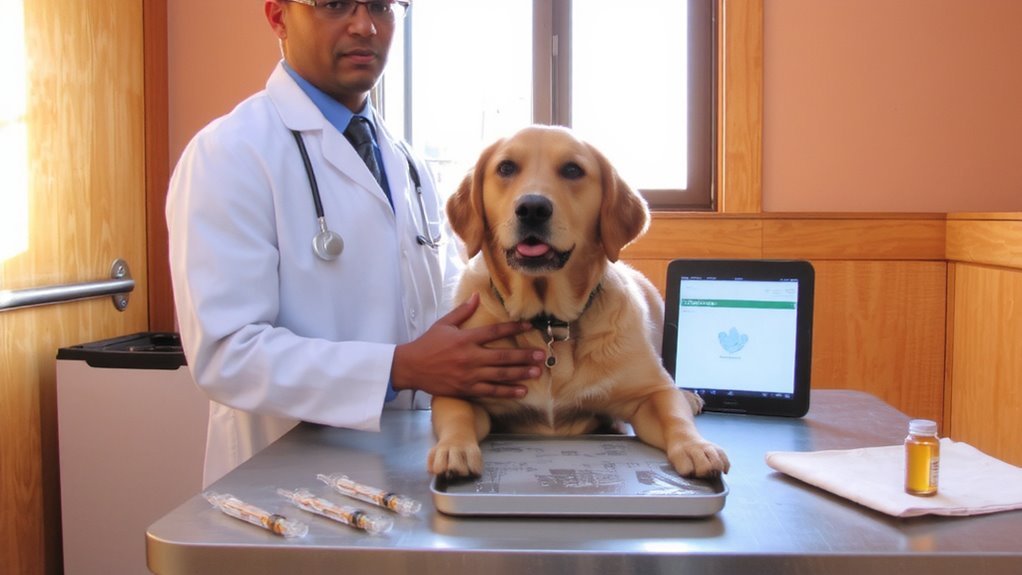
While core vaccines are essential for all adult pets, the specific schedule and type depend on species, lifestyle, and local regulations. Dogs typically need rabies and distemper vaccines; cats require rabies, feline calicivirus, and feline herpesvirus shots. Core boosters maintain immunity and are usually given every one to three years. Your vet may recommend vaccine titers-blood tests measuring antibody levels-to assess if boosters are immediately necessary. Titers help avoid unnecessary vaccinations, especially in pets with medical conditions. Not all vaccines qualify for titer testing; rabies compliance is often legally mandated regardless of titer results. Non-core vaccines, like leptospirosis or bordetella, depend on exposure risk. Your vet will tailor the plan using regional disease data and your pet’s daily routine. Always keep accurate vaccination records. Discuss titer options and core booster timing during each wellness visit.
Is My Adult Pet at a Healthy Weight?

How do you know if your adult pet’s weight falls within a healthy range? Your vet uses a body condition score (BCS), a standardized 1–9 scale, to assess fat coverage and muscle mass. A score of 4–5 indicates ideal weight. Ribs should be palpable with minimal fat, the waist should be visible from above, and an abdominal tuck should be present from the side. Being overweight increases risks for diabetes, joint disease, and heart issues. Portion control is critical-follow feeding guidelines based on your pet’s species, size, and activity level. Measure food accurately using standard measuring cups, not estimated scoops. Avoid free-feeding. Treats should make up no more than 10% of daily calories. Your vet can provide exact caloric needs in kilocalories per day, tailored to your pet’s metabolic rate and lifestyle.
Adjusting Your Adult Pet’s Diet for Long-Term Health
Why might your adult pet need a diet change now? As pets age, their metabolism slows, altering nutritional needs. Proper portion control prevents weight gain, while nutrient balance supports organ function and joint health.
| Life Stage | Recommended Protein Level |
|---|---|
| Adult Dog | 18–25% crude protein |
| Adult Cat | 26–30% crude protein |
| Senior Dog | 20–28% crude protein |
| Senior Cat | 30–40% crude protein |
These ranges guarantee adequate amino acid intake without overburdening kidneys. Caloric density should match activity level-sedentary pets need fewer kcal/kg body weight. Discuss with your vet whether your pet needs reduced phosphorus, increased fiber, or omega-3 fatty acids. Commercial diets labeled “adult maintenance” must meet AAFCO standards for nutrient balance. Always measure food portions precisely. Free-feeding disrupts portion control and increases obesity risk.
Parasite Preventives and Screenings Adult Pets Need
Your pet’s diet plays a key role in long-term health, but protecting them from parasites is just as important for maintaining energy into adulthood. Year-round heartworm prevention is critical-these medications, typically administered monthly, target *Dirofilaria immitis* larvae transmitted by mosquitoes. Preventives like ivermectin or milbemycin oxime have over 90% efficacy when dosed correctly. Missed doses increase infection risk, which can lead to fatal pulmonary and cardiac damage. Flea control is equally essential; *Ctenocephalides felis* infestations cause dermatitis and transmit tapeworms. Fast-acting oral agents like nitenpyram eliminate adults within 30 minutes, while topical or oral isoxazolines provide month-long protection. Your vet may recommend combination products to address multiple parasites. Routine fecal exams and annual antigen testing guarantee early detection. Preventive protocols should be customized based on your pet’s lifestyle, geography, and exposure risk.
Supporting Dental Health in Adult Pets
Could bad breath in your adult pet be more than just an annoyance? It often signals underlying dental disease, which affects over 80% of dogs and 70% of cats by age three. Plaque accumulation leads to gingivitis and, if untreated, periodontal disease. Daily tooth brushing is the gold standard for prevention-use a soft-bristled brush and pet-specific toothpaste at a 45-degree angle to the gumline. Veterinary-recommended dental chews can supplement brushing, reducing plaque by up to 70% when used daily. Look for products with VOHC (Veterinary Oral Health Council) approval, indicating proven efficacy. Most effective chews have a texture that maintains contact with teeth for 30–60 seconds per side during chewing. While dental chews help, they don’t replace mechanical cleaning. Regular veterinary dental exams are essential to monitor oral health and prevent systemic complications. For dogs, choosing natural dental chews can support oral hygiene with minimally processed ingredients.
Behavioral Red Flags in Adult Pets to Watch For
Changes in your pet’s behavior can be early indicators of underlying health issues, even when physical symptoms aren’t obvious. You should monitor for sudden aggression issues, such as unprovoked growling or biting, which may signal pain, neurological disorders, or hormonal imbalances. Anxiety signs include excessive panting, pacing, or destructive behavior, particularly when left alone. These behaviors often correlate with hyperadrenocorticism or cognitive dysfunction, especially in pets over seven years. Note frequency, duration, and triggers-this data helps your vet make accurate diagnoses. For instance, nighttime restlessness paired with vocalization may indicate hypertension or sensory decline. Document any behavioral shifts alongside bathroom habits or appetite changes. Early recognition improves treatment outcomes. Routine screening, including blood panels and neurological assessments, can uncover medical causes. Addressing these red flags promptly supports better long-term wellness and prevents escalation.
On a final note
You should see your vet annually for preventive care. This visit confirms vaccine boosters-like rabies and DHPP in dogs-are up to date. Your vet assesses body condition score (BCS), ideally 4–5 on a 9-point scale, to identify weight-related risks. They’ll recommend diet adjustments using calorie density values (kcal/kg) based on activity. Monthly heartworm preventives and fecal exams every 6–12 months control parasites. Dental exams rule out periodontal disease. Behavioral shifts may signal pain or illness.