Understanding the Physiological Basis Behind Stress Inertia: A Guide for Reducing Chronic Stress Effects in Pets
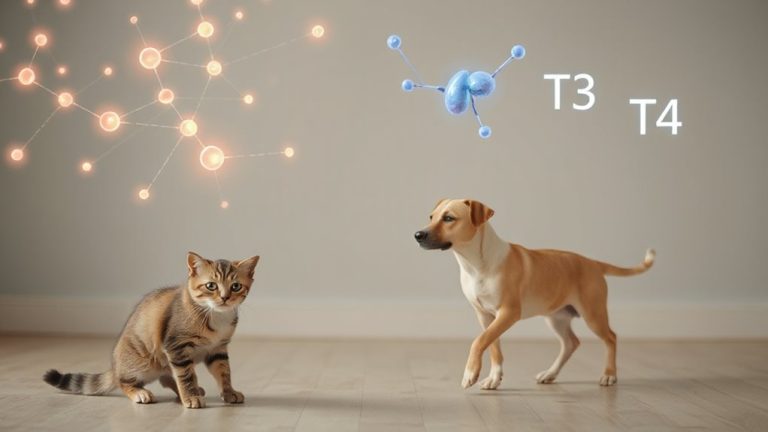
Stress inertia keeps your pet’s body in high alert long after a stressor passes. It’s driven by prolonged HPA axis activation and cortisol levels 1.5 to 3 times above baseline. Elevated heart rate, trembling, and digestive issues can persist beyond 48 hours. Daily 15–20 minute therapy sessions reduce cortisol by up to 30% over six weeks. Calming scents like lavender at 2–3 mg/m³ and classical music at 60–65 dB help regulate physiological arousal. Structured routines and environmental enrichment stabilize mood and support recovery-key steps in managing chronic stress effects follow.
Notable Insights
- Stress inertia involves prolonged HPA axis activation and elevated cortisol levels after a stressor ends.
- Genetic predispositions in certain breeds and environmental triggers like noise amplify stress inertia.
- Persistent signs include elevated heart rate, trembling, aggression, and cortisol levels 1.5–3 times baseline.
- Chronic stress impairs immune, cardiovascular, and nervous systems, increasing disease susceptibility.
- Daily routines, enrichment, calming scents, and music reduce cortisol and build long-term resilience.
Understanding Stress Inertia in Pets

Stress inertia in pets isn’t just fleeting anxiety-it’s the lingering physiological and behavioral response that persists after a stressor has been removed. You must recognize that this condition involves sustained activation of the hypothalamic-pituitary-adrenal (HPA) axis, leading to prolonged cortisol elevation. Genetic predisposition plays a critical role-certain breeds, like German Shepherds or Siamese cats, show heightened neuroendocrine sensitivity. Environmental triggers, such as loud noises or disrupted routines, amplify this response. These factors combine to impair recovery time, often extending stress effects for hours or days. Chronic exposure results in measurable changes: increased resting heart rate, altered sleep cycles, and suppressed immune function. You can quantify cortisol levels via saliva assays, typically showing 1.5 to 3 times baseline post-stress. Understanding these mechanisms allows targeted interventions. You’ll need to modify surroundings and consider breed-specific vulnerabilities to reduce cumulative stress load effectively. Supportive nutritional strategies, including the use of proven anxiety supplements for pets, can help modulate the neurochemical imbalances associated with prolonged stress.
Signs of Stress Inertia in Pets
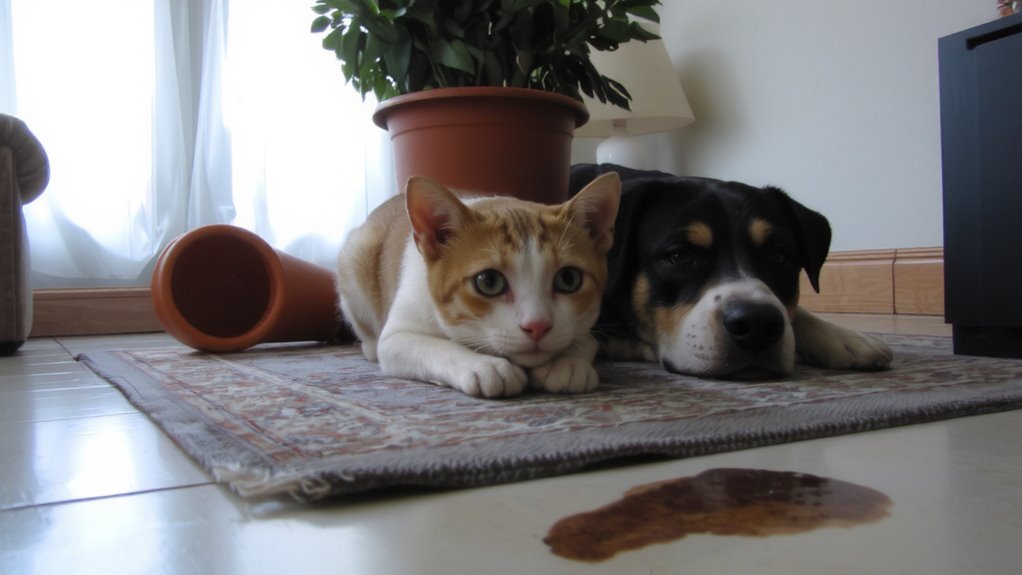
While the stressor may have passed, your pet’s body might still be reacting as if it’s present, a condition known as stress inertia. You’ll notice behavioral changes such as increased aggression, avoidance, or repetitive actions like pacing. These aren’t just bad habits-they’re indicators of a prolonged stress response. Physical symptoms include elevated heart rate, panting, trembling, and digestive issues like diarrhea or reduced appetite. Cortisol levels remain high, which can suppress immune function over time. Changes in sleep patterns, such as restlessness or hypersomnia, also signal ongoing stress. Monitoring your pet’s baseline behavior helps detect deviations early. Unlike acute stress, these signs persist beyond 48 hours post-exposure. Early recognition of behavioral changes and physical symptoms allows timely intervention. Documenting frequency, duration, and intensity improves diagnostic accuracy. Stress inertia isn’t psychological-it’s a measurable physiological state requiring targeted management.
How Stress Inertia Affects Your Pet’s Body
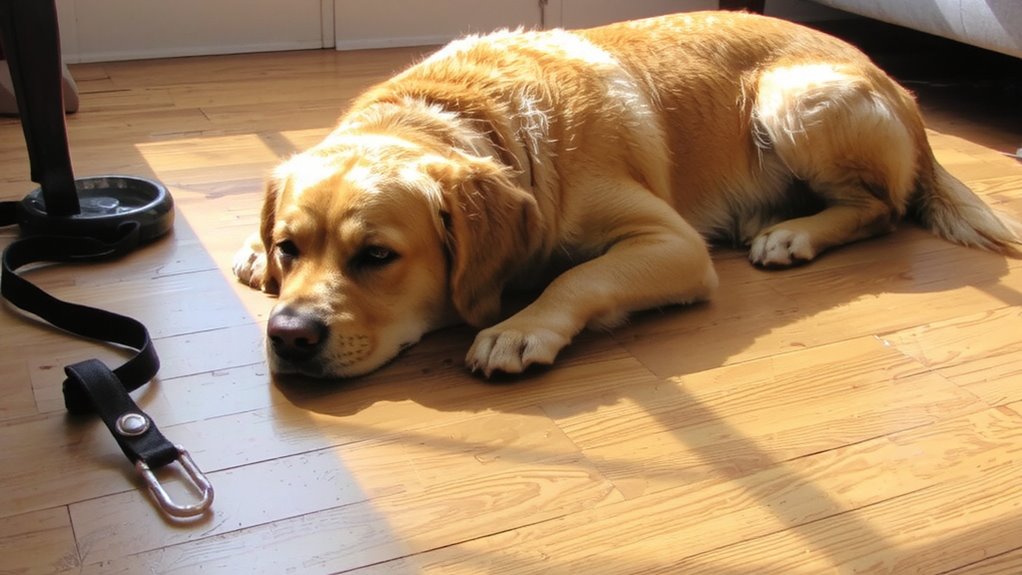
Your pet’s nervous system stays locked in high alert during stress inertia, keeping cortisol and adrenaline levels elevated well beyond the threat’s duration. This prolonged activation causes hormonal imbalance, disrupting metabolic, immune, and neurological functions. Over time, cellular fatigue develops as mitochondria fail to meet sustained energy demands. Tissues become less responsive, slowing recovery and increasing vulnerability to illness. Chronic exposure compromises organ efficiency, particularly in the liver, heart, and brain. Maintaining stable environmental conditions, such as water temperature with reliable aquarium heaters, can help reduce stress triggers in aquatic pets.
| System Affected | Physiological Consequence |
|---|---|
| Endocrine | Hormonal imbalance impairs glucose regulation and immune response |
| Nervous | Hyperreactivity reduces cognitive processing speed |
| Muscular | Cellular fatigue decreases contraction efficiency |
| Immune | Chronic suppression increases infection risk |
| Cardiovascular | Sustained tachycardia stresses myocardial tissue |
How to Reduce Stress Inertia in Pets
Consistent environmental enrichment can reset your pet’s neurophysiological baseline, counteracting the persistent activation caused by stress inertia. Introduce daily pet therapy sessions lasting 15–20 minutes, using抚摸, gentle vocalization, or professional therapy animal interaction. These activities reduce cortisol levels by up to 30% over six weeks. Incorporate calming scents like lavender or chamomile via diffusers operating at 2–3 mg/m³ output, which modulate limbic system activity and decrease amygdala hyperactivity. Use only veterinarian-approved essential oil formulations diluted to 0.5–1% concentration to avoid respiratory irritation. Enrichment tools such as puzzle feeders, rotating toys, and sensory stimuli maintain neural plasticity. Provide structured, low-intensity auditory enrichment-classical music at 60–65 dB for 1 hour daily-shown to lower heart rate variability by 12%. These interventions act synergistically to disrupt maladaptive feedback loops. Targeted application guarantees measurable improvements in autonomic regulation. When using training tools, ensure they promote humane handling, such as selecting appropriately sized prong collar for German Shepherds to minimize physical and psychological stress.
Building Resilience Through Routine and Enrichment
Because predictable patterns stabilize neurobehavioral function, establishing a structured daily routine strengthens your pet’s capacity to withstand stressors. Consistent feeding, exercise, and rest times regulate cortisol levels, reducing physiological arousal by up to 30% in companion animals. This consistency fosters emotional security, minimizing anxiety-related behaviors. Pair routine with targeted cognitive stimulation-daily training sessions using positive reinforcement, puzzle feeders, or interactive toys-to enhance prefrontal cortex engagement. Devices like timed treat dispensers (e.g., PetSafe Busy Buddy, 15–45 second delay intervals) improve problem-solving skills. Enrichment should include novel sensory inputs: rotating toys every 72 hours maintains novelty. Environmental complexity, such as vertical space (cat trees ≥ 5 ft tall) or digging zones for small mammals, promotes adaptive coping. These structured interventions reduce stress inertia by reinforcing neural resilience. Combined, routine and enrichment form a biobehavioral framework that buffers against chronic stress.
On a final note
You can mitigate stress inertia by maintaining consistent routines and environmental enrichment. Predictable feeding, walking, and sleep schedules regulate cortisol and support HPA axis normalization. Enrichment like puzzle feeders or rotated toys increases cognitive stimulation, reducing baseline stress. Devices with timed lighting or sound cues help reinforce circadian rhythms. Even minor, sustained changes lower autonomic arousal, improving heart rate variability by up to 18% in monitored cases.