Exploring Phobia Development and Management Techniques for Pets With Specific Fears, Such as Water
Your pet’s fear of water often stems from genetics or past trauma, triggering amygdala-driven responses and hippocampal stress encoding. Signs include avoidance, trembling, and heart rates above 160 BPM. Use gradual desensitization: start with paw contact in shallow water for 5–7 minutes, 3–4 times weekly. Pair calm behavior with high-value treats (>18% protein) within 1–2 seconds. Avoid comforting during panic or forced exposure. Consider professional help if fear includes aggression or immobilizing anxiety. Effective techniques build new neural associations over time.
Notable Insights
- Genetic predisposition and selective breeding can heighten amygdala responses to water, increasing phobia risk in certain pets.
- Past trauma like near-drowning or forced bathing creates lasting fear through stress-encoded neural pathways in the hippocampus.
- Signs of water phobia include avoidance, rapid breathing, trembling, elevated heart rate, and cortisol spikes during water exposure.
- Gradual desensitization using controlled, shallow-water exposure and non-slip surfaces reduces fear over 4–6 weeks.
- Positive reinforcement with high-value treats and verbal markers builds calm associations, while forced exposure worsens phobic responses.
What Causes a Fear of Water in Pets?
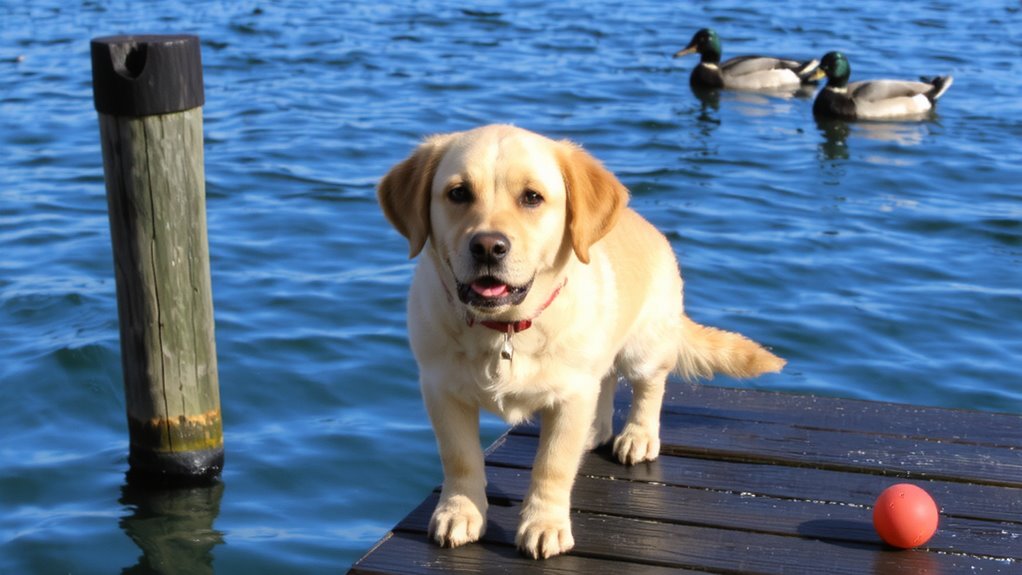
Why do some pets panic at the sight of water? Their reaction often stems from genetic predisposition or past trauma. Some breeds inherit a heightened sensitivity to novel stimuli, including water, due to selective breeding patterns affecting the amygdala’s threat response. This genetic predisposition can make them more reactive in wet environments. Alternatively, past trauma-such as a negative bathing experience or near-drowning-can condition a lasting aversion. Neural pathways reinforce this fear through repeated stress encoding in the hippocampus. You’ll observe physiological signs like tachycardia, trembling, or escape behaviors when exposed to moisture. These are measurable stress responses, not mere disobedience. Unlike instinctive avoidance, trauma-based fear generalizes across contexts-puddles, sinks, or rain may trigger panic. Understanding these causes allows for targeted intervention. You can’t alter genetics, but you can retrain responses using behavioral modification grounded in operant conditioning.
Is My Pet Afraid of Water? Key Signs
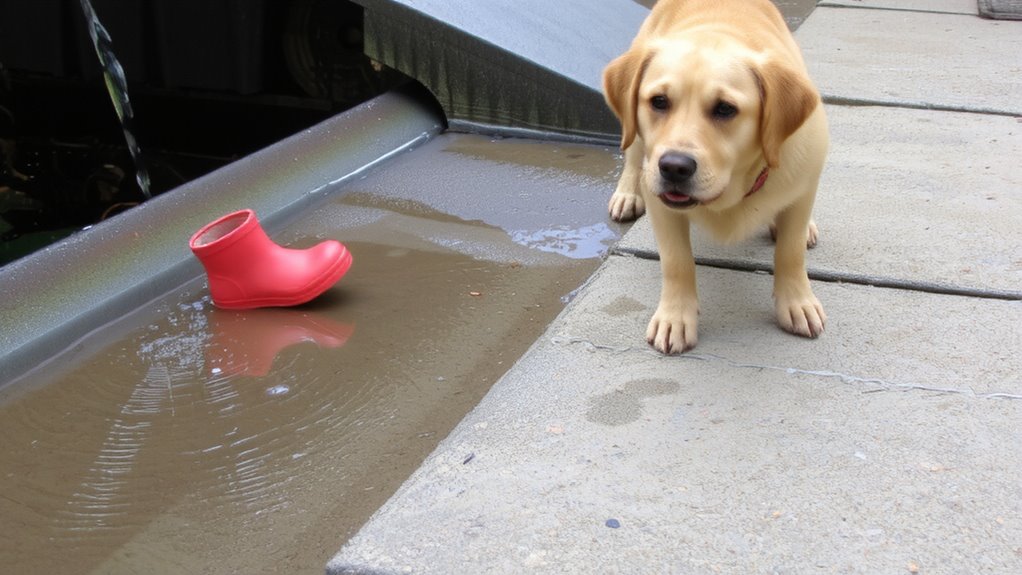
How can you tell if your pet’s reaction to water goes beyond simple hesitation? Look for consistent avoidance behaviors, rapid breathing, trembling, or dilated pupils when near water. These signs indicate fear, not just discomfort. A history of bathing trauma can trigger intense reactions, even years later. Pets exposed to water negatively during critical developmental periods often show lifelong aversion. In contrast, early exposure-between 3 and 14 weeks in dogs-typically reduces sensitivity. Physiological markers like elevated heart rate (above 160 BPM in canines) or cortisol spikes confirm stress. Vocalizations such as whining or growling near water sources signal distress. Avoidance of rain, sinks, or bathtubs supports a water-related fear diagnosis. Observing frequency, duration, and intensity of these behaviors helps assess severity. These responses differ from normal caution, suggesting a conditioned fear response rather than instinctive behavior. Accurate identification guarantees appropriate intervention.
Desensitize Your Pet to Water Gradually
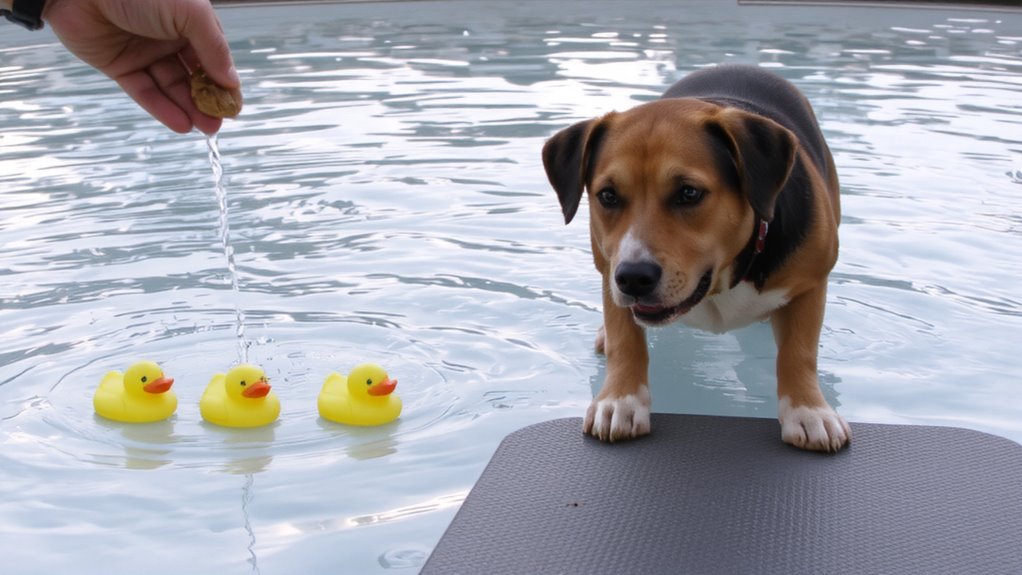
While progress may seem slow at first, consistent exposure is essential for rewiring your pet’s fear response to water. Begin with controlled water exposure in a calm, quiet environment. Use a shallow container, such as a bathtub with one inch of lukewarm water, to minimize stress. Allow your pet to approach at their own pace-do not force interaction. Gradual immersion starts with paw contact, then increases over sessions to hocks, then belly level, depending on species and size. Sessions should last 5–7 minutes, occurring 3–4 times weekly. Monitor heart rate and respiration; a spike indicates distress, requiring immediate pause. Desensitization protocols rely on duration, frequency, and incremental depth. Use non-slip mats to enhance stability and reduce fear of slipping. Over 4–6 weeks, most pets show measurable reduction in avoidance behaviors. Consistency, timing, and environmental control are critical for successful acclimation through gradual immersion.
Reward Calm Behavior Around Water
When your pet remains calm near water, immediately reinforce the behavior with a high-value treat or verbal praise they’ve been conditioned to recognize. This use of positive reinforcement strengthens desired responses by linking calmness with rewarding outcomes. Deliver the reward within one to two seconds of the behavior to guarantee accurate association. Consistent routines enhance learning by providing predictability, which reduces anxiety and increases attentiveness. Conduct sessions daily for 5–10 minutes, using identical cues and rewards to maintain clarity. High-value treats should contain >18% protein and <5% fiber for maximum palatability and motivation. Pair verbal markers like “good” with tangible rewards to create a conditioned response. Over time, systematic positive reinforcement reshapes your pet’s behavioral response to water stimuli. Track progress weekly, noting increased duration of calm behavior. Success depends on precise timing, repetition, and environmental control during exposure. Incorporating best dog training treats can significantly improve motivation and training effectiveness.
Mistakes That Make Water Fear Worse
If you inadvertently reinforce anxious behaviors, you’ll strengthen the very responses you’re trying to eliminate. Comforting your pet during panic signals approval of fear, creating negative reinforcement. Each time they react and receive attention, the behavior becomes more entrenched. Forced exposure is even more damaging-throwing a dog into water or pushing a cat near a bath overwhelms their stress threshold. This causes cortisol spikes, neural sensitization in the amygdala, and accelerates fear conditioning. Avoid sudden entries, loud encouragement, or restraining near water sources. These actions deepen avoidance. Instead, maintain neutral responses. Distance and silence reduce emotional payoff. Operant conditioning shows avoidance behaviors persist when escape is rewarded. You’re not helping-you’re participating in the fear loop. Prevent rehearsal of panic. Every incident shapes neural pathways. Missteps create long-term sensitization, making future desensitization protocols less effective and prolonging rehabilitation timelines.
When to Call a Professional Trainer
How do you know when your pet’s fear has crossed the line from manageable anxiety to a clinical issue? If your pet shows severe avoidance, aggression, or immobilizing panic around water, it’s time to call a professional trainer. These signs indicate a phobia requiring expert behavioral assessment. A certified trainer uses systematic desensitization and counterconditioning protocols tailored to your pet’s species, breed, and temperament. Without intervention, the fear may escalate, necessitating emergency intervention during routine care like bathing or vet visits. Trainers with credentials such as CPDT-KA or IAABC perform detailed evaluations to identify triggers, thresholds, and response patterns. They document baseline behaviors and measure progress using frequency, duration, and intensity metrics. Early professional involvement improves prognosis. For persistent or worsening symptoms, delay risks entrenchment of maladaptive behaviors. A structured, evidence-based plan guarantees safety, consistency, and measurable improvement. Using the right equipment, such as a durable training leash, can support effective implementation of behavior modification techniques during walks and exposure exercises.
On a final note
You can manage your pet’s fear of water with consistent, gradual exposure. Start by introducing water at a distance, then slowly decrease the proximity over days or weeks. Use positive reinforcement with treats or praise when your pet remains calm. Avoid forced immersion-it elevates stress and worsens phobia. Monitor heart rate and respiration as indicators of anxiety. Consult a certified animal behaviorist if progress stalls after four weeks of structured training.