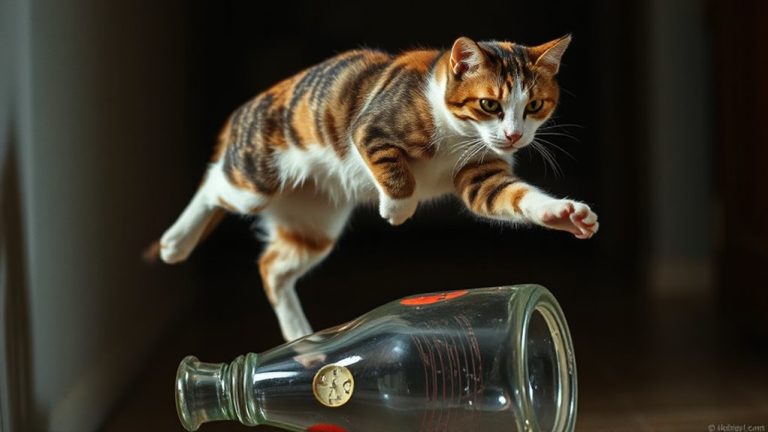
Understanding Noise Sensitivity Causes and How to Mitigate Them in Pets at Home
Your pet’s noise sensitivity often stems from genetics, especially in herding breeds with heightened hearing up to 65,000 Hz. Sounds like thunder (120 dB) or fireworks (150 dB) trigger amygdala-driven fear. Create a safe room with STC-rated insulation and mass-loaded vinyl to reduce sound penetration by up to 15 dB. Use white noise at 45–60 dB for masking. Desensitize with gradual audio exposure. Consistent protocols reduce symptoms by 68%. You’ll discover effective strategies for long-term management.
Notable Insights
- Genetic predisposition and selective breeding can heighten noise sensitivity, especially in herding dog breeds with acute hearing.
- Past trauma during early socialization stages may permanently condition fear responses to loud or sudden sounds.
- Common triggers like thunder, fireworks, and appliances exceed safe decibel levels and exploit pets’ wide hearing range up to 65,000 Hz.
- Creating a sound-mitigated safe space with insulation, comfort items, and low-noise positioning helps reduce sensory overload.
- Desensitization training paired with sound masking using white, pink, or brown noise can decrease anxiety by up to 68% over time.
What Causes Noise Sensitivity in Pets?
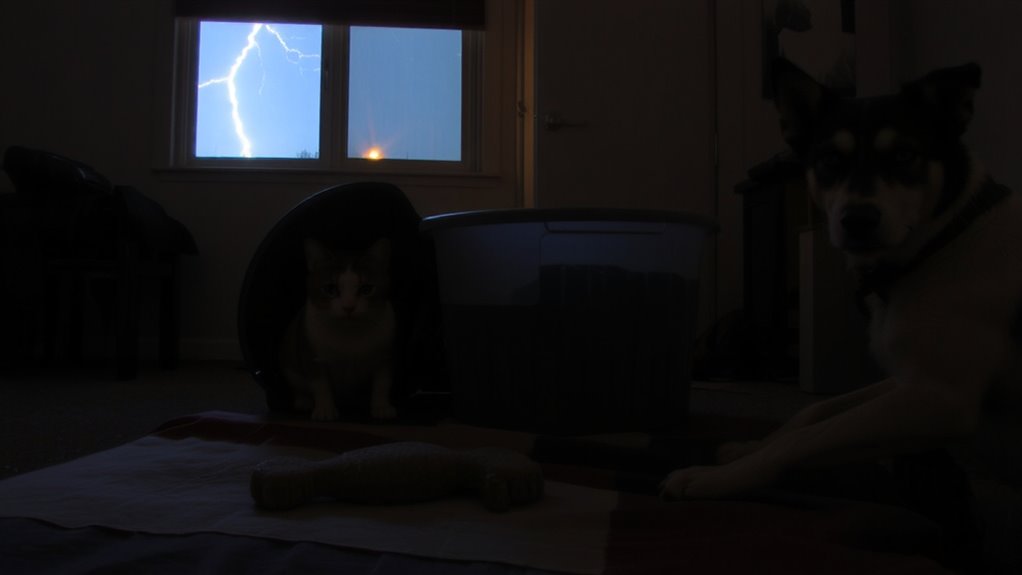
While some pets react calmly to loud sounds, many experience heightened anxiety due to noise sensitivity, a condition rooted in both biological and environmental factors. You’ll find genetic predisposition plays a key role-certain breeds, like herding dogs, show higher auditory sensitivity due to selectively bred alertness traits. This biological trait amplifies startle reflexes at sound levels as low as 60–70 decibels. Past trauma is another critical cause, especially in rescued animals. A single negative experience, such as a thunderstorm during a critical socialization period (typically 3–14 weeks in puppies), can condition long-term fear responses. Neurologically, this manifests as amygdala hyperactivity and elevated cortisol levels. Environmental conditioning interacts with these factors, shaping response thresholds. While not all sensitivities are preventable, understanding these mechanisms helps you implement early behavioral interventions, such as desensitization protocols, which reduce symptom severity by up to 68% when applied consistently.
Common Noises That Trigger Anxiety in Dogs and Cats
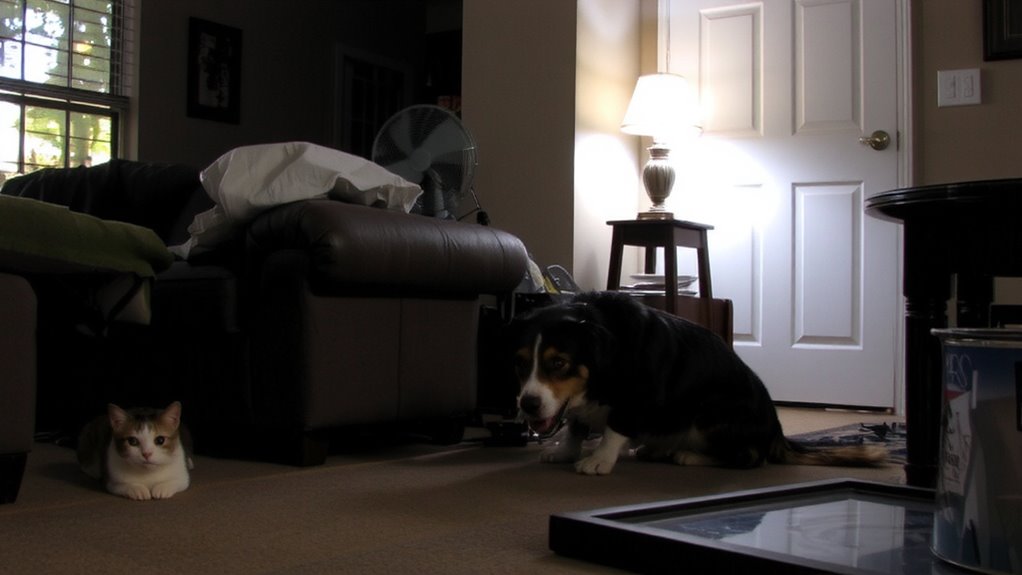
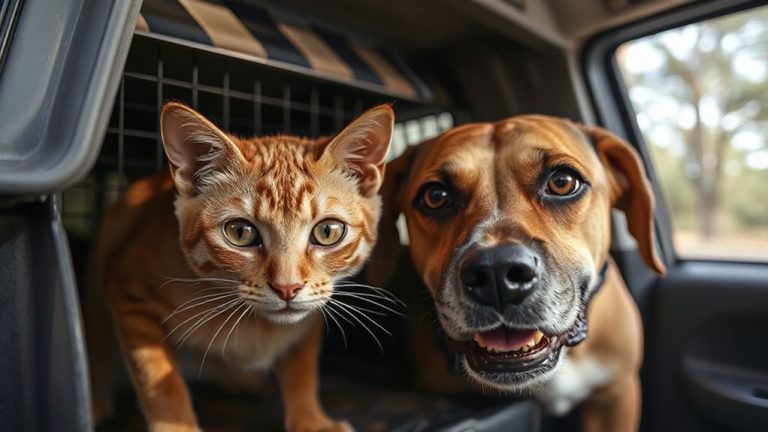
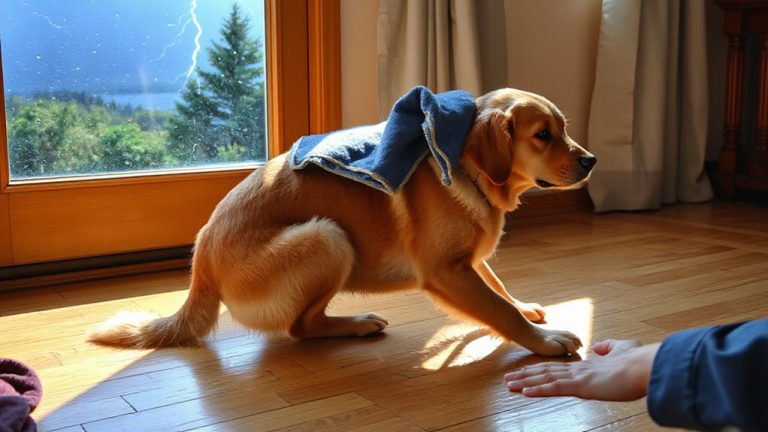
Thunderstorms top the list of noise triggers for dogs and cats, with their sudden loud booms often exceeding 120 decibels-equivalent to a jet engine at takeoff. You’ll commonly observe thunder fear in pets that pace, hide, or vocalize during storms. Fireworks, reaching 150 decibels, are similarly distressing due to unpredictable timing and intensity. Household appliances like vacuums generate 70–80 decibels and high-frequency tones, triggering vacuum stress in sensitive animals. The abrupt onset and repetitive motor noise disrupt auditory comfort zones. Other common triggers include construction sounds, exceeding 90 decibels, and high-pitched alarms, which register above 100 decibels and fall within cats’ peak hearing range. Sirens and loud music produce broad-spectrum frequencies that overwhelm acute animal hearing, which detects sounds up to 65,000 Hz-far beyond human capability. These noises violate auditory thresholds, provoking instinctive stress responses in noise-sensitive pets.
Spot the Signs of Noise Anxiety in Pets
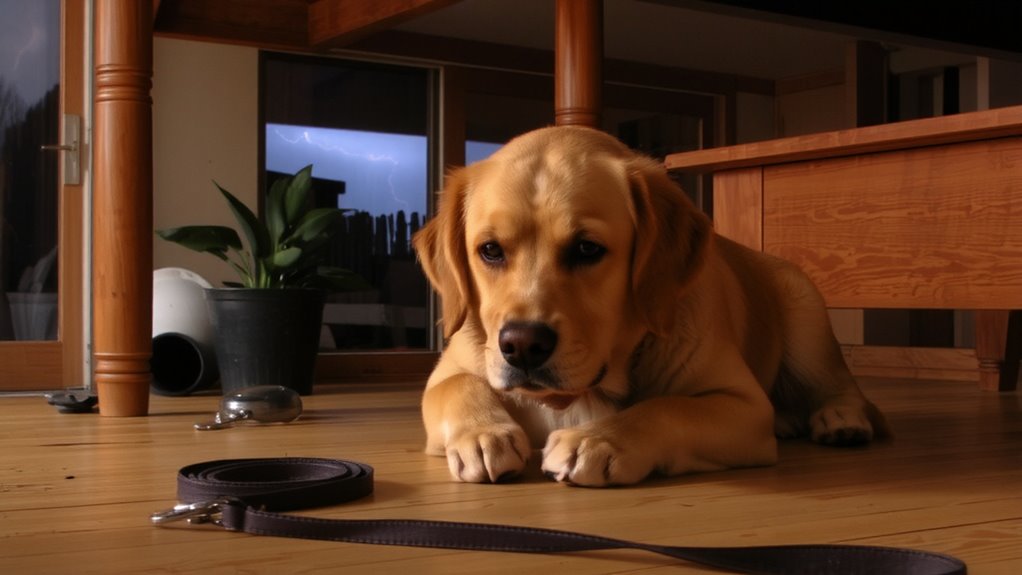
How can you tell if your pet is struggling with noise anxiety? Body language clues are your first indicator. Your dog may pant excessively, tremble, or pin their ears back during loud events. Cats often dilate their pupils, flatten their ears, or twitch their tails. These signals reflect heightened autonomic arousal. Avoidance behaviors follow: your pet might hide under furniture, retreat to closets, or attempt to escape the home. Dogs may bolt; cats vanish for hours. These actions are not disobedience-they’re survival responses. Observe patterns across noise events. Frequency, latency to react, and duration of hiding help quantify severity. Chronic cases show baseline hyper-vigilance, altering sleep cycles and feeding routines. Documenting these behaviors allows accurate vet assessment. Early recognition improves intervention success. Don’t dismiss subtle changes-they’re diagnostic. Best calming supplements for pets can support behavioral management when used alongside environmental and training strategies.
Build a Safe Space for Noise-Sensitive Pets
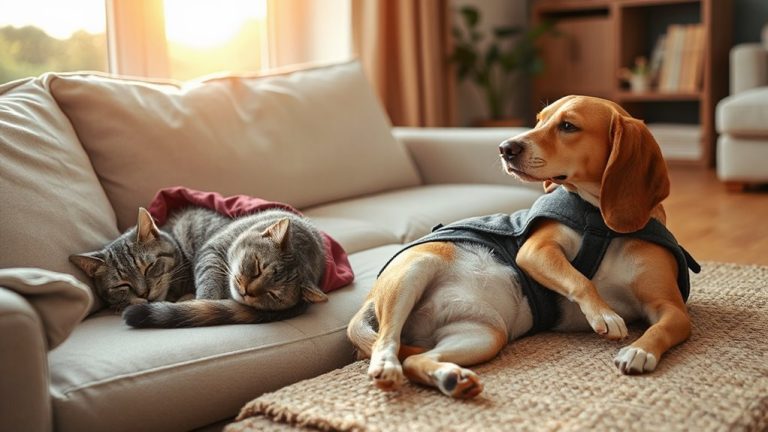
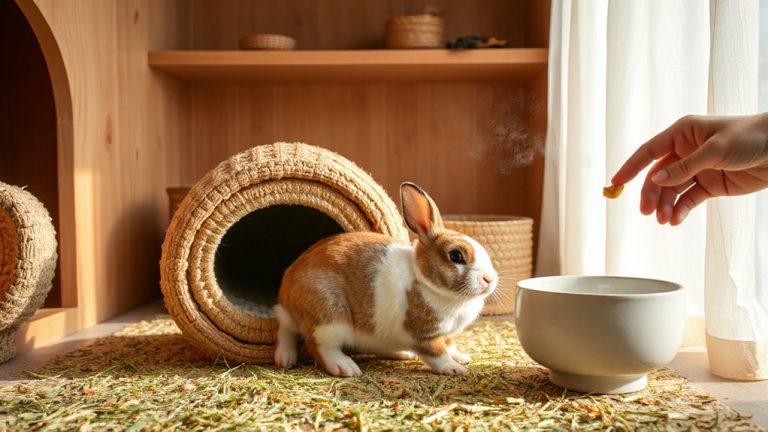
Create a dedicated refuge to help your pet manage noise sensitivity. Choose an interior room with minimal windows and solid walls to reduce external sound penetration. Apply soundproofing techniques such as adding mass-loaded vinyl barriers, installing acoustic foam panels, or using weatherstripping around doors to dampen noise levels by up to 70%. Line the space with comfort items like memory foam beds, fitted blankets, and chew-resistant bolsters to provide tactile reassurance. Position the enclosure away from appliances or HVAC systems that generate low-frequency noise. Use dense, insulated curtains and carpet underlays rated for STC (Sound Transmission Class) improvement of 15–20 points. Guarantee ventilation remains unobstructed while maintaining acoustic integrity. This controlled microenvironment mimics a den, offering psychological and physiological stability during auditory stressors. Consider incorporating an anxiety wrap to enhance your pet’s sense of security through gentle, constant pressure.
Use White Noise to Calm Anxious Pets
Why do sudden sounds startle your pet when background noise remains steady? Your pet’s startle response is triggered by unpredictable, high-amplitude noises. White noise machines reduce this reaction through sound masking, producing a consistent 45–60 dB broadband frequency output (20 Hz–20 kHz). This steady audio signal fills auditory gaps, making sudden sounds less distinct. Sound masking doesn’t eliminate noise, but it decreases the contrast between ambient and peak sound levels by up to 15 dB, reducing perceived loudness. Some white noise devices offer pink or brown noise variants, which emphasize lower frequencies and may better soothe anxious pets. While not a method of audio desensitization, white noise creates a stable auditory environment. Use it daily, especially during storms or fireworks. Position the device 6–8 feet from your pet’s safe space for maximum diffusion without causing new sensory stress. Maintain volume below 60 dB to prevent overexposure.
Help Pets Get Used to Loud Noises Over Time
When introduced properly, repeated exposure to controlled sound levels can reduce your pet’s sensitivity to loud noises over time. This process is known as desensitization training. Start with low-volume recordings of common loud sounds-thunder, fireworks, vacuums-and play them at levels just below your pet’s reaction threshold. Gradually increase volume over days or weeks, ensuring your pet remains calm. Pair each session with positive experiences like treats or play; this is counter conditioning. It rewires your pet’s emotional response from fear to association with reward. Sessions should last 10–15 minutes, repeated daily. Use high-fidelity audio files with accurate frequency ranges (20 Hz–20 kHz) for realism. Monitor body language closely-pinned ears or crouching mean you’ve progressed too fast. Consistency and precision yield results. Never force exposure. With proper technique, most pets show improvement within 4–6 weeks.
When to Call a Veterinarian or Behaviorist
How do you know when noise sensitivity goes beyond normal caution? If your pet shows signs of panic, like dilated pupils, tachypnea (rapid breathing), or attempts to escape, it’s time to act. These aren’t just behavioral quirks-they may require emergency interventions. Persistent vocalization, self-injury, or trembling for hours post-noise exposure indicates pathology, not just stress. You should seek professional referrals immediately. A veterinarian can rule out underlying conditions, such as hyperthyroidism or neurological disorders, that exacerbate sensitivity. For long-term management, a certified veterinary behaviorist can design a targeted desensitization protocol. Do not rely solely on over-the-counter solutions like pheromone diffusers or anxiety wraps without clinical guidance. Untreated, noise aversion can lead to chronic cortisol elevation, impairing immune function. Early professional referrals improve prognosis markedly.
On a final note
You can manage your pet’s noise sensitivity effectively with consistent strategies. Create a safe space measuring at least 36 x 36 inches for cats and 48 x 36 inches for dogs, lined with sound-absorbing foam. Use white noise machines emitting 60–70 dB to mask triggering sounds. Gradually desensitize pets using validated audio protocols, increasing volume by 5 dB daily. Consult a veterinarian if anxiety persists despite interventions.