Managing Fight-or-Flight Responses in Pets Exposed to Loud Noises and Sudden Changes
You can reduce your pet’s fight-or-flight response by controlling their environment and using targeted interventions. Dogs with genetic sensitivity or past trauma experience heightened amygdala activation from sudden noises. Create a safe space in an interior room using mass-loaded vinyl (NRC ≥ 0.8) and sealed doors to cut sound transmission by up to 50%. Play pink noise at 60–65 dB from a source 6–8 feet away to mask disturbances. Use pressure wraps delivering 15–30 mmHg to reduce heart rate variability by up to 22%. Start desensitization with sounds at 20–30 dB, increasing in 5-dB increments only if no stress signs appear. Pair audio cues with treats to build positive associations. Consistent 10–15 minute daily sessions in the same quiet setting improve neural conditioning. If your pet shows persistent panic or self-injury, veterinary evaluation for SSRIs or benzodiazepines may be necessary. Behavioral therapy combined with medication yields better outcomes. There’s a specific way to structure training sessions for maximum retention and calm.
Notable Insights
- Create a soundproof safe space in a quiet interior room using acoustic materials and sealed doors to reduce noise exposure.
- Gradually desensitize pets to loud sounds using low-volume recordings, increasing intensity only in 5-dB increments without stress signs.
- Pair noise exposure with positive experiences like treats or play to build positive associations through counterconditioning.
- Use calming tools such as pink noise machines and pressure wraps to lower heart rate and block sudden auditory stimuli.
- Seek veterinary care if pets show persistent panic, self-injury, or destruction, as medication and behavioral therapy may be needed.
What Triggers Fight-or-Flight in Pets?
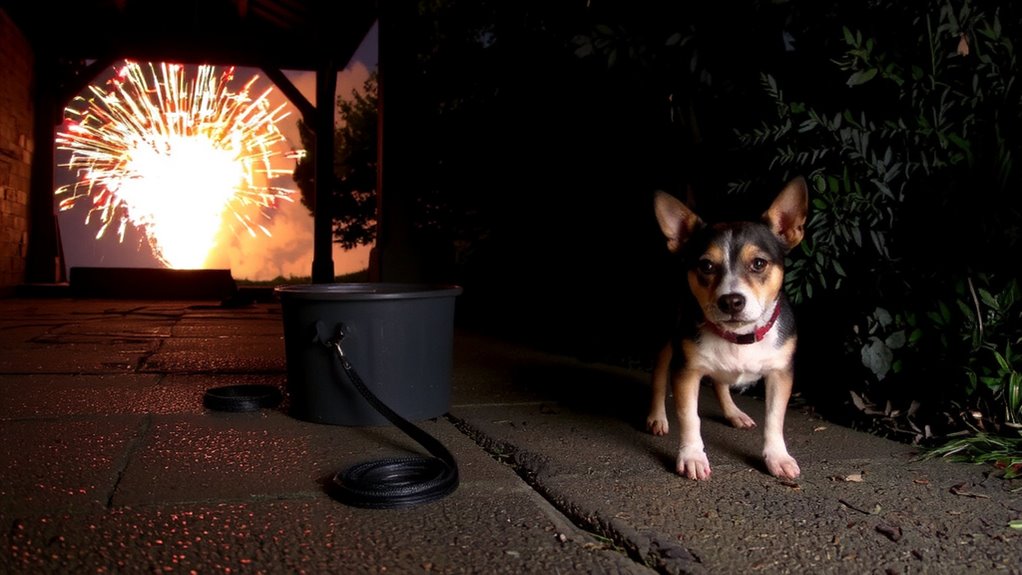
Why do pets suddenly freeze, flee, or fight when nothing seems wrong? Their reactions often stem from genetic predisposition and past trauma. Certain breeds inherit heightened alertness, making them more reactive. For example, herding dogs possess a genetic predisposition to respond rapidly to movement, increasing fight-or-flight likelihood. Similarly, rescue animals with past trauma may perceive neutral stimuli as threats due to learned fear responses. These behaviors are mediated by the amygdala, which processes threat signals and activates the sympathetic nervous system. Heart rate increases, pupils dilate, and stress hormones like cortisol spike within seconds. Neurological studies show that animals with early-life adversity exhibit prolonged activation of the hypothalamic-pituitary-adrenal axis. This physiological cascade prepares the body for action, even if no danger exists. Recognizing these internal mechanisms helps explain seemingly unprovoked reactions. Understanding both genetic and experiential factors allows for accurate assessment and targeted intervention in at-risk pets.
Why Loud Noises Stress Pets
Loud noises stress pets because their auditory systems are both more sensitive and broader in range than humans’. You may not hear certain sound frequencies, but your pet does-often up to 45,000 Hz, compared to your 20,000 Hz limit. These higher frequencies can be jarring, even painful. Sudden loud sounds trigger immediate neurological reactions, activating the amygdala and hypothalamus. This cascade initiates the fight-or-flight response, releasing adrenaline and cortisol. Heart rate increases, muscles tense, and focus sharpens-all within milliseconds. These responses are automatic, not learned. Your pet can’t reason its way out of the reaction because the neurological pathways bypass higher cognitive processing. Even brief exposure to unexpected noises, like thunder or fireworks, sustains elevated stress hormones. This physiological arousal persists long after the sound ends, affecting behavior and well-being. Understanding these mechanisms helps you anticipate and manage stress triggers effectively. Products containing pheromone products can help mitigate these stress responses by promoting a sense of calm in anxious pets.
Create a Safe Space for Noise-Anxious Pets
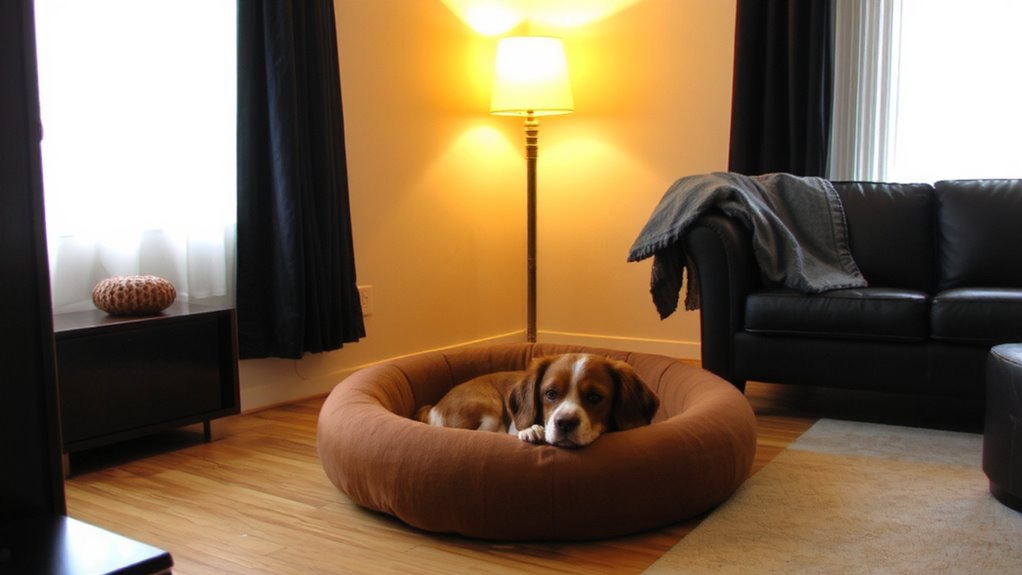
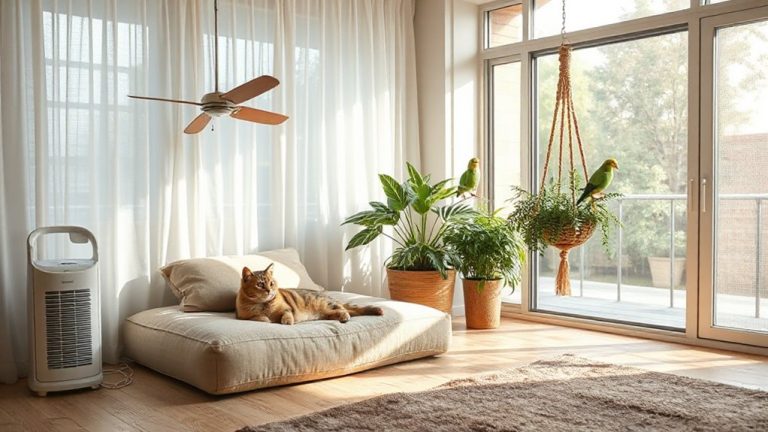
A quiet refuge isn’t just comforting-it’s a physiological necessity for noise-sensitive pets. You can reduce stress responses by creating designated retreat areas in low-traffic, interior rooms away from windows. These spaces should incorporate soundproofing techniques like mass-loaded vinyl barriers, acoustic foam panels (NRC rating ≥ 0.8), and sealed door edges (reducing sound transmission by up to 50%). Use rugs and heavy curtains (STC ratings of 15–20) to dampen noise. Design the area with solid, enclosed structures-such as modified crates or under-bed enclosures lined with ISO-certified sound-absorbing materials. Maintain temperatures between 68–75°F and light levels below 50 lux to promote calm. Avoid open or reflective surfaces that amplify sound. These retreats mimic den-like conditions, reducing cortisol spikes during noise events. Consistency in location and setup strengthens the pet’s association with safety.
Train Your Pet to Tolerate Sudden Sounds
You can condition your pet to handle sudden sounds by using systematic desensitization and counterconditioning protocols. Start with sound desensitization by playing low-volume recordings of common loud noises-thunder, fireworks, door slams-at intensities below your pet’s reactivity threshold, typically 20–30 dB. Gradually increase volume in 5-dB increments over multiple sessions, making certain no signs of stress occur. Pair each exposure with treats, praise, or play to apply positive reinforcement. This creates a positive association with the sound. Sessions should last 10–15 minutes daily, using consistent timing and environments. Adjust progression based on your pet’s behavioral cues-freezing, panting, or fleeing indicate you’ve advanced too quickly. Use high-fidelity audio files to guarantee accurate sound replication. Mastery may take 4–8 weeks. Success is measured by stable heart rate and relaxed posture during full-volume playback. Incorporating evidence-based pet stress relief products can further support your pet’s emotional well-being during training.
Best Calming Tools for Noise-Stressed Pets
When desensitization alone doesn’t fully address your pet’s reactivity to sudden sounds, integrating evidence-based calming tools can markedly reduce physiological stress markers. Sound machines emit steady pink noise at 60–65 decibels, masking unpredictable spikes like thunder or fireworks. Models with adjustable frequency ranges (0.5–20 kHz) align closely with canine and feline hearing profiles. You’ll see best results when placing the device 6–8 feet from your pet’s resting area. Pressure wraps apply gentle, constant tactile stimulation, typically delivering 15–30 mmHg of compression. This mimics deep-touch pressure therapy, shown to lower heart rate variability by up to 22% in stressed dogs. Select wraps with stretchable, breathable fabric and adjustable straps for a secure fit. Use both tools in combination during high-noise events for synergistic effect. You should monitor respiration rate and muscle tension to gauge effectiveness. An effective option for pressure wraps is an anxiety-reducing harness, which combines secure fit and targeted compression to help calm anxious pets.
When to See a Veterinarian for Pet Anxiety
How do you know when your pet’s anxiety crosses the line from manageable to medical? If your pet shows persistent panic, self-injury, or destruction during storms or loud events, professional intervention is necessary. Aggression, excessive vocalization lasting hours, or refusal to eat or sleep post-trigger indicate clinical anxiety. These signs suggest the nervous system is stuck in fight-or-flight mode. Your veterinarian can assess neurochemical imbalances and recommend medication options like selective serotonin reuptake inhibitors (SSRIs) or benzodiazepines, dosed by weight and species. Behavioral therapy, including desensitization protocols and counterconditioning, works best when combined with pharmacologic support. Therapy plans often require 4–8 weeks to show measurable improvement. Early veterinary consultation improves outcomes, especially when noise aversion progresses to generalized anxiety disorder.
On a final note
You can manage your pet’s fight-or-flight response effectively with proactive strategies. Noise anxiety triggers physiological stress: increased heart rate, elevated cortisol. Create a sound-dampened safe zone-ideally 20 dB quieter-using dense materials like mass-loaded vinyl. Use desensitization training with calibrated sound recordings, starting at 30 dB and increasing by 5 dB daily. Pair with pheromone diffusers (e.g., Adaptil, Feliway) emitting species-specific calming signals. Consult a vet if symptoms persist beyond 14 days despite intervention.