Calming Techniques for Pets During Travel: Understanding Flight or Fight Responses
Your pet’s travel anxiety activates a fight-or-flight response due to motion sensitivity, unfamiliar scents, and confinement stress. The amygdala triggers fear, while cortisol release impairs calm behavior. Use a CPS-certified carrier or crash-tested harness for safety. Administer species-specific pheromones-F3 for cats, DAP for dogs-which reduce stress for up to 30 days. Give supplements like L-theanine 90 minutes prior, dosed by weight. You’ll discover effective training and environmental strategies next.
Notable Insights
- Pets exhibit fight-or-flight responses during travel due to amygdala activation and cortisol release from stress triggers like motion or unfamiliar scents.
- Gradual desensitization to carriers and short car rides over 7–10 days can reduce fear-based reactions and build positive associations.
- Use of species-specific pheromones (DAP for dogs, F3 for cats) helps calm pets by signaling safety through scent cues.
- Proper restraints like CPS-certified carriers or crash-tested harnesses provide security and reduce anxiety during vehicle motion.
- Avoid sedatives unless prescribed; instead, maintain a controlled environment with noise reduction, familiar scents, and regular monitoring.
What Triggers Your Pet’s Travel Anxiety?
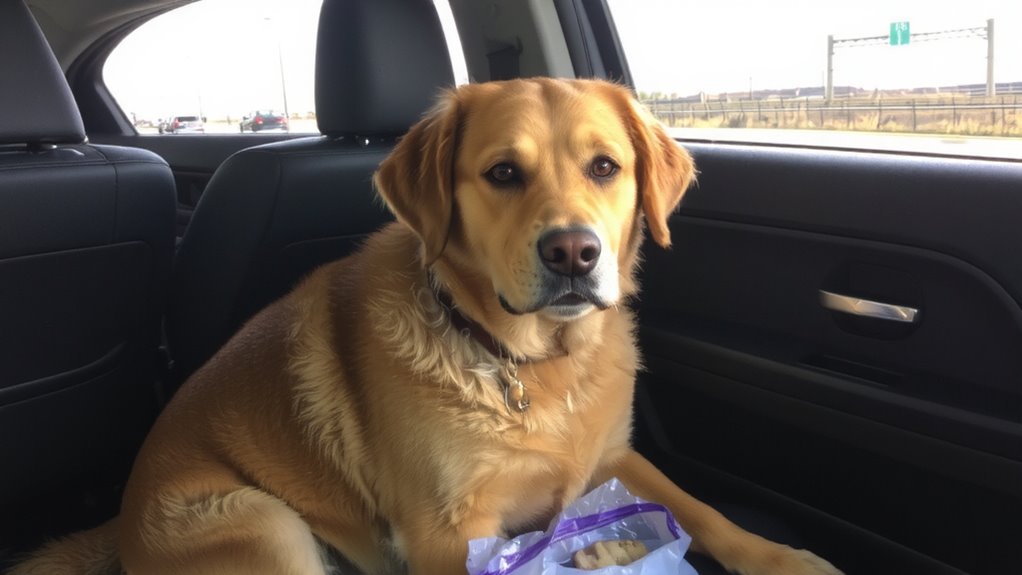
Why does your pet react so strongly when the travel carrier comes out? The sight triggers a stress response linked to past negative associations. Motion sensitivity plays a key role-it disrupts your pet’s inner ear balance system, causing dizziness and nausea. This is especially true in cats and small dogs, whose vestibular systems are highly responsive to lateral and vertical acceleration. Unfamiliar scents contribute substantially; pets rely on olfactory cues for environmental security. The plastic odor of a new carrier or residual cleaning agents can signal danger. These stimuli activate the amygdala, heightening alertness. When combined, motion sensitivity and unfamiliar scents create a compounded anxiety response. The hypothalamus then stimulates the adrenal glands, releasing cortisol. This physiological cascade impairs rational behavior, prompting avoidance or panic. Understanding these triggers enables targeted interventions. Neutralizing foreign smells and acclimating pets gradually to carriers can mitigate reactive episodes effectively. Top-rated products like calming collars and pheromone diffusers offer pet anti-anxiety solutions that support behavioral training during travel preparation.
Spot the Signs of Stress in Dogs and Cats
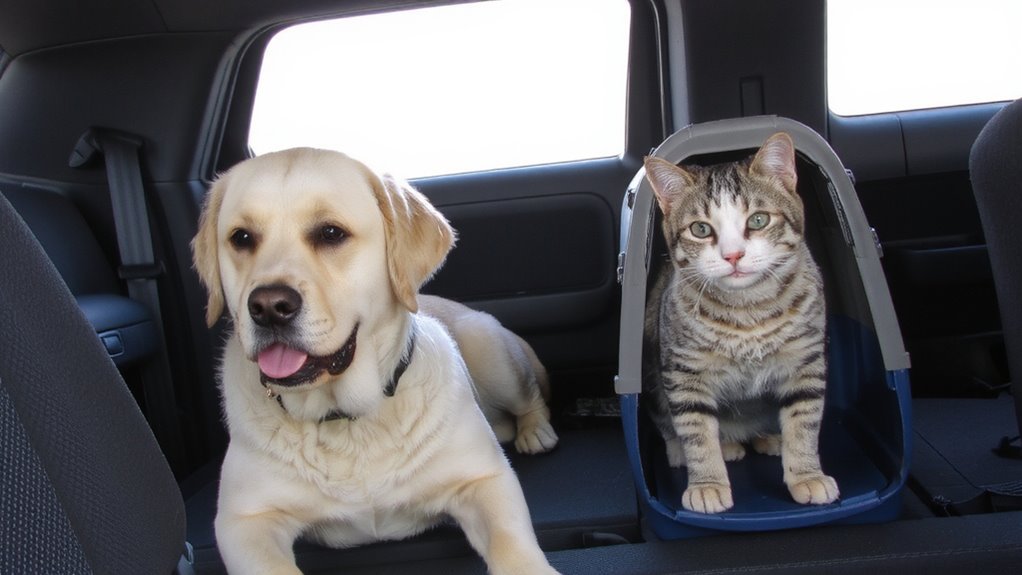
Recognizing your pet’s stress begins with observing changes in behavior and physiology. Body language is a key indicator-panting, trembling, flattened ears, or lowered tail position signal anxiety in dogs. Cats may crouch low, tuck their tails, or flatten their ears against their heads. You’ll often notice dilated pupils or rapid blinking in both species. Vocal changes include excessive whining, growling, or howling in dogs; cats may yowl or hiss unexpectedly. These responses reflect autonomic nervous system activation. A stressed dog’s heart rate can rise from a resting 60–100 bpm to over 140 bpm. In cats, normal respiratory rates (20–30 breaths/minute) may double. These physiological shifts parallel human stress responses. Monitoring such signs helps differentiate fear from discomfort. Early detection enables timely intervention before escalation. Effective support may include using best pet calming aids to help reduce anxiety during stressful situations.
How to Keep Your Pet Calm in the Car
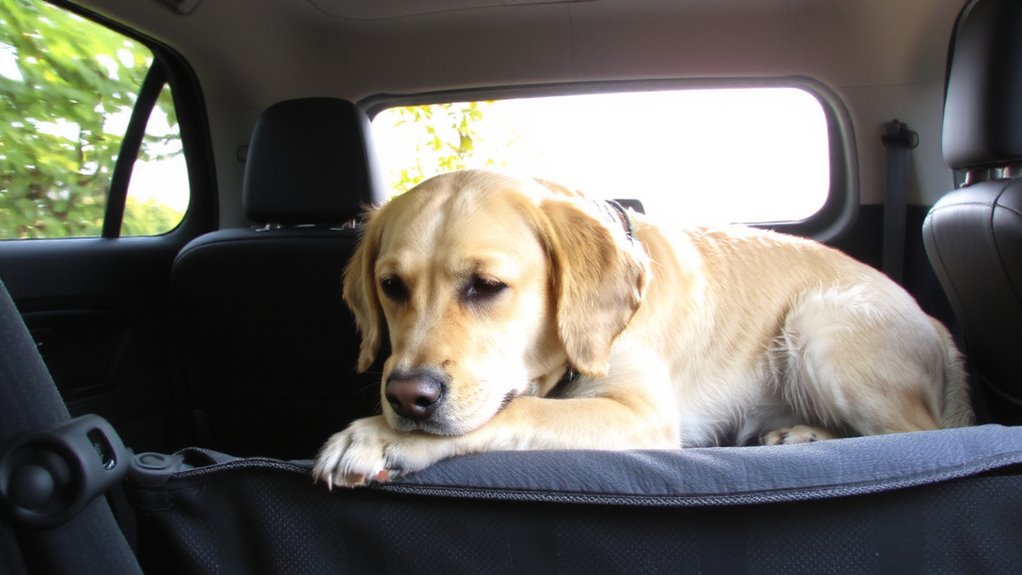
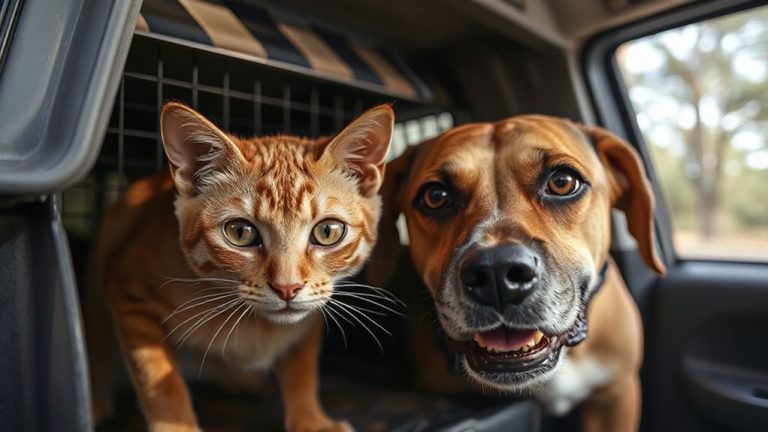
While motion and unfamiliar environments can heighten anxiety, you can minimize your pet’s stress in the car with structured preparation and the right tools. Start with gradual car desensitization: begin with stationary sessions, then short drives, increasing duration over 7–10 days. This reduces panic by familiarizing your pet with vehicle stimuli. To prevent motion sickness, withhold food 12 hours before travel but allow water. Use a secure carrier or harness rated for crash safety (tested to 30 mph in frontal impact per Center for Pet Safety standards). Best pet car seats provide elevated visibility and restraint, helping reduce anxiety during travel.
| Item | Specification |
|---|---|
| Travel Carrier | Hard-sided, CPS Certified, 18″ x 12″ x 12″ minimum |
| Safety Harness | Five-point attachment, tensile strength 500 lb |
| Window Cover | UV-blocking, 90% glare reduction |
| Travel Blanket | Machine-washable, hypoallergenic microfiber |
| Food Dispenser | Timer-controlled, holds up to 2 cups |
Monitor behavior closely to adjust training or seating.
Use Calming Aids Like Pheromones and Supplements
You’ve already taken steps to acclimate your pet to the car and equipped them with safety-rated restraints and shielding from visual overstimulation. Now consider adding calming aids like pheromone diffusers and natural supplements. Pheromone diffusers release species-specific synthetic signals-feline facial pheromones (F3) or dog-appeasing pheromones (DAP)-that reduce stress by mimicking natural calming cues. These operate continuously for up to 30 days and cover areas of approximately 700 square feet. For travel, portable plug-in or spray versions are available. Natural supplements often contain L-theanine, chamomile, or tryptophan, which modulate neurotransmitters like serotonin and GABA. They typically take 30–90 minutes to take effect and last 4–8 hours. Administer them before departure based on label dosage, using weight-specific guidelines. These aids complement behavioral and environmental strategies without sedation.
Train Your Pet to Stay Calm During Travel
If your pet struggles with travel anxiety, systematic desensitization training can reshape their behavioral response. Use gradual exposure to acclimate your pet to travel-related stimuli in controlled, low-stress environments. Begin by introducing the carrier or vehicle while allowing voluntary exploration. Reward calm behavior with treats, praise, or play-this is positive reinforcement. Progressively increase exposure duration and stimulus intensity over days or weeks. For example, close the carrier door for 30 seconds, then 2 minutes, then 10. Next, carry it around the house, then into the car without starting the engine. Each step must elicit no fear before advancing. Pair sessions with high-value rewards to strengthen associations. Training sessions should last 5–10 minutes, daily or twice daily, maintaining consistency. Properly applied, this method modifies neurological response patterns, reducing activation of the sympathetic nervous system during actual travel.
How to Calm Your Pet on a Plane
Flying with your pet introduces unique challenges that go beyond standard travel preparation. You must address in-flight stressors like cabin pressure changes, motion, and loud engine noise. Noise reduction is critical: use species-specific ear protection, such as canine flight muffs rated at 22 dB attenuation, to minimize auditory distress. Place your pet in an airline-compliant carrier positioned beneath the seat, ensuring adequate ventilation and secure fastening during turbulence. Introduce a familiar blanket-preferably pre-scented with home odors-inside the carrier to provide tactile continuity and olfactory reassurance. The fabric should be 100% cotton for breathability and weigh between 0.5–0.7 kg to avoid excess bulk. Avoid sedatives unless prescribed, as they may impair thermoregulation. Maintain hydration with collapsible silicone bowls secured to carrier walls. Monitor behavior throughout the flight using direct visual checks at 15-minute intervals.
Create a Fear-Free Travel Environment for Your Pet
A well-designed travel environment minimizes stress triggers through controlled sensory input and structural safety. Use a secure, airline-approved carrier with internal dimensions meeting your pet’s height, length, and ability to stand, turn, and lie down comfortably. Line the base with non-slip padding to reduce motion vibration. Introduce familiar objects-such as a worn t-shirt or favorite blanket-48 hours before travel to transfer your scent and enhance olfactory anchoring. These items provide psychological continuity in unfamiliar spaces. Apply positive reinforcement by rewarding calm behavior with treats or soft verbal cues during pre-trip carrier training. Avoid abrupt movements or loud noises near the carrier. Maintain ambient temperatures between 65–75°F and limit visual stimuli with a breathable, opaque cover. These adjustments lower cortisol levels, reducing flight-or-fight activation. You’re not just transporting your pet-you’re engineering a mobile safety zone.
On a final note
You can manage your pet’s travel anxiety with proven methods. Recognize stress triggers like motion, noise, and confinement. Use species-specific pheromone diffusers-Feliway for cats, Adaptil for dogs-emitting vaporized molecules that mimic natural calming signals. Administer vet-approved supplements such as L-theanine or alpha-casozepine, dosed at 20 mg/kg for cats and 40 mg/kg for dogs. Combine gradual desensitization training with secure, well-ventilated carriers measuring at least 1.5 times your pet’s length.