Behavioral and Physiological Indicators of Generalized Anxiety Disorder in Parrots as Pets
You’ll see prolonged feather fluffing, rapid eye blinking over 40 times per minute, and repetitive pacing in anxious parrots. These behaviors correlate with elevated corticosterone and heart rates exceeding 500 bpm, even without visible distress. Feather tremors and reduced vocalization are subtle physical signs. Parrots mask symptoms due to evolutionary survival instincts, delaying detection. Chronic stress suppresses immunity and disrupts digestion. Monitoring duration-over 10 minutes or five episodes hourly-helps identify clinical patterns. Further details reveal how environment directly shapes long-term avian wellness.
Notable Insights
- Prolonged feather fluffing and rapid eye blinking exceeding 40 times per minute signal heightened anxiety in pet parrots.
- Repetitive behaviors like head jerking or pacing indicate limbic system dysregulation and underlying stress.
- Involuntary feather tremors and resting heart rates above 500 bpm reveal hidden physiological anxiety responses.
- Parrots mask distress due to evolutionary survival instincts, often showing no obvious signs despite elevated corticosterone levels.
- Chronic anxiety manifests in suppressed immunity, feather damage, and changes in sleep or feeding, even without visible agitation.
Triggers of Parrot Anxiety
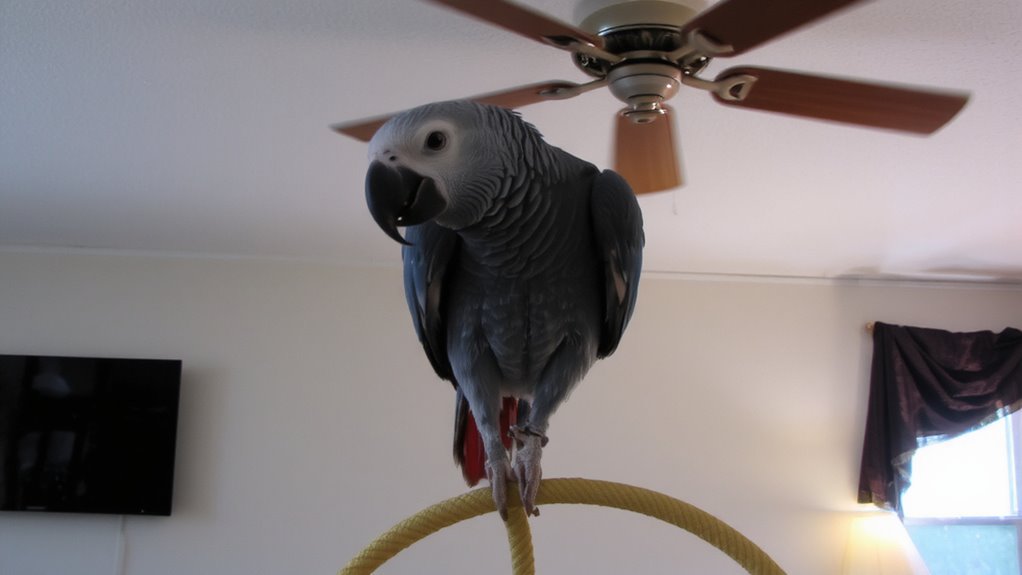
Many pet parrots experience anxiety due to environmental or social stressors, and understanding these triggers is essential for effective care. Noise sensitivity is a primary contributor; sudden or sustained loud sounds-like vacuum cleaners, alarms, or shouting-elevate corticosterone levels, triggering a stress response. Parrots perceive frequencies from 20 Hz to 20 kHz, making household noise particularly disruptive. Chronic exposure leads to altered heart rate variability and suppressed immune function. Social isolation is equally impactful; parrots are obligate social animals evolved to live in cohesive flocks. Deprived of consistent interaction, they exhibit elevated baseline stress hormones. Even short separations exceeding four hours can induce measurable behavioral and physiological changes. Environmental enrichment alone cannot compensate for lack of social input. You must provide predictable auditory environments and daily social engagement to mitigate these core anxiety triggers effectively.
Behavioral Signs of Parrot Anxiety
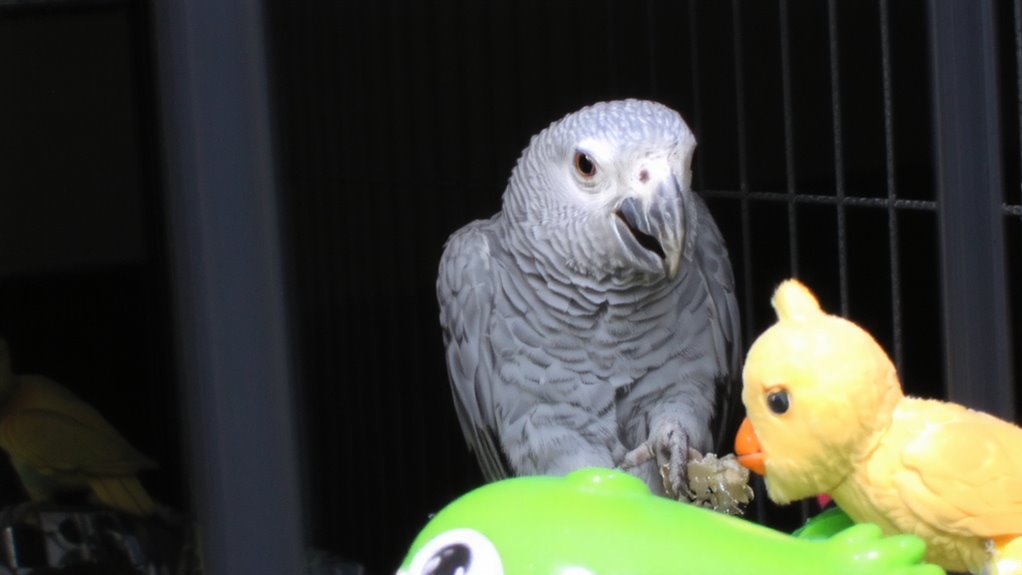
When your parrot feels anxious, it often displays observable changes in behavior that signal distress, even before physical symptoms appear. Feather fluffing is a common indicator, where the bird puffs up its contour and down feathers to appear larger or conserve body heat during stress. Unlike brief fluffing during sleep or preening, prolonged feather fluffing correlates with heightened cortisol levels. Rapid eye blinking is another measurable sign; healthy parrots blink slowly 15–20 times per minute, but anxious individuals may blink over 40 times per minute. This hyper-blinking response often accompanies redirected attention and hypervigilance. You might also observe repetitive head jerking, pacing along perches, or decreased vocalization. These behaviors reflect dysregulation in the avian limbic system. Monitoring frequency and duration of these actions-over 10 minutes continuously or recurring more than five times hourly-can help quantify anxiety severity. These behavioral markers provide early detection essential for intervention.
Hidden Physical Signs of Stress in Parrots
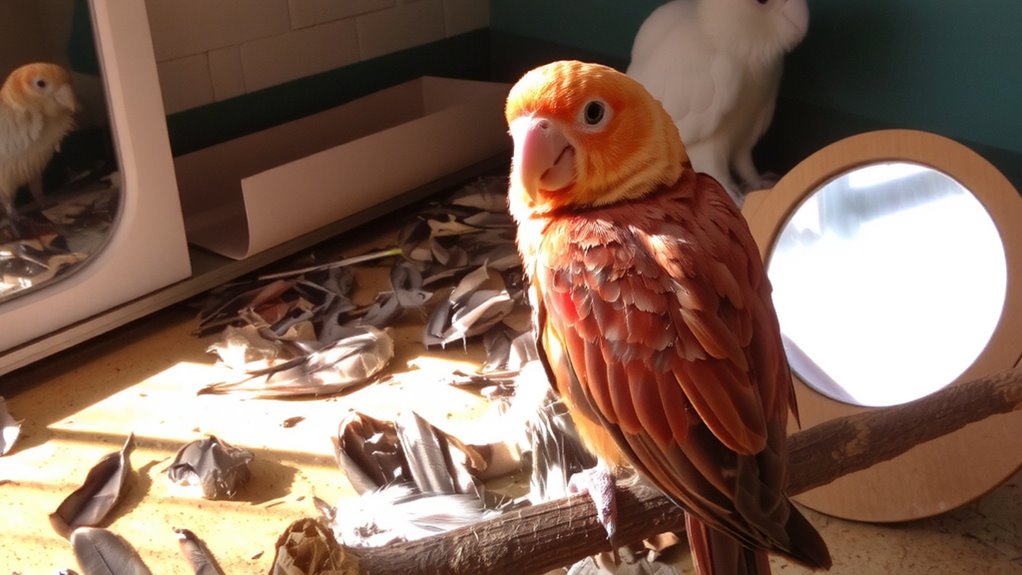
Your parrot’s stress isn’t always obvious-some of the most telling signs are hidden beneath the surface. Feather tremors are a subtle but measurable indicator of underlying anxiety. These small, involuntary muscle contractions appear as faint shaking in the contour feathers, especially along the spine and wings. Unlike full-body shivering, feather tremors occur even in warm environments and can last several minutes. An elevated heart rate is another physiological marker. In calm states, a parrot’s resting heart rate ranges from 200 to 400 beats per minute, depending on species and size. During stress, it may surge above 500 bpm. These changes often happen without visible agitation. Monitoring such signs requires close observation and sometimes tools like a stethoscope or infrared thermometer. Detecting these physical cues early allows for timely intervention, improving long-term welfare outcomes. Stress isn’t always loud-sometimes, it’s silent, internal, and running fast.
Why Parrots Hide Anxiety (And Why It’s Risky)
Parrots conceal anxiety as a survival instinct rooted in their evolutionary history. This behavior, known as social masking, prevents predators from targeting weak or distressed individuals in the wild. In captivity, you may overlook subtle signs because your parrot actively suppresses visible distress. Evolutionary survival prioritizes silence over expression-hiding fear increases chances of acceptance within a flock. Social masking means your bird may appear calm while experiencing elevated heart rate, increased corticosterone levels, or suppressed immune function. These physiological markers persist even without overt symptoms. Chronic concealment leads to deteriorating health, including feather damage or gastrointestinal disruption. You must monitor baseline behaviors closely-changes in sleep patterns, feeding frequency, or vocalization duration can indicate underlying anxiety. Early detection requires understanding that apparent normalcy doesn’t equal wellness. Recognizing hidden stressors and behavioral shifts is essential for timely intervention and long-term avian well-being.
When to See a Bird Behavior Expert?
How do you know when occasional quirks become signs of a deeper issue? Persistent parrot phobic patterns-such as panic responses to routine stimuli, self-mutilation, or nocturnal fear episodes-indicate pathological anxiety, not normal behavior. When stereotypic actions like pacing, feather plucking, or refusal to eat occur more than 30 minutes daily, the condition exceeds adaptive stress responses. These manifestations often correlate with elevated corticosterone levels, tachycardia, and sleep cycle disruptions measurable via avian physiological monitoring. If behavioral modifications fail after two weeks of consistent application, expert intervention时机 is required. You’re not dealing with defiance-you’re seeing maladaptive coping. Delaying professional help risks entrenching irreversible behaviors. A certified bird behaviorist conducts functional assessments, identifies antecedent triggers, and designs evidence-based protocols. Early expert intervention时机 improves prognosis markedly. Don’t wait until symptoms escalate. Monitor duration, frequency, and intensity. When thresholds exceed baseline variability, act. Parrot mental health is treatable with timely, specialized care. Choosing a species suited to your lifestyle can prevent stress-related disorders, so consider the best house pet birds before adoption.
How to Create a Calm Environment for Your Parrot
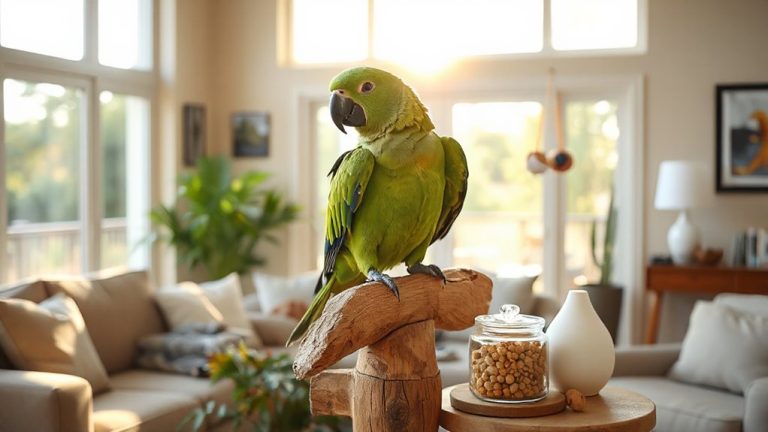
What if the key to reducing your parrot’s anxiety lies not in medication, but in the layout of the room? Soft lighting markedly lowers stress. Use warm-white bulbs under 2700K and dimmers to simulate natural dawn. Position cages away from direct sunlight, which can cause overheating and agitation. Maintain ambient light between 100–300 lux during daytime; under 50 lux at night. Quiet routines are equally essential. Feed, clean, and interact at consistent times daily. Aim for minimal auditory disruption-keep noise under 55 decibels, equivalent to a quiet office. Avoid sudden movements or household chaos near the cage. Use white noise machines at 45 dB if external sounds fluctuate. Cage placement should offer a solid back wall and partial visual barriers. These environmental controls regulate circadian rhythms, reduce cortisol spikes, and support behavioral stability. Calm isn’t just comfort-it’s clinical support. For nighttime safety without disruption, consider a low-lumen night light for dogs that provides gentle illumination without overstimulation.
On a final note
You must recognize subtle signs of anxiety in pet parrots. Behavioral shifts like feather plucking or aggression indicate distress. Physiological markers include elevated corticosterone levels and tachycardia-resting heart rates exceeding 300 bpm. Parrots mask symptoms due to survival instincts, increasing health risks. Environmental enrichment, consistent routines, and proper lighting (12 hours of full-spectrum light daily) reduce stress. Consult an avian behaviorist if symptoms persist. Early intervention prevents chronic conditions.