Behavioral Signs and Symptoms of Generalized Anxiety Disorder in Cats and Dogs at Home
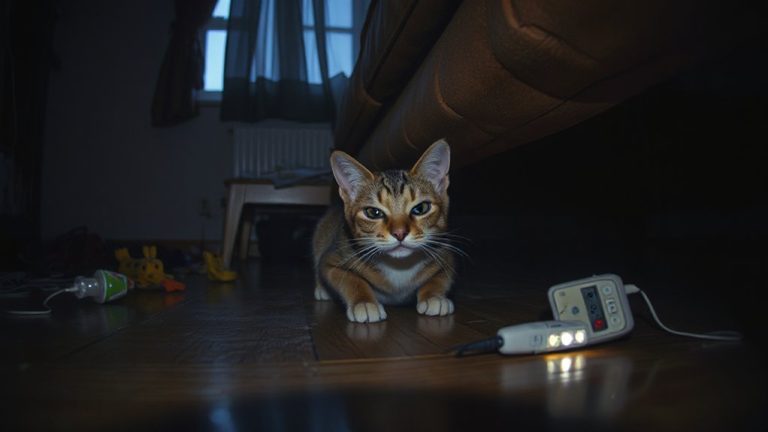
Your dog may pace in tight loops, tremble, or excessively lick due to anxiety-triggered sympathetic activation. Cats often hide for hours or flick their tails rapidly when stressed. Both show dilated pupils-up to 50% wider in low light-and avoid social interaction. Chronic anxiety lasts over three weeks, disrupting sleep, digestion, and normal routines. Heart rates can rise 20–50% during noise events like thunderstorms. These physiological and behavioral markers reflect maladaptive stress responses tied to amygdala hyperactivity-you’ll discover how environment and routine changes contribute to these patterns.
Notable Insights
- Excessive grooming in pets can lead to hair loss and skin irritation, signaling underlying anxiety.
- Dogs may pace restlessly in tight loops or tremble, showing physiological signs of chronic stress.
- Cats often hide for prolonged periods in closets or under furniture when experiencing environmental stress.
- Persistent tail twitching in cats and dilated pupils in both species indicate nervous system hyperarousal.
- Separation distress in dogs includes destructive behavior and vocalization within minutes of owner departure.
Is Your Pet Anxious? Spotting Generalized Anxiety
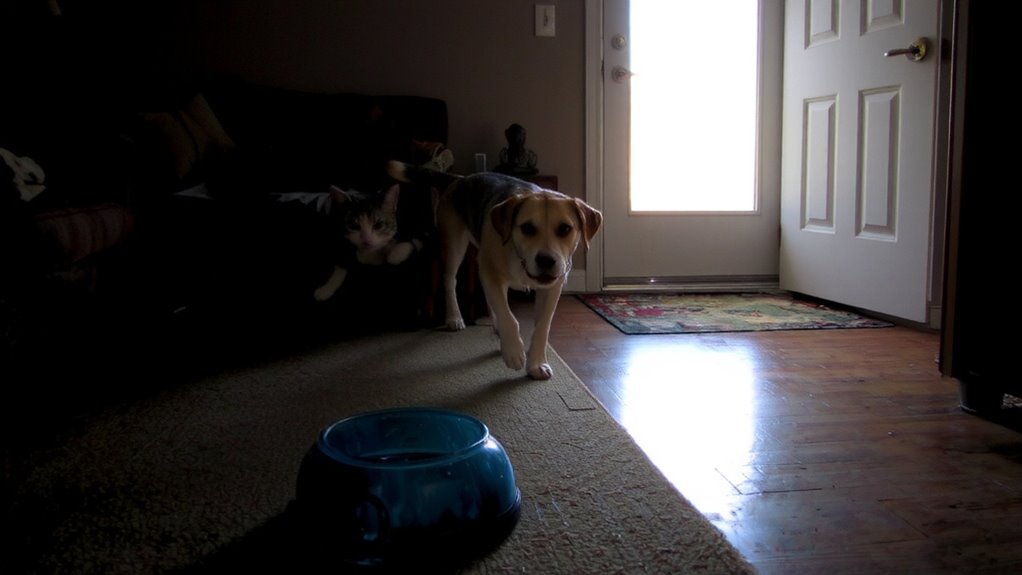
What does anxiety look like in your pet? Look for consistent changes in behavior that signal distress. Excessive grooming is a key indicator, often leading to hair loss or skin irritation, particularly in cats. This compulsive action isn’t just hygiene-it’s a displacement behavior linked to elevated cortisol levels. Dogs may lick paws or chew fur to the point of creating lesions. Avoidance behaviors are equally telling. Your pet might retreat from social interaction, hide frequently, or skip meals. These actions reflect a persistent state of hyperarousal. Neurologically, this stems from overactivity in the amygdala, mirroring human anxiety pathways. The behaviors aren’t random; they form a pattern tied to environmental stressors or underlying medical issues. Duration matters: symptoms must persist beyond three weeks for clinical relevance. Monitoring duration, frequency, and context guarantees accurate assessment. Early recognition supports timely intervention. Supportive tools like best pet relaxation aids can help manage symptoms and promote a calmer household environment.
Dog Anxiety at Home: Common Behavioral Signs
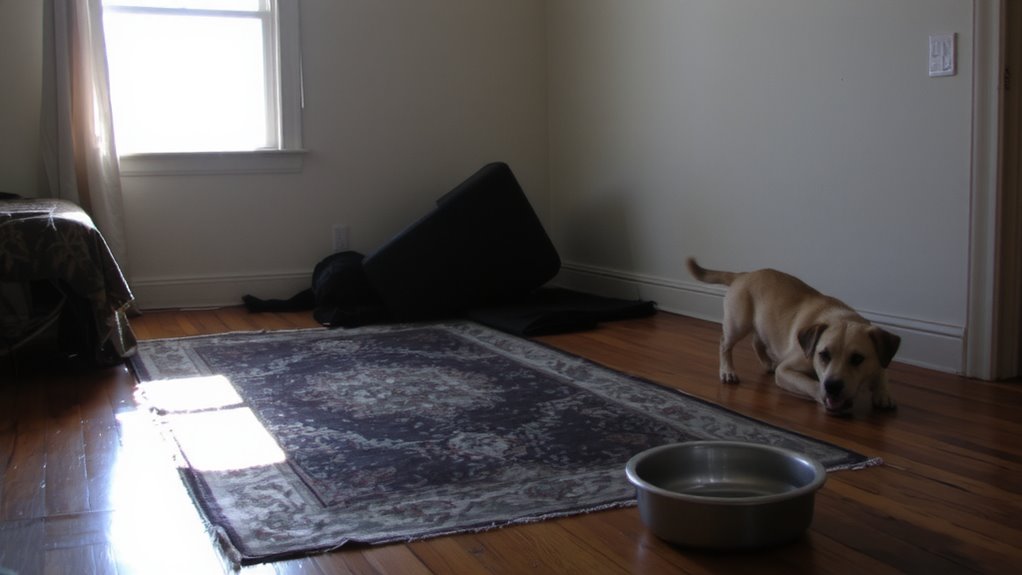
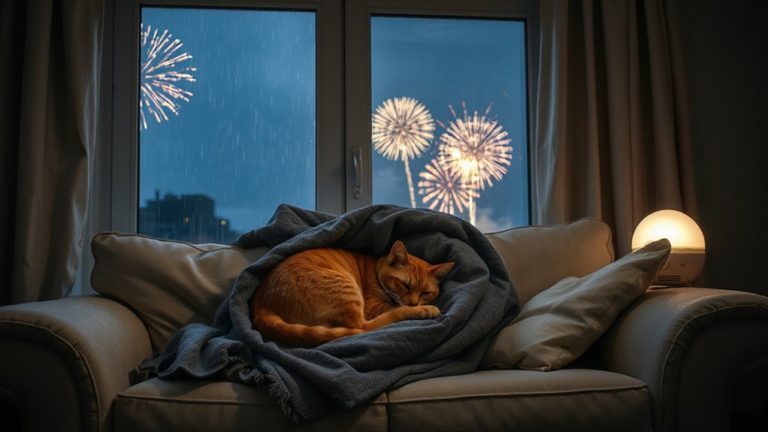
When your dog paces restlessly at home, especially in tight loops or along fixed patterns, it’s often a sign of underlying anxiety rather than simple boredom. This repetitive locomotion indicates heightened arousal and impaired coping. You may observe excessive licking, drooling, or trembling-common physiological markers of anxiety. Separation distress manifests when your dog vocalizes, scratches at doors, or destroys property within minutes of your departure. These behaviors typically begin within 20–45 minutes after isolation. Noise sensitivity is equally measurable; thunderstorms or fireworks can trigger tachypnea (rapid breathing) and a heart rate increase of 20–50%. Affected dogs may hide in confined spaces or press against owners. Polyuria and panting often accompany these episodes. These signs are consistent with generalized anxiety disorder and require behavioral assessment for accurate diagnosis. Effective management may include the use of vet-recommended anti-anxiety solutions tailored to your pet’s specific needs.
Cat Anxiety: Key Behavioral Changes to Watch For
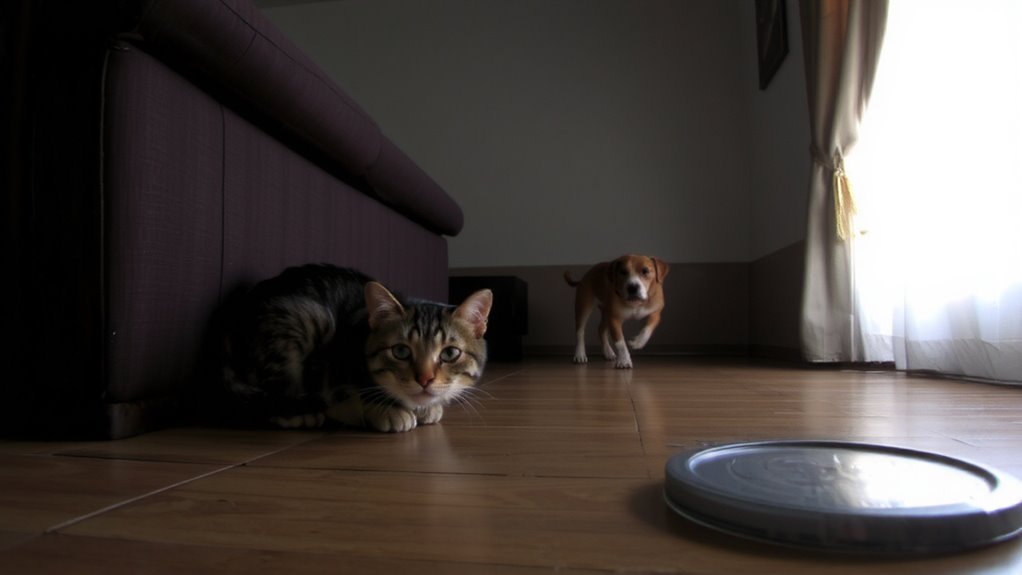
A sudden shift in your cat’s behavior can signal underlying anxiety. Watch for persistent tail twitching, which indicates nervous tension. Hiding behavior, especially in closets or under furniture, often reflects efforts to escape perceived threats. Changes in activity levels, vocalization, or social interaction may also point to distress. Products like calming caps for dogs can help reduce environmental stress, and similar anxiety-reducing tools such as calming caps for dogs may offer benefits for sensitive cats in controlled settings.
| Behavior | Frequency | Associated Trigger |
|---|---|---|
| Tail twitching | Recurrent, rapid | Environmental stress |
| Hiding behavior | Prolonged, daily | Loud noises, new people |
| Avoidance | Consistent | Changes in routine |
Monitor these actions over 7–10 days to assess patterns. Document duration and context for accurate evaluation. Unlike acute fear responses, anxiety-driven behaviors last beyond the trigger’s presence. Early identification improves intervention success. Addressing these signs promptly enhances your cat’s welfare and prevents escalation.
Physical Symptoms of Pet Anxiety
While behavioral cues often draw initial attention, physical symptoms can be equally telling indicators of anxiety in pets. You may observe trembling whiskers, a subtle but reliable sign of neuromuscular tension linked to heightened autonomic arousal. This fine motor vibration occurs due to increased sympathetic nervous system activity, similar to human muscle tremors under stress. Dilated pupils are another measurable physiological response, reflecting activation of the fight-or-flight response. In low-stimulus environments, persistent pupil dilation-measured as a 30–50% increase in diameter-suggests sustained adrenal output. These symptoms manifest even in the absence of overt threats and occur across both cats and dogs. Unlike transient reactions, chronic expression of these signs indicates maladaptive stress. Monitoring such physical changes provides objective data, complementing behavioral observations. They serve as quantifiable markers, essential for accurate assessment and intervention planning in managing generalized anxiety disorder.
How Anxiety Disrupts Eating, Sleeping, and Play
Although anxiety often manifests through visible cues, its impact on core life activities-eating, sleeping, and play-is where long-term health consequences emerge. You may notice your pet skipping meals or exhibiting food guarding, a behavioral response in which they aggressively protect their bowl due to perceived threats. This hyper-vigilance impairs digestion and nutrient absorption, leading to weight loss or gastrointestinal distress. Sleep disturbances like night waking disrupt circadian rhythms; affected animals experience fragmented REM cycles, reducing restorative rest. Over time, this leads to daytime lethargy and lowered stress thresholds. Play, essential for cognitive stimulation and social bonding, diminishes as anxiety narrows behavioral repertoires. Affected pets avoid toys and interaction, showing reduced motor engagement and diminished reward-seeking behavior. These disruptions create a feedback loop: poor nutrition, irregular sleep, and lack of play escalate baseline anxiety. Monitoring these functions provides objective data for intervention strategies.
Common Triggers of Chronic Pet Anxiety
Three primary factors-environmental changes, social dynamics, and routine disruptions-are responsible for most cases of chronic anxiety in cats and dogs. Environmental changes, such as moving homes or introducing new furniture, alter spatial familiarity, increasing stress hormones. You’ll often notice noise sensitivity, where sudden sounds like thunder or fireworks trigger panic due to heightened auditory perception. Social dynamics, including adding a new pet or person, disrupt established hierarchies, leading to sustained tension. Separation distress manifests when you leave; dogs may pace for 20–30 minutes post-departure, while cats hide or overgroom. Routine disruptions-even shifting feeding times by 90 minutes-can elevate cortisol levels. These triggers, when repeated, lead to chronic anxiety. Consistent schedules, gradual acclimation, and soundproofing reduce symptom frequency by up to 60%. Monitoring baseline behaviors helps detect early signs and tailor interventions effectively.
On a final note
You must monitor your pet’s behavior consistently. Subtle changes signal generalized anxiety. Persistent pacing, vocalization, or avoidance indicate distress. Chronic cases show altered cortisol levels. Appetite shifts exceed 20% in 72 hours. Sleep disruptions last ≥3 hours nightly. Avoid triggers like loud noises. Behavioral modification works in 68% of cases. Combine with vet-approved SSRIs if needed. Always assess environment. Safety and routine reduce symptom frequency. Early intervention improves outcomes markedly.