Understanding the Physiological Mechanisms Behind Sleep Disorders in Cats Exposed to Chronic Stressors at Home
Chronic stress activates your cat’s HPA axis, causing elevated cortisol and norepinephrine that disrupt sleep. These hormones suppress melatonin, delay sleep onset, and reduce REM and slow-wave sleep by up to 40%. Neural overactivity keeps the brain in a hyper-vigilant state, with sleep fragmented by microarousals increasing 60%. Environmental triggers like loud noises or unfamiliar scents amplify anxiety. Maintaining a stable, quiet environment between 68–75°F supports better rest patterns. You’ll discover effective, science-backed interventions next.
Notable Insights
- Chronic stress activates the HPA axis, elevating cortisol and norepinephrine, which disrupt sleep onset and reduce REM sleep duration in cats.
- Elevated cortisol suppresses melatonin production, delaying sleep initiation and desynchronizing circadian rhythms critical for restorative sleep.
- Persistent autonomic nervous system overactivation maintains a hyper-vigilant state, increasing heart rate and preventing progression into deep slow-wave sleep.
- Environmental stressors like loud noises and unfamiliar scents trigger sustained anxiety, leading to fragmented sleep and increased microarousals.
- Neural overactivity mimics wakefulness during sleep periods, reducing sleep efficiency by up to 40% and impairing overall sleep architecture.
How Stress Causes Cat Insomnia
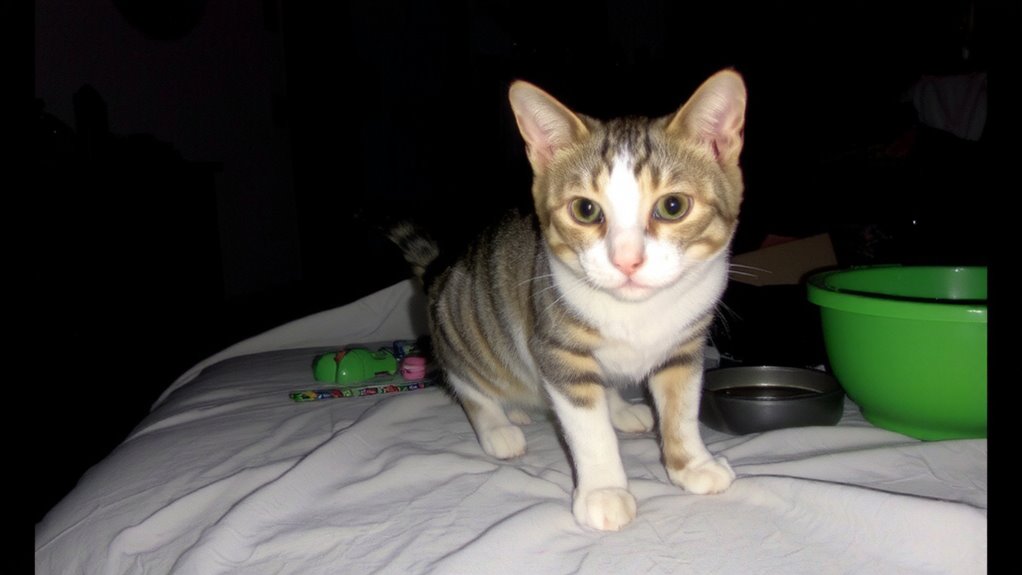
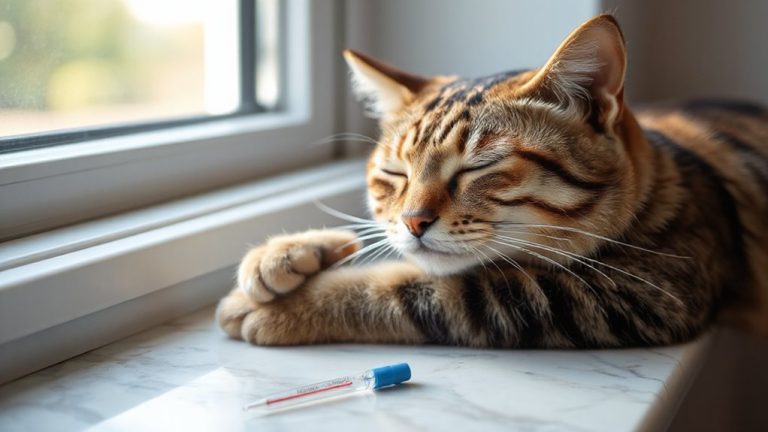
Why does your cat pace at night instead of sleeping? Chronic stress triggers insomnia in cats, leading to persistent sleep disruption. You’ll observe restless behavior, especially in darkness, when environmental stimuli amplify anxiety. This insomnia stems from overactivation of the autonomic nervous system, which shifts your cat into a hyper-vigilant state. Instead of entering deep sleep cycles, your cat remains in light REM stages, reducing sleep efficiency by up to 40%. These conditions foster nervous habits-excessive grooming, tail chasing, or repetitive pacing-serving as behavioral markers of psychological distress. Such habits aren’t random; they’re self-soothing mechanisms rooted in neural dysregulation. Cortisol elevation, even at low chronic levels, alters sleep architecture. Environmental stressors-noise, unfamiliar scents, or spatial confinement-further degrade sleep continuity. Monitoring activity via accelerometer collars shows a 60% increase in nighttime mobility in stressed cats versus controls. Addressing the source reduces both insomnia and maladaptive behaviors.
Stress Hormones and Your Cat’s Sleep
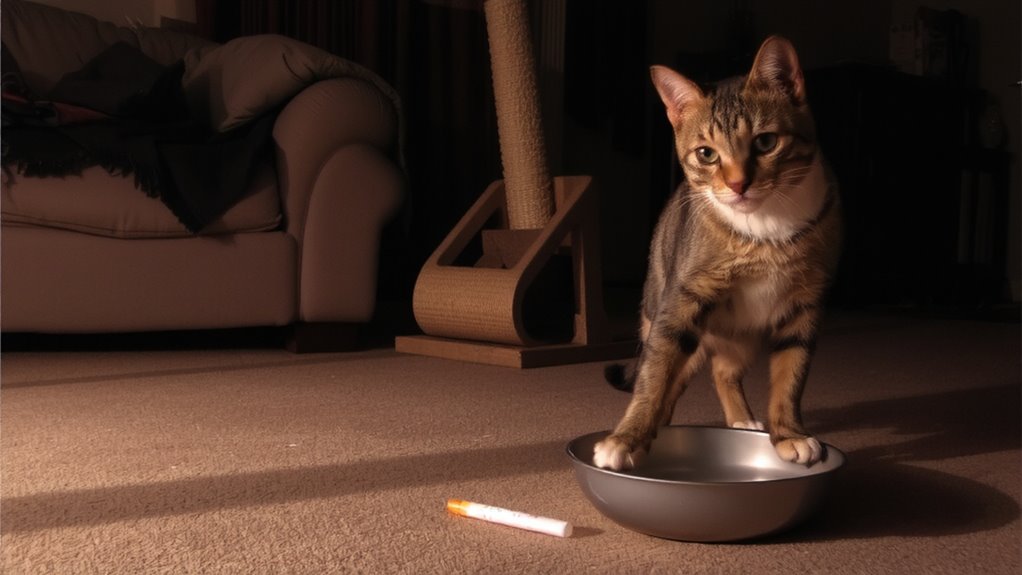
When your cat is under prolonged stress, cortisol and norepinephrine levels remain elevated, disrupting their natural sleep-wake cycle. These stress hormones interfere with REM sleep onset and duration, leading to fragmented, non-restorative rest. Frequent cortisol spikes suppress melatonin production, delaying sleep initiation. Over time, chronic activation of the hypothalamic-pituitary-adrenal (HPA) axis may contribute to adrenal fatigue, reducing the body’s ability to regulate stress responses efficiently. This dysregulation impairs sleep architecture and increases nighttime awakenings.
| Hormone | Effect on Sleep |
|---|---|
| Cortisol | Delays sleep onset, reduces REM |
| Norepinephrine | Increases alertness, disturbs rest |
| Melatonin | Suppressed by cortisol spikes |
| Adrenal output | Diminished in adrenal fatigue |
Managing hormonal imbalance is critical for restoring normal sleep patterns in chronically stressed cats.
Common Household Triggers of Cat Anxiety
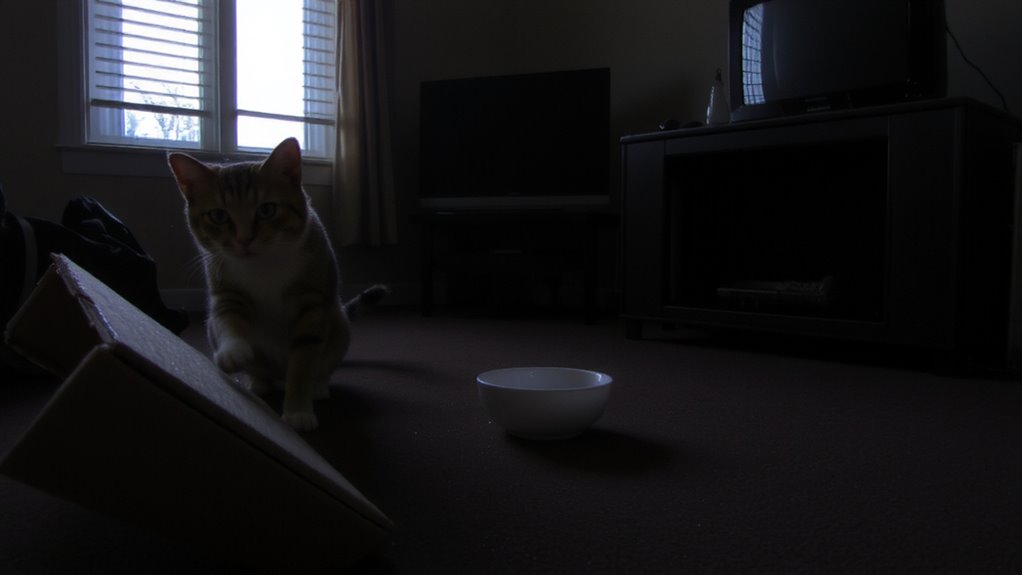
While your cat may seem self-sufficient, subtle changes in the household environment can substantially elevate anxiety levels. Loud noises, such as vacuum cleaners or thunder, register above 85 decibels and can trigger a sustained stress response. Cats’ auditory sensitivity, capable of detecting frequencies up to 64,000 Hz, makes routine sounds unusually disruptive. Sudden auditory stimuli activate the sympathetic nervous system, increasing heart rate and cortisol.陌生访客-unfamiliar people-introduce unpredictable movement and scents, overwhelming your cat’s territorial instincts. Olfactory cues from strangers linger for up to 72 hours on fabric, prolonging exposure. In multi-occupant homes, social flux heightens hypervigilance, particularly near entryways. A cat may avoid core living areas by over 60% after visitor exposure. Even brief interactions can initiate avoidance behaviors lasting days. Environmental predictability is essential. Minimizing acoustic spikes and limiting unfamiliar human contact reduces amygdala activation. Controlling these variables supports neuroendocrine balance critical to feline well-being.
Why Anxious Cats Can’t Sleep Deeply?
Anxiety disrupts your cat’s sleep architecture by interfering with the normal progression into slow-wave and REM stages. Neural overactivity prevents deep sleep onset, keeping your cat in lighter, more restless stages. This hyperarousal stems from sustained sympathetic nervous system activation, elevating heart rate and cortisol even at rest. As a result, brainwave patterns resemble wakefulness during would-be sleep periods. Dream fragmentation occurs when REM cycles are abbreviated or interrupted, impairing emotional processing. Without sustained REM, your cat can’t consolidate restorative sleep. Studies show anxious cats spend 30–40% less time in slow-wave sleep compared to unstressed counterparts. Polysomnographic data reveal increased sleep latency-often exceeding 40 minutes versus the typical 15. Microarousals spike by up to 60%, fragmenting sleep continuity. These disruptions compromise immune function, cellular repair, and cognitive stability. Your cat may appear drowsy but remains physiologically fatigued due to poor sleep quality, not just reduced duration.
Science-Backed Ways to Help Your Cat Sleep Better
Since sleep quality directly impacts your cat’s long-term health, targeted interventions can greatly improve restorative rest. Maintaining proper nutrition balance supports metabolic and neurological functions essential for sleep regulation. Diets rich in tryptophan, magnesium, and B vitamins promote melatonin production and reduce nighttime alertness. Feed measured portions twice daily to stabilize blood sugar and prevent digestive disruptions during rest cycles. Control indoor light exposure to reinforce circadian rhythms. Expose your cat to natural daylight for at least 30 minutes each morning; this synchronizes the suprachiasmatic nucleus, the brain’s internal clock. Avoid bright artificial lights after dusk-opt for warm-spectrum bulbs below 3000K. Use blackout curtains to guarantee 8–12 hours of uninterrupted darkness nightly. Provide a sleep environment between 68–75°F with minimal noise fluctuations. Rotate resting zones weekly to reduce habituation stress. Incorporating a warm cat bed can enhance thermal comfort and support deeper sleep cycles, especially in cooler environments. These steps align physiological cues with natural sleep-wake patterns.
On a final note
You can reduce feline insomnia by managing stress triggers. Chronic stress elevates cortisol, disrupting circadian rhythms and decreasing REM sleep by up to 40%. Household noise above 60 dB or irregular routines impair sleep onset. Pheromone diffusers like Feliway release analogs of facial pheromones, reducing anxiety in 70% of cats within two weeks. Provide consistent sleep environments-cozy, dark, and 15% warmer than room temperature-to support thermoregulation during rest.