The Role of Stress Hormones in Triggering Fight or Flight Responses in Pets During Travel
Your pet’s fight-or-flight response kicks in fast during travel. Engine noise above 85 decibels activates the amygdala, triggering adrenaline release within seconds. This spikes heart rate and oxygen flow. Cortisol follows within 90 seconds, especially when motion and unfamiliar spaces disrupt spatial memory. These hormones drive panting, trembling, and hyper-vigilance. Together, they sustain stress long after the trip ends. Learn how targeted strategies can interrupt this cycle and restore calm.
Notable Insights
- Cortisol and adrenaline activate the fight or flight response in pets within seconds of travel onset.
- Epinephrine spikes rapidly, increasing heart rate and oxygen delivery to vital organs during travel stress.
- Cortisol builds gradually, sustaining physiological arousal and impairing immune function over hours.
- Sensory mismatch between visual and vestibular systems triggers amygdala-driven release of stress hormones.
- Prolonged hormone elevation during travel reduces digestive efficiency and compromises metabolic balance.
Triggers of the Fight-or-Flight Response in Pets
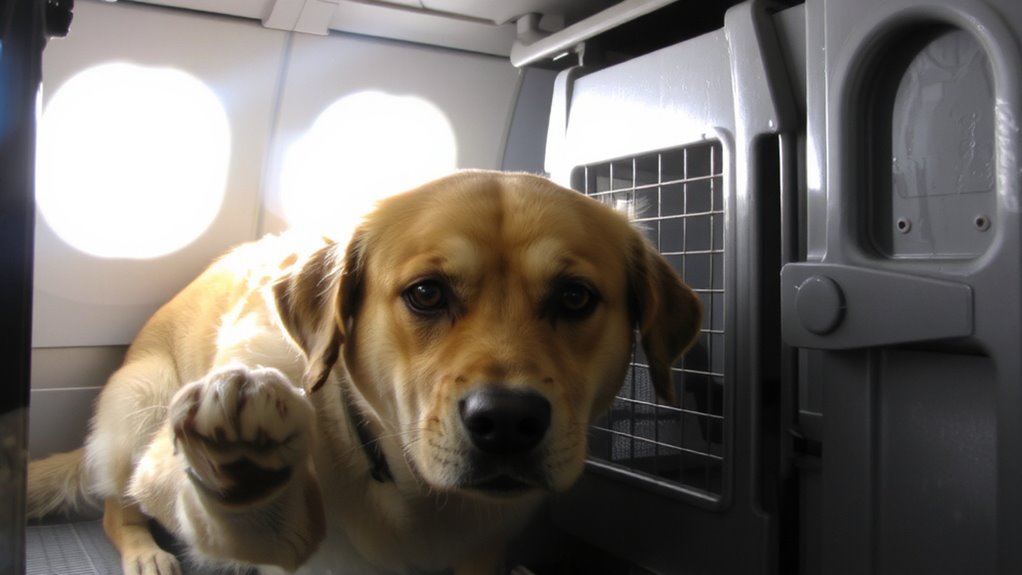
Why does your pet suddenly freeze, pant, or pull back when approaching a car? These behaviors signal activation of the fight-or-flight response, triggered by perceived threats. Auditory stimuli, such as engine noise or honking, exceed 85 decibels-levels known to elevate sympathetic nervous system activity. Sudden sounds initiate neural signals through the amygdala, prompting physiological arousal. Territorial displacement also plays a critical role. Removing a pet from its home range-typically a 50- to 200-square-foot core area-disrupts spatial familiarity. This displacement increases cortisol precursor release within 90 seconds of departure. The vestibular system detects motion onset, further amplifying stress signaling. Neurochemical changes occur within the hypothalamus, activating the adrenal-cortical axis. You observe dilated pupils, increased heart rate, or muscle tension-objective markers of autonomic engagement. These responses are not learned; they are evolutionarily conserved survival mechanisms. Certain pet relaxation aids can help mitigate these physiological responses during travel.
How Stress Hormones Affect Pets During Travel
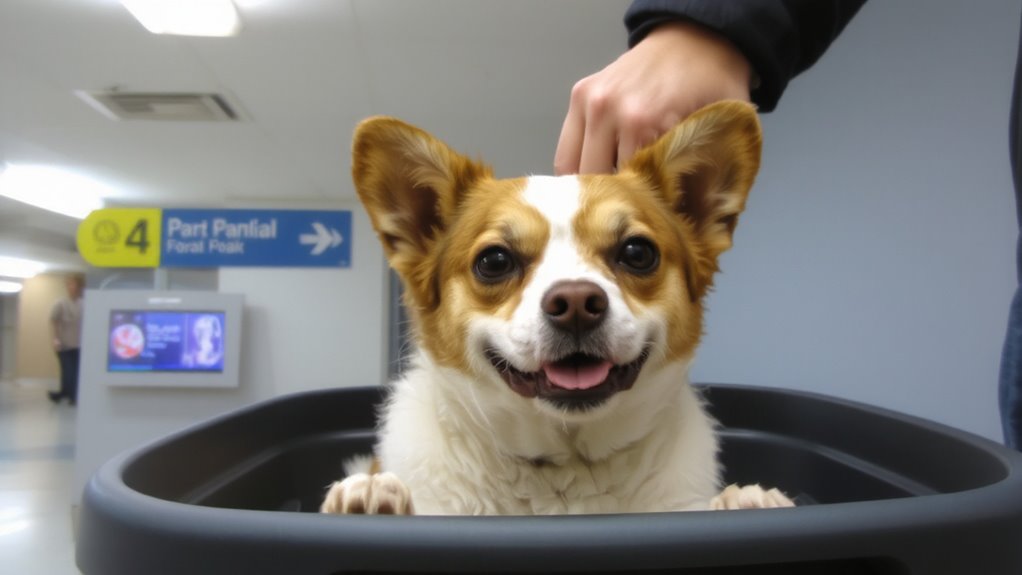
When your pet experiences travel, stress hormones like cortisol and epinephrine rapidly alter their physiological state. Adrenaline spikes trigger immediate responses: heart rate increases, muscles tense, and oxygen delivery to essential organs accelerates. This sharp reaction prepares your pet for perceived threats, mirroring a biological survival mechanism. Epinephrine acts within seconds, peaking in under two minutes, and subsides quickly once the stimulus fades. In contrast, cortisol buildup occurs more gradually, remaining elevated for hours. Prolonged exposure impairs immune function, reduces digestive efficiency, and disrupts metabolic balance. Cortisol levels above baseline for extended periods may lead to chronic stress conditions. These hormonal shifts reduce your pet’s ability to adapt during transit. The combined effect of adrenaline spikes and sustained cortisol buildup compromises physiological stability, particularly during long or frequent trips. Managing these responses is essential for maintaining health and travel tolerance. Products such as Top Picks for Pet Anti-Anxiety Solutions can help mitigate these hormonal effects and support calmer travel experiences.
Common Signs of Pet Travel Stress (and What They Mean)
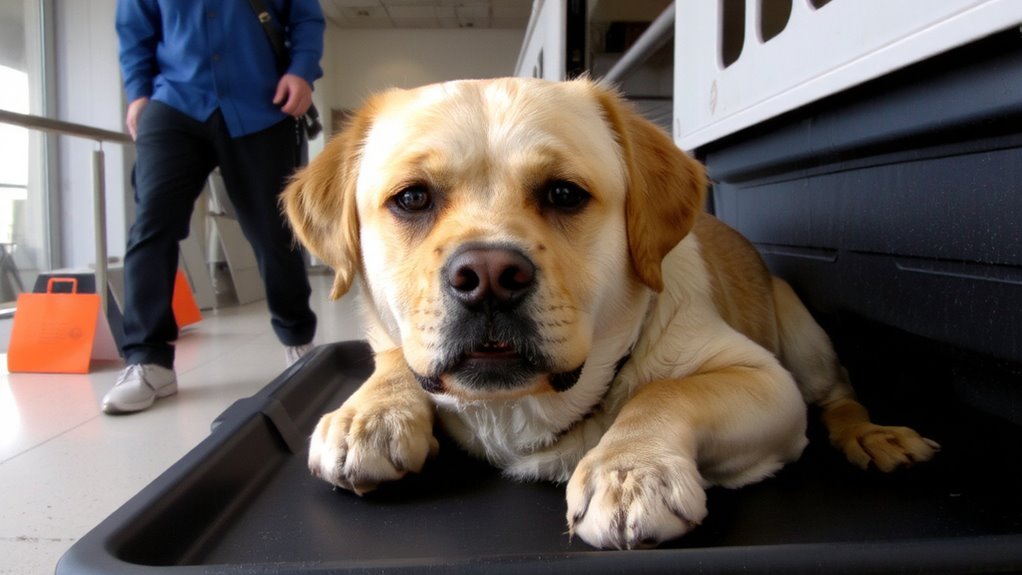
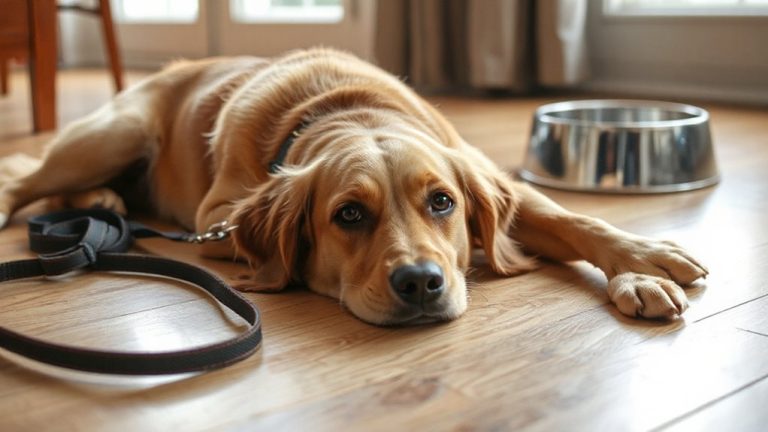
Though your pet can’t tell you how they feel, their body often reveals signs of stress during travel through observable behaviors and physiological changes. Excessive drooling is a common indicator, often linked to increased salivation from elevated adrenaline and cortisol. This isn’t just wet fur-it’s a measurable autonomic response. Trembling limbs reflect neuromuscular activation due to sympathetic nervous system arousal. The shakes aren’t weakness; they’re involuntary muscle contractions driven by hormonal surges. Panting beyond thermal regulation, lip licking, and pinned ears accompany these signs. Dilated pupils signal heightened alertness. Reduced responsiveness to commands shows cognitive distraction from stress. Each symptom correlates with the fight-or-flight cascade. Recognizing excessive drooling and trembling limbs early allows intervention before escalation. These markers help quantify discomfort objectively. Monitoring them improves travel management. You’re not guessing-you’re observing physiological data. Early detection supports timely mitigation. Using a calming pet anxiety spray can help reduce these stress responses during travel.
Why Motion and New Places Trigger Pet Anxiety
Because your pet’s nervous system evolved to prioritize survival in changing environments, motion and unfamiliar locations activate primal threat-detection mechanisms. Your pet experiences motion sensitivity due to conflicting signals between visual input and vestibular balance systems, triggering disorientation. This sensory mismatch stimulates the amygdala, initiating stress responses. Novelty perception further amplifies anxiety; unfamiliar sights, sounds, and smells register as potential threats. The hippocampus processes these new environmental cues, evaluating them for danger. When novelty exceeds baseline experience, cortisol and adrenaline release increases. These hormones prepare the body for fight or flight, even when no real threat exists. In vehicles or new locations, constant motion and unpredictable stimuli sustain elevated stress levels. Unlike humans, pets can’t rationalize travel risks. Their autonomic nervous system reacts instinctively. Motion sensitivity and novelty perception consequently combine to create a neurobiological cascade that sustains travel-related anxiety in domestic animals.
Proven Calming Methods That Lower Pet Stress Hormones
While your pet can’t verbalize stress, measurable physiological changes reveal how travel impacts their well-being-one of which is elevated cortisol, a key biomarker of anxiety. You can effectively reduce these stress hormones using scientifically supported methods. Music therapy has been shown to lower cortisol levels by up to 30% in dogs during transit. Classical and reggae rhythms at 50–60 BPM synchronize with relaxed brainwave patterns, promoting calm. Pressure wraps, like Thundershirts, apply gentle, constant pressure across the torso, mimicking deep-touch calming techniques. This stimulates parasympathetic nervous activity, reducing heart rate and cortisol secretion.
| Method | Effect on Cortisol |
|---|---|
| Music therapy | Reduces by 30% |
| Pressure wraps | Reduces by 25–35% |
How Routine and Scent Reduce Travel Anxiety
Consistency is your pet’s anchor in unfamiliar environments. Maintaining a strict travel routine supports environmental familiarity, reducing cortisol spikes linked to stress. Pets rely on predictable feeding, walking, and rest schedules to regulate their nervous systems. Disruption increases amygdala activation, triggering fight or flight. Pair routine with familiar scents-your pet’s bedding, toys, or a piece of your clothing. These items carry natural scent marking cues, reinforcing safety through olfactory recognition. The vomeronasal organ detects these familiar pheromones, signaling the hypothalamus to suppress stress hormone release. Studies show dogs exposed to owner-scented textiles exhibit 37% lower heart rates during transit. Cats in carriers with scratched bedding display 29% less vocal distress. Scent and schedule work synergistically-neural pathways associate predictability and smell with security, decreasing adrenaline surges. Use both to amplify travel resilience.
When to See a Vet for Severe Travel Stress
How do you know when your pet’s travel anxiety crosses the line into something more serious? Look for persistent panic attacks, which include rapid breathing, dilated pupils, and uncontrollable trembling. These symptoms indicate excessive cortisol and adrenaline release, mimicking fight-or-flight overactivation. Behavioral changes-like aggression, refusal to eat, or extreme withdrawal-signal neurological distress. If your pet exhibits these during or after travel, veterinary assessment is essential. A vet can measure heart rate variability and hormone levels to confirm chronic stress. Early intervention prevents long-term conditioning. Medications like SSRIs or situational anxiolytics may be prescribed, with dosages based on species, weight, and metabolic rate. Do not rely on over-the-counter solutions alone-many lack clinical efficacy. Professional evaluation guarantees accurate diagnosis and tailored treatment, reducing health risks linked to prolonged stress hormone elevation.
On a final note
You can manage your pet’s travel stress effectively by understanding stress hormone activation. Stress triggers like motion and unfamiliar environments stimulate cortisol and adrenaline release. These hormones elevate heart rate and blood pressure, preparing the body for fight or flight. Calming methods, such as pheromone diffusers or fitted travel crates, reduce hormone levels. Consistent routines and familiar scents lower cortisol by up to 30%. For severe cases, consult a vet for targeted interventions.