Cat Fight-or-Flight: How Adrenaline Spikes Heart Rate to 200+ BPM
When your cat hears a loud noise, adrenaline triggers its fight-or-flight response in under 0.1 seconds. This surge activates the amygdala and hypothalamus, spiking heart rate from 120 to over 200 bpm. Pupils dilate, respiration exceeds 60 breaths per minute, and glucose floods muscles for instant energy. Common triggers like vacuums or visitors exceed your cat’s 60–70 dB auditory threshold, provoking freezing, fleeing, or aggression. Adrenaline typically clears within 5 to 10 minutes, though stress markers may linger-you’ll discover how to support faster recovery with targeted strategies.
Notable Insights
- Adrenaline is released within seconds of a threat, triggering the fight-or-flight response in cats via the amygdala and hypothalamus.
- Sudden movements or loud noises activate adrenaline release, increasing heart rate from 120 to over 200 bpm for rapid response.
- Adrenaline enhances physical readiness by dilating pupils, increasing respiration, and mobilizing glucose for immediate muscle energy.
- Cats may respond to adrenaline surges by fighting, fleeing at up to 30 mph, or freezing, depending on threat and environment.
- Adrenaline effects last 5–10 minutes, but stress may persist longer, especially in older cats with slower metabolic clearance.
What Sets Off a Cat’s Fight-or-Flight Response?
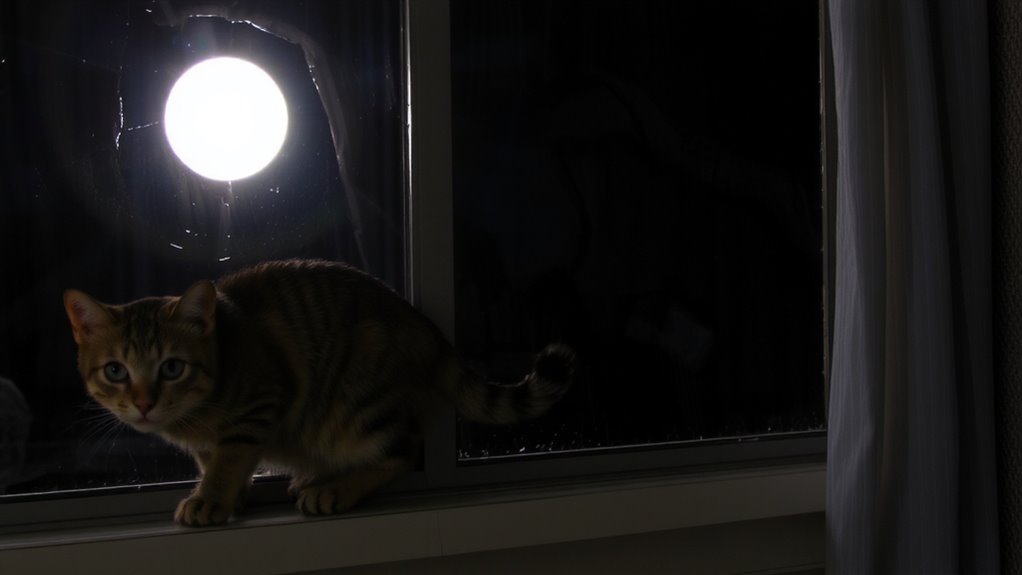
A cat’s survival hinges on its ability to respond rapidly to threats, and the activation of its fight-or-flight response is rooted in evolutionary necessity. You’ll notice this reaction when sudden movements startle your cat. The visual and auditory systems detect motion in less than 0.1 seconds, triggering neural signals to the amygdala. This activates the hypothalamus, prompting the adrenal glands to release adrenaline. Elevated heart rate-from 120 to 200 beats per minute-and dilated pupils enhance readiness. Territorial disputes with other cats or animals also provoke this response. Pheromone detection via the vomeronasal organ identifies intruders, escalating alertness. Adrenaline increases glucose availability, supplying muscles with rapid energy. The entire physiological shift occurs within seconds. Even benign stimuli, like a rustling bag, mimic predator cues. These reactions are hardwired, not learned. You can observe behaviors like crouching or hissing as measurable outputs of hormonal surges. Response duration averages 5 to 10 minutes post-stimulus.
Why Cats Fight, Flee, or Freeze When Scared
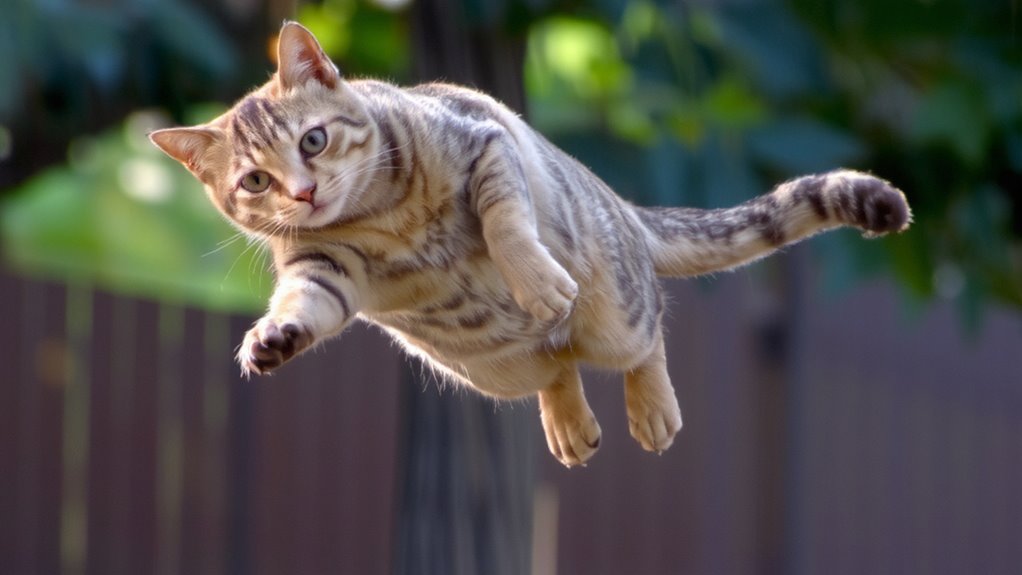
When faced with danger, cats don’t just react-they execute survival strategies shaped by millions of years of evolution. You see these responses as fight, flee, or freeze, all rooted in instinct. Fight arises when escape isn’t possible; territorial disputes often trigger aggression, with cats using claws, teeth, and vocalizations to defend space. Fleeing is the most common reaction-cats bolt at speeds up to 30 mph, relying on explosive hindlimb power. Their light frames, typically 8–10 pounds, enhance acceleration. Freezing allows threat assessment; motionlessness reduces detection, a tactic tied to hunting instincts where stealth guarantees prey capture. Each choice depends on threat proximity, past experience, and environmental layout. These behaviors aren’t random-they’re calculated responses. Neural circuits in the amygdala and hypothalamus activate within milliseconds, preparing the cat to respond. You can predict reactions by observing body language: flattened ears signal preparation for action. These survival mechanisms remain even in domesticated cats.
Physical and Mental Effects of Adrenaline in Cats
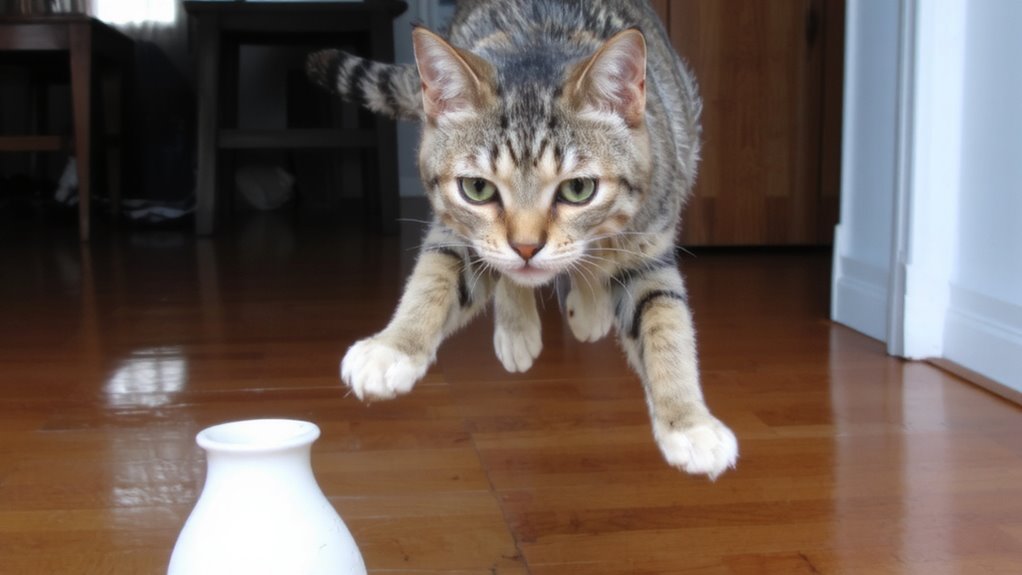
That split-second decision to fight, flee, or freeze hinges on a flood of adrenaline-your cat’s body responding before the mind fully registers the threat. Adrenaline triggers increased heart rate, elevating cardiac output from a resting 120–140 bpm to over 200 bpm. This accelerates oxygen delivery to muscles, preparing for explosive movement. Rapid breathing follows, increasing respiration from 20–30 breaths per minute to 60 or more, enhancing oxygen intake and CO₂ expulsion. Blood glucose rises as glycogen stores break down, supplying immediate energy. Pupils dilate, improving visual awareness. Non-essential systems like digestion slow. Mental focus sharpens, heightening situational awareness, though prolonged exposure impairs decision-making. These physiological changes are transient, typically resolving within minutes once the threat passes. The cascade is efficient, evolutionarily tuned for survival in predators and prey alike, ensuring peak physical readiness with minimal delay.
Everyday Triggers That Scare Cats
Why do ordinary household sounds send your cat leaping for cover? Loud noises, such as vacuum cleaners or thunder, trigger acute stress responses. These sounds exceed 85 decibels, surpassing a cat’s sensitive auditory threshold of 60–70 dB. Your cat’s auditory system detects rapid pressure changes, initiating neural signals to the amygdala. This activates the hypothalamic-pituitary-adrenal axis, prompting adrenaline release. Unfamiliar visitors compound the stress. Their novel scent profiles and movement patterns are perceived as potential threats. Pheromone detection via the vomeronasal organ confirms foreign presence. Heart rate increases from a baseline 120–140 bpm to over 200. Pupils dilate, and muscle tension rises, preparing for rapid escape. Even brief exposure to these triggers induces measurable physiological changes. Environmental predictability is critical. Minimizing sudden auditory stimuli and allowing gradual acclimation to guests reduces activation frequency. Control these variables to maintain homeostasis. Routine pet eye care products can help reduce stress-related ocular irritation in cats during frequent anxiety episodes.
How Long Adrenaline Stays in a Stressed Cat
Adrenaline circulates in a stressed cat for approximately 5 to 10 minutes after the trigger is removed, though individual variation exists based on age, health, and exposure duration. This adrenaline duration influences how quickly your cat returns to baseline physiological function. The hormone activates immediate energy mobilization, increasing heart rate, dilating airways, and redirecting blood flow to muscles. Once the threat passes, metabolic clearance begins. Stress recovery starts within minutes but may extend longer if the cat remains vigilant. Cortisol levels can remain elevated, prolonging the overall stress response. Younger, healthy cats typically metabolize adrenaline faster, with full clearance in under 15 minutes. In older or compromised cats, adrenaline duration may stretch beyond typical limits due to reduced liver and kidney efficiency. Monitoring behavioral cues like panting, pacing, or hiding helps assess recovery progress. While adrenaline itself degrades rapidly, the nervous system’s return to parasympathetic dominance is gradual.
How to Calm a Cat After a Scare
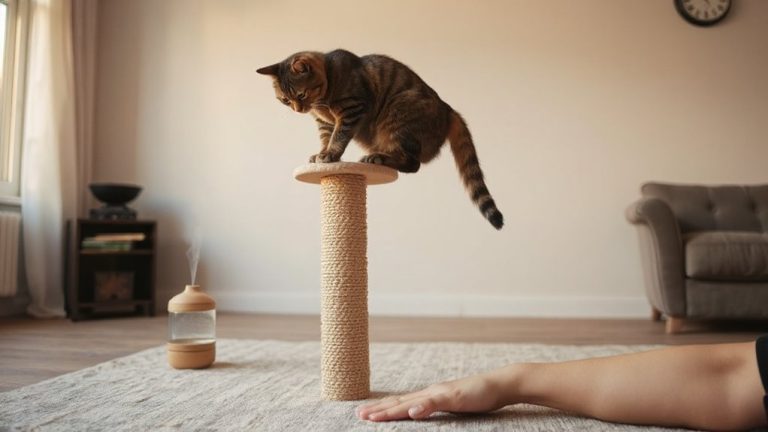
You can help your cat recover quickly after a scare by creating a stable, quiet environment. Safe spaces are essential-provide enclosed hiding spots like cardboard boxes or covered cat beds, ideally 18–24 inches wide to accommodate natural tucking postures. Place them in low-traffic areas, maintaining ambient temperatures between 68–72°F for ideal comfort. Introduce soothing sounds such as low-frequency classical music or specialized feline audio therapy tracks at 45–55 decibels, played for 30-minute intervals. Avoid sudden noises above 60 decibels, which can retrigger stress. Limit physical contact initially; let your cat self-regulate. Pheromone diffusers emitting synthetic facial pheromones (F3 fraction) can reduce anxiety within 15–30 minutes. Guarantee fresh water and familiarity through consistent routine. These measures support parasympathetic activation, helping lower heart rate and cortisol levels efficiently. Incorporating veterinarian-approved anxiety supplements for pets can further support your cat’s nervous system during stressful transitions.
On a final note
You experience your cat’s stress response when adrenaline surges through its body. This hormone spikes heart rate to 220 beats per minute and increases respiration from 30 to 40 breaths per minute. Pupils dilate, muscles tense, and glucose floods the bloodstream for immediate energy. These changes prepare your cat for rapid action. Adrenaline typically clears within 30 to 60 minutes after threat removal. Calming techniques help restore baseline physiological function efficiently.