How to Support a Cat With Hyperesthesia Syndrome Through Behavior Modification
You can reduce hyperesthesia episodes by identifying triggers like vacuum cleaners (85 dB+), sudden movements within 3 feet, or strong scents. Maintain a calm environment with noise below 60 decibels using rugs and curtains. Provide safe zones that are 18 x 18 inches and enclosed on three sides. Stick to set feeding and play times to regulate your cat’s internal clock. Use positive reinforcement when your cat stays calm and offer puzzle feeders for mental stimulation. During episodes, stay still, speak softly, and avoid forced touch. Track episode length to monitor progress. Adjusting routines and surroundings consistently helps stabilize your cat’s nervous system. Further refinements to your approach can markedly improve long-term outcomes.
Notable Insights
- Identify and eliminate common triggers like loud noises, sudden movements, and strong scents to reduce episode frequency.
- Create quiet, enclosed safe spaces in each room using sound-absorbing materials to minimize sensory overload.
- Maintain a consistent daily routine for feeding, play, and rest to enhance environmental predictability and reduce anxiety.
- Use positive reinforcement with treats or play to encourage calm behavior and strengthen stress-resilient responses.
- Respond to episodes calmly by staying still, speaking softly, and avoiding forced contact to prevent further stimulation.
Identify Common Hyperesthesia Triggers in Cats
Sensitivity to stimuli lies at the heart of feline hyperesthesia syndrome, and recognizing triggers is the first step toward managing episodes. Environmental changes, such as new furniture or altered routines, can provoke acute reactions. Cats may respond with sudden tail flicking, skin rippling, or vocalization. These behaviors typically follow exposure to sensory overload-excessive noise, bright lights, or unfamiliar scents. Affected cats exhibit lower thresholds for stimulation, with neural pathways misfiring in response to mild input. Observe your cat for 10–15 minutes, three times daily, to identify patterns. Triggers often include vacuum cleaners (85 dB or higher), sudden movements within 3 feet, or concentrated perfume use. Episodes last 30 seconds to 2 minutes on average. Document timing, duration, and context. Early identification reduces episode frequency by up to 60% when avoided. Tracking guarantees accurate diagnosis and targeted intervention, improving long-term behavioral outcomes without pharmacological reliance. Incorporating pet mental health aids can further support behavioral management by reducing baseline anxiety levels.
Reduce Overstimulation With a Calm Home Environment
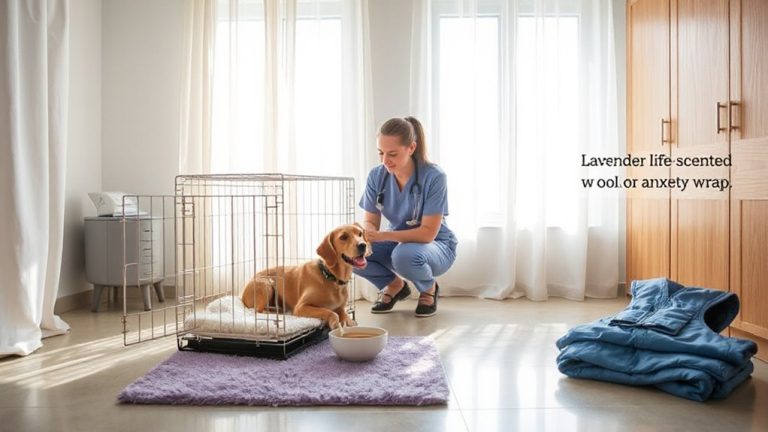
A well-managed environment is essential for minimizing episodes in cats with hyperesthesia syndrome. You must prioritize quiet spaces where your cat can retreat without disturbance. Ideal quiet spaces are located away from high-traffic areas, measuring at least 18 x 18 inches, and equipped with soft, washable bedding. Sensory balance is critical-limit abrupt noises, bright lights, and strong odors. Use sound-absorbing materials like rugs and curtains to dampen noise levels below 60 decibels. Maintain consistent lighting with dimmable LED fixtures set below 300 lumens to avoid visual overstimulation. Avoid air fresheners and opt for unscented, low-dust litter to reduce olfactory triggers. Provide at least one safe zone per room, enclosed on three sides, to support emotional regulation. These technical adjustments promote sensory balance and decrease the frequency of neurological overreactions. Cleaning your cat’s face with gentle, non-irritating wipes can also prevent ocular discharge buildup, which may contribute to sensory discomfort; consider using pet-safe options like best dog eye wipes for delicate areas.
Follow Consistent Routines to Ease Anxiety
You can greatly reduce anxiety-related episodes by establishing predictable daily routines. Cats with hyperesthesia syndrome benefit from structured environments that minimize uncertainty. Maintaining consistent feeding rhythms-such as meals at 7:00 AM and 6:30 PM-helps regulate their internal clocks. Pair this with fixed play schedules to prevent overarousal and support neurological stability.
| Activity | Time | Duration |
|---|---|---|
| Morning Feeding | 7:00 AM | 10 minutes |
| Play Session | 7:30 AM | 15 minutes |
| Evening Feeding | 6:30 PM | 10 minutes |
| Play Session | 7:00 PM | 15 minutes |
These routines provide environmental predictability, reducing triggers for hyperesthetic episodes. Fixed play schedules allow for controlled stimulation, while consistent feeding rhythms support metabolic and behavioral regulation. Your cat learns when to expect interaction and rest, decreasing stress-induced reactivity.
Redirect Stress With Positive Reinforcement
When your cat shows signs of agitation, redirecting the behavior with positive reinforcement can prevent escalation into a hyperesthetic episode. Use treats, praise, or play to reward calm responses immediately after stress cues appear. Positive reinforcement strengthens desired behaviors by linking them to pleasurable outcomes, increasing their frequency. Pair this with environmental enrichment to reduce baseline anxiety. Provide vertical spaces, such as cat trees 5–6 feet tall, and rotate interactive toys every 3–4 days to maintain novelty. Install puzzle feeders that dispense kibble slowly, promoting foraging behavior over 10–15 minute intervals. Auditory enrichment, like species-specific music played for 30 minutes twice daily, can further reduce stress. These methods work synergistically: positive reinforcement modifies reactions, while environmental enrichment addresses root causes of hyperarousal. Consistent application improves long-term behavioral outcomes without sedation or restraint. Introducing a best cat scratching deterrent can also protect furniture while guiding your cat toward appropriate scratching surfaces.
Respond During a Hyperesthesia Episode Calmly
Though the episode unfolds rapidly, remaining composed allows you to minimize sensory input and prevent worsening symptoms. Use deep breathing to stabilize your own nervous system-this helps you respond, not react. Avoid sudden movements or loud noises. Dim lights and reduce auditory stimuli promptly. Do not attempt vigorous handling; instead, apply gentle petting only if your cat tolerates it. Forcing contact may increase agitation. Monitor duration and frequency to inform long-term behavioral planning.
| Action | Purpose |
|---|---|
| Stay motionless | Reduces sensory overload |
| Speak softly | Minimizes auditory stress |
| Practice deep breathing | Regulates your response tempo |
| Offer gentle petting | Soothes only if accepted |
| Record episode length | Tracks pattern for behavior plans |
Pair Behavior Strategies With Veterinary Care
Effective management of feline hyperesthesia syndrome requires more than immediate behavioral responses during episodes-it demands a coordinated plan that aligns in-home strategies with professional veterinary oversight. Your vet must conduct a thorough behavioral assessment to rule out medical conditions like seizures or dermatological issues. This evaluation often includes blood work, neurological exams, and response observation. Once diagnosed, integrate environmental enrichment to reduce triggers. Use vertical spaces, rotating toys, and scent diffusers to stimulate your cat’s senses predictably. Pair these with scheduled play sessions lasting 10–15 minutes twice daily to regulate stress responses. Medications such as SSRIs may be prescribed alongside. Consistent monitoring guarantees treatment efficacy. Adjust tactics based on recorded episode frequency, duration, and intensity. Collaboration between you and your veterinarian optimizes outcomes, much like calibrating a system to maintain equilibrium. Track progress monthly for measurable improvement.
On a final note
You manage feline hyperesthesia syndrome effectively with behavior modification. Consistent routines reduce anxiety-triggered episodes. A calm environment minimizes sensory overload, decreasing episode frequency. Positive reinforcement redirects stress into adaptive behaviors. During episodes, remain passive; physical restraint worsens symptoms. Always pair behavioral strategies with veterinary oversight. Diagnosis rules out seizures or dermatologic conditions. Treatment may include environmental enrichment and, if needed, medication.