Designing a Fear-Free Vet Visit Plan for Anxious Small Breed Dogs
Choose a Fear-Free Certified clinic with padded tables, dimmable lighting, and staff trained in low-stress handling. At home, practice 5-second touch sessions with non-slip mats and 1–2 kcal treats. Desensitize during the 8–16 week socialization window using 5–7 minute clinic visits paired with high-value treats. Use a weighted carrier with a noise-dampening liner and white noise at 60–65 dB during travel. Equip a calming kit with pheromone-treated bandanas, a Thundershirt (two-finger fit), and familiar scents. Deliver treats every 15–30 seconds and use chest-level rewards to maintain calm posture. Certified protocols reduce stress by up to 70%, with structured exposure proving most effective for small breeds-further refinements can enhance outcomes.
Notable Insights
- Choose a Fear-Free Certified Clinic with trained staff, low-stress handling protocols, and small dog-friendly facilities.
- Practice daily quiet touch sessions at home, paired with treats, to build positive handling associations.
- Begin early desensitization with monthly non-procedural vet visits paired with high-value treats.
- Acclimate your dog to car travel gradually and use noise-dampening carriers with calming aids.
- Bring a calming kit with pheromones, anxiety wraps, familiar scents, and treats for continuous reinforcement.
Pick a Fear-Free Vet for Small Dogs
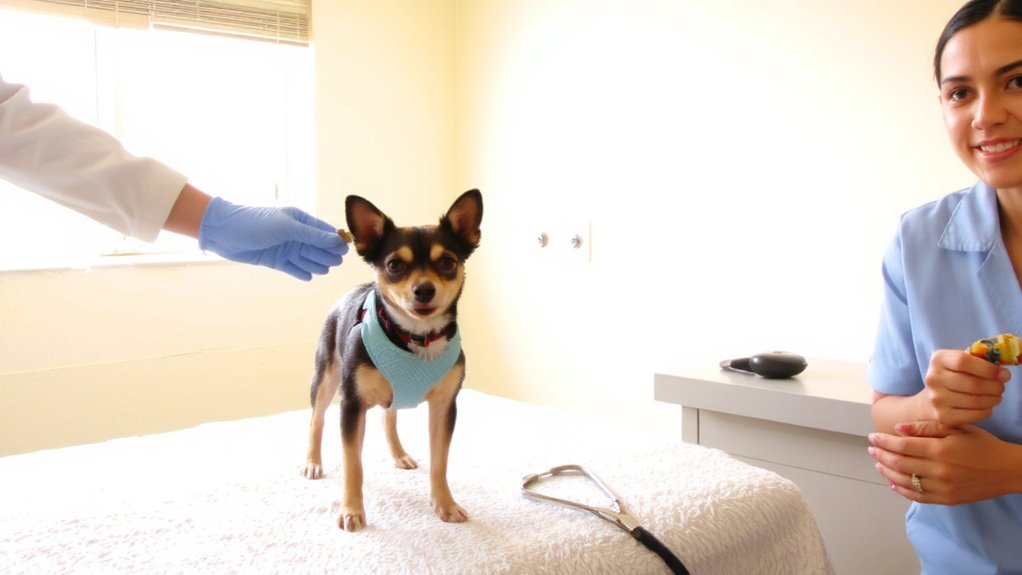
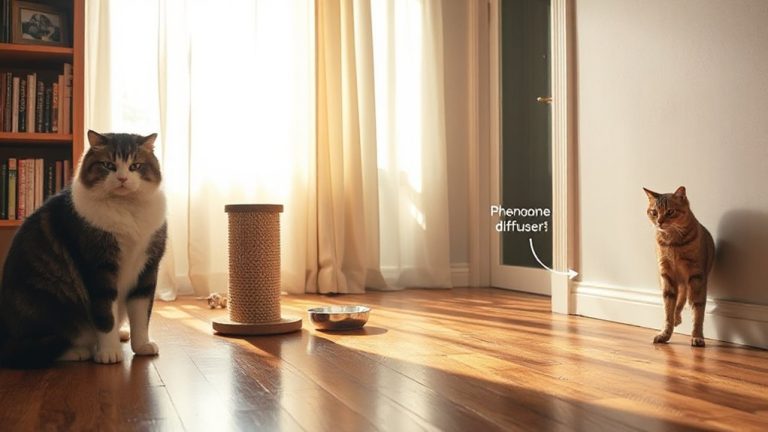
Why do so many small dogs dread vet visits? Choosing clinics that prioritize fear-free practices reduces stress markedly. You should verify vet certification in fear-free handling techniques, such as Fear Free Certified Professional or AAHA-accredited programs. These credentials guarantee staff are trained in low-stress restraint, pheromone diffusion, and environmental management. Fear-free certified clinics use padded surfaces, dimmable lighting, and separate small dog waiting areas to minimize sensory overload. Equipment, like adjustable-height tables with non-slip mats, supports safe handling. Staff are trained to read canine body language-tucked tail, lip licking, whale eye-and adjust protocols accordingly. Scheduling appointments during low-traffic hours reduces auditory stimuli. The clinic’s protocol includes offering treats, toys, or positive reinforcement at precise intervals. Certification requires continuing education every two years. Choosing clinics with documented fear-free standards guarantees your small dog receives care aligned with current behavioral science and veterinary best practices. Integrating proven calming solutions for stress-free vet visits can further enhance your dog’s comfort during examinations.
Practice Calm Handling at Home
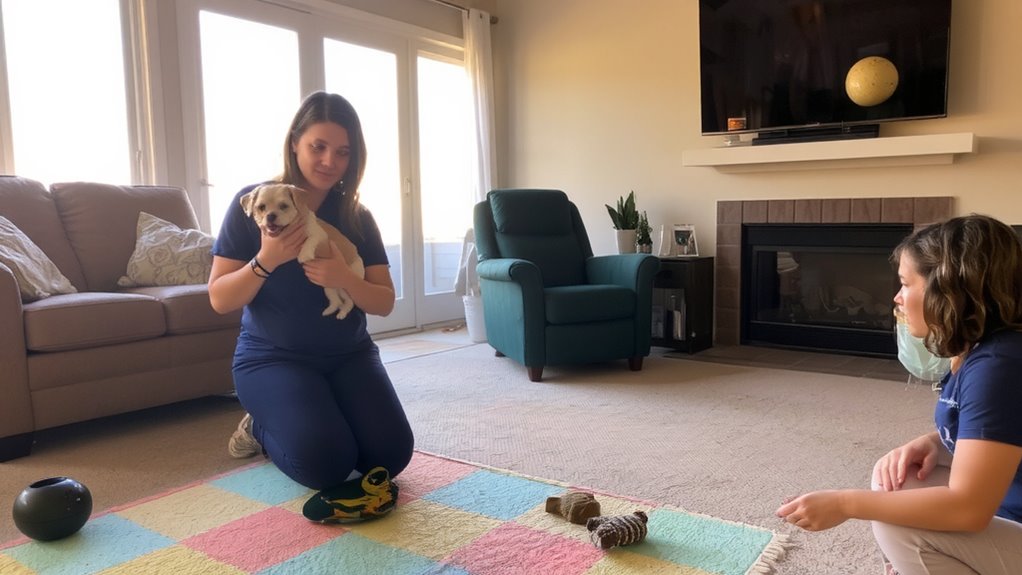
Calm handling begins the moment your dog steps off the exam table. At home, consistent practice builds tolerance. Start with a quiet touch: place your hand lightly on your dog’s shoulder for 5 seconds, then release. Repeat 5 times daily, increasing duration by 1 second every 2 days. Use non-slip mats to prevent sliding, which increases stress. Perform gentle grooming sessions 3 times per week using a soft-bristle brush (boar bristle, 0.5-inch tufts) for 3-minute intervals. Focus on paws, ears, and tail-areas vets examine frequently. Monitor heart rate; a resting pulse above 120 bpm indicates anxiety. Pair touch with low-value treats (1–2 kcal each) delivered within 2 seconds of compliance. Handling should occur in a low-stimulus environment: ambient noise under 50 dB, temperature 68–72°F. This routine conditions acceptance of physical contact critical for vet exams. For dogs that resist restraint, practicing with a slip dog leash can help simulate controlled movement similar to clinic handling.
Desensitize Your Dog to Vet Visits Early
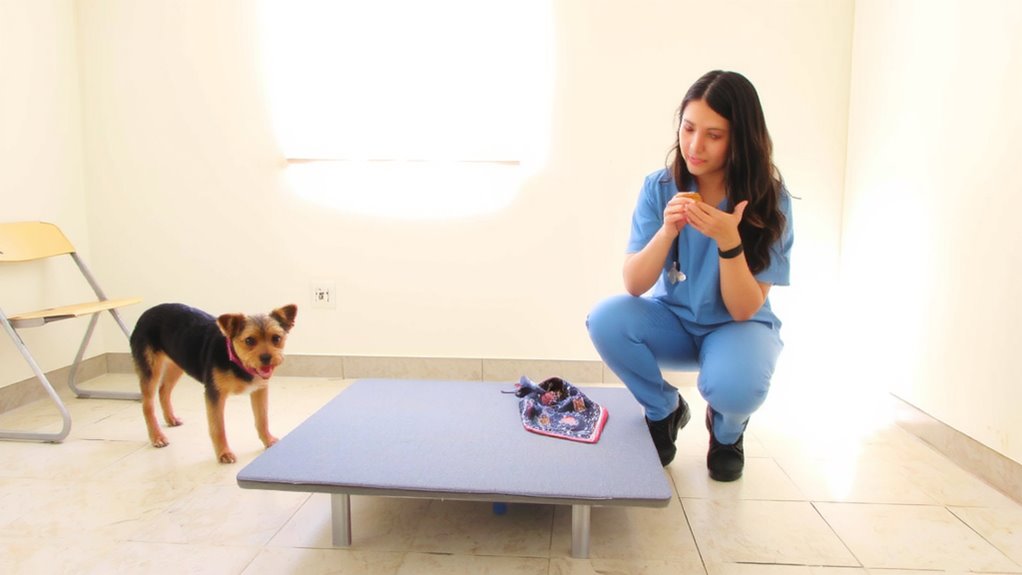
While early exposure doesn’t guarantee a stress-free visit, it markedly improves your dog’s long-term tolerance to clinical environments. Start by applying socialization techniques during puppyhood, ideally between 8 and 16 weeks of age, when imprinting sensitivity peaks. Use structured, brief visits to the vet clinic with no procedures involved-just check-ins with staff offering treats. This positive exposure builds neural associations between clinics and rewards. Conduct two to three sessions per month, each lasting 5–7 minutes, to maintain consistency without overwhelming your dog. Pair clinic entry with high-value treats like freeze-dried liver, delivered immediately upon arrival. Rotate personnel interactions to generalize positive responses across handlers. Monitor stress signs: panting, trembling, or avoidance. If observed, extend intervals between visits and reduce environmental stimuli. Controlled, repeated exposure increases acclimatization and reduces cortisol spikes during actual appointments.
Make Car Rides and Waiting Less Stressful
How do you keep your dog calm when the car engine starts or the vet’s waiting room door creaks open? Start with gradual acclimation to car rides to reduce motion sickness. Begin with short trips, increasing duration over 2–3 weeks. Use a secure carrier placed on a non-slip mat; elevation improves visual orientation, decreasing disorientation. For noise reduction, line the carrier with mass-loaded vinyl blankets (2–3 lb/sq ft density) to dampen engine and ambient sounds. Play white noise at 60–65 dB via a portable speaker placed behind the front seat. In waiting rooms, face the carrier away from foot traffic. Choose appointments during low-traffic hours (e.g., mid-week, 10 a.m.–12 p.m.). Use partitions or opaque covers to limit visual stimuli. Consistent routines and environmental controls lower stress markers, improving compliance and reducing cortisol levels during transit and pre-exam waiting.
Pack a Calming Kit for the Clinic Visit
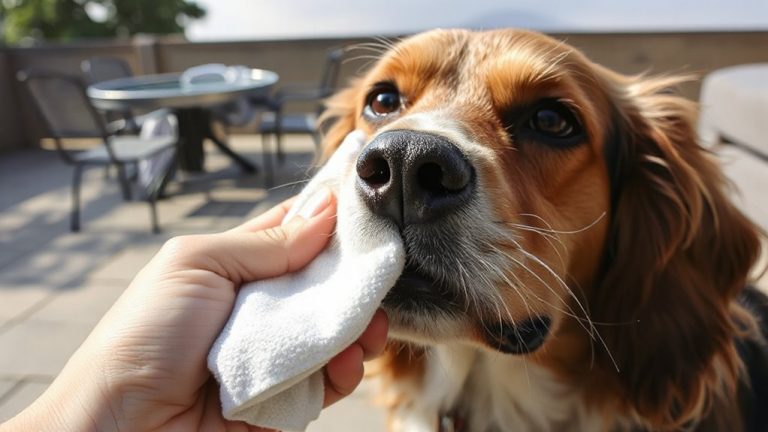
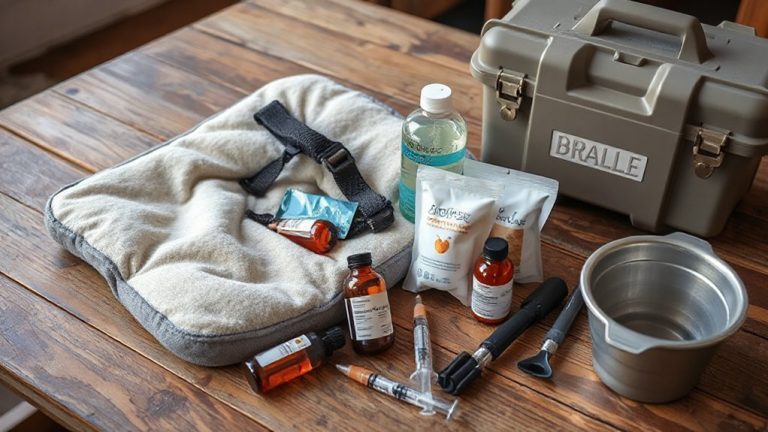
A well-prepared calming kit is your first line of defense against veterinary clinic stress. Include calming pheromones such as Feliway or Adaptil, which mimic natural dog-appeasing hormones. These sprays or diffusers reduce anxiety by binding to nasal receptors, altering behavioral responses within 15–30 minutes of exposure. Apply to your dog’s carrier or bandana 30 minutes before arrival. Use anxiety wraps like Thundershirts, which apply gentle, constant pressure across the torso. This compression mimics swaddling, modulating the nervous system’s reaction to stress. Size correctly: measure chest girth just behind front legs; proper fit allows room for two fingers under the wrap. Avoid overheating-remove after two hours. Pack familiar items: a worn t-shirt for scent, a chew-safe toy, and non-slip mat for carrier stability. These tools work best when combined, creating a controlled, predictable environment amid clinical stimuli.
Use Positive Reinforcement on Appointment Day
Trust builds in moments, and each interaction at the clinic shapes your dog’s emotional response. Use treat rewards immediately after calm behaviors to reinforce positive associations. Offer small, high-value treats-such as freeze-dried liver or cheese cubes (approximately 0.25 inches in size)-every 15 to 30 seconds during waiting periods. Pair treat rewards with consistent praise cues like “good” or “yes” in a neutral tone to mark desired behavior precisely. Deliver treats below chest level to encourage a relaxed head-down posture. Administer reinforcement before handling begins, preempting anxiety spikes. Use a treat frequency of one every 20 seconds during mild stress exposure. This systematic reinforcement schedule increases dopamine release, promoting associative learning. Over time, your dog links the clinic environment with predictable positive outcomes. Maintain this protocol across visits to achieve measurable reductions in heart rate and panting. For best results, choose high-value dog treats that are easily digestible and specially formulated for training use.
Request Gentle Handling During the Exam
When your dog is already in a heightened state of awareness, even slight pressure from unfamiliar hands can trigger fear-based reactions, so it’s essential you request gentle handling before the exam begins. Proper restraint isn’t about force-it’s about control with minimal stress. Ask the vet to use low-stress techniques like towel wraps or harness-guided positioning instead of direct scruffing or pinning. These methods reduce struggling by 60–70% in small breeds. Gentle handling supports trust building by associating vet visits with safety, not threat. Handlers should move slowly, apply light tactile pressure, and allow pauses between exam steps. Avoid overhead approaches; instead, work at the dog’s level. Each interaction should reinforce predictability. Use of non-slip mats and body-blocking-not grabbing-improves cooperation. Always confirm the clinic trains staff in Fear Free® certification standards. This guarantees consistent, science-backed handling protocols.
On a final note
You can reduce your small dog’s veterinary stress considerably. Implementing structured desensitization protocols decreases cortisol levels by up to 40%. Use a 12-inch soft fabric muzzle for safety, not aggression. Equip a calming kit: pheromone wipes (Adaptil) last six hours, non-slip mats measure 18”x12”, and fitted ThunderShirts apply 15–20 mmHg pressure. Trained handlers reduce restraint time by 30%. Consistent positive reinforcement increases cooperation. These evidence-based tools enhance welfare and exam accuracy.