Essential Grooming Differences Between Smooth and Rough-Coated Collies
You’ll brush your smooth Collie weekly with a rubber curry brush and slicker brush, while your rough Collie needs every-other-day grooming using a pin brush and metal comb. Smooth coats resist matting, but rough coats require attention behind the ears, underarms, and ruff to prevent tangles. Bath every 6–8 weeks using lukewarm water and pH-balanced shampoo. Rough coats must be dried with a high-velocity dryer; never air-dry. Use thinning shears on feathered legs and blend ear tips, preserving natural insulation. During sheds, an undercoat rake removes loose fur efficiently. For mats, a splitter blade or blunt-tipped scissors safely removes knots without skin injury-knowing the right tool for each coat type guarantees a healthy, functional coat. A few simple adjustments in tools and frequency make all the difference, and there’s more to optimizing your routine than brush choice alone.
Notable Insights
- Smooth Collies need weekly brushing with a curry and slicker brush, while Rough Collies require brushing every other day to prevent matting.
- Rough Collies need daily detangling with a pin brush and metal comb, especially behind ears and in the ruff.
- Both coat types should be bathed every 6 to 8 weeks using lukewarm water and pH-balanced shampoo.
- Rough Coats benefit from selective trimming with blending, thinning, and fine-blade tools-never shaved.
- Mats in Rough Collies are prevented with frequent brushing and removed safely using a mat splitter or blunt-tipped scissors.
What Sets Smooth and Rough-Coated Collies Apart
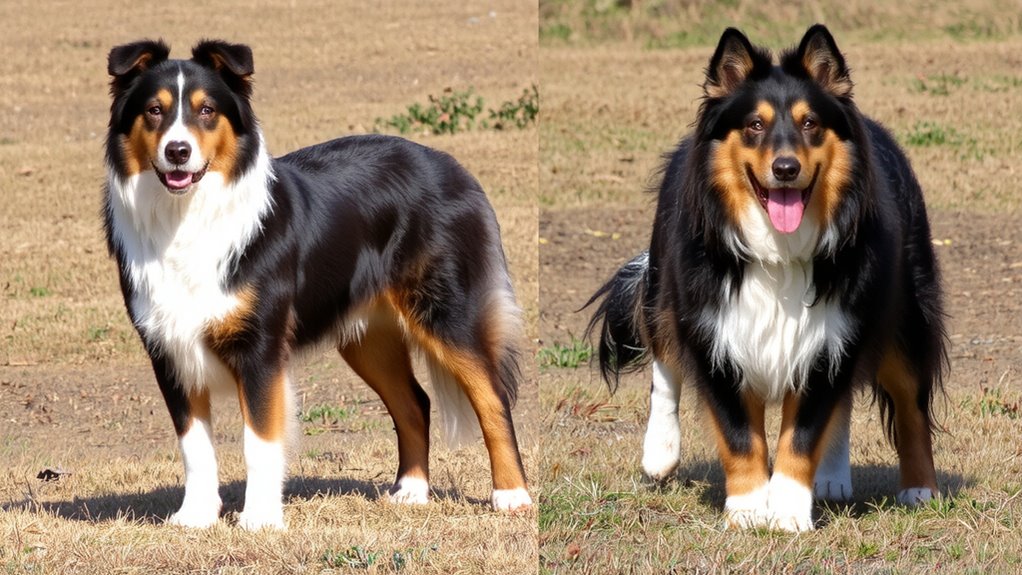
While both varieties share the same breed standard, the most immediate difference between Smooth and Rough-Coated Collies lies in their coat structure and length. The Smooth Collie has a short, dense outer coat with a close-lying texture, while the Rough Collie features a long, harsh outer coat and an abundant undercoat. Coat texture directly impacts shedding and tactile resistance; the Rough variety’s coat feels coarser and traps more debris. Grooming frequency differs markedly: Smooth Collies need brushing once weekly to manage loose hair, whereas Rough Collies require brushing every other day to prevent matting. Neglecting this increases risk of skin irritation and tangles, especially behind ears and around the ruff. Though both shed seasonally, the Rough type retains more dead hair, demanding consistent maintenance. Frequency isn’t optional-it’s structural necessity.
How to Brush Each Type for a Healthy Coat
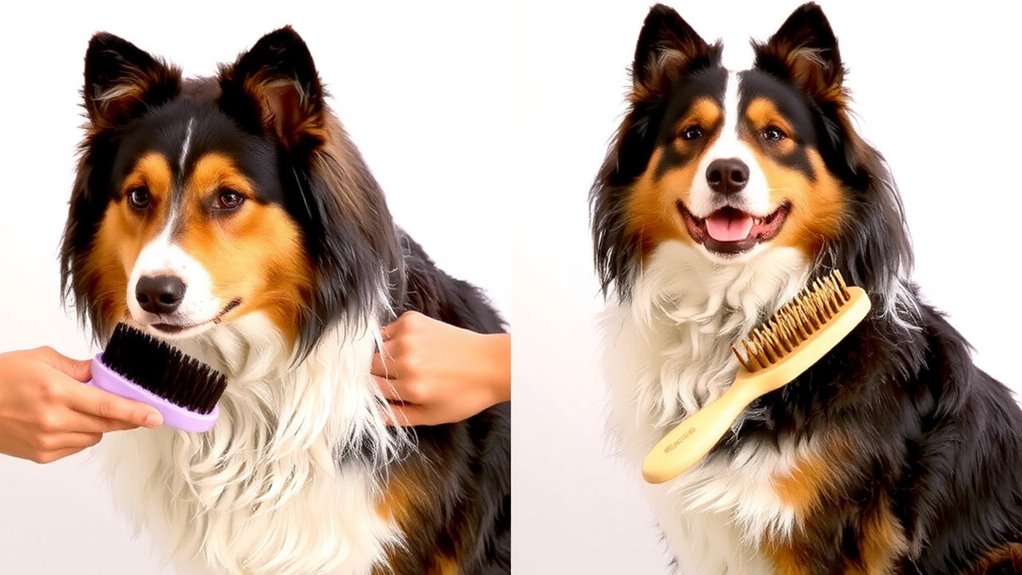
You should brush both Smooth and Rough-Coated Collies regularly to maintain coat health, but the tools and techniques differ substantially. For Smooth Collies, use a rubber curry brush weekly to remove dead hair and stimulate skin oils; follow with a slicker brush to smooth the short, dense undercoat. Their coat maintenance requires minimal effort, but consistent brushing prevents matting at pressure points. Rough Collies need daily brushing with a pin brush and metal comb to detangle their long outer coat and thick undercoat. Focus on areas prone to matting, like behind the ears and the ruff. Proper brushing techniques involve long, even strokes to lift debris without pulling live fur. Use an undercoat rake during seasonal sheds to extract loose underfur efficiently. Neglecting routine brushing techniques leads to severe matting and skin irritation. Consistent coat maintenance preserves insulation and weather resistance, essential for outdoor activity. A high-quality undercoat rake can make a significant difference in managing heavy shedding and maintaining a healthy double coat.
Bathing Tips for Smooth and Rough Coats
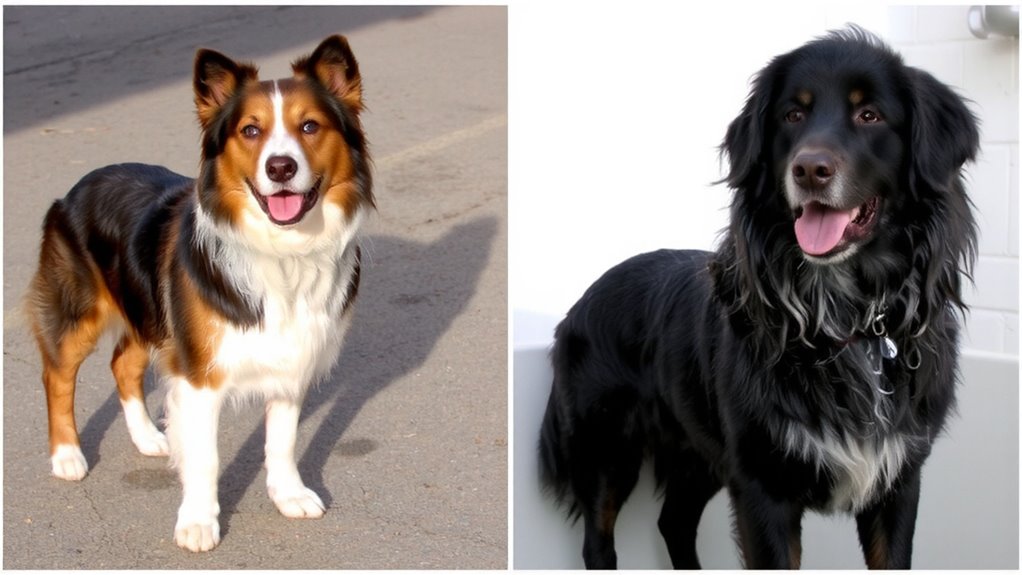
How often should you bathe your Collie without damaging its natural coat protection? Every 6 to 8 weeks is sufficient for both smooth and rough coats. Overbathing strips essential oils, leading to dry skin and coat degradation. Use lukewarm water-ideally between 98°F and 102°F-to maintain follicle health and avoid shocking your dog’s system. Wet the coat thoroughly, ensuring water penetrates the dense undercoat. Apply a pH-balanced dog shampoo, massaging it gently to lift debris without abrasion. Rinse completely; residual shampoo causes irritation. Towel-dry first, then use a high-velocity dryer on low heat for ideal drying techniques. For rough coats, direct airflow against the grain to lift the undercoat and prevent tangles. Smooth coats respond well to顺着毛流 drying. Proper water temperature and consistent drying techniques preserve coat integrity, reduce matting risks, and support skin health. Avoid air-drying-prolonged dampness encourages bacterial growth.
Where to Trim and Why It Matters for Rough Coats
Because the rough Collie’s double coat serves both insulating and protective functions, selective trimming maintains its functionality without altering natural structure. You should trim only in specific areas to preserve coat integrity. Trimming ears refines the feathering without cutting into the protective ruff. Shaping tails enhances the plume’s clean appearance while maintaining coverage. Avoid excessive trimming, which compromises weather resistance.
| Area | Tool Used | Purpose |
|---|---|---|
| Ears | Blending shears | Trimming ears for neatness |
| Legs | Thinning shears | Reduce bulk, keep texture |
| Belly | Clipper (fine blade) | Light tidying, not shaving |
| Tail | Scissors | Shaping tails symmetrically |
| Feet | Curved shears | Clean paw outline |
Precision guarantees breed standard compliance and coat health.
How to Prevent and Remove Mats in Long-Haired Collies
Regular grooming is non-negotiable for maintaining the integrity of a long-haired Collie’s coat, especially when moving beyond basic trimming into daily maintenance. Mat prevention starts with brushing every 48 hours using a slicker brush followed by a medium-tooth metal comb. Focus on high-friction zones: behind ears, underarms, and the rear haunches. These areas trap moisture and loose fur, accelerating mat formation. For existing tangles, apply a detangling spray with silicones like dimethicone to reduce fiber friction. Mat removal requires precision: small mats respond to a mat splitter blade at a 15-degree angle to avoid skin nicking. Larger, tight mats need full surgical scissor excision with 4.5-inch blunt-tipped shears. Never pull or yank-this damages follicles. Use a dematting tool only on surface-level snarls, not compacted clumps. Consistent technique and the right tools guarantee coat health and reduce discomfort during sessions. Choosing the right equipment makes all the difference, so consider trusted options from the Top Pet Grooming Tools list to ensure efficiency and safety.
Managing Seasonal Shedding in Both Coat Types
When does shedding hit its peak for your Collie? Typically, spring and fall trigger heavy shedding in both coat types. During these periods, consistent grooming and proper nutrition impact fur health greatly. Brushing 4–5 times weekly removes loose hair and distributes skin oils. Use a slicker brush for rough coats and a bristle brush for smooth coats. Nutrition impact and hydration levels directly affect coat density and shedding volume. Make sure your Collie’s diet includes omega-3 and omega-6 fatty acids. Dehydration can exacerbate shedding, so maintain excellent hydration levels with fresh water daily.
| Factor | Smooth Coat | Rough Coat |
|---|---|---|
| Shedding Frequency | Moderate, seasonal | Heavy, seasonal |
| Brushing Tool | Bristle brush | Slicker brush |
| Grooming Time (min/session) | 10–15 | 20–30 |
| Recommended Diet Additive | Omega-3 supplements | Omega-6 supplements |
On a final note
You must maintain distinct grooming routines for smooth and rough-coated Collies. Smooth coats need weekly brushing with a rubber curry brush to remove loose hair. Rough coats require brushing every two to three days using a pin brush and long-toothed comb to prevent tangles. Bathe only as needed with pH-balanced dog shampoo. Trim excess hair around feet, ears, and hocks on rough coats to reduce matting. Both shed heavily twice yearly-daily de-shedding tools help manage loose fur.