Training Your Cat to Tolerate Gentle Touch on Sensitive Areas Like Paws and Ears
You can train your cat to accept gentle touch on paws and ears using desensitization. Cats have over 1,000 mechanoreceptors per paw pad and sensitive ear canals with delicate nerves, making touch aversive. Start with 2–3 second touches on the chin or shoulders using 50–125 grams of pressure. Pair each touch with a high-value treat within 1–2 seconds. Progress only when your cat remains relaxed, increasing duration by no more than 10% per session. Daily 1–2 minute sessions build trust and prepare your cat for handling, grooming, or veterinary exams-key steps follow.
Notable Insights
- Start desensitization with low-sensitivity areas like the chin and shoulders using light, brief touches.
- Use high-value treats immediately after touch to create positive associations with handling.
- Watch for early stress signals such as flattened ears, tail flicking, or nose licking.
- Gradually increase touch duration by no more than 10% per session on paws and ears.
- Conduct short daily training sessions of 1–2 minutes, always ending on a positive note.
Why Cats Are Touch-Averse (Especially on Paws and Ears)
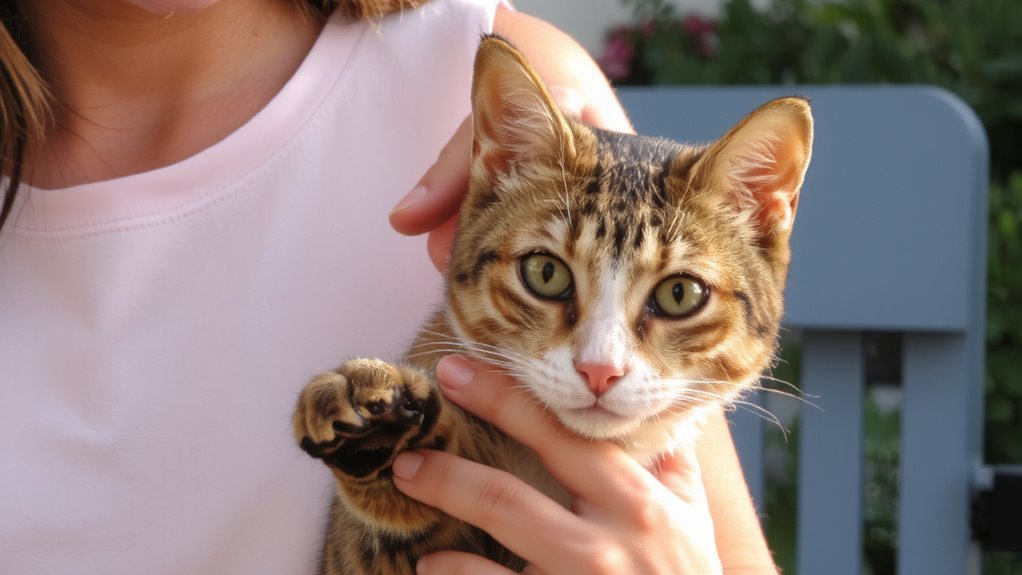
Sensitivity. Cats exhibit touch-aversiveness due to evolutionary instincts and heightened sensory sensitivity. Wild ancestors relied on acute awareness for survival, making unexpected touch a potential threat. The paws contain dense concentrations of nerve endings-over 1,000 mechanoreceptors per paw pad-amplifying tactile input. This sensory sensitivity aids balance and prey detection but increases discomfort when manipulated. Ear canals house delicate skin and cartilage, with auditory nerves reacting strongly to pressure. Even light contact can register as intrusive. Evolutionary instincts drive cats to protect these areas from harm, as injuries to paws or ears compromised hunting or escape. Reflexive withdrawal is not defiance but a hardwired response. Genetic studies show domestication altered only 13% of fear-related genes, leaving most defensive behaviors intact. Understanding this biological basis improves training approaches. You must work with, not against, these innate traits for successful desensitization.
Recognize and Respect Your Cat’s Warning Signs
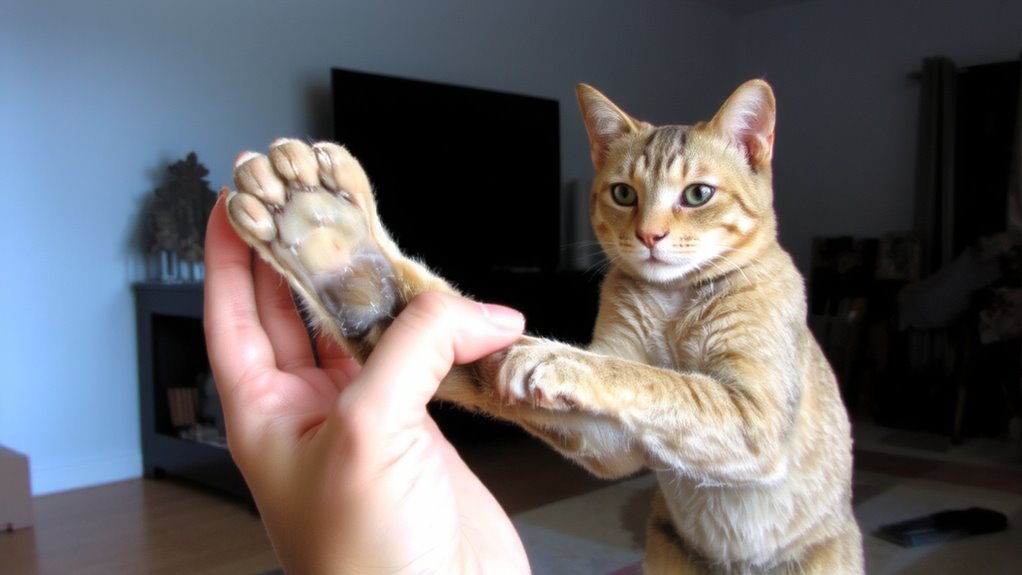
Cats communicate discomfort through subtle body language long before resorting to defensive actions. You must recognize these early body language cues to prevent escalation. A flicking tail, flattened ears, or dilated pupils signal rising stress. Slow blinking is positive; rapid blinking often indicates tension. If your cat turns its head away or licks its nose repeatedly, it’s displaying displacement behaviors linked to anxiety. Respect personal space boundaries by pausing or ending touch sessions at the first sign of unease. Never force contact. Instead, monitor posture shifts-crouching or tensing suggests discomfort. These signals function like error codes in a system: early warnings that the threshold is near. Respond promptly. Allowing recovery time maintains trust. Over time, tracking these cues improves your ability to predict reactions. Accurate interpretation prevents injury and builds cooperation during training.
Start by Touching Your Cat’s Chin and Shoulders
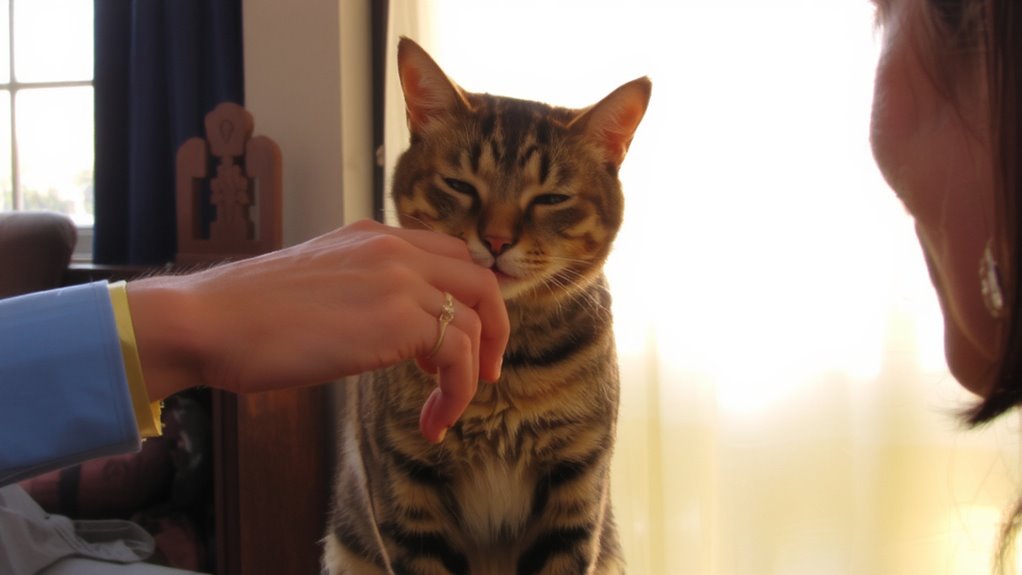
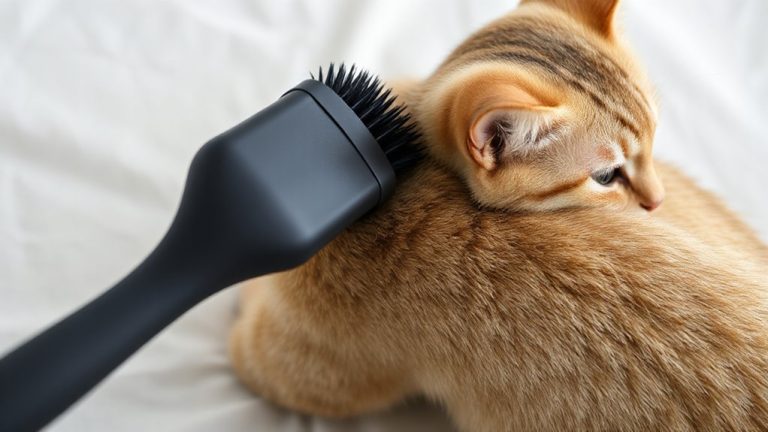
When beginning desensitization to touch, start with areas your cat typically finds less threatening, such as the chin and shoulders. Chin contact triggers positive responses due to scent gland concentration in that region, promoting familiarity and reducing stress. Begin with 2–3 seconds of gentle fingertip pressure at a 30-degree angle to the skin surface, applying approximately 50–100 grams of force. Repeat daily for five sessions, increasing duration by 1 second per session. Shoulder strokes activate fewer defensive reflexes than limb handling. Use flat-palm movements aligned with fur growth direction, maintaining consistent pressure of 75–125 grams. Perform these strokes in 3-second intervals, gradually increasing to 10 seconds over 7–10 days. Monitor ear position and tail movement to detect discomfort. Consistent, controlled exposure builds tactile tolerance. Progress only when your cat remains relaxed, showing no aversive behaviors.
Let Your Cat Get Used to Paw Touching: With Treats
Paw sensitivity varies among individual cats due to dense nerve endings in the digital pads and interdigital skin. You can reduce discomfort through consistent paw desensitization. Begin by touching one paw for one to two seconds while offering immediate treat reinforcement. Use high-value, soft treats measuring approximately 0.5 inches in diameter for quick consumption. Repeat this daily for five to seven days, increasing touch duration by no more than 10% per session. Maintain a quiet environment with minimal distractions to enhance focus. If your cat withdraws, pause without forcing contact-resume after a 30-second break. Successful conditioning relies on timing: deliver the treat within 0.5 to 1 second of touch. This precise interval strengthens the association between paw contact and reward. Over time, this method promotes tolerance, making grooming and health checks more manageable. Incorporating an anxiety comfort item during sessions can further soothe sensitive cats and improve desensitization outcomes.
Touch Ears Gently: Always Follow With a Treat
Usually, touching your cat’s ears requires careful technique due to their high density of sensory nerves. Sudden or rough contact may cause ear discomfort. Begin with light fingertip contact for one to two seconds. Immediate treat timing reinforces positive association. Use high-value treats like freeze-dried chicken (approximately 3–5 calories per piece) for maximum response. Pair each touch with a reward within 0.5 to 1 second to establish clear cause and effect.
| Touch Duration | Treat Given | Outcome |
|---|---|---|
| 1 second | Yes | Positive reinforcement |
| 3 seconds | Delayed | Reduced compliance |
| 2 seconds | Yes | Increased tolerance |
Consistent treat timing strengthens behavioral conditioning. Avoid prolonged handling. Monitor ear flicks or flattening-these indicate distress. Gradually increase touch duration only after five consecutive successful trials. This method guarantees steady progress without triggering sensitivity. For cats with pronounced anxiety, consider using calming cat treats to support relaxation during training sessions.
Train for 1–2 Minutes Daily to Build Trust
Consistently dedicating just 1–2 minutes per day to training can considerably enhance your cat’s tolerance of touch in sensitive areas. Incorporating brief sessions into your daily routine prevents habituation stress. Use positive reinforcement-offer a treat immediately after gentle paw or ear contact. Timing is critical: reward within 1–2 seconds to associate the action correctly. Each session should target one area, lasting no more than 120 seconds. Short durations maintain focus and reduce anxiety. Conduct sessions at the same time daily to reinforce predictability. Touch must be light; pressure should not exceed 50 grams-roughly the weight of a AA battery. Repeat the sequence daily: touch, pause, treat. Over weeks, this builds neural associations between touch and reward. Consistency in duration, timing, and reinforcement magnitude increases compliance. Gradual acclimation through micro-sessions improves somatosensory acceptance without triggering defensive reflexes. Trust develops through repetition, not duration.
Use Handling Practice to Prepare for Grooming and Vet Trips
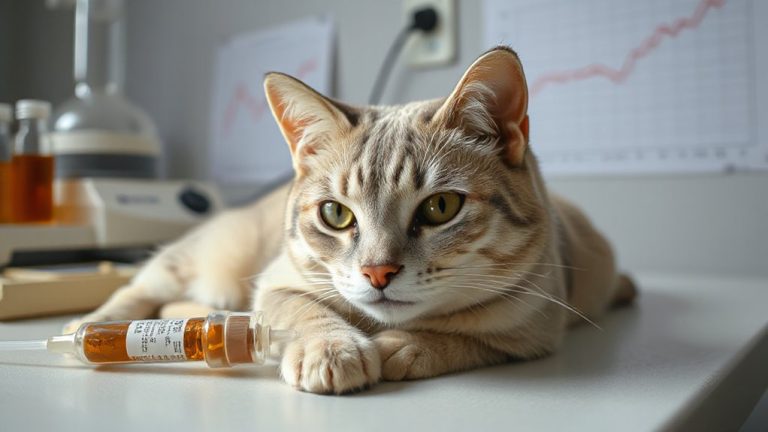
You can make future grooming and veterinary visits less stressful by incorporating regular handling practice into your cat’s routine. Start with brief sessions of 30–60 seconds, focusing on one area at a time, such as the paws, ears, or tail. Use positive reinforcement: offer small, high-value treats immediately after calm behavior during touch. Gradual exposure is key-begin with less sensitive areas and slowly progress to more reactive zones over days or weeks. Handle each paw for 2–3 seconds initially, increasing duration by 1-second increments weekly. This mimics the restraint used during nail trims or blood draws. Consistent practice builds conditioned tolerance. Perform sessions at least 3–4 times per week to maintain progress. Avoid forcing contact; retreat if your cat shows tension. Over time, this structured approach reduces fear responses and increases compliance during real-world procedures.
On a final note
You build trust through consistent, brief handling sessions. Perform 1–2 minute training daily, focusing on one area at a time. Start with less sensitive zones like the chin and shoulders before progressing to paws and ears. Pair each touch with a high-value treat, reinforcing positive associations. Use gentle, steady pressure-never force. This method conditions your cat to accept handling, improving cooperation during grooming and veterinary exams.