Using a Fine-Tooth Comb to Check for Tangles in a Cat’s Neck Ruff
Use a fine-tooth comb with 0.5 to 1.0 mm spacing to detect tangles early in your cat’s neck ruff. Stainless steel combs resist corrosion and maintain smooth, snag-free edges. Comb perpendicular to the skin in 1-inch sections, starting at the skull base. Fine teeth penetrate dense fur, exposing knots before they tighten. This method helps prevent restricted circulation and skin damage. You’ll learn how to safely address severe mats next.
Notable Insights
- Use a fine-tooth comb with 0.5 to 1.0 mm spacing to detect early tangles in dense neck ruff fur.
- Gently part the fur and comb perpendicular to the skin in 1-inch sections from the skull base downward.
- Examine both guard hairs and undercoat, as hidden tangles often form beneath the surface layer.
- Look for resistance or snagging, which indicates developing mats that could restrict blood flow.
- Perform weekly checks with a stainless steel, polished-tooth comb for smooth, effective tangle detection.
Recognize the Dangers of Neck Ruff Tangles
While it may seem harmless, a tangled neck ruff can quickly become a serious health risk for your cat if left unaddressed. Matting restricts blood circulation, depriving skin tissues of oxygen and nutrients. Prolonged restriction mimics tourniquet effects, potentially leading to necrosis in extreme cases. Compromised blood flow also slows healing and increases infection susceptibility. Tangles pull on follicles, causing persistent skin irritation. This friction breaks the epidermal barrier, inviting bacterial colonization. Mats trap moisture and debris, creating a microenvironment ideal for dermatitis and fungal growth. You’ll often notice redness, flaking, or hot spots near the neck. Left untreated, minor irritation escalates into chronic pain. The neck ruff’s dense fur retains tangles close to the skin, magnifying damage. Regular inspection is critical. Early detection prevents escalation. Addressing mats promptly preserves integumentary health and maintains your cat’s comfort and mobility. Prevention is more effective than treatment.
Choose a Fine-Tooth Comb for Tangle Prevention
A fine-tooth comb is your most effective tool for preventing tangles before they compromise your cat’s skin health. Choose a comb with teeth spaced 0.5 to 1.0 mm apart for ideal tangle detection in dense neck ruff fur. Comb material matters-stainless steel resists corrosion and maintains sharp, smooth teeth edges, reducing hair breakage. Plastic combs may warp, increasing snagging risk. Each tooth should be polished to prevent snags. Use the comb weekly to detect early matting beneath surface fur. Fine teeth penetrate layered coats, exposing small knots before they tighten. This precision aids early intervention, minimizing discomfort during grooming. A lightweight, ergonomic handle improves control. Effective tangle prevention relies on consistent use of properly spaced, durable tools. Comb material directly influences detangling efficiency and coat preservation. Selecting the right fine-tooth comb enhances both detection and prevention, supporting long-term skin and fur health. For optimal results, pair your combing routine with one of the top cat grooming brushes recommended for thorough coat maintenance.
How to Check Your Cat’s Neck Ruff for Tangles
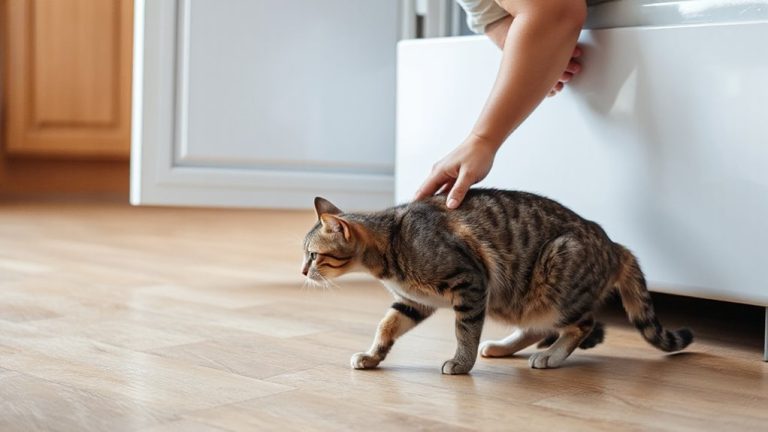
Your cat’s neck ruff requires regular inspection to catch tangles before they become mats. Begin by gently parting the fur with your fingers, evaluating fur texture for changes in smoothness or density. Use a fine-tooth comb with teeth spaced 0.5 to 1 mm apart to test for resistance. Move the comb perpendicular to the skin in 1-inch sections, starting at the base of the skull and progressing downward. Note any snagging, which indicates early-stage tangles. Be mindful of neck sensitivity-many cats react strongly to touch near the scruff. Apply minimal pressure, letting the comb’s precision do the work. Examine both the outer guard hairs and undercoat, as tangles often form beneath the surface. Perform checks weekly, especially in long-haired breeds. This systematic approach guarantees early detection while preserving coat integrity. Record findings to track recurring problem areas.
Safely Remove Stubborn Neck Ruff Mats
Once you’ve identified a mat during your weekly neck ruff inspection, immediate and careful intervention prevents skin irritation and coat damage. Begin with proper lighting to clearly see the mat’s density and its proximity to the skin. Use a fine-tooth comb with 0.5 mm tines to gently tease apart the outer layers. Apply minimal pressure-excessive force risks breaking hairs or abrading sensitive tissue. For tight mats, switch to blunt-tipped mat splitters designed for safety on delicate areas. Work in small sections, no larger than 1 cm² at a time, using gentle handling to avoid distressing your cat. Never cut directly into a mat near the skin; instead, lift it slightly and slice horizontally with scissors that have rounded tips. Remove loosened debris with a soft brush. Repeat as needed until the ruff lies smooth and tangle-free. A high-quality grooming tool can make a significant difference, so consider selecting from the best small pet grooming brushes available to ensure safe and effective detangling. best small pet grooming brushes
Keep Your Cat Calm During Grooming
Start grooming sessions when your cat is naturally relaxed, such as after a meal or light play, since a calm baseline state improves cooperation. A relaxed cat responds better to gentle handling, reducing stress and resistance. Use slow, deliberate motions with the fine-tooth comb, applying minimal pressure to avoid skin irritation. Maintain a soothing environment-choose a quiet room with consistent temperature and low lighting. Avoid sudden noises or movements that can trigger anxiety. Speak in a soft, steady tone to reinforce security. Limit early sessions to 3–5 minutes to build positive associations. Reward calm behavior with small treats or praise, reinforcing compliance. Consistent routines enhance predictability, which cats prefer. Gentle handling prevents fear-based aggression, while a soothing environment stabilizes heart and respiratory rates. Over time, this approach increases grooming tolerance, enabling thorough tangle checks in the neck ruff without restraint.
Comb Frequency by Coat Type and Length
Regularly evaluating your cat’s coat type and length guarantees ideal grooming frequency, directly influencing tangle prevention and skin health. Short-haired cats need combing once weekly; their coat type resists matting but still sheds. Medium coats require brushing every other day to prevent tangles, especially around the neck ruff. Long-haired cats demand daily grooming-neglect causes severe matting within 72 hours. Your grooming schedule must adapt to seasonal shedding peaks, typically in spring and fall, when undercoat volume increases up to 40%. Use a fine-tooth comb with teeth spaced 0.5–1.0 mm apart to detect early tangles. For thick double coats, combine with an undercoat rake to reach the dermal layer. Consistency prevents debris accumulation and supports sebum distribution. Adjust frequency if your cat is prone to static or lives indoors with low humidity. A disciplined grooming schedule enhances coat integrity and reduces hairball incidents by 60%.
On a final note
Check your cat’s neck ruff weekly with a fine-tooth comb featuring 0.5 mm teeth spaced 1.2 mm apart. This spacing effectively captures loose undercoat while preventing skin irritation. Longhaired cats need grooming 3–4 times weekly; shorthairs require once-weekly combing. Mats larger than 1 cm demand professional clipping to avoid injury. Consistent combing reduces hairball formation by 40%. Use slow, steady strokes from base to tip of fur. Never force the comb through tangles-lift and tease gently.