Why Cats Thrive on Low-Residue Diets During Episodes of Acute Diarrhea
Your cat thrives on a low-residue diet during acute diarrhea because it reduces intestinal irritation and stool volume. These diets offer over 90% digestibility for protein and fat, minimizing undigested material. With less than 1.5% crude fiber, they limit fermentation and gas. Highly digestible carbs like rice provide energy at 450–500 kcal/cup. Low-residue foods support mucosal healing-learn how timing and formulation impact recovery.
Notable Insights
- Low-residue diets reduce stool volume and frequency by minimizing undigested material in the gut.
- High digestibility of proteins and fats spares the inflamed intestine from excessive work.
- Hydrolyzed or novel proteins lower immune reactivity and reduce gastrointestinal inflammation.
- Highly digestible carbohydrates like rice provide energy without promoting fermentation or gas.
- These diets support rapid mucosal healing and firm stools within 24–48 hours in most cats.
What Causes Acute Diarrhea in Cats?
While your cat may seem perfectly healthy one day, acute diarrhea can appear suddenly and signal an underlying issue. Dietary indiscretion is a common trigger, occurring when your cat ingests spoiled food, garbage, or foreign substances. This disrupts normal digestion, leading to rapid intestinal transit and loose stools. Sudden ingredient changes or lactose in milk can also overwhelm a cat’s sensitive gastrointestinal tract. Parasitic infections, including Giardia and coccidia, directly damage the intestinal lining, impairing nutrient absorption and increasing fluid secretion. These organisms are often contracted through contaminated water or fecal-oral exposure. Bacterial imbalances and inflammatory responses further exacerbate symptoms. Acute episodes typically last less than two weeks but require prompt evaluation. Left untreated, they may progress to chronic conditions. Identifying the cause-whether nutritional or infectious-is essential for effective intervention and gastrointestinal recovery.
How Low-Residue Diets Help Cats Recover
When your cat’s digestive system is inflamed or irritated, a low-residue diet can help reduce stool volume and frequency by minimizing undigested material in the intestines. This promotes gut rest, allowing the intestinal lining to repair. Without excess fiber and indigestible components, fermentation decreases, lowering gas production and motility. You’ll notice firmer stools within 24–48 hours in most cases. These diets offer high nutrient density, delivering essential proteins, fats, and vitamins in a smaller, more digestible volume. Hydrolyzed or highly bioavailable proteins reduce antigen exposure, limiting immune stimulation. Caloric density typically ranges from 1.6–1.8 kcal/mL in liquid formulations or 450–500 kcal/cup in dry formats, ensuring energy needs are met without overloading the gut. Electrolyte balance is maintained through precise sodium (0.2–0.4%) and potassium (0.15–0.3%) levels, supporting hydration and cellular function during recovery.
What Makes a Cat Food Low-Residue?
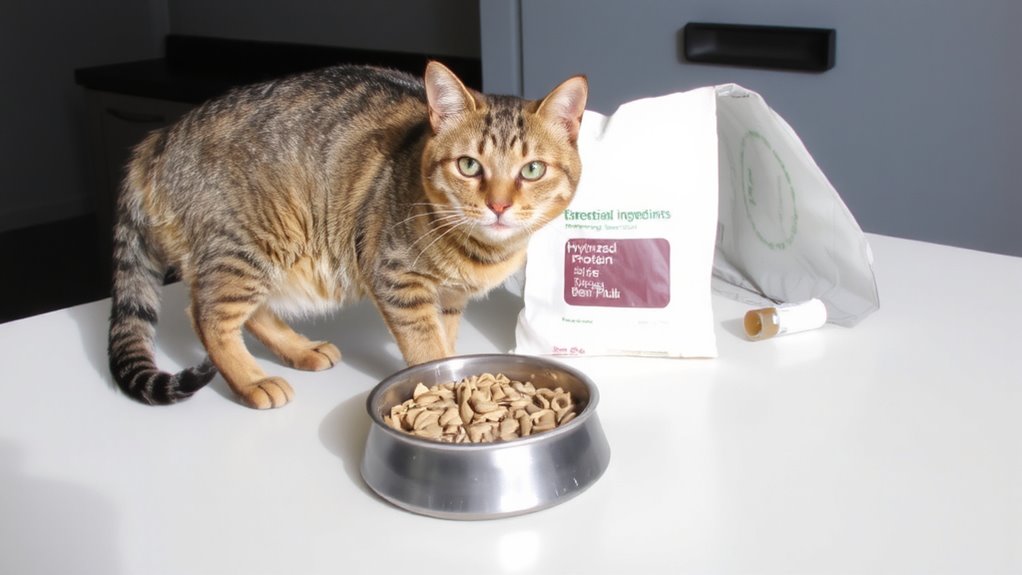
Because your cat’s digestive system needs to heal efficiently, a low-residue diet is designed to minimize gastrointestinal stress through precise formulation. These diets produce minimal stool volume by maximizing nutrient absorption. High digestibility-typically over 90% for protein and fat-reduces undigested material fermenting in the colon. You’ll find hydrolyzed or novel proteins used to address digestive sensitivity, lowering the chance of immune reactivity. Ingredient sourcing focuses on purity and consistency, often using select animal by-products or purified plant isolates proven to be low in fiber-less than 1.5% crude fiber on a dry matter basis. Complex carbohydrates are limited; instead, highly digestible starch sources like rice or potato are used in controlled amounts. Moisture content in canned versions often exceeds 75%, supporting hydration without taxing digestion. Additives like prebiotics or insoluble fibers are excluded to prevent residue buildup. Each component serves a functional role in easing gut workload.
When to Start a Low-Residue Diet for Cats
A low-residue diet supports intestinal recovery by reducing fecal bulk and digestive strain, but knowing when to introduce it is key to effective management. Start this diet when symptoms appear, such as loose stools, increased defecation frequency, or mucoid feces lasting more than 24 hours. Early intervention can minimize irritation and support mucosal healing. However, never initiate dietary changes without veterinary consultation, especially if blood is present, fever develops, or your cat shows lethargy. Your vet will rule out infections, parasites, or systemic disease before confirming acute diarrhea as the primary issue. Once cleared, shift to a low-residue formula within 12–24 hours of symptom onset. Choose a highly digestible, low-fiber food with a protein source like hydrolyzed chicken or egg. Gradual introduction over 3–4 days guarantees tolerance and reduces further GI upset.
Vet-Approved Homemade Recipes for Cats
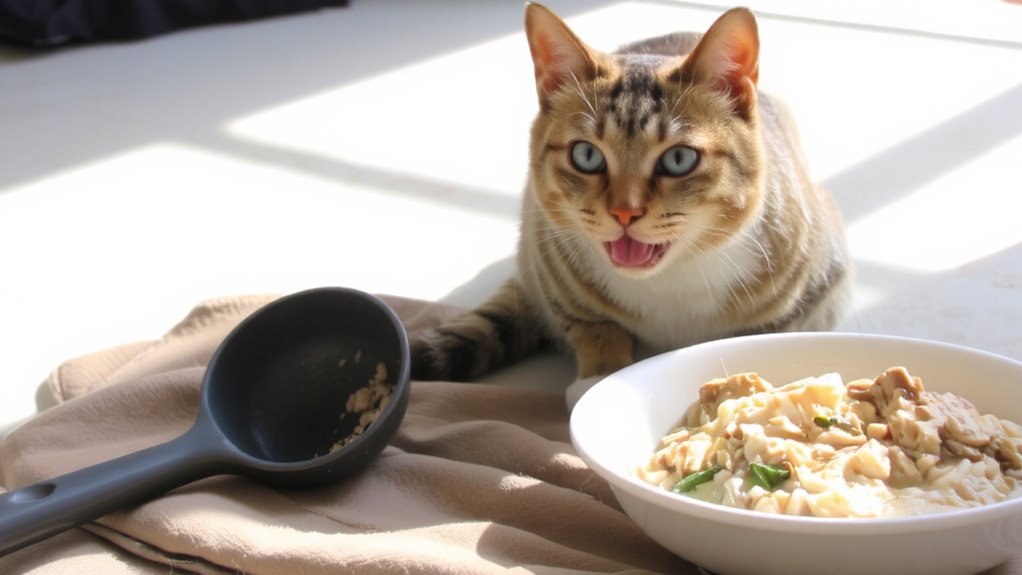
This vet-approved homemade low-residue diet provides a nutritionally sound option for managing acute feline diarrhea while supporting intestinal rest. You can prepare it using 1 part boiled skinless chicken breast and 2 parts boiled white rice, cooked in low-sodium broth or water. This recipe offers easily digestible proteins and minimal fiber, aligning with core principles of cat nutrition during gastrointestinal distress. Make sure all ingredients are plain-no spices, oils, or seasonings. Serve in small portions every 3–4 hours to monitor tolerance. While not a long-term solution, this diet helps stabilize digestion quickly. Avoid giving homemade treats until diarrhea resolves, as added ingredients may exacerbate symptoms. Shift back to regular food gradually over 3–5 days. Always consult your vet before initiating dietary changes, especially in kittens or cats with underlying conditions. This approach supports recovery without unnecessary additives.
Best Vet-Recommended Commercial Low-Residue Foods
When diarrhea strikes, your cat’s digestive system needs relief-fast. Choosing a vet-recommended commercial low-residue food helps minimize bowel irritation. These diets feature controlled fiber content-typically under 2% crude fiber-to reduce fecal volume. High ingredient quality guarantees digestibility and limits allergens. Look for easily absorbed proteins like hydrolyzed chicken or egg-based formulas.
| Brand | Fiber Content (Crude) | Key Protein Source |
|---|---|---|
| Hills i/d Low Residue | 1.4% | Hydrolyzed Chicken |
| Royal Canin Gastrointestinal | 1.6% | Hydrolyzed Soy |
These formulations support rapid intestinal recovery. Consistent ingredient quality reduces immune triggers. Clinical studies show cats on these diets often improve within 48 hours. Always verify nutrient profiles match your vet’s specifications. Low-residue doesn’t mean low-nutrition-each calorie is optimized for healing.
How to Transition Off a Low-Residue Diet
Once your cat’s diarrhea has resolved and bowel function has stabilized, shifting off a low-residue diet must be done gradually to avoid digestive setbacks. Begin with the gradual reintroduction of your cat’s regular food over 7 to 10 days. Start by mixing 25% of the original diet with 75% of the low-residue food. Every two to three days, increase the proportion of the original diet by 25% while decreasing the low-residue portion. Monitor stool consistency closely; soft feces indicate the shift is too fast. Maintain consistent meal frequency-preferably two to three small meals daily-to support digestive rhythm. Sudden changes in nutrient composition or feeding schedule may trigger gastrointestinal upset. Always guarantee fresh water is available. If diarrhea recurs, pause the shift and consult your veterinarian before proceeding.
On a final note
You treat acute feline diarrhea effectively with a low-residue diet. These diets reduce fecal volume by limiting indigestible fibers and complex proteins. You’ll see improvement within 24–48 hours in most cases. A proper formula contains highly digestible ingredients like boiled chicken and rice, or veterinary formulations with hydrolyzed proteins. Shift slowly-over 5–7 days-back to regular food to avoid relapse. Always consult your vet before dietary changes.