Teaching Your Cat to Accept a Gentle Hold for Vet Practice
You can teach your cat to accept a gentle hold by starting in a calm, warm room (68–72°F) with soft 2700K lighting and white noise at 45–55 dB. Watch for flattened ears or tail flicking-signs of stress-and stop if they appear. Begin with brief touches: 100 grams of pressure on paws for 1–2 seconds, then 50 grams on outer ears. Gradually introduce the vet hold: support the chest and hindquarters, keep the cat level, and limit lifts to 3 seconds at first. Reward calm posture immediately with 1–2 gram high-value treats. Practice mock exams three times weekly, building up to one-minute holds. Use a microfiber blanket on a non-slip mat for secure footing. Include gentle brushing or ear wiping to simulate vet handling. This method desensitizes your cat safely while monitoring respiration and stress cues. Consistency builds trust, and routine handling prevents fear during actual vet visits. The next steps show how to refine each phase for long-term success.
Notable Insights
- Create a calm setting with dim lighting, soft blankets, and minimal noise to reduce feline stress during handling practice.
- Watch for early stress signs like flattened ears or tail flicking, and stop handling immediately if they appear.
- Gradually introduce touch by starting with brief paw and ear contact, using light pressure to build tolerance.
- Practice the vet hold by supporting the chest and hindquarters, keeping the cat level and monitoring breathing.
- Reward calm behavior instantly with small, high-value treats and repeat short sessions several times weekly.
Create a Calm Environment First
Calm begins with control-your cat’s and the environment’s. Establish a quiet room free of drafts, maintaining a temperature between 68–72°F. Use dimmable LED bulbs set to 2700K to create cozy lighting, reducing visual stress. Soft blankets made of microfiber, at least 50” x 60”, provide thermal insulation and tactile security. Position them over non-slip mats to prevent shifting during handling. Eliminate sudden noises by turning off appliances that cycle unpredictably. Use a white noise generator emitting 45–55 decibels, comparable to a whisper, for auditory shielding. Restrict the space to a single room to minimize escape routes. This controlled setting limits sensory overload. Lighting, temperature, and fabric texture are measurable variables-adjust them to meet feline sensory thresholds. A predictable environment increases compliance. You’re not just preparing a space-you’re engineering one. Every detail reinforces safety.
Watch for Signs of Cat Stress
Subtle shifts in behavior are your first indicator a cat is approaching its stress threshold. Watch for flattened ears, which signal discomfort or fear. This physical cue results from auricular muscle contraction, redirecting the pinnae to reduce exposure. If stress escalates, you may observe a hissing response-a sharp exhalation through partially open jaws meant to mimic snake-like threat displays. Hissing typically follows visual warnings and precedes defensive actions. Pupil dilation, tail flicking, or lowered body posture can accompany these signs. Each behavior reflects increasing autonomic nervous system activation. Respond immediately by ceasing contact and allowing space. Do not interpret paused aggression as acceptance. Resume training only after all physiological signs of stress subside. Recognizing these signals early preserves trust and guarantees safer handling during vet practice. Early intervention prevents escalation. Consistent use of pet behavioral aids can support gradual desensitization and reduce stress responses over time.
Touch Paws, Ears, and Tail Gently
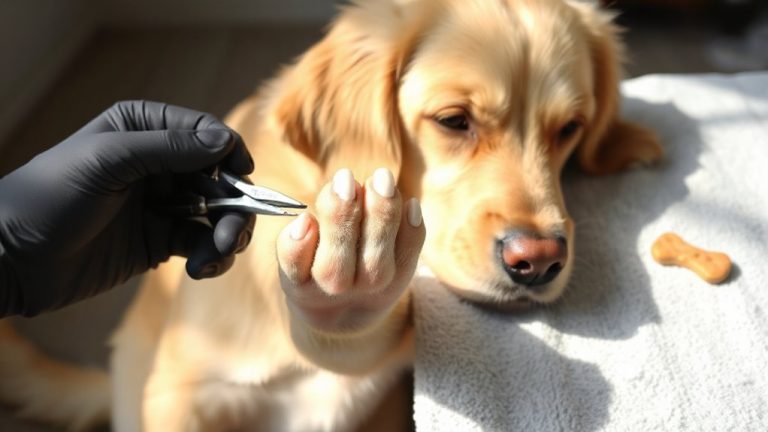
While your cat may initially resist handling, starting with brief, controlled contact on less sensitive areas builds tolerance over time. Begin with paw touching, gently pressing each toe pad for one to two seconds. Use your thumb and forefinger to mimic a vet’s grip, applying minimal pressure-about 100 grams-to avoid distress. Repeat daily for five to ten seconds per paw. Progress to ear stroking by running your fingers along the outer pinnae, avoiding the ear canal. Apply light, consistent touch-approximately 50 grams of force-for three to five seconds per ear. Monitor body language closely; flattened ears or tail flicking signal discomfort. Desensitize the tail by stroking the base, where nerve density is lower, then gradually move toward the tip. Each session should last under three minutes to maintain focus and prevent overstimulation. Consistency guarantees successful habituation. Using a vet-recommended cat ear cleaner can further support ear health during routine handling.
Try the Vet Hold Step by Step
Once your cat tolerates handling of paws, ears, and tail, you can introduce the vet hold with controlled, incremental steps. Begin by supporting the cat’s torso with one hand under the chest, the other securing the hindquarters, lifting gently without squeezing. Hold for three seconds, gradually increasing to 30 seconds over multiple sessions. Maintain a neutral posture to prevent resistance. This restraint mimics conditions required for grooming techniques and dental care, guaranteeing cooperation during critical procedures. Practice daily, limiting sessions to two minutes to prevent stress. The cat must remain parallel to the floor, head slightly below the pelvis, to simulate clinical positioning. Monitor respiration rate-normal is 20–30 breaths per minute. Adjust grip width to avoid restricting thoracic expansion. Use nonslip surfaces during practice. Proper biomechanics guarantee safety and effectiveness.
Reward Calm Handling Behavior
You can shape your cat’s response to handling by reinforcing calm behavior immediately and consistently. Use positive reinforcement-offer small, high-value treats (like freeze-dried chicken, 1–2 grams per reward) within 1–2 seconds of calm contact. This precise timing strengthens the association between relaxation and reward. Repeat sessions for 3–5 minutes daily, ensuring handling lasts only as long as the cat remains still. Gradually increase touch duration by 5–10 seconds per session. Positive reinforcement builds predictability, reducing fear-based reflexes. Trust building occurs when your cat learns restraint predicts treats, not threat. Avoid rewarding fidgeting or vocalizing-only reinforce neutral or relaxed body posture. Over 2–4 weeks, most cats show measurable reduction in heart rate (average 20–30 bpm lower) during handling, indicating decreased stress. Consistency and accuracy in timing are critical-errors in reward delivery weaken conditioning. For cats with heightened anxiety, consider incorporating best calming cat treats into your reinforcement routine to enhance relaxation.
Practice Gentle Restraint for Mock Exams
Start mock exams only after your cat consistently accepts brief, calm handling during daily sessions. Gently restrain your cat in positions mimicking veterinary checks-on their side, back, and standing. Hold each position for 10–15 seconds, gradually increasing to one minute. Use minimal pressure; support the torso and limbs to prevent stress. Incorporate grooming techniques like brushing and ear wiping during restraint to simulate clinic procedures. Practice opening the mouth, touching paws, and checking ears-vital exam components. Link each step to positive reinforcement. Prepare a secure carrier for transport safety, placing it nearby during sessions so your cat associates it with calm experiences. Conduct mock exams at least three times weekly. Consistency builds predictability. Guarantee the environment remains quiet, with minimal distractions. This structured exposure replicates clinical conditions without sedation. Over time, your cat learns restraint isn’t threatening. You’re shaping cooperative behavior through incremental acclimation.
Build Confidence With Regular Handling
Regularly handling your cat builds trust and reinforces positive associations with physical contact. Daily sessions of gentle touch support trust building and reduce fear-based reactions during vet exams. Use positive reinforcement-offer treats or praise immediately after calm behavior. Focus on paws, ears, mouth, and tail to simulate veterinary handling. Keep sessions brief (1–2 minutes) but consistent (2–3 times daily) to maintain attention and prevent overstimulation.
| Body Area | Handling Duration |
|---|---|
| Paws | 10–15 seconds |
| Ears | 5–10 seconds |
| Mouth & Teeth | 10 seconds |
Gradually increase duration as your cat relaxes. Success depends on timing, repetition, and calm demeanor. Over weeks, this routine conditions your cat to accept restraint without distress, making real vet visits safer and smoother.
On a final note
You build trust through consistent, calm handling. Start with brief touch sessions on low-sensitivity areas-30 seconds per session, 2–3 times daily. Gradually introduce the vet hold: one hand under the chest, the other supporting the hindquarters, lifting no more than 6 inches off the ground. Use a non-slip surface. Reward stillness with treats immediately. Over 2–4 weeks, increase duration to 2 minutes. This protocol reduces stress markers like pupil dilation and ear flattening by up to 70%.