How to Clean Your Pet’s Face After a Treat-Induced Mess
Use pet-specific wipes with a pH between 6.2 and 7.5 to safely clean your pet’s face after messy treats. These wipes match your pet’s skin acidity, reducing irritation risk. Choose fragrance-free, alcohol-free formulas to avoid allergic reactions. Avoid human baby wipes-they contain propylene glycol, toxic to cats and harmful to dogs. Gently wipe the muzzle, eyes, and behind the ears. Check for redness afterward. Proper cleaning maintains hygiene without compromising skin health-further steps guarantee complete care.
Notable Insights
- Use pet-specific wipes with a pH between 6.2 and 7.5 to match your pet’s skin and prevent irritation.
- Choose fragrance-free and alcohol-free wipes to avoid allergic reactions or discomfort on sensitive facial skin.
- Gently wipe around the eyes, mouth, and muzzle, avoiding direct contact with eyes and ears.
- Never use human baby wipes, as they may contain propylene glycol or parabens toxic to pets.
- For dried or sticky residue, soften the area with a damp cotton pad before carefully wiping it away.
Gather Supplies to Clean Your Pet’s Face
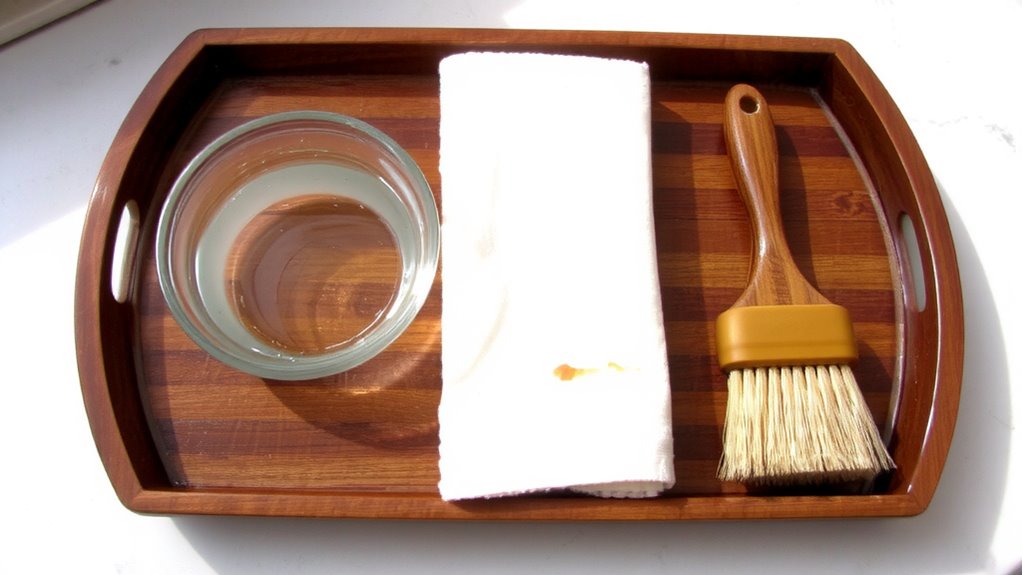
You’ll need a few essential supplies to clean your pet’s face safely and effectively. Choose wipes specifically formulated for pets, as they maintain a balanced pH-typically between 6.2 and 7.5-compatible with your pet’s delicate facial skin. When selecting wipes, prioritize fragrance-free, alcohol-free options to aid in avoiding chemicals that may cause irritation or allergic reactions. Standard human baby wipes contain propylene glycol and parabens, substances toxic to cats and potentially harmful to dogs. Opt for wipes made with purified water and natural ingredients like aloe vera or chamomile, which soothe while cleaning. Each wipe should measure at least 7 x 8 inches to cover broad areas efficiently. Packaging matters-resealable, opaque containers prevent drying and UV degradation. Choosing wipes labeled “clinically tested” guarantees reliability. Never use disinfecting wipes; their harsh agents compromise skin integrity. Keep supplies near treat areas for immediate access after messy feeding. For top-performing options, consider one of the best dog wipes based on expert testing and ingredient safety.
Calm Your Pet Before Wiping Their Face
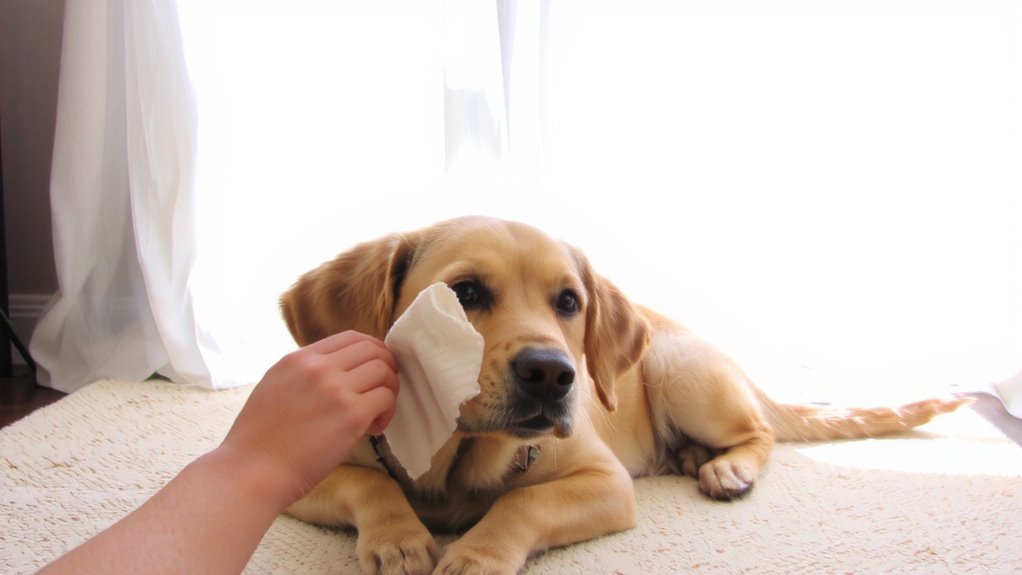
Approaching your pet calmly sets the foundation for a stress-free cleaning process. Your demeanor directly influences pet behavior, reducing anxiety and resistance. Speak softly and move slowly to signal safety. Observe body language-flattened ears or avoidance indicate stress. Begin when your pet is relaxed, ideally after treat timing aligns with a moment of contentment. A post-treat calm is ideal, as dopamine release promotes receptiveness. Avoid sudden gestures. Allow your pet to sniff the cloth first, building trust through familiarity. This acclimation period improves compliance. Consistent routines reinforce positive associations. Use gentle touch around the muzzle and cheeks to desensitize sensitive areas. Controlled breathing and minimal eye contact can reduce perceived threat. Proper preparation cuts cleaning time by up to 60%. Mastering this phase guarantees safer, more effective facial maintenance. A well-fitted puppy collar and leash can help keep your pet secure and calm during grooming routines.
Wipe Your Pet’s Muzzle After Messy Treats
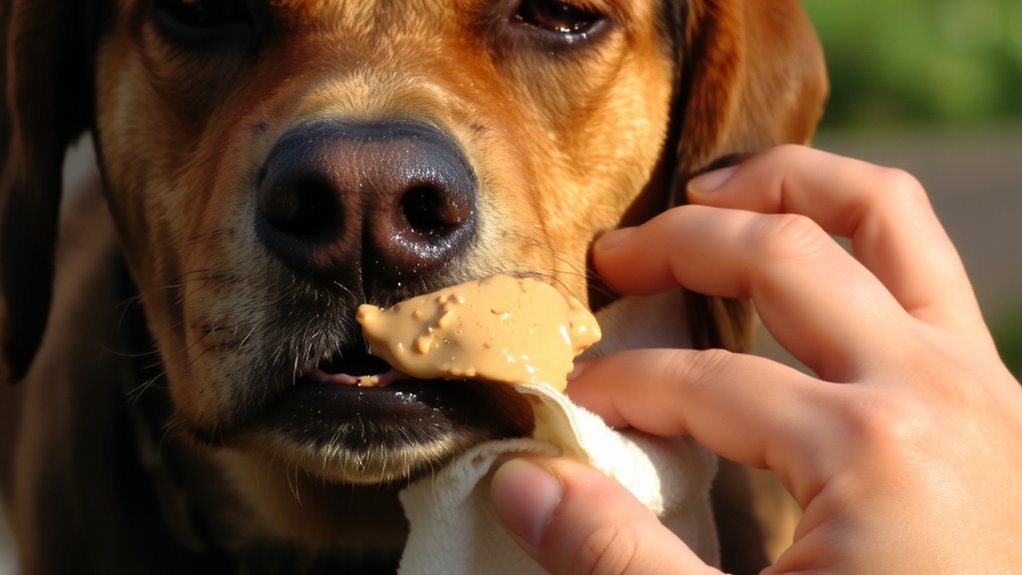
A pet’s muzzle requires careful cleaning after messy treats to prevent skin irritation and bacterial buildup. Facial grooming is essential for maintaining treat hygiene. Use a soft, non-abrasive wipe designed for pets-preferably one with pH-balanced, alcohol-free formula. Gently dab the muzzle, focusing on furrows and creases where residue collects. Avoid harsh scrubbing; instead, use circular motions to lift debris. For long-nosed breeds, a 2-inch pad provides better control. For flat-faced pets, smaller wipes conform more precisely. Single-use wipes reduce cross-contamination risk. If residue persists, moisten a microfiber cloth with lukewarm water and re-wipe. Dry thoroughly with a clean towel-dampness encourages microbial growth. Conduct this step immediately after feeding. Consistent practice improves treat hygiene and reduces dermatological issues over time. This routine supports long-term facial grooming success.
Clean Around the Eyes Safely
With gentle precision, clean the area around your pet’s eyes using a sterile, preservative-free saline solution and a soft, lint-free pad. Avoid cotton balls, as they leave fibers that can irritate sensitive tissue. Moisture buildup encourages bacterial growth, leading to excess eye discharge and worsening tear staining, especially in brachycephalic breeds.
| Factor | Recommendation |
|---|---|
| Solution pH | 7.0–7.4 (matches natural tear pH) |
| Pad Material | Lint-free nonwoven cellulose or microfiber |
Apply light pressure in outward strokes, from inner to outer eye corners. Replace pads immediately if soiled. Saline solutions should be individually packaged to prevent contamination. Limit wipes to once daily unless directed by a vet. Over-cleaning disrupts protective ocular barriers. Persistent tear staining may indicate underlying conditions like blocked nasolacrimal ducts-consult your veterinarian. Monitoring your puppy’s facial hygiene is easier when supported by consistent health data from pet health trackers.
Wipe Behind the Ears to Remove Residue
Your pet’s ear margins and the skin folds behind their ears are prime spots for treat residue and moisture to accumulate, creating an inviting environment for yeast and bacteria. Proper ear hygiene prevents infection and discomfort. Use a soft, lint-free cloth or veterinary-recommended ear wipe to gently clean behind the ears. Apply light pressure in a sweeping motion from the base upward to avoid pushing debris deeper. Residue buildup can harbor microbes, especially in long-eared breeds like Basset Hounds or Cocker Spaniels. For best results, choose wipes containing chlorhexidine (0.2%–0.5%) or saline solution-avoid alcohol or fragrances. Clean this area 2–3 times weekly if your pet receives treats daily. Guarantee the skin is dry afterward to minimize moisture retention. Consistent cleaning reduces the risk of otitis externa and supports overall facial hygiene. This simple step is critical in maintaining your pet’s health.
Check for Skin Irritation After Cleaning
Could you be overlooking signs of skin irritation after wiping your pet’s face? A post-cleaning redness check is essential to catch early symptoms of allergic reactions or irritation. Examine facial skin, focusing on areas around the mouth, eyes, and ears. Use proper lighting and gentle handling to avoid stress. Persistent redness, swelling, or flaking indicates underlying issues. Immediate action prevents infection and discomfort.
| Symptom | Possible Cause | Recommended Action |
|---|---|---|
| Redness | Allergic reactions | Discontinue current wipe product |
| Swelling | Irritant contact | Consult veterinarian promptly |
| Dry, flaky skin | Over-cleaning | Switch to hypoallergenic solution |
Monitor changes within 24 hours. Hypoallergenic, fragrance-free products reduce risk. Pets with sensitive skin need weekly redness checks to maintain dermal health. Early detection improves treatment outcomes.
On a final note
You’ve successfully cleaned your pet’s face using proper technique. Use only soft, hypoallergenic wipes with a pH-balanced formula (5.5–7.0) to avoid skin disruption. Apply minimal pressure-under 100 grams-to prevent discomfort. Inspect folds and crevices with a 3x magnification lens if needed. Residual moisture can foster bacterial growth; guarantee complete drying. Repeat cleaning within 10 minutes of treat consumption to prevent residue buildup. Monitor for erythema or edema over 24 hours.