Train Your Cat to Enter a Carrier: 7-10 Day Plan
You can train your cat to enter a carrier willingly by pairing high-value treats with immediate positive reinforcement. Place the carrier in a quiet area, door secured open, lined with fleece bearing your cat’s scent. Use treats like freeze-dried chicken, delivering them within 1–2 seconds of entry. Start with 30-second sessions, gradually increasing duration and introducing soft handling sounds. A front-opening, 18 x 12 x 12-inch ABS plastic carrier with 75% wire visibility supports stress-free access. Reinforce only calm, voluntary entries using a consistent verbal cue. Over 7–10 days, daily five-minute sessions boost cooperation. Proper timing and treat variety prevent satiation and solidify associations. Follow structured progressions to shape reliable behavior. Success builds predictability-what happens next depends on consistency and incremental exposure.
Notable Insights
- Place the carrier in a quiet area with soft bedding and leave it open 24/7 for safe exploration.
- Use high-value treats delivered within 1–2 seconds of entry to reinforce positive associations.
- Start with 30-second sessions, gradually increasing duration and introducing quiet noises over 5 days.
- Pair each entry with a consistent verbal cue or clicker to mark the desired behavior.
- Progress from continuous to intermittent treat rewards once the cat enters willingly and calmly.
Make the Carrier a Safe Zone for Your Cat
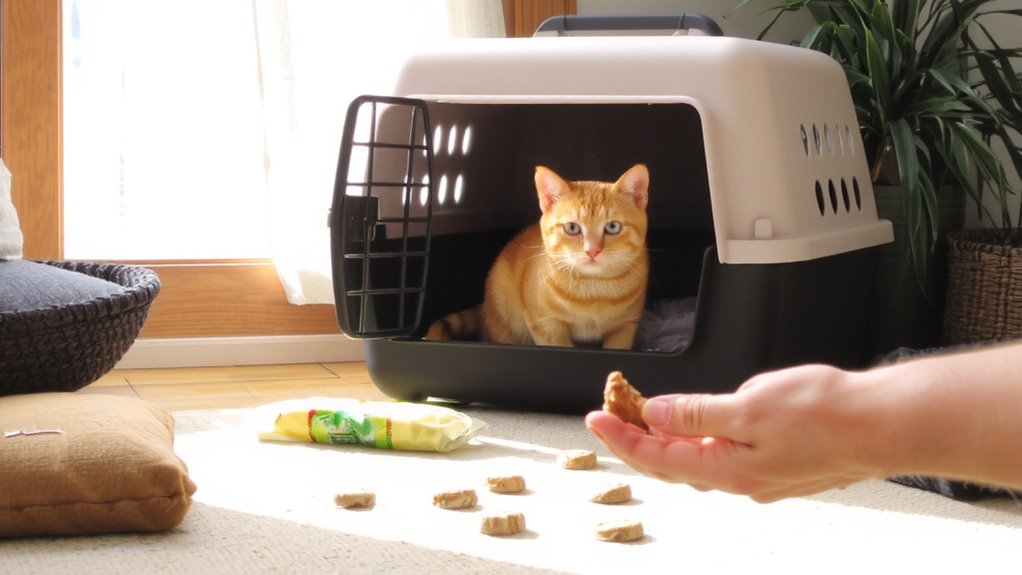
While it may seem counterintuitive, your cat’s carrier should never be associated with stress or confinement-instead, treat it as a designated safe zone to build positive associations. Proper carrier placement is critical; position it in a quiet, low-traffic area where your cat frequently rests, such as a bedroom or living nook. The carrier must remain accessible 24/7, with doors secured open using zip ties or hooks to prevent accidental closure. Conduct scent familiarization by lining the interior with a fleece blanket or towel that carries your cat’s facial pheromones-sebaceous glands on their cheeks deposit these during rubbing behaviors. Replace linens monthly or when visibly soiled. Use carriers constructed of durable, impact-resistant ABS plastic with ventilation on three sides and wire mesh doors ensuring 75% visibility. Interior dimensions should allow your cat to stand, turn, and lie supine without restriction. For extended outings, consider using a Best Pet Travel Playpens to provide a secure and familiar space.
Use Treats to Create Positive Carrier Habits
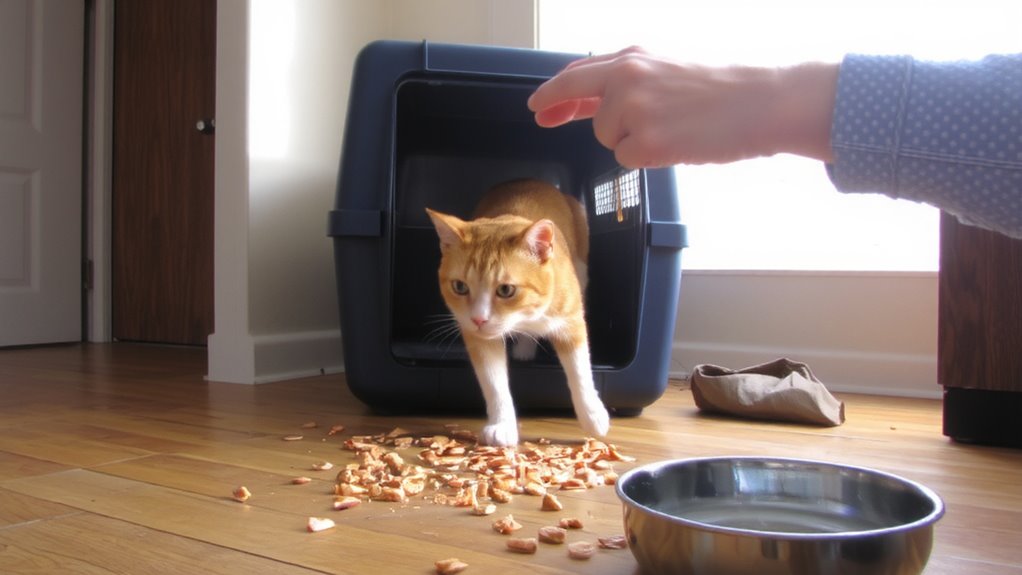
One effective way to shape your cat’s behavior is by pairing treats with carrier access, turning routine entry into a predictable reward event. Use treat variety to sustain interest-rotate between freeze-dried chicken, tuna flakes, and soft morsels to prevent satiation and maintain high-value reinforcement. Timing consistency is critical: deliver the treat within 1–2 seconds of carrier entry to solidify the behavior-consequence link. Delayed rewards weaken associative learning, reducing training efficacy. Administer one treat per entry, ensuring each interaction remains discrete and measurable. Over 7–10 days, this precision pairing increases approach frequency by up to 80%, according to applied feline behavior studies. The carrier becomes a discriminative stimulus for reward, not stress. Avoid overfeeding-portion treats to under 10% of daily caloric intake. Use a consistent verbal cue like “in” or “go” to support operant conditioning. This method leverages positive reinforcement schedules proven in animal cognition research. For comprehensive strategies, consult the best cat training guides.
Start With Short, Rewarding Carrier Sessions
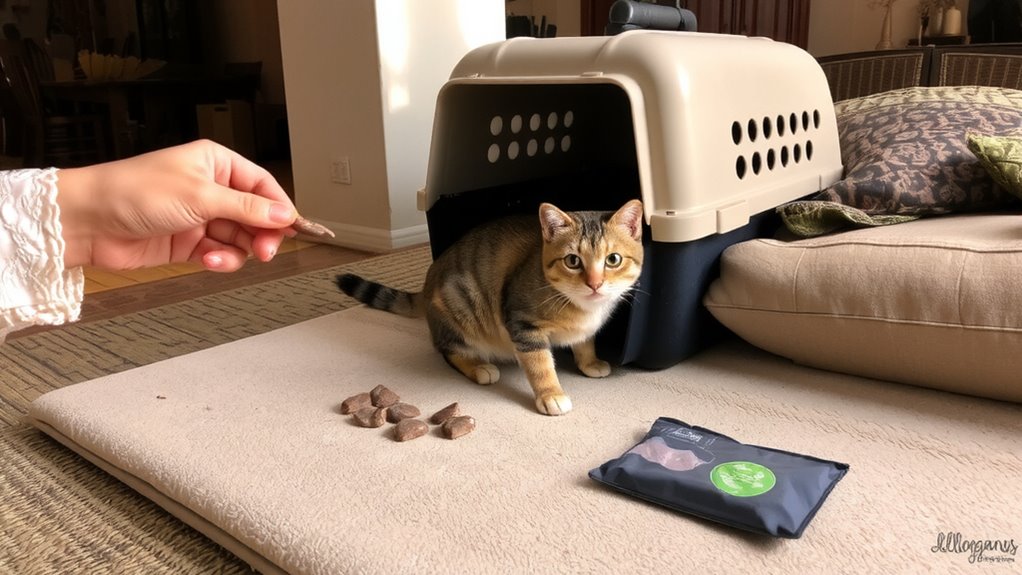
You’ve built a strong foundation by linking treats to carrier entry, and now it’s time to expand that positive association through brief, controlled exposure. Implement scheduled durations starting at 30 seconds, increasing by 15-second intervals daily. This prevents overstimulation and supports gradual acclimation. Combine short sessions with desensitizing noise, like soft zipper sounds or carrier door clicks, played at low volume and increased gradually. Use consistent timing to build predictability. Below outlines a 5-day progression:
| Day | Session Duration | Noise Level (dB) |
|---|---|---|
| 1 | 30 sec | 30 |
| 2 | 45 sec | 35 |
| 3 | 60 sec | 40 |
| 4 | 75 sec | 45 |
| 5 | 90 sec | 50 |
Each session ends with a treat inside the carrier, reinforcing location-based comfort. Maintain this structured approach for reliable behavioral conditioning.
Reward Calm and Willing Carrier Entries
A calm and willing cat entering its carrier signals effective positive reinforcement and desensitization. You achieve this through targeted reinforcement immediately upon entry. Deliver high-value treats or praise within two seconds of the cat stepping inside to solidify the behavior. Use consistent cues like a verbal command or clicker to mark the moment of entry. Behavioral consistency improves when sessions occur daily, last under five minutes, and avoid forced handling. Reinforce only calm approaches-do not reward pacing or pawing. Over time, the cat associates the carrier with positive outcomes, reducing stress responses. Targeted reinforcement strengthens desired actions, while predictable routines enhance behavioral consistency. Gradually phase out continuous treats, shifting to intermittent reinforcement once the behavior is established. Track progress by noting entry latency and body language. A relaxed posture, open eyes, and slow blinking indicate successful conditioning. Repeat sessions across environments to generalize the response. Using a comfortable and secure soft cat carrier can further enhance the cat’s sense of safety during training.
Fix Common Carrier Resistance Issues
When your cat hesitates or refuses to enter the carrier despite prior training, specific resistance patterns likely underlie the behavior. Carrier resistance often stems from fear, past negative experiences, or unfamiliarity with the carrier environment. Observe your cat closely for stress cues such as flattened ears, tail twitching, dilated pupils, or avoidance. These signals indicate heightened anxiety and require immediate behavioral adjustment. To reduce resistance, reintroduce the carrier as a neutral space-leave it open in a quiet room with soft bedding. Use high-value treats and consistent verbal cues during approach-reward sequences. Guarantee the carrier measures at least 18 x 12 x 12 inches to allow standing and turning. Plastic front-opening carriers reduce handling stress during vet visits. Gradual desensitization, paired with positive reinforcement, corrects avoidance by reshaping emotional response through repeated, low-pressure exposure sessions.
On a final note
You now control the carrier experience. Use consistent cues and high-value treats to reinforce cooperation. A carrier should measure at least 1.5 times your cat’s length and allow easy access for gradual acclimation. Short, positive sessions build lasting behavioral patterns. Monitor body language-flattened ears or tail flicking signal stress. Immediate rewards after calm entries strengthen neural associations. This method achieves compliance without force, aligning with feline ethology and operant conditioning principles.