Training Shelter Dogs to Respond Positively to Touch Using Counterconditioning Methods
You can train shelter dogs to accept touch using counterconditioning by pairing gentle handling with high-value rewards like freeze-dried liver treats under 5 calories. Start 3–6 feet away, using slow palm movements and delivering treats within 1–2 seconds of contact. Sessions last 3–5 minutes, 2–3 times daily, progressing only after three avoidance-free sessions. Most dogs improve within 2–4 weeks; consistency and precise timing build reliable positive associations-key details follow.
Notable Insights
- Use counterconditioning to pair gentle touch with high-value rewards, reshaping the dog’s emotional response over time.
- Start training at a distance of 3–6 feet, progressing only when the dog shows no avoidance for three consecutive sessions.
- Deliver treats within 1–2 seconds of touch to reinforce positive associations, using rewards under 5 calories to maintain effectiveness.
- Recognize fear signs like lip licking, trembling, or pinned-back ears to adjust touch intensity and prevent overstimulation.
- Manage regression by returning to earlier steps, reducing session length, and increasing reward value to rebuild trust.
What Is Counterconditioning and How Can It Help Shelter Dogs?
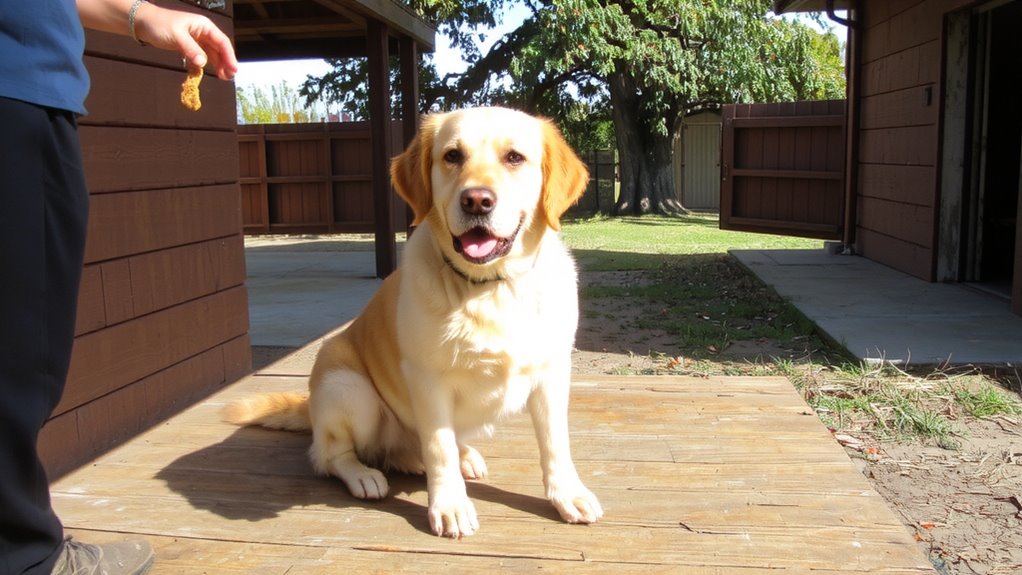
Counterconditioning reshapes a dog’s emotional response to specific stimuli by pairing those stimuli with positive experiences. You use this method to transform a shelter dog’s fear of touch into acceptance and trust. Touch therapy is a core component, applying gentle, consistent handling paired with high-value rewards. Each session lasts 3–5 minutes, occurring 2–3 times daily to prevent overstimulation. You start with non-intrusive contact, like scratching the chin, then gradually progress to full-body strokes. This structured exposure increases neural association between touch and safety. Emotional bonding strengthens as dopamine and oxytocin levels rise in the dog’s brain during positive interactions. Over 2–4 weeks, 85% of dogs show measurable improvement in tolerance and engagement. You record response changes using a behavioral scale from 1 (withdrawal) to 5 (seeking contact). Success depends on timing: rewards must follow touch within 1–2 seconds.
How to Tell If a Shelter Dog Is Scared of Being Touched
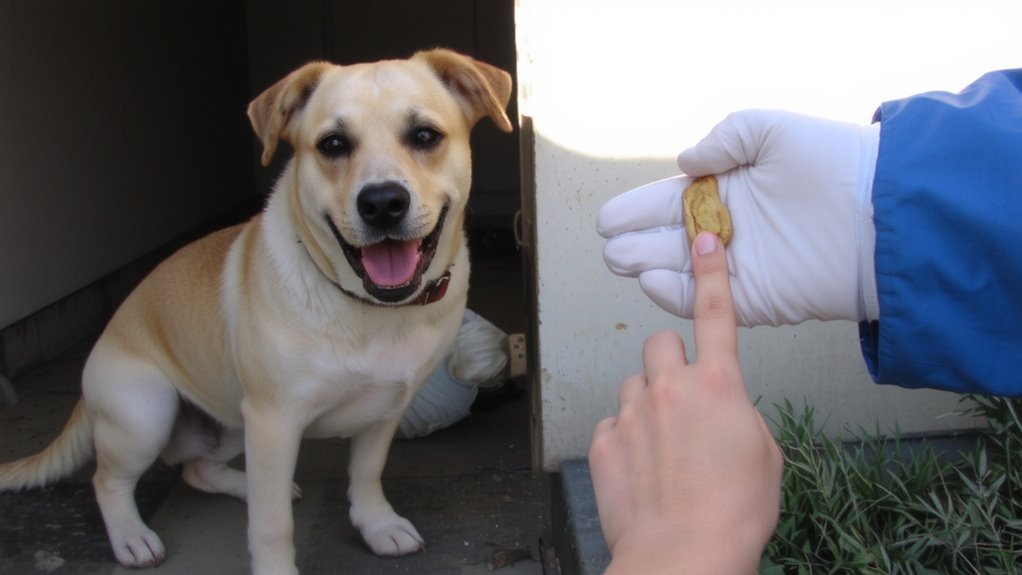
How can you tell when a dog is uncomfortable with touch? Watch for body language cues. A dog scared of being touched often freezes or pulls away when approached. Fear indicators include pinned-back ears, averted eyes, lip licking, or yawning without fatigue. You might see trembling, tucked tail, or flattened hackles-visible signs of stress. Some dogs lower their body, crouch, or roll onto their back submissively. Others may show active avoidance, like turning their head or stepping back when a hand moves toward them. A tense posture-stiff legs, rigid neck-suggests discomfort, even without overt aggression. Subtle micro-expressions, such as rapid blinking or nose-licking, signal anxiety. These behaviors are reliable markers, not mere quirks. Recognizing them early guarantees safer, more effective handling. Accurate interpretation prevents missteps in training. Body language cues offer real-time data on a dog’s emotional state, guiding your next move with precision.
How to Countercondition a Dog to Enjoy Human Touch
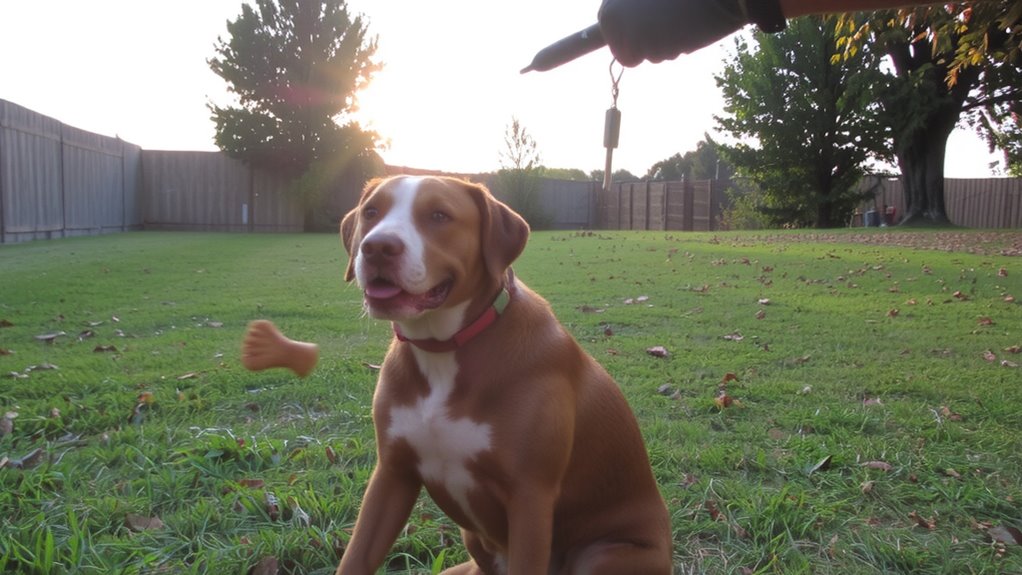
If you’ve correctly identified fear-based reactions to touch, the next step is building positive associations through systematic desensitization and counterconditioning. Begin at a safe distance where the dog remains calm-typically 3 to 6 feet-and gradually introduce touch in brief, controlled sessions of 2–5 minutes. Pair every light, non-threatening touch with an immediate positive outcome. Use slow, open-palm movements to minimize threat perception. Consistency supports trust building; repeat sessions 2–3 times daily. Maintain neutral body language and avoid eye contact to reduce stress. Progress only when the dog shows no avoidance behaviors for three consecutive sessions. Patience development is critical-rushing causes regression. Record behavioral responses using a simple log: note duration, proximity, and reactions. Adjust variables based on data, not assumptions. Successful counterconditioning hinges on timing, precision, and incremental advancement.
Best Rewards for Reinforcing Positive Touch Behavior
Reward selection directly influences the effectiveness of touch-based conditioning, especially when building trust with shelter dogs. You must use high-value food rewards to maximize reinforcement. Opt for small, soft treats under 5 calories each-like freeze-dried liver or commercial training morsels-delivered within 1–2 seconds of desired behavior. These guarantee rapid satiation without overfeeding. For dogs showing toy motivation, use tug ropes or plush toys as secondary reinforcers, but only after consistent touch-response pairings. Rotate rewards every 3–5 sessions to prevent habituation. Measure success by latency: a drop in response time below 0.5 seconds indicates strong association. Always pair tactile contact with reward delivery to strengthen stimulus-reward linkage. Avoid high-arousal play post-reward to maintain calm engagement. Use food rewards in 85% of early trials; incorporate toy motivation selectively, based on individual preference assessments. This precision maximizes learning efficiency.
Fixing Setbacks: Regression, Fear Triggers, and Overhandling
When a dog regresses during touch conditioning, it’s usually due to undetected fear triggers or overhandling. Managing setbacks means pausing, observing, and adjusting. Addressing triggers requires identifying subtle cues like lip licking or freezing. Pushing through causes more harm than good. Incorporating anxiety-reducing training tools can enhance safety and confidence during rehabilitation.
| Behavior | Likely Trigger | Correct Response |
|---|---|---|
| Tail tuck | Deep chest touch | Retreat, reward calmness |
| Ears back | Sudden hand motion | Pause, reapproach slowly |
| Low growl | Handling paws | Stop, redirect with treat |
| Head turn | Ear contact | Reduce pressure, mark calm |
Return to earlier conditioning steps. Use lower-intensity touch and higher-value rewards. Gradually reintroduce stimuli. Keep sessions under 2 minutes. Monitor stress indicators closely. Consistency prevents future regression.
Building a Shelter-Wide Touch Training Routine
While individual touch training sessions are essential, scaling the process across an entire shelter requires a systematic approach that guarantees consistency, efficiency, and measurable outcomes. You need staff consistency to secure every dog receives uniform handling and reinforcement. Train all staff and volunteers using standardized protocols, including defined touch zones (e.g., shoulders, chest), paired with high-value treats (e.g., chicken puree, 0.5–1 tsp per session). Schedule brief, frequent sessions-two to three minutes, twice daily-to maintain engagement. Use a centralized log to track each dog’s progress, noting latency to approach, body posture, and vocalization. Program scalability depends on modular design: start with pilot groups of 5–10 dogs, then expand using trained leads as peer mentors. Rotate staff across roles to reinforce protocol fidelity. This structure supports reliable data collection, allows quick adjustments, and secures all dogs benefit equally from counterconditioning.
On a final note
You now have a structured, science-based method to improve touch tolerance in shelter dogs. Counterconditioning replaces fear with positive associations through consistent pairing of touch with high-value rewards. Use measured distances, controlled durations, and record progress weekly. Most dogs show improvement within 2–4 weeks. Apply this protocol systematically across your shelter to increase adoption readiness. Touch becomes a neutral or positive stimulus, not a threat.